Artwork
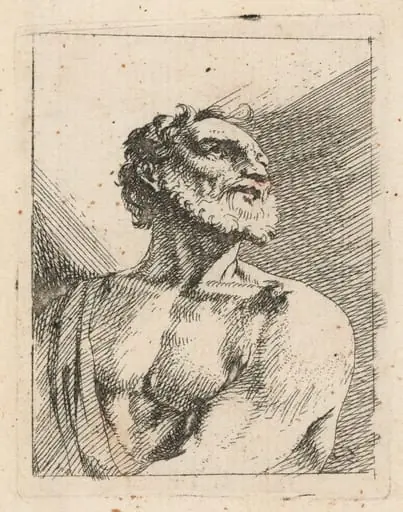
Bust of a Bearded Warrior
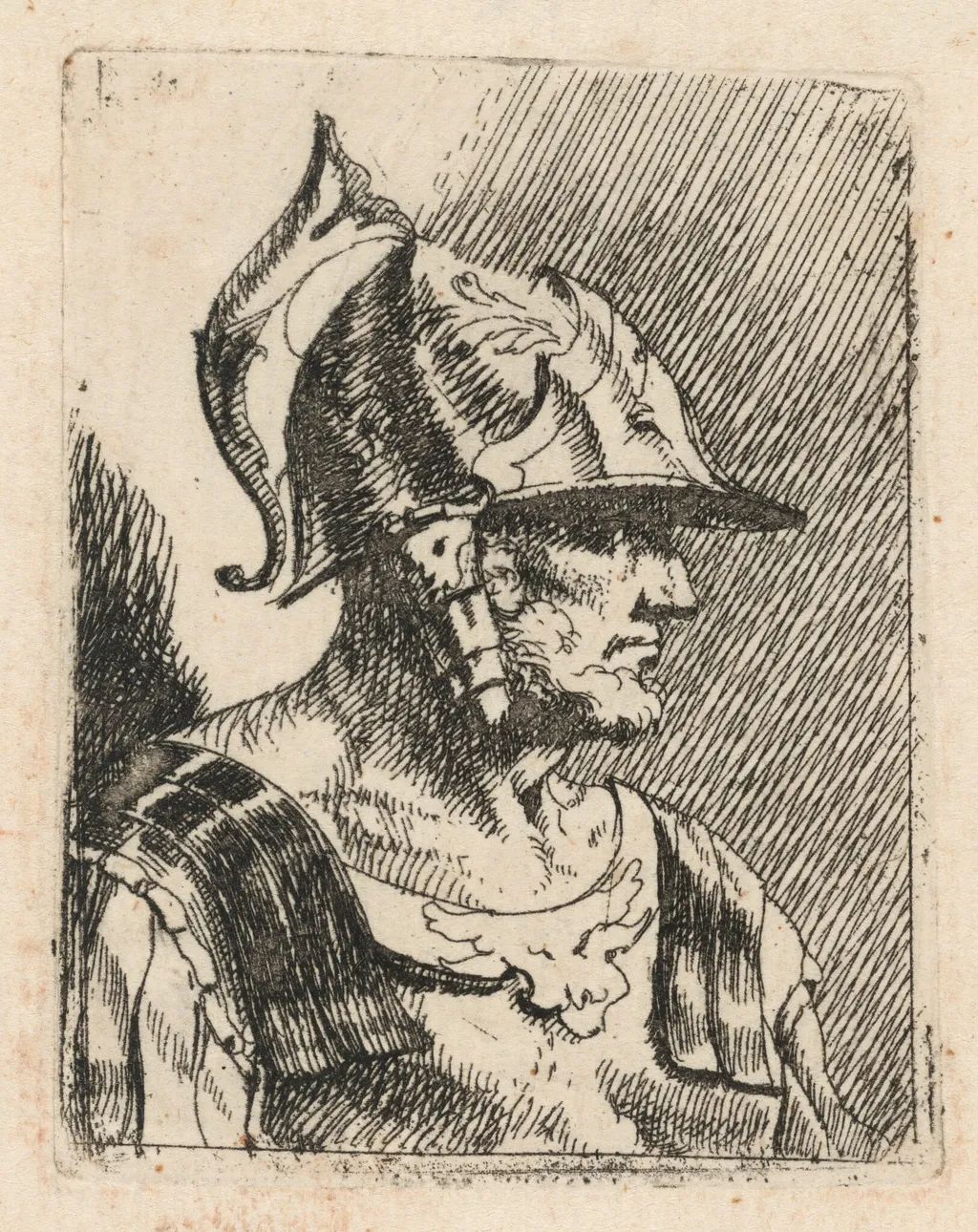
Bust of a Bearded Warrior is an ink print by the Baroque artist Johann Heinrich Schönfeld. It dates from 1626 and is held in the collection of the National Gallery of Art.
About this work
Overview
Created in 1626 by Johann Heinrich Schönfeld, this etching depicts a bearded male figure in profile, rendered in bold, incised lines on laid paper.
Created in 1626 by Johann Heinrich Schönfeld, this etching depicts a bearded male figure in profile, rendered in bold, incised lines on laid paper. The work is part of the National Gallery of Art’s collection in Washington, D.C. Its surface bears the subtle texture of aged paper and the crisp, uneven marks characteristic of hand-etched metal plates, reflecting the technical methods of early 17th-century printmaking.
Subject & Meaning
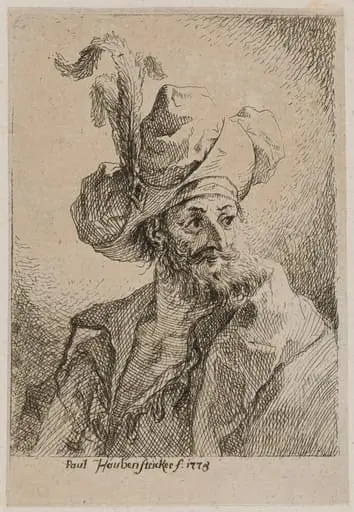
The figure is a stylized warrior, identified by his rugged facial features and ornate headwear adorned with large feathers and a dark band. Though not a portrait of a specific individual, the image evokes ideals of martial vigor and stoic endurance common in Baroque visual culture. The beard and helmet-like hat suggest a blend of classical and contemporary military iconography, emphasizing character over identity.
Technique & Style
Schönfeld employed etching, a process involving acid-resistant coating and incised lines on a metal plate, to produce sharp, expressive contours. The rough texture of the face mimics stone, achieved through dense, irregular strokes, while the hat’s feathers are rendered with fluid, sweeping lines. The contrast between detailed facial carving and looser, atmospheric background reflects a dynamic, almost theatrical approach to form.
History & Provenance
The print entered the National Gallery of Art’s collection through established acquisition channels, though its earlier ownership history remains undocumented. Its survival in relatively intact condition suggests careful preservation, likely within private or institutional collections since the 17th century. No known variants or impressions are widely recorded, making this a rare surviving example of Schönfeld’s graphic work.
Context
Produced during the Thirty Years’ War, the image aligns with a broader European trend of depicting idealized soldiers and heroic types in print. Etchings like this served both as artistic studies and as accessible images for collectors interested in martial themes. Schönfeld, trained in Italy and influenced by Caravaggisti, brought a dramatic chiaroscuro sensibility to his graphic work, even in monochrome.
Legacy
While not widely reproduced in modern scholarship, this etching exemplifies the expressive potential of early Baroque printmaking. It reflects how artists used the medium to explore character and emotion without color or large-scale composition. Its preservation offers insight into the circulation of visual ideas among Northern European printmakers during a period of intense cultural and political upheaval.
Artist & collection
Artist
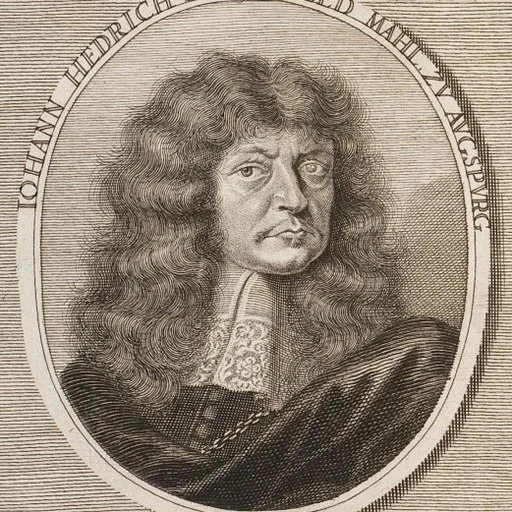
Johann Heinrich Schönfeld (1609–1684) was an artist, born in Biberach an der Riß.

 Soldier Seated
 The Figurine Series: Figurina
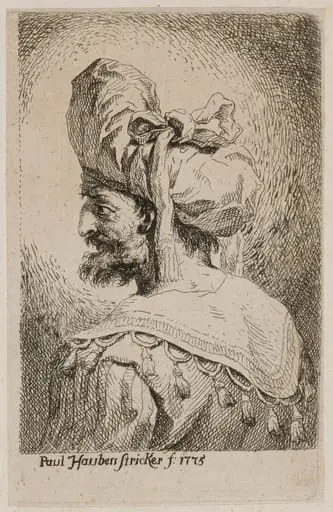 Oriental with a Soft Hat in Profile, Looking Left
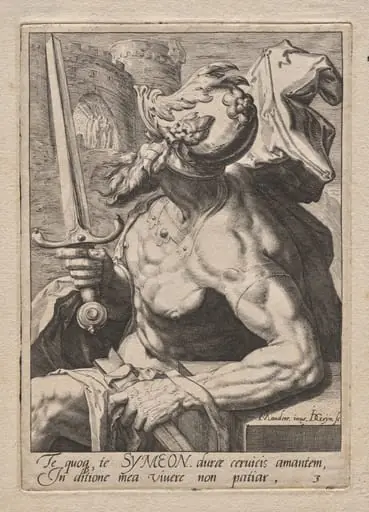 Plate 3: Simeon
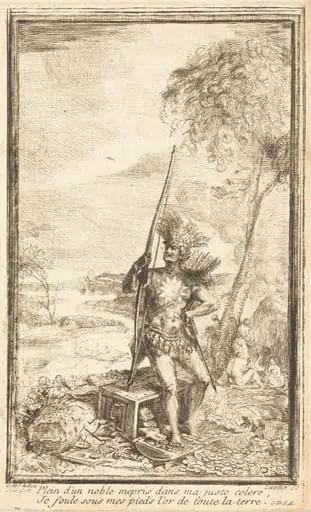 Frontispiece: Allegorical Composition (Composition allegorique)
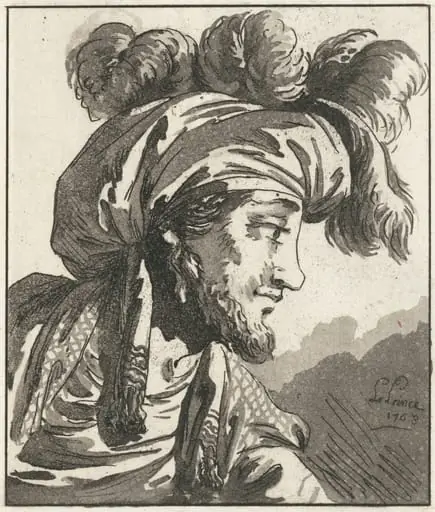 Head of a Turbaned Man without a Moustache
 Oriental with a Plumed Hat, Looking Right
 Mars
Mars Saint Simon
 Standing Soldier in a Long Cloak
 The Jester Barbarroja
 Bust of a Bearded Man