Artwork
Shield with Wings, Held by Peasant
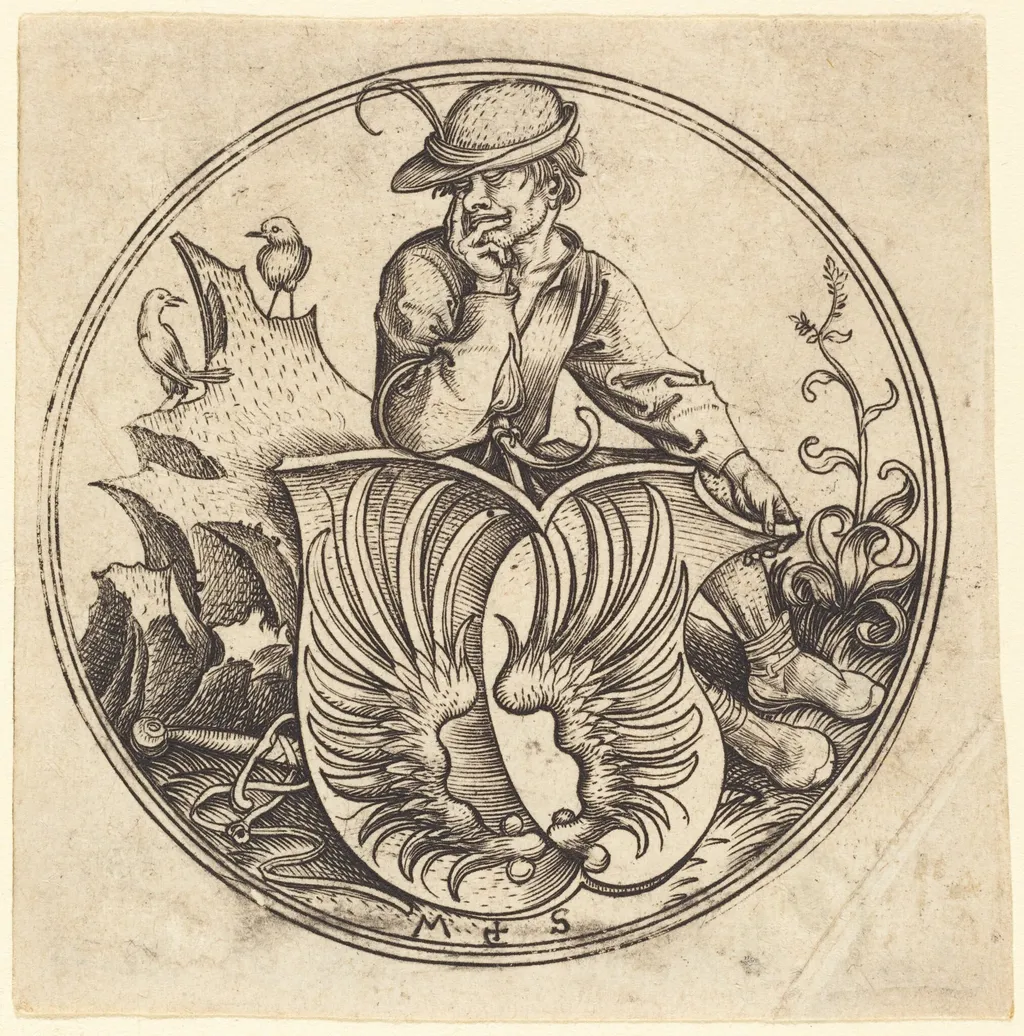
Shield with Wings, Held by Peasant is an ink print by the Renaissance artist Martin Schongauer. It dates from 1485 and is held in the collection of the National Gallery of Art.
About this work
Overview
Created circa 1485, this engraving by Martin Schongauer captures a solitary peasant cradling a peculiar shield adorned with wings and a feathered tail.
Created circa 1485, this engraving by Martin Schongauer captures a solitary peasant cradling a peculiar shield adorned with wings and a feathered tail. Executed in fine, controlled lines, the work exemplifies the technical rigor of late 15th-century German printmaking. Schongauer, among the most influential engravers north of the Alps before Dürer, used this medium to explore symbolic imagery with quiet intensity, blending the mundane with the allegorical.
Subject & Meaning
The figure, a humble peasant, holds a shield that defies practical use—its wings suggest flight or divine association, while the tail evokes a bird’s plumage. Small birds rest along its rim, and miniature figures scale its surface, hinting at a layered, possibly allegorical narrative. The shield may symbolize protection, transformation, or spiritual burden, rendered not as heraldry but as a mysterious object suspended between the earthly and the symbolic.
Technique & Style
Schongauer employed fine, intersecting lines to model form and texture, particularly in the feathers, fabric folds, and the shield’s metallic surface. The engraving’s tonal depth emerges through dense hatching and delicate cross-contours, a hallmark of his graphic precision. The peasant’s loose garments and wide-brimmed hat are rendered with subtle gradations, while the surrounding birds and climbers are minimized to delicate strokes, enhancing the composition’s enigmatic stillness.
History & Provenance
The work originates from Schongauer’s mature period in Colmar, where he maintained a prolific printmaking practice. Though no early ownership records are documented, the engraving circulated widely in northern Europe, influencing later artists. Its survival in multiple impressions attests to its popularity among collectors and craftsmen, who valued its intricate detail and unusual subject matter as much as its technical mastery.
Context
In the decades before Dürer’s rise, Schongauer dominated the German print market, blending Gothic detail with emerging Renaissance sensibilities. This image reflects a cultural moment when secular and symbolic imagery coexisted in everyday objects. The peasant’s presence alongside a fantastical shield suggests a fascination with the intersection of labor, myth, and the uncanny in late medieval visual culture.
Legacy
Schongauer’s engraving influenced generations of Northern European printmakers through its compositional daring and technical finesse. Though less overtly religious than his other works, this image contributed to a broader tradition of allegorical prints that invited contemplation over narrative clarity. Its quiet strangeness continues to resonate as an early example of the print medium’s capacity for poetic ambiguity.
Artist & collection

Artist
Martin Schongauer, also known as Martin Schön or Hübsch Martin by his contemporaries, was an Alsatian engraver and painter.

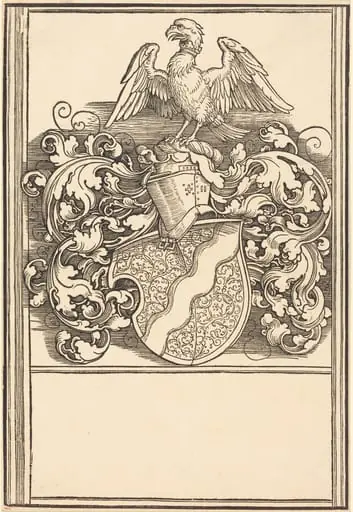 Coat of Arms of Michael Behaim
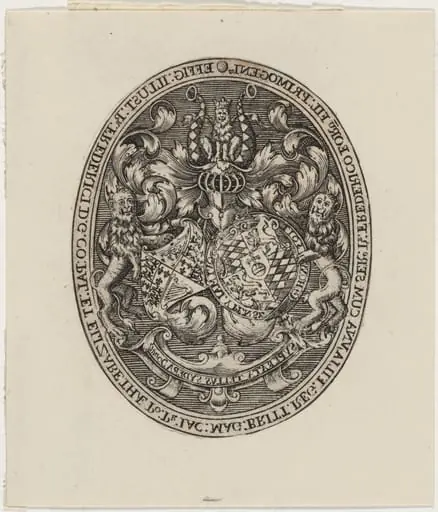 Shields of Frederick V, Elizabeth, and Prince Frederick Henry
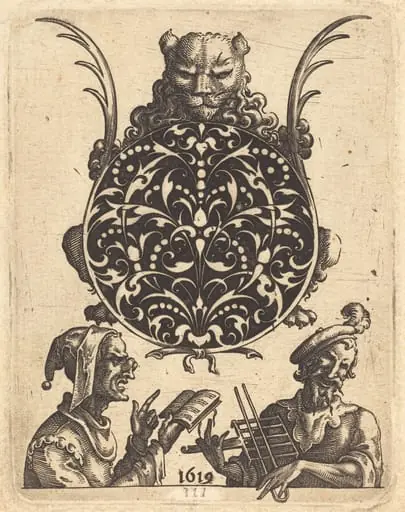 Jewelry Design with a Lion's Head
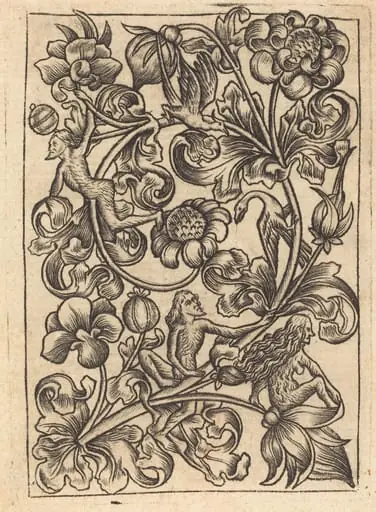 Ornament with Wild Folk
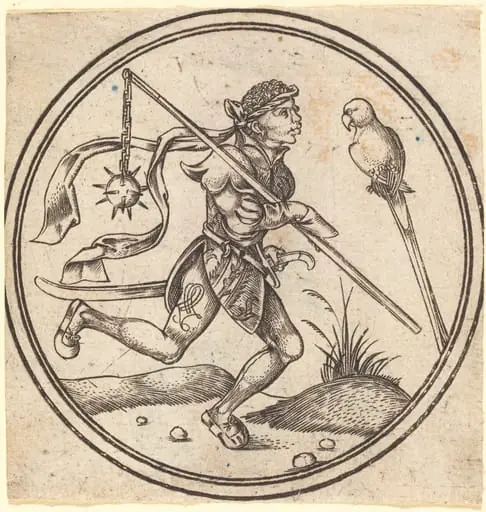 The Jack of Parrots
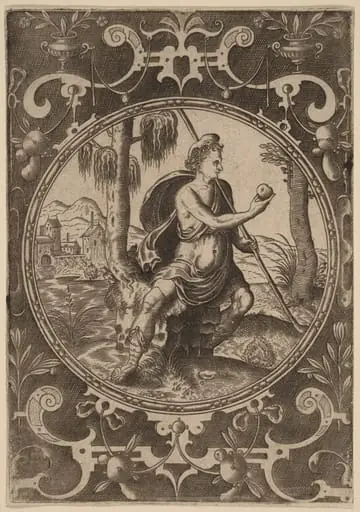 Paris with the Apple
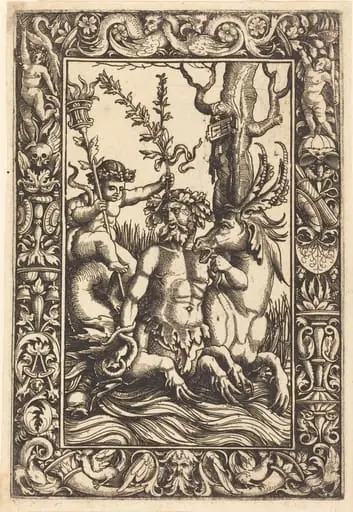 Mythological Marine Subject
 Shields of Frederick V, Elizabeth, and Prince Frederick Henry
 Hermes
 Shields with Rabbit and Moor's Head, Held by Wild Man
 Ornament with Flower and Eight Wild Folk
 Letter S