Artwork
Allegory of Vanity
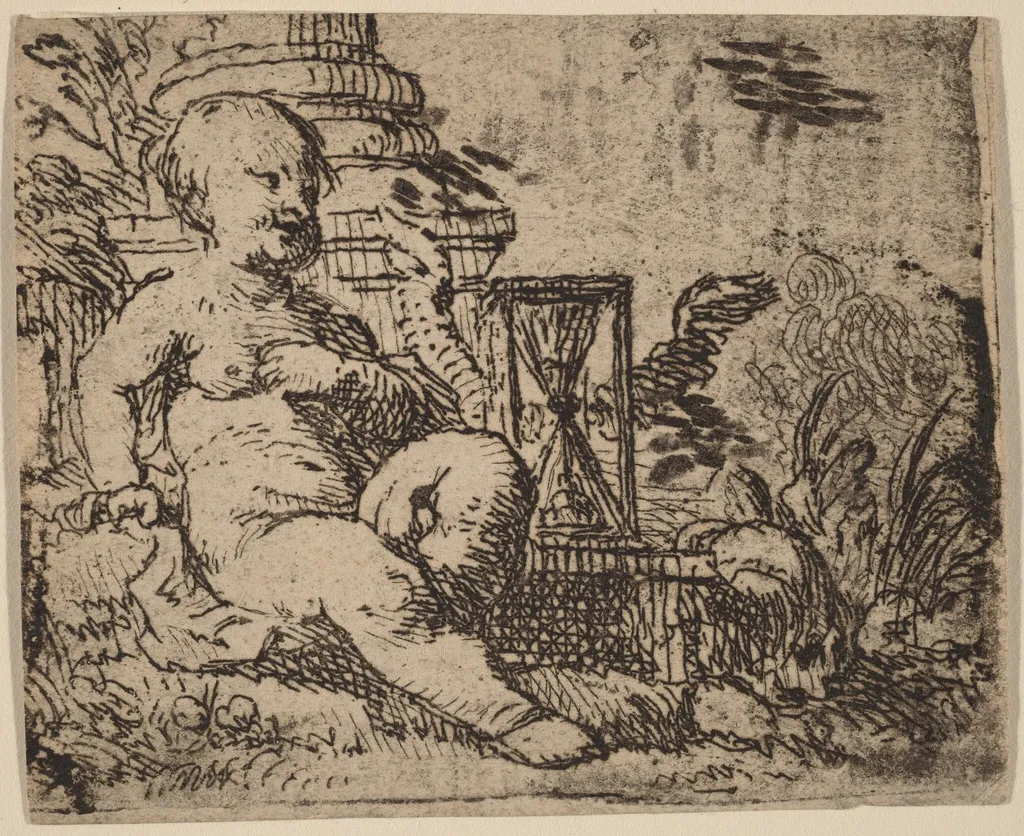
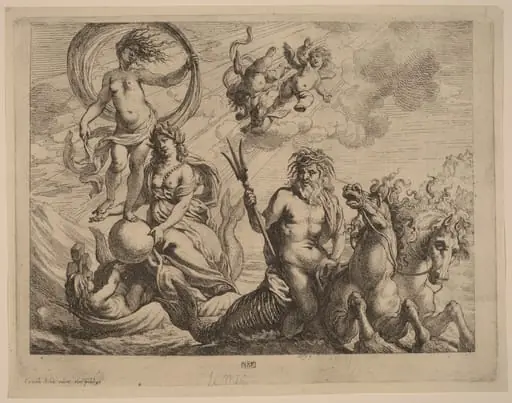
Allegory of Vanity is an ink print by the Renaissance artist Cornelis Schut I. It dates from 1626 and is held in the collection of the National Gallery of Art.
About this work
Overview
Cornelis Schut I’s 1626 etching entitled *Allegory of Vanity* presents a somber tableau in which a solitary figure collapses amid broken symbols of time and self‑image. The composition is dominated by a cracked hourglass and a shattered mirror, surrounded by a birdcage, scattered books and a wilted flower, all rendered on laid paper with a stark, shadowy atmosphere.
Subject & Meaning
The work visualises the transience of earthly pursuits, using the broken hourglass to signify the passage of time and the fractured mirror to suggest the loss of self‑reflection. The disordered objects—caged bird, abandoned books, decaying flora—reinforce a moralizing message about the futility of vanity and the inevitable decay of material concerns.
Technique & Style
Schut employed the traditional etching process, incising his design into a copper plate and allowing acid to bite the lines. Ink rests in these recessed grooves, producing pronounced chiaroscuro when pressed onto the laid paper. The resulting image is marked by vigorous, uneven strokes and deep, velvety blacks that give the scene a theatrical, almost stage‑like quality.
History & Provenance
Created in the early seventeenth century, the print reflects the period’s preoccupation with moral allegories. While specific ownership records are scarce, the piece has been documented in several European collections of Dutch Baroque prints, indicating its circulation among connoisseurs of allegorical imagery during and after Schut’s lifetime.
Artist & collection


![Seated Angel in a Landscape [recto], by Anicet Charles Gabriel Lemonnier](https://artifactworldgallery.com/img/anicet-charles-gabriel-lemonnier--seated-angel-in-a-landscape-recto--17dbd8d92a970c98-w320.webp)