Artwork
Three Flying Putti
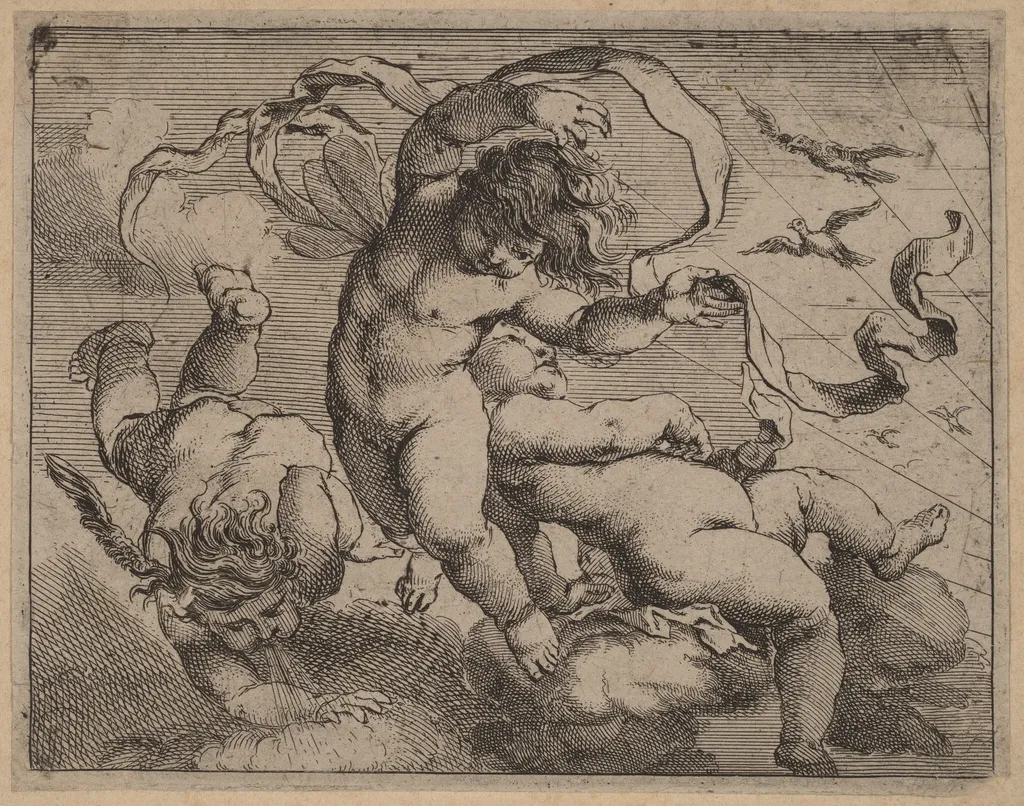
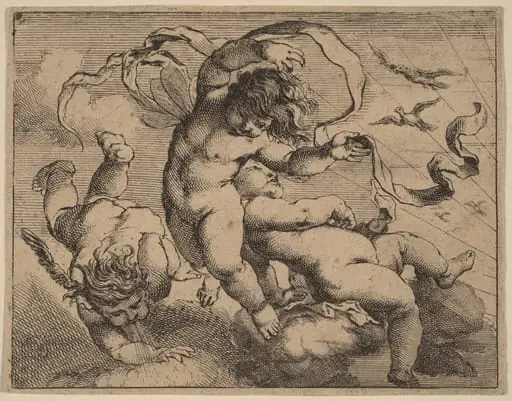
Three Flying Putti is an ink print by the Renaissance artist Cornelis Schut I. It dates from 1626 and is held in the collection of the National Gallery of Art.
About this work
Overview
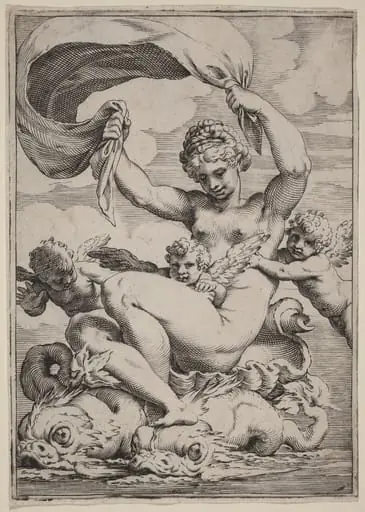
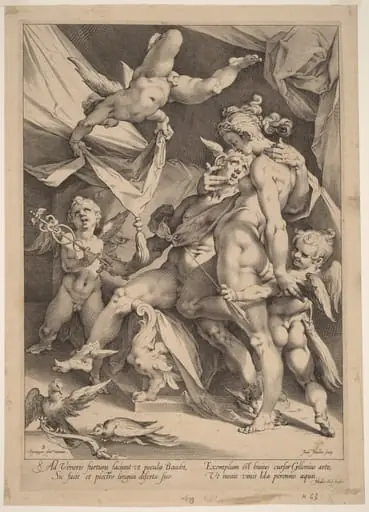
Created in 1626 by Cornelis Schut I, this print depicts three putti in dynamic flight. Executed in engraving and etching on laid paper, the work is mounted on a backing sheet. The composition captures the figures mid-motion, their limbs extended as if caught in an unseen current, conveying movement through precise linear control and subtle tonal shifts.
Subject & Meaning
The three putti, traditionally symbolic of divine or celestial play, are shown without wings yet still airborne, suggesting an ethereal realm beyond earthly gravity. One holds a wreath aloft, possibly referencing victory or sacred honor. Their unrestrained motion implies joy or spiritual exuberance, aligning with Baroque ideals of emotional expression and movement in sacred imagery.
Technique & Style
Schut employed engraving and etching to achieve fine, interwoven lines that define form and shadow. Drypoint additions enhance depth beneath the wings and around the figures, creating soft halos of ink that give volume and lift. The paper’s texture subtly interacts with the ink, preserving the delicacy of the lines while lending resilience to the overall impression.
History & Provenance
The print was produced during Schut’s active years in Antwerp, a center for printmaking in the early 17th century. It likely circulated among collectors and artists as a study in figural dynamism. The work’s preservation on a secondary support suggests it was valued early on, though its specific provenance prior to modern collections remains undocumented.
Context
In early 17th-century Flanders, putti were common in religious and mythological prints, often serving as decorative or allegorical elements. Schut’s version reflects the influence of Rubens and other Flemish masters who infused classical motifs with energetic movement. This print exemplifies how engravers translated painterly dynamism into the more restrained medium of print.
Legacy
Though not widely reproduced in later centuries, the work stands as an example of Schut’s skill in translating motion into line. It contributes to the broader understanding of how Northern European printmakers adapted Italianate themes with technical precision, influencing regional print traditions without seeking mass appeal.
Artist & collection