Artwork
The deceitful wife ejects the procuress after blackening her face, from a Tuti-nama (Tales of a Parrot): Eighth Night
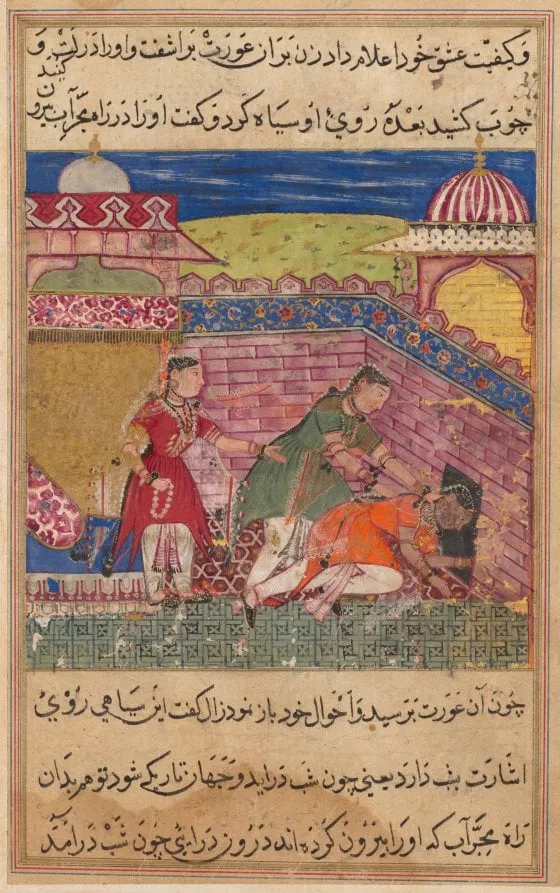
The deceitful wife ejects the procuress after blackening her face, from a Tuti-nama (Tales of a Parrot): Eighth Night is an unspecified painting by the Mughal Painting artist Shravana. It dates from 1560 and is held in the collection of the Cleveland Museum of Art. This 16th-century Indian painting illustrates a scene from the Tuti-nama, a collection of tales told by a parrot.
About this work
You see a woman in a red dress shoving another woman out the door while smearing black paint on her face.
You see a woman in a red dress shoving another woman out the door while smearing black paint on her face.
This tiny painting tells a secret story from a 16th-century Indian book of parrot tales. The wife isn’t really angry—she’s sending a hidden message to her lover. The artist added a pink brick wall to make the room feel deeper.
If you like these clever little scenes, look up mughal india, court of akbar (reigned 1556–1605).
Overview
This 16th-century Indian painting illustrates a scene from the Tuti-nama, a collection of tales told by a parrot. It depicts a wife ejecting a messenger after smearing her face with black paint.
Subject & Meaning
The scene shows a clever ruse by an adulterous wife, who uses the act of disgracing the messenger as a coded message to her lover to meet at a specific location.
Technique & Style
The artist, Shravana, employed a pink brick wall to create a sense of depth in the composition, adding dimensionality to the intimate scene.
Context
The painting is part of a larger tradition of illustrated manuscripts from Mughal India, particularly during the reign of Akbar (1556–1605).
Legacy
This work exemplifies the intricate and clever narrative style characteristic of Mughal Indian art, inviting viewers to explore the rich cultural context of its creation.
Artist & collection

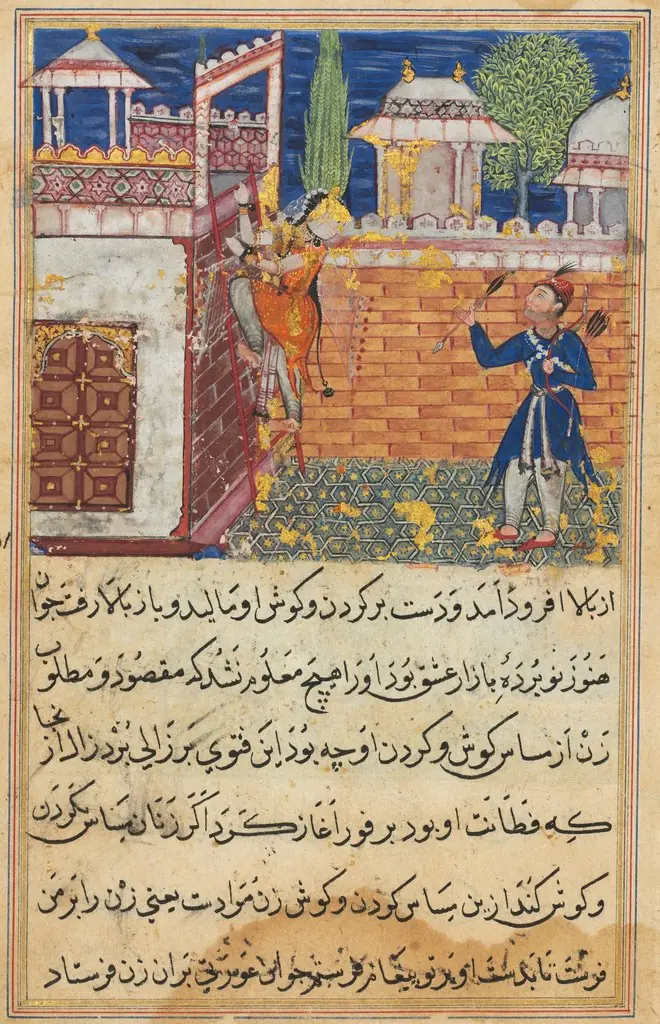 The deceitful wife returns to her terrace after caressing her lover, from a Tuti-nama (Tales of a Parrot): Eighth Night
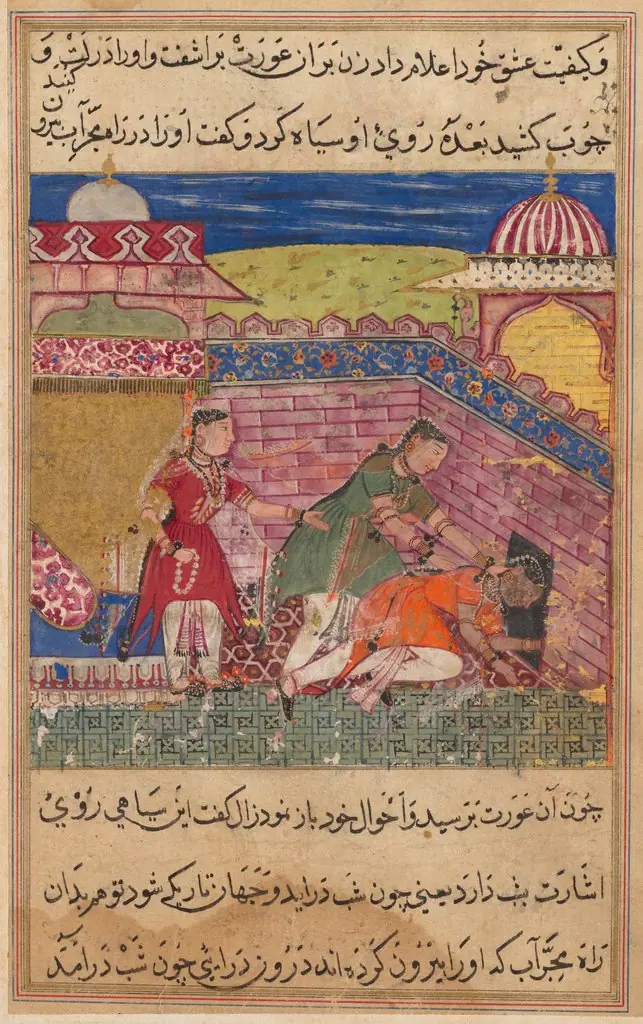 The deceitful wife ejects the procuress after blackening her face, from a Tuti-nama (Tales of a Parrot): Eighth Night
 The deceitful wife returns to her terrace after caressing her lover, from a Tuti-nama (Tales of a Parrot): Eighth Night
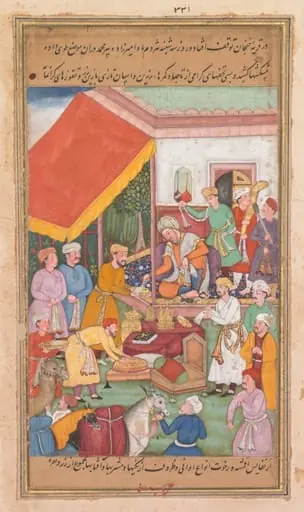 Timur distributes gifts from his grandson, the Prince of Multan, from a Zafar-nama (Book of Victories)
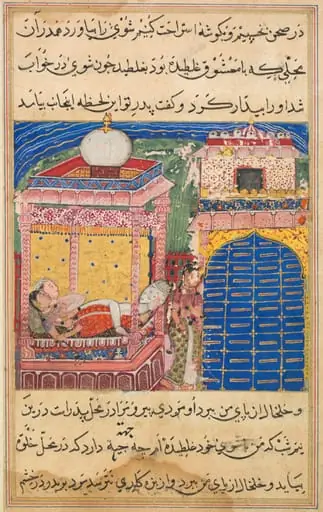 The deceitful wife persuades her husband to sleep in the same place where she had previously slept with her lover, from a Tuti-nama (Tales of a Parrot): Eighth Night
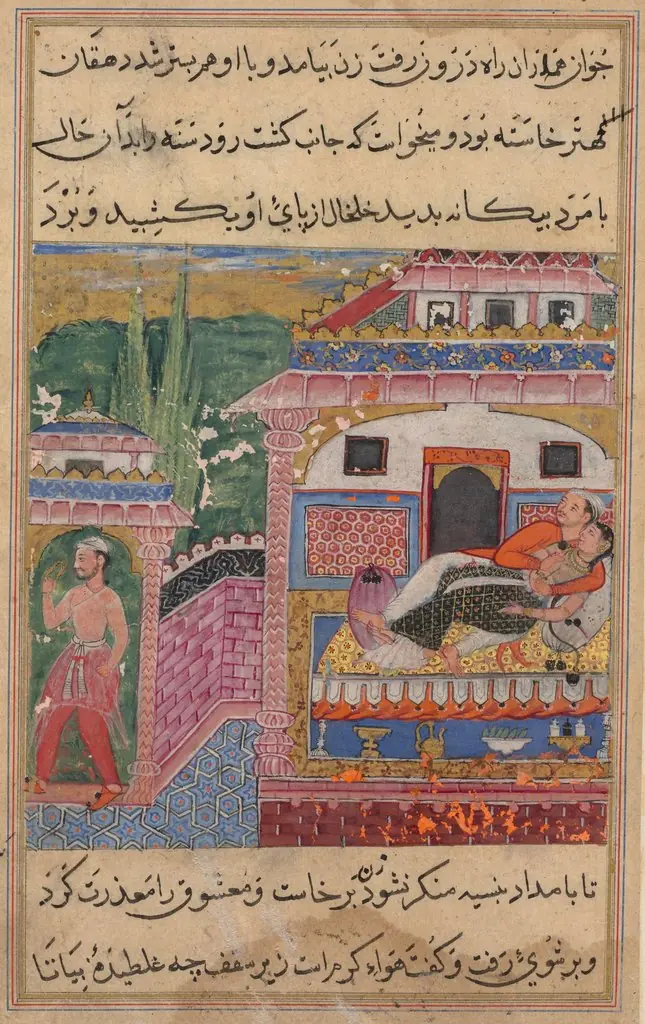
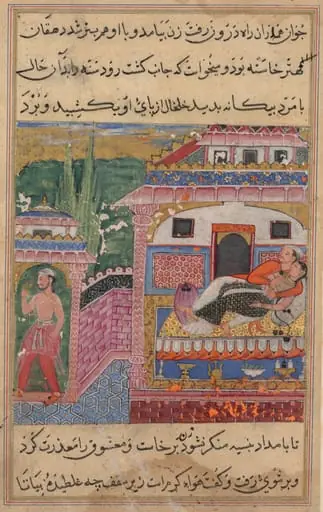 The farmer, father of the son with the deceitful wife, steals away with her anklet while she is in bed with her lover, from a Tuti-nama (Tales of a Parrot): Eighth Night
 The deceitful wife persuades her husband to sleep in the same place where she had previously slept with her lover, from a Tuti-nama (Tales of a Parrot): Eighth Night
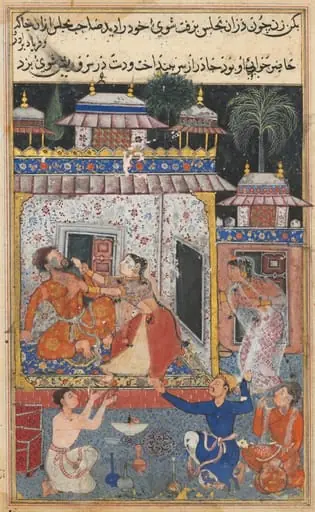 The deceitful wife assaults her erring husband, from a Tuti-nama (Tales of a Parrot): Eighth Night
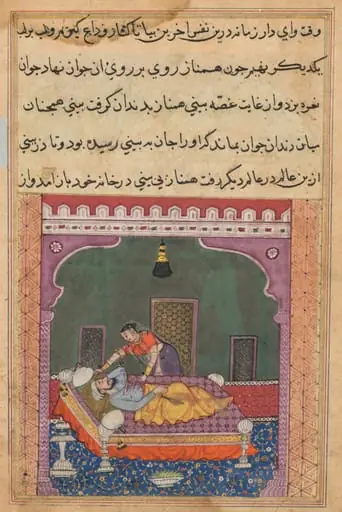 In order to falsely implicate her husband, Hamnaz places a knife by his side and lets the blood dripping from her nose stain his clothes, from a Tuti-nama (Tales of a Parrot): Twenty-fifth Night
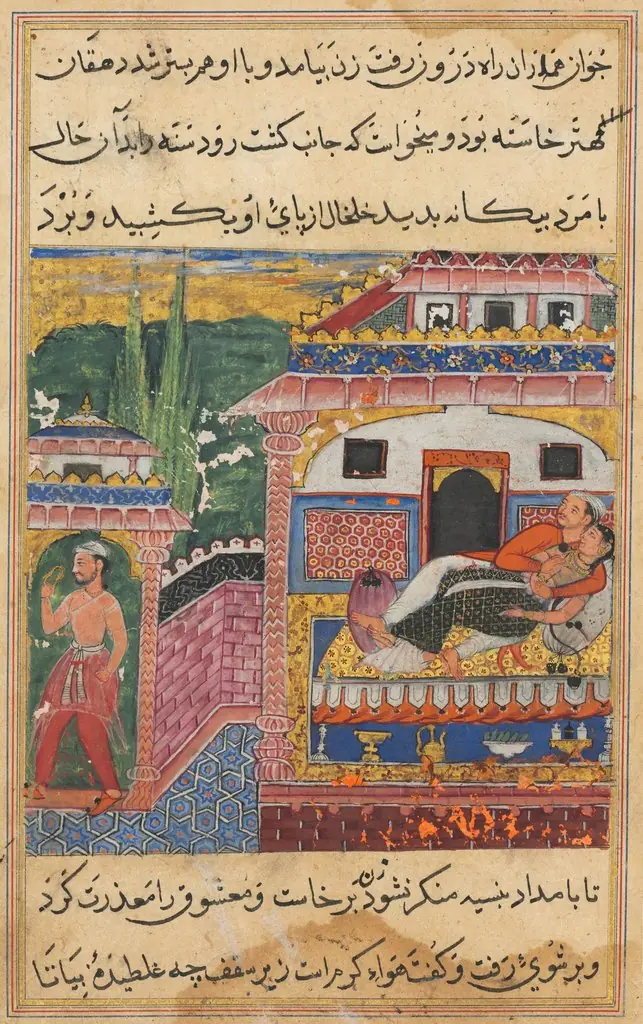 The farmer, father of the son with the deceitful wife, steals away with her anklet while she is in bed with her lover, from a Tuti-nama (Tales of a Parrot): Eighth Night
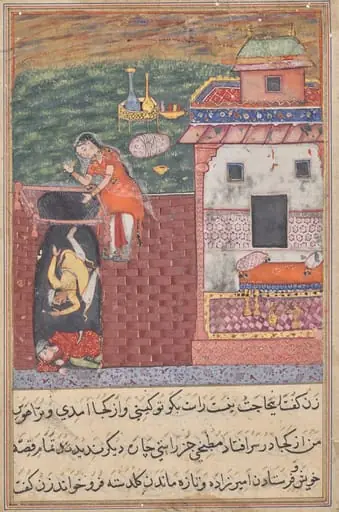 The two cooks, who attempt to seduce the warrior’s loyal wife, are trapped by her in a cellar, from a Tuti-nama (Tales of a Parrot): Fourth Night