Artwork
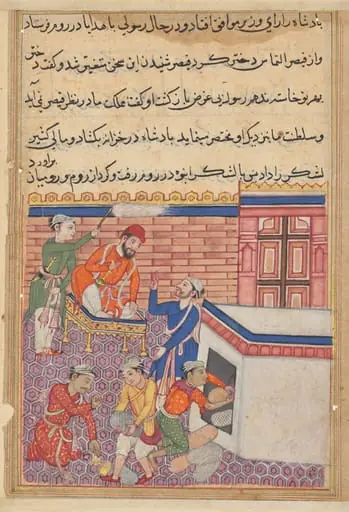
The two cooks, who attempt to seduce the warrior’s loyal wife, are trapped by her in a cellar, from a Tuti-nama (Tales of a Parrot): Fourth Night
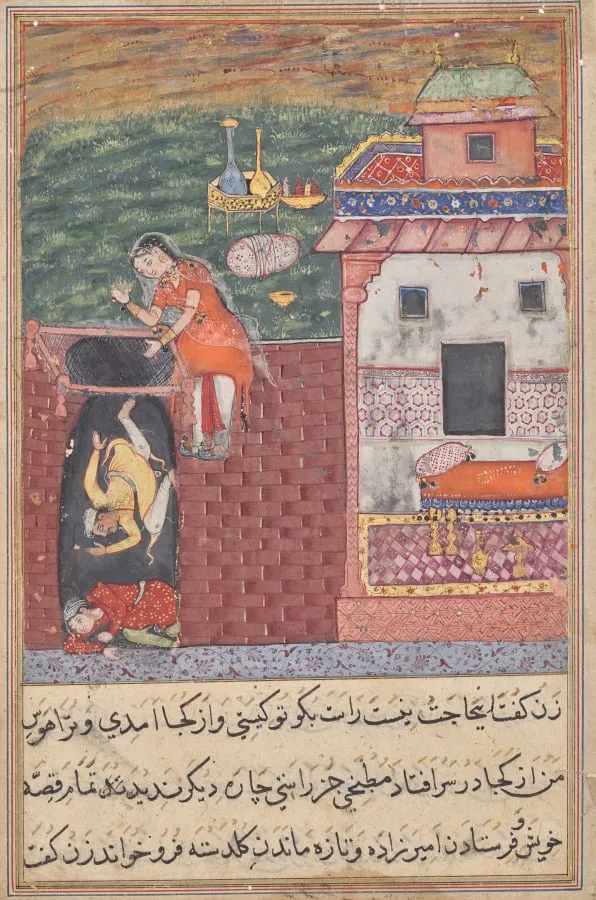
The two cooks, who attempt to seduce the warrior’s loyal wife, are trapped by her in a cellar, from a Tuti-nama (Tales of a Parrot): Fourth Night is an unspecified painting by the Mughal Painting artist Unknown. It dates from 1560 and is held in the collection of the Cleveland Museum of Art.
About this work
A woman stands above them, arms crossed, while a bed made of thin sticks collapses behind the men.
You see two cooks hiding in a dark cellar, their faces lit by a single lamp. A woman stands above them, arms crossed, while a bed made of thin sticks collapses behind the men.
This painting comes from a book of parrot tales told to Emperor Akbar. The story tests a wife’s loyalty—she outsmarts the cooks sent to seduce her. The artist shows the moment of trickery, with light and shadow making the scene feel tense.
To see more stories like this, look up *mughal india, court of akbar (reigned 1556–1605)*.
Overview
The painting illustrates a scene from a fourth‑night episode of the *Tuti‑nama*, a collection of parrot‑told tales compiled for the Mughal court of Emperor Akbar. In the image, a faithful wife confronts two royal cooks who have been dispatched by the king to test her loyalty while her soldier husband is away on campaign.
Subject & Meaning
The narrative underscores the virtue of marital fidelity: the wife, aware of the king’s scheme, lures the cooks into a trap rather than yielding to their advances. By imprisoning them in a cellar, she demonstrates that true devotion resists temptation, a moral lesson valued in the courtly literature of the period.
Technique & Style
Rendered in the miniature tradition of Mughal painting, the work employs a limited palette of deep shadows and a single lamp to illuminate the cooks’ faces, heightening the drama. The composition is tightly framed, with the woman’s crossed arms and the collapsing stick‑bed directing the viewer’s eye toward the concealed pit.
History & Provenance
Created for a manuscript commissioned by Akbar (reigned 1556–1605), the piece remained within the imperial collection before entering modern museum holdings in the early twentieth century. Its provenance traces a path from the Mughal court to European collectors, reflecting the broader circulation of Mughal miniatures.
Context
The story reflects courtly concerns with loyalty, honor, and the king’s authority to test subjects. It also illustrates the role of parrot narratives—stories told by a talking bird—as a literary device for moral instruction within the Mughal cultural milieu.
Artist & collection

 Domestic Scene
 Giacomo and Cardinal Marco, investing Andrea, Abbot of San Zeno, with his Benefice
 The Nymph of Fontainebleau
 Portrait of a Woman
 Madonna and Child with Saints in the Enclosed Garden
 Venus and Minerva
 Family Group of Four on Sofa
 Wall painting from Room H of the Villa of P. Fannius Synistor at Boscoreale
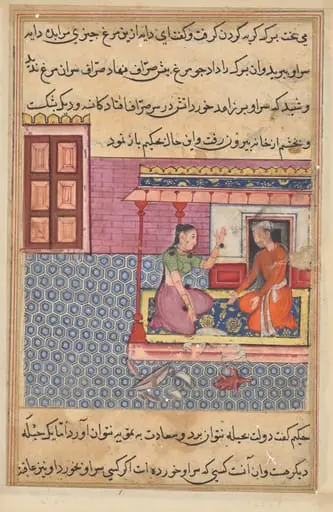 The pious man’s wife offers the seven-colored bird as food to her lover, but not finding its head, he breaks the pot and bowl in anger, from a Tuti-nama (Tales of a Parrot): Fifty-second Night
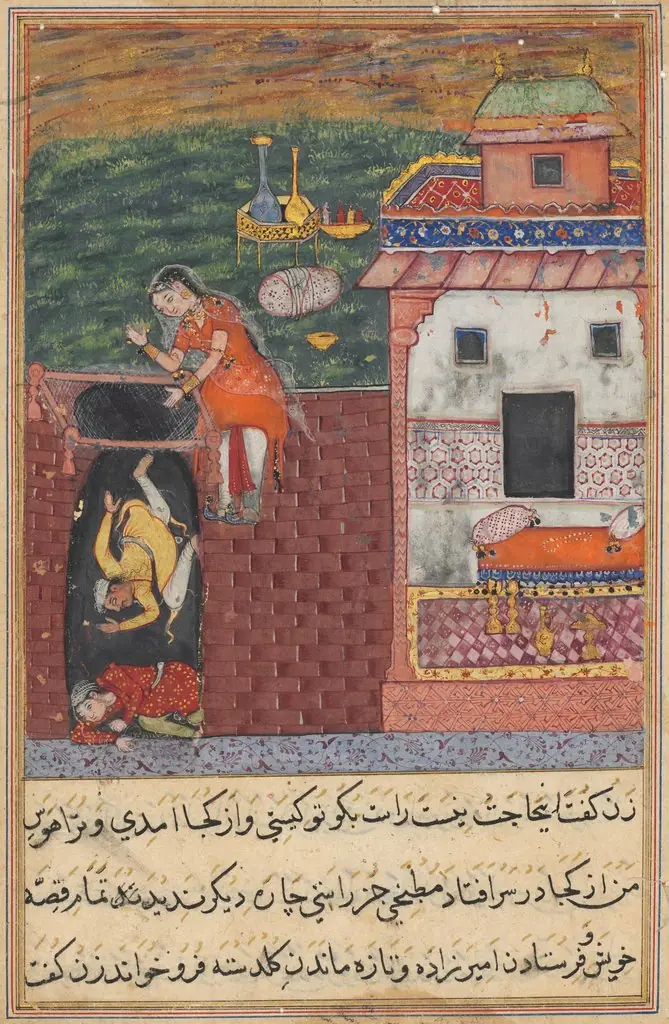 The two cooks, who attempt to seduce the warrior’s loyal wife, are trapped by her in a cellar, from a Tuti-nama (Tales of a Parrot): Fourth Night
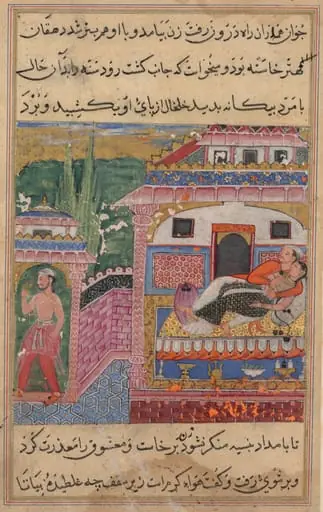 The farmer, father of the son with the deceitful wife, steals away with her anklet while she is in bed with her lover, from a Tuti-nama (Tales of a Parrot): Eighth Night
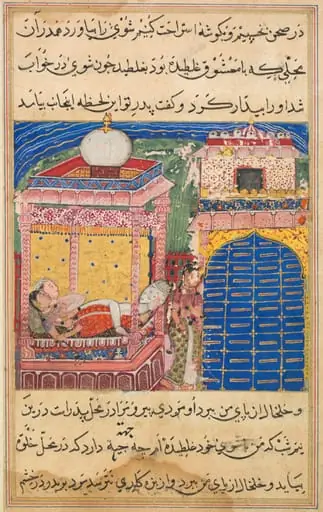 The deceitful wife persuades her husband to sleep in the same place where she had previously slept with her lover, from a Tuti-nama (Tales of a Parrot): Eighth Night
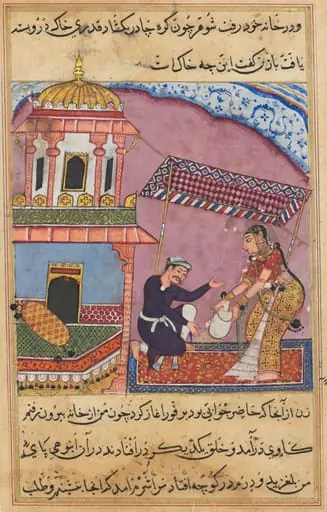 The husband berates his wife for purchasing gravel instead of sugar, from a Tuti-nama (Tales of a Parrot): Eighth Night
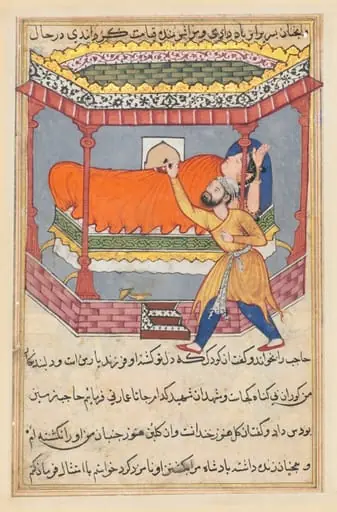 The king places the talisman on his sleeping wife, from a Tuti-nama (Tales of a Parrot): Fiftieth Night
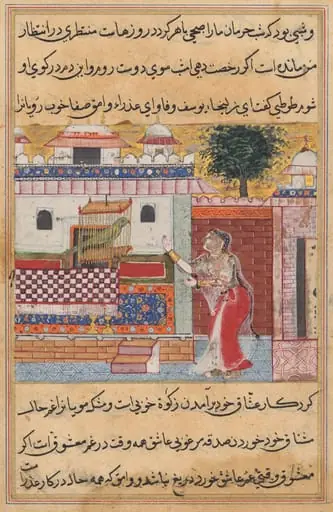 The Parrot Addresses Khujasta at the Beginning of the Twelfth Night, from a Tuti-nama (Tales of a Parrot)
 The king’s emissary being provided with gifts for his mission to Rum in order to seek the hand of the emperor’s daughter in marriage, from a Tuti-nama (Tales of a Parrot): Fiftieth Night