Artwork
The deceitful wife persuades her husband to sleep in the same place where she had previously slept with her lover, from a Tuti-nama (Tales of a Parrot): Eighth Night
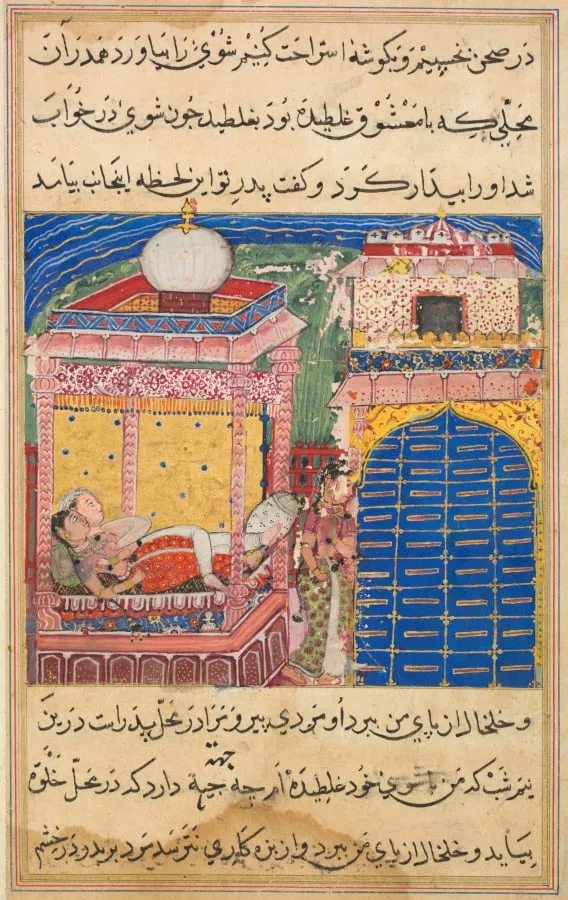
The deceitful wife persuades her husband to sleep in the same place where she had previously slept with her lover, from a Tuti-nama (Tales of a Parrot): Eighth Night is an unspecified painting by the Renaissance artist Unknown. It dates from 1560 and is held in the collection of the Cleveland Museum of Art. This painting illustrates a scene from the Tuti-nama, a collection of tales told by a parrot, created for a Mughal emperor.
About this work
You see a woman in a red dress talking to a man in a green robe by a garden pool, while a servant waits nearby.
You see a woman in a red dress talking to a man in a green robe by a garden pool, while a servant waits nearby.
This painting comes from a book of parrot tales told to a Mughal emperor. The woman is tricking her husband to cover up an affair. The artist used tiny gold dots and bright colors to show wealth and drama. We don’t know who painted it, but the style is very precise.
To see more paintings like this, look up Mughal India, court of Akbar (reigned 1556–1605).
Overview
This painting illustrates a scene from the Tuti-nama, a collection of tales told by a parrot, created for a Mughal emperor. It depicts a deceitful wife convincing her husband to sleep in the same location where she had previously been with her lover.
Subject & Meaning
The scene shows a woman in a red dress persuading a man in a green robe, set by a garden pool with a servant waiting nearby. The narrative revolves around the wife's cleverness in avoiding detection of her adultery.
Technique & Style
The artist employed precise techniques, utilizing bright colors and tiny gold dots to convey wealth and drama, characteristic of the style associated with the court of Akbar, a Mughal emperor who reigned from 1556 to 1605.
History & Provenance
The painting is part of a manuscript, the Tuti-nama, created for a Mughal emperor, though the specific artist remains unknown. The style is reminiscent of works associated with Akbar's court.
Artist & collection

 Domestic Scene
 Giacomo and Cardinal Marco, investing Andrea, Abbot of San Zeno, with his Benefice
 The Nymph of Fontainebleau
 Portrait of a Woman
 Madonna and Child with Saints in the Enclosed Garden
 Venus and Minerva
 Family Group of Four on Sofa
 Wall painting from Room H of the Villa of P. Fannius Synistor at Boscoreale
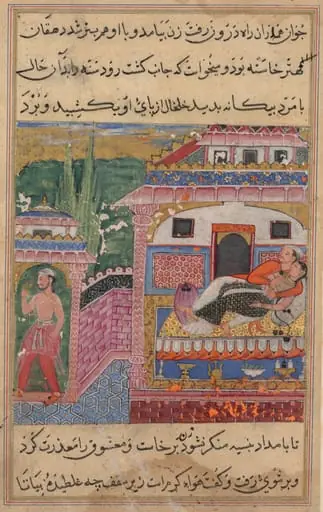 The farmer, father of the son with the deceitful wife, steals away with her anklet while she is in bed with her lover, from a Tuti-nama (Tales of a Parrot): Eighth Night
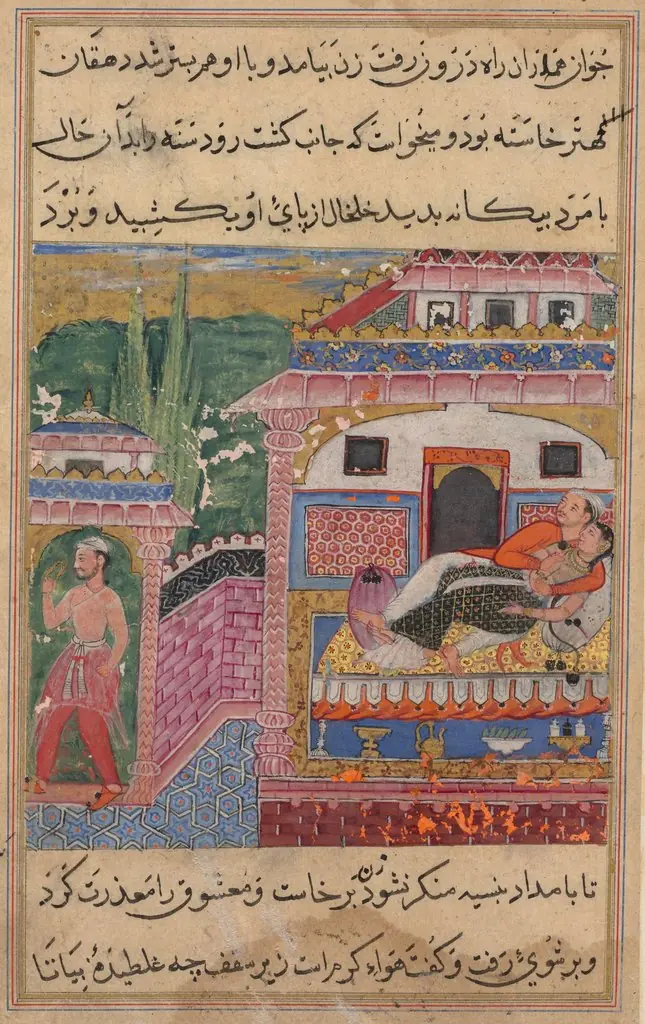 The deceitful wife persuades her husband to sleep in the same place where she had previously slept with her lover, from a Tuti-nama (Tales of a Parrot): Eighth Night
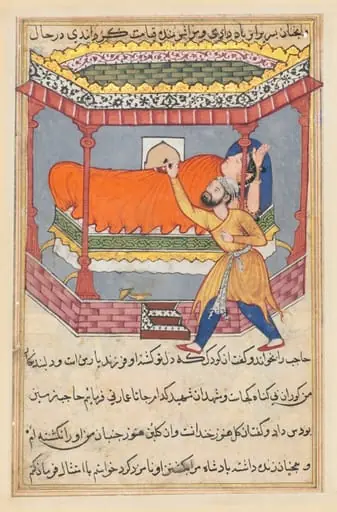 The king places the talisman on his sleeping wife, from a Tuti-nama (Tales of a Parrot): Fiftieth Night
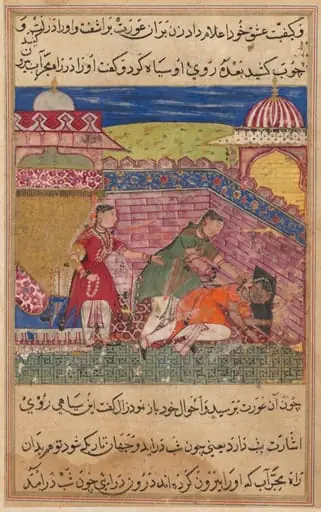 The deceitful wife ejects the procuress after blackening her face, from a Tuti-nama (Tales of a Parrot): Eighth Night
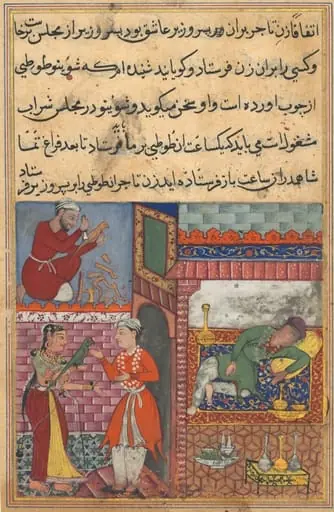 The vizier’s son receives the magic wooden parrot from the wife of the merchant, who is drunk, and has a replica made by a carpenter, from a Tuti-nama (Tales of a Parrot): Tenth Night
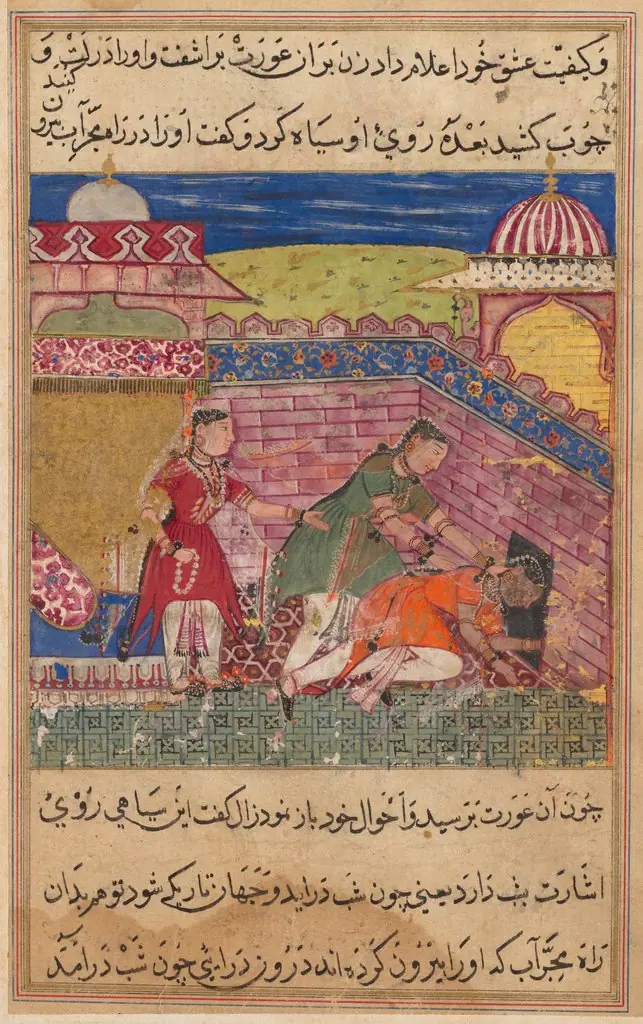 The deceitful wife ejects the procuress after blackening her face, from a Tuti-nama (Tales of a Parrot): Eighth Night
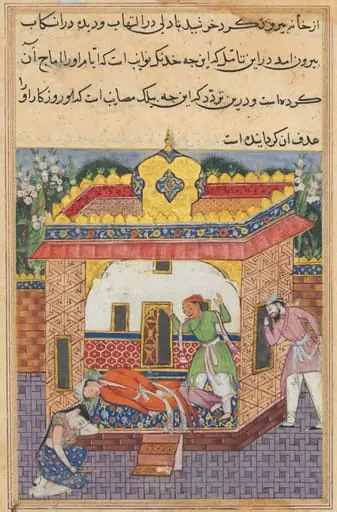 Latif, who has murdered his brother, falsely accuses Khurshid of the deed, from a Tuti-nama (Tales of a Parrot): Thirty-second Night
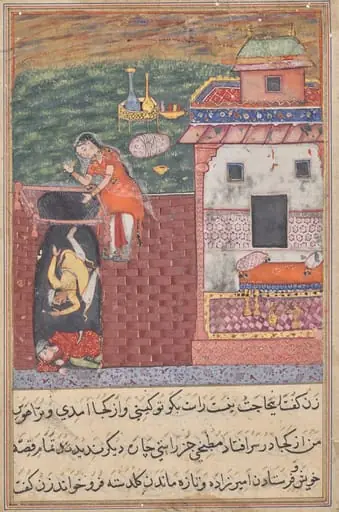 The two cooks, who attempt to seduce the warrior’s loyal wife, are trapped by her in a cellar, from a Tuti-nama (Tales of a Parrot): Fourth Night
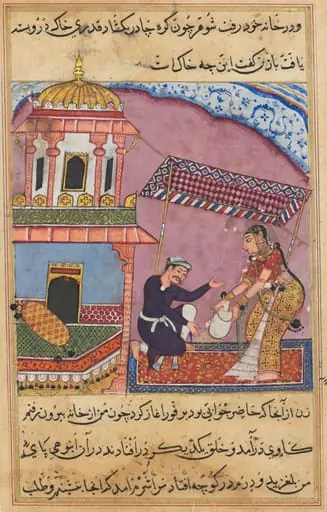 The husband berates his wife for purchasing gravel instead of sugar, from a Tuti-nama (Tales of a Parrot): Eighth Night
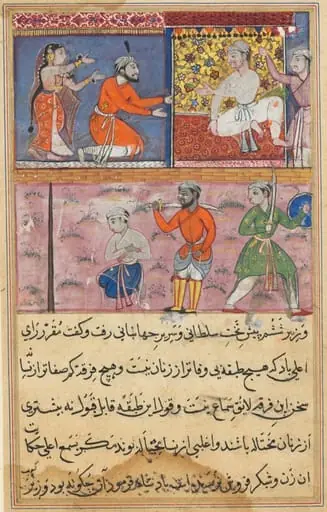 The prince sent back to the place of execution for the sixth time, from a Tuti-nama (Tales of a Parrot): Eighth Night
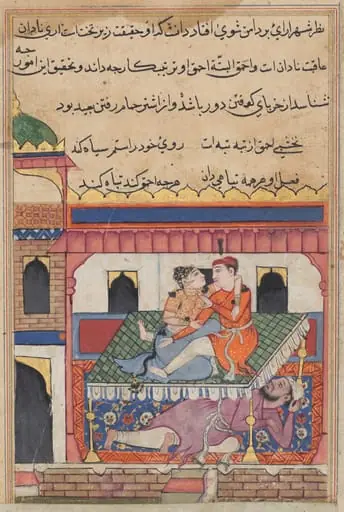 Shahr-Arai and her lover dallying on a bed beneath which is concealed her husband, from a Tuti-nama (Tales of a Parrot): Fortieth Night