Artwork
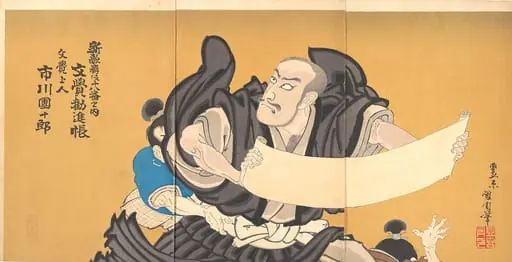
見立三国志 牛若の源治|Ichimura Kakitsu IV as Ushiwaka no Genji in the Kabuki play A Parody of the Romance of the Three Kingdoms (Mitate Sangokushi-Ushiwaka no Genji)
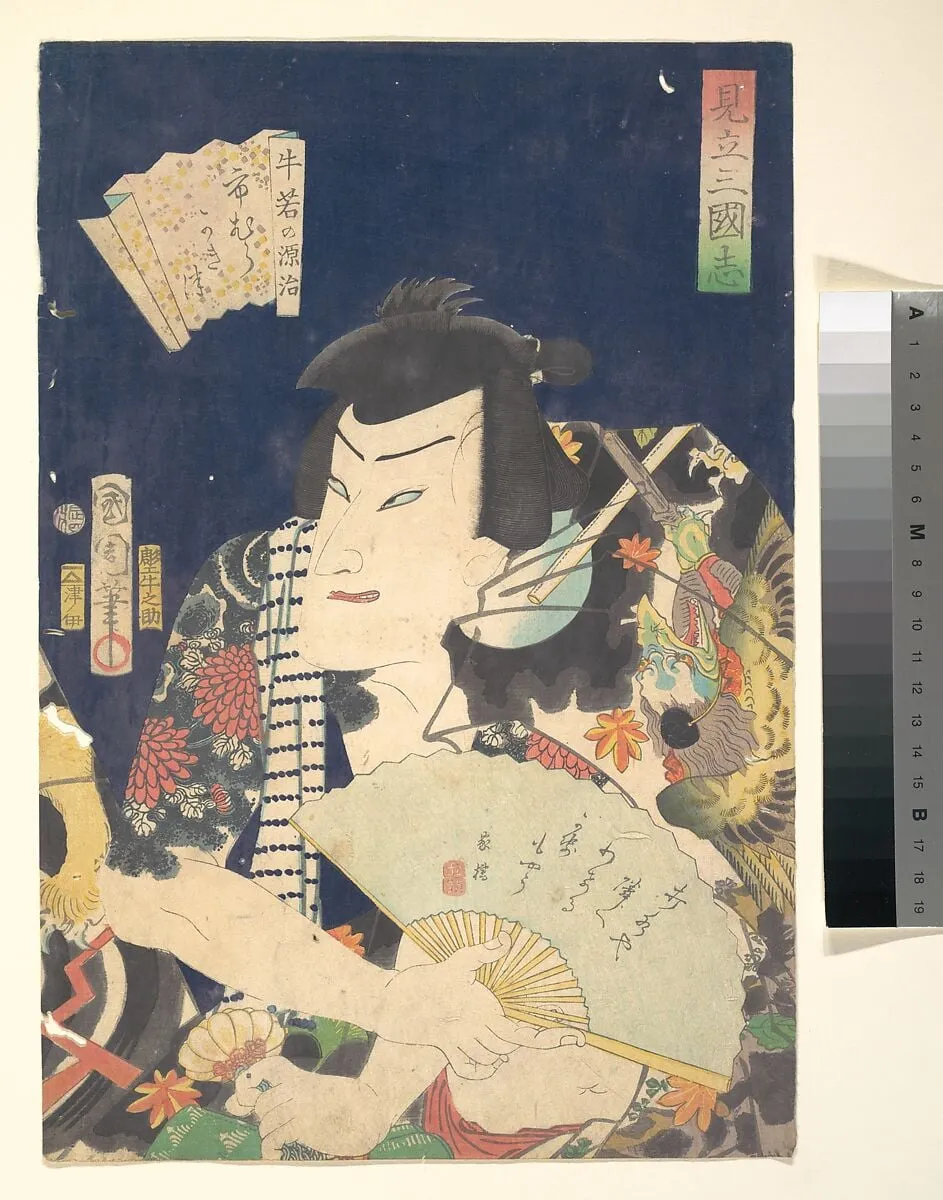
見立三国志 牛若の源治|Ichimura Kakitsu IV as Ushiwaka no Genji in the Kabuki play A Parody of the Romance of the Three Kingdoms (Mitate Sangokushi-Ushiwaka no Genji) is an ink print by the Impressionist artist Toyohara Kunichika. It dates from 4 and is held in the collection of the Metropolitan Museum of Art.
About this work
Overview
Toyohara Kunichika’s woodblock portrait captures the kabuki actor Ichimura Kakitsu IV in the role of Ushiwaka no Genji, a character from the stage adaptation titled A Parody of the Romance of the Three Kingdoms. Executed on a single sheet of a three‑panel format, the print combines ink and vivid pigments on paper and is part of the Metropolitan Museum of Art’s collection.
Subject & Meaning
The image presents the actor in full costume, his face painted white with stark black lines that define the stylised kabuki makeup. He wears a towering black hat adorned with sweeping curls, while his robes blaze with reds, greens and gold, evoking the heroic and flamboyant nature of the legendary figure he portrays.
Technique & Style
Kunichika employs the traditional ukiyo‑e woodblock process, layering ink outlines with multiple color blocks to achieve a rich, saturated palette. The composition is dense, with decorative motifs such as flowers and a fan filling the space, and marginal text and tiny details that echo the bustling visual language of Edo‑period theater prints.
History & Provenance
Created in the late nineteenth century, the print reflects the popularity of actor‑portraiture that documented celebrated performers for a growing urban audience. It entered the Metropolitan Museum of Art’s holdings through acquisition in the twentieth century, where it remains a reference point for the intersection of visual art and kabuki performance.
Context
During the Meiji era, kabuki productions often re‑imagined classic narratives, blending historical epics like the Romance of the Three Kingdoms with contemporary theatrical flair. Prints such as this served both as promotional material for shows and as collectible memorabilia for fans of the actors and the stories they enacted.
Artist & collection


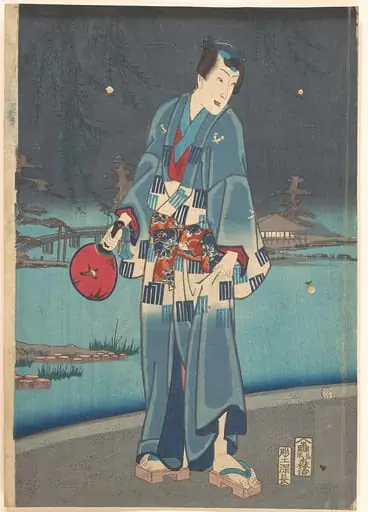 今様源氏紫絹蛍遊び|Modern Genji – Firefly Viewing (Imayō genji shiken hotaru asobi)
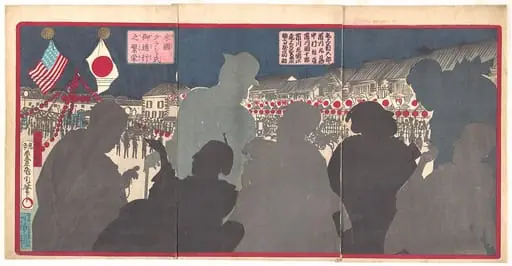 米国グラント氏御通行之繁栄|Splendor of the Procession of General Grant from America (Beikoku Guranto-shi go tsūkō no han'ei)
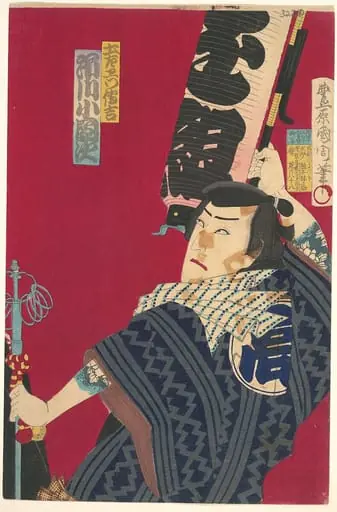 市川左小治 土左衛門伝吉|Ichikawa Sadanji as Dozaemon Denkichi in a Kabuki Play
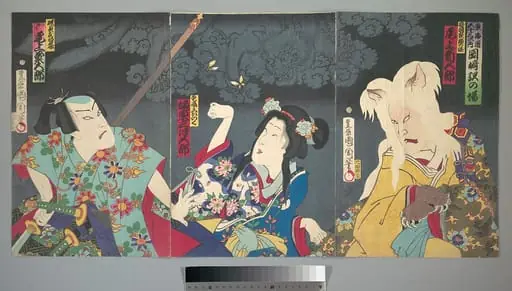 東海寄談音児館|Onoe Kikugorō V as Otowake Neko no ke (Right), Bandō Mitsugorō IV as Aishō Michinoku (Center), Onoe Kikugorō V as Isogai Mibunosuke (Left) in the Kabuki play Tōkai Kidan Nekomata Yashiki
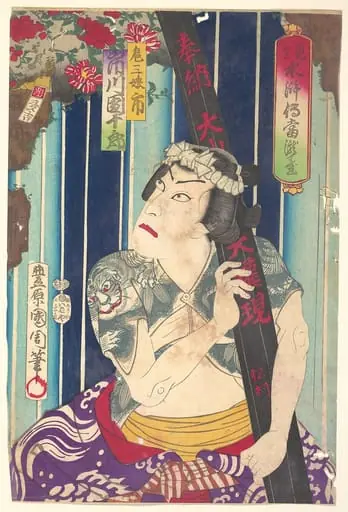 Untitled
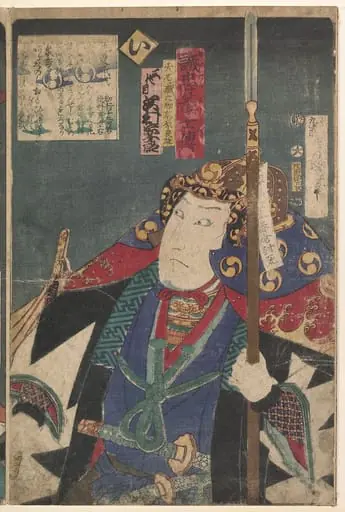 Untitled
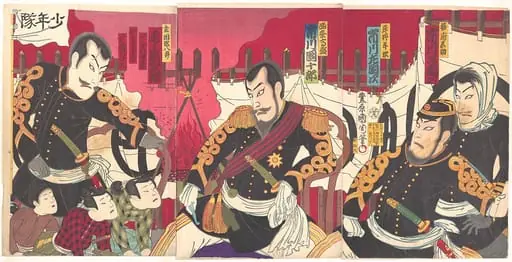 「摂府真助」「市川子團次」「岸野年秋 市川左團次」 「西条高盛 市川團十郎」 「倉田進八郎 尾上菊五郎」「正太郎 中村仲太郎」「孫市 尾上菊之介」「徳丸 市川幸作」西南雲晴朝東風|Ichikawa Kodanji as Seppu Shinsuke, Ichikawa Sadanji as Kishino Toshiaki, Ichikawa Danjūrō as Saijō Takamori, Onoe Kikugorō as Kurata Shinpachirō, Nakamura Chūtarō as Shōtarō, Onoe Kikunosuke as Magoichi, and Ichikawa Kōsaku as Tokumaru in the play Okige no kumo harau asa gochi
 Untitled
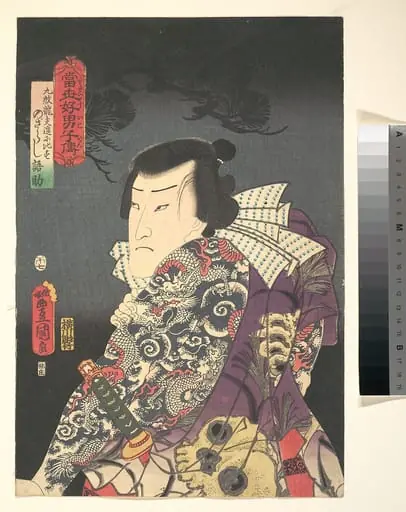 当世好男子伝」松 「九紋竜支進に比すのざらし語助」三代目市川市蔵|The Actor Ichikawa Ichizō III as Nozarashi Gosuke, likened to Shi Jin the Nine Dragoned (Kyūmonryū Shishin ni hisu), from the “Pine” triptych of the series A Modern Water Margin (Tōsei suikoden)
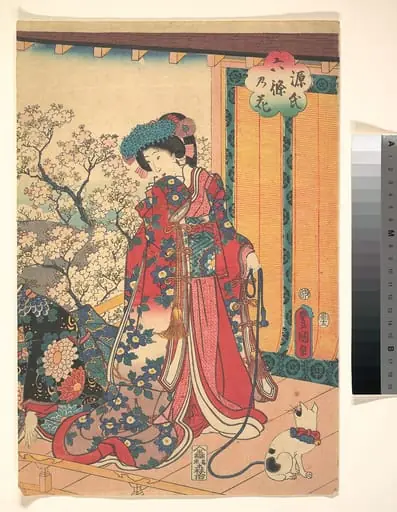 Untitled
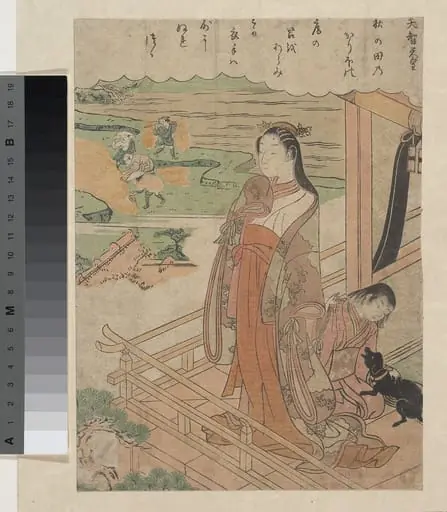 百人一首 天智天皇|Sympathy
 Untitled
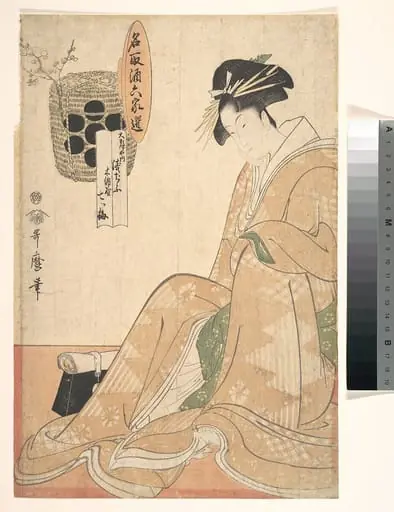 名取酒六家選 大もんぢや内浅じふ 木綿屋七ッ梅|A Courtesan
 Untitled
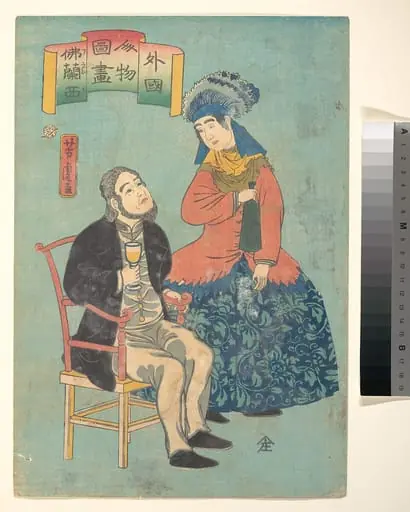 外国人物図畫仏蘭西|France, from the series Pictures of People from Foreign Lands (Gaikoku jinbutsu zuga)
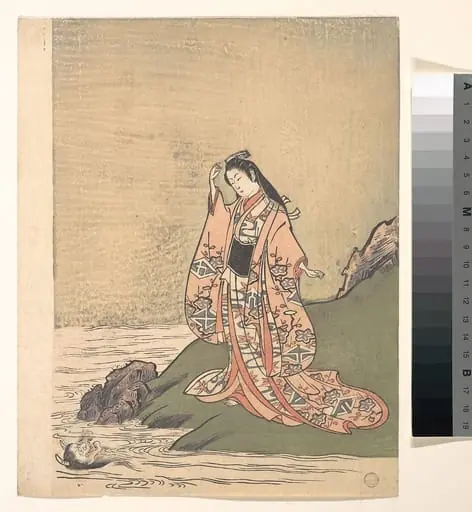 Untitled
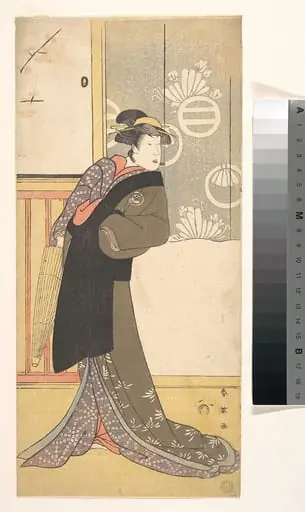 Untitled
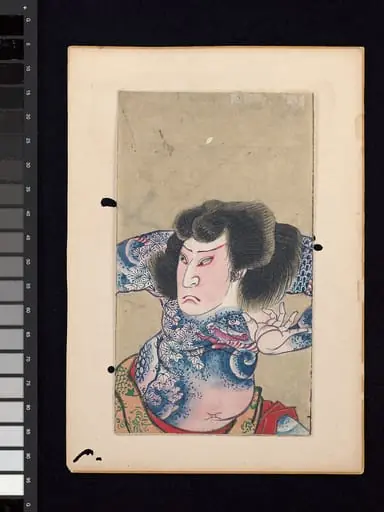 Untitled
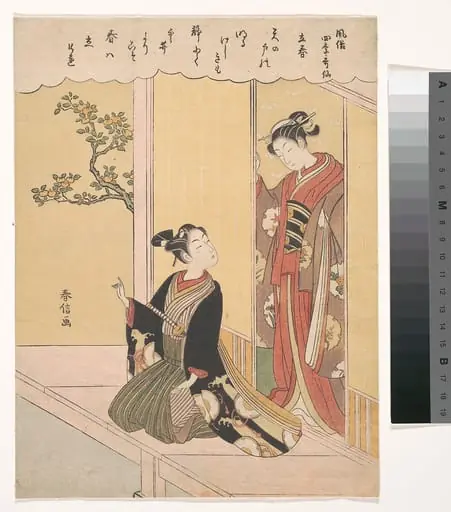 鈴木春信画「風俗四季歌仙 立春」|The First Day of Spring (Risshun), from the series Fashionable Poetic Immortals of the Four Seasons (Fūzoku shiki Kasen)
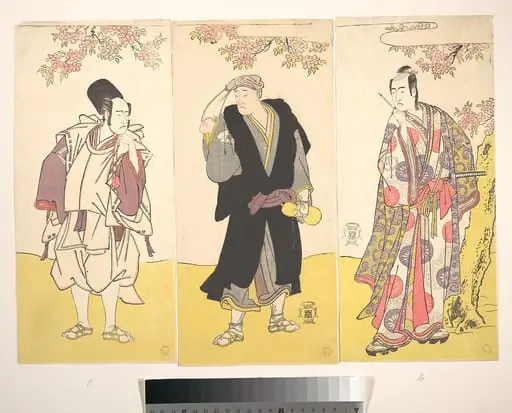 三代目市川八百藏・初代目尾上松助・三代目澤村宗十郎|Kabuki Actors Ichikawa Yaozō III, Onoe Matsusuke I, and Sawamura Sōjūrō III