Artwork
Veue de Larcenal
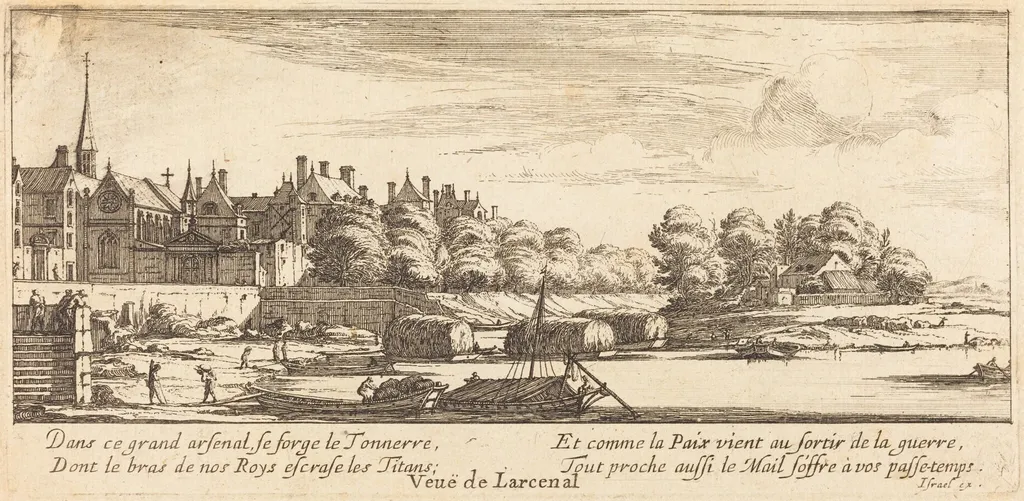
Veue de Larcenal is an ink print by the Baroque artist Israël Silvestre. It dates from 1655 and is held in the collection of the National Gallery of Art.
About this work
Overview
Created in 1655, *Vue de Larcenal* is an etching by the French draftsman Israel Silvestre, whose reputation rests on detailed topographical prints. The image presents a tranquil riverside tableau, featuring a church with a prominent steeple, a walled garden with trees and a modest structure, and a small boat near the water’s edge, populated by figures engaged in everyday activity.
Subject & Meaning
The composition captures a peaceful moment along a riverbank, juxtaposing architectural elements with human presence. While an accompanying inscription alludes to themes of war and peace, the visual narrative emphasizes daily life and the calm of the landscape, inviting contemplation of the coexistence of built and natural environments.
Technique & Style
Silvestre employed the etching process, using fine incised lines to render subtle gradations of light and shadow. This approach yields a sense of depth that approaches three‑dimensionality, allowing intricate details of the church, garden walls, and figures to emerge with clarity across the printed surface.
History & Provenance
Orphaned early, Silvestre was raised in Paris by an uncle who was both an etcher and a print‑seller linked to Jacques Callot. After extensive travels through France, Spain, and Italy, he produced prints derived from his on‑site sketches, often issuing them singly or as part of thematic series. *Vue de Larcenal* reflects this practice of documenting notable locales.
Context
The work belongs to a broader 17th‑century French tradition of topographical prints that served both artistic and documentary purposes. By focusing on recognizable architecture and landscape, Silvestre’s etchings catered to collectors interested in visual records of cities, towns, and countryside scenes.
Artist & collection
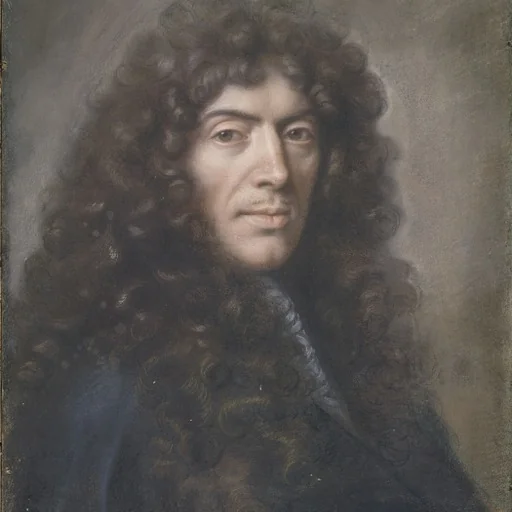
Artist
Israel Silvestre (13 August 1621 in Nancy – 11 October 1691 in Paris), called the Younger to distinguish him from his father, was a prolific French draftsman, etcher and print dealer who specialized in topographical views and perspectives…

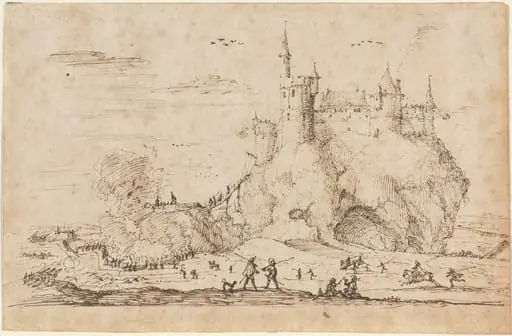 Castle under Siege
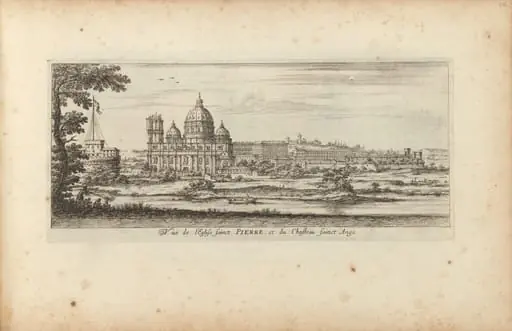 Vuë de l'Eglise sainct Pierre, et du Chasteau Sainct Ange
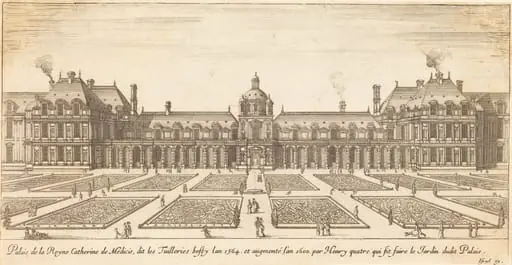 Palais de la Reyne Catherine de Medicis
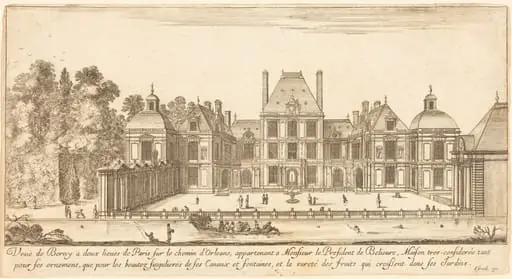 Veue de Berny a deux lieues de Paris sur le chemin d'Orléans
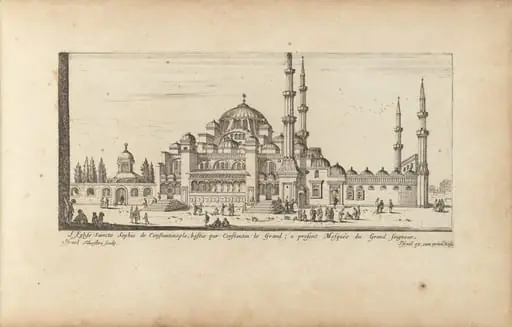 L'Eglise Saincte Sophie de Constantinople, bastie par Constantin le Grand; a present Mosquée du Grand seigneur
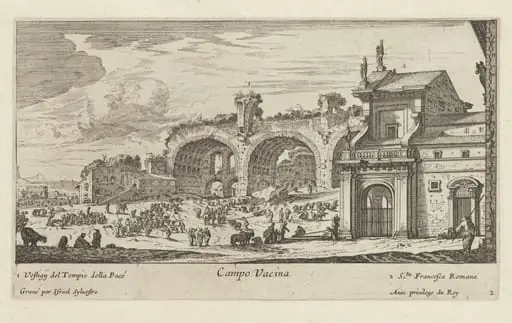 Campo Vacina
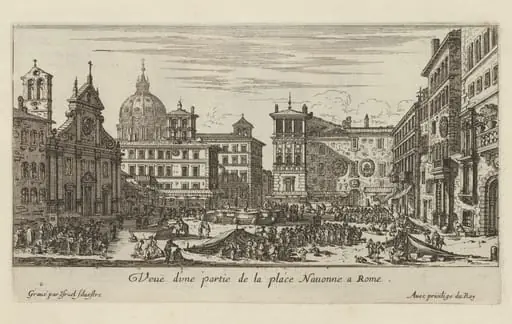 Veuë d'une partie de la place Navonne a Rome
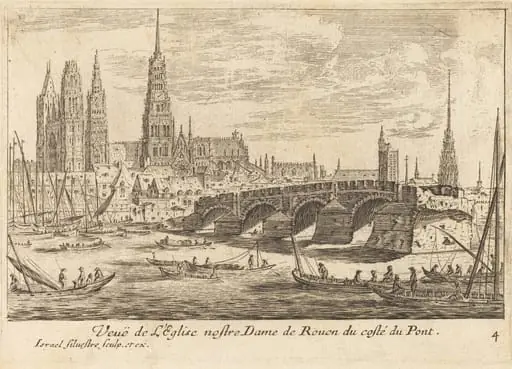 Veue de l'Eglise nostre Dame de Rouen
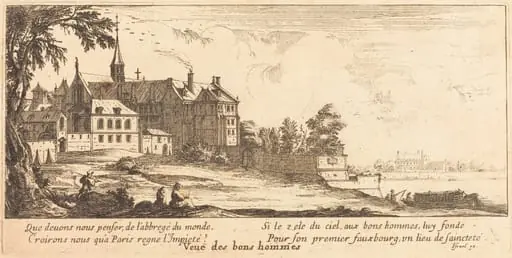 Veue des bons hommes
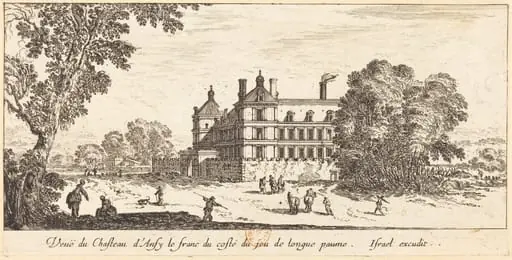 Veue du Chasteau d'Ansy le franc du coste du jeu de longue paume
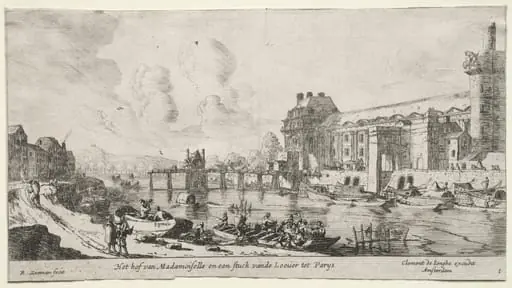 Views of Paris: View of the Louvre and the Tuileries
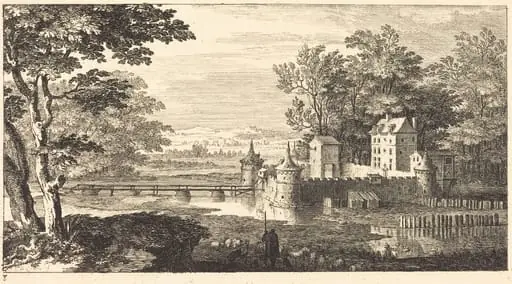 Landscape with Chateau
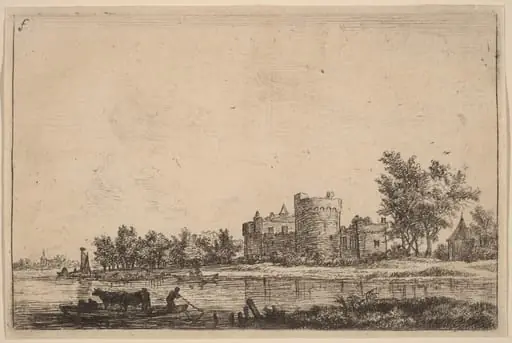 Two Cows on a Ferry
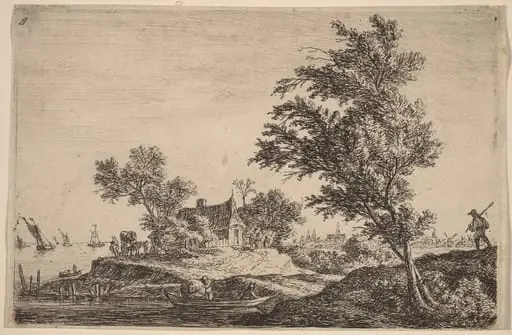 Traveler Passing Two Large Trees
 Plan general du Chasteau et petit Parc de Vincennes
 Vue de l'Etang de Fontainebleau
 Vue du chateau de Madrid
 Landscape
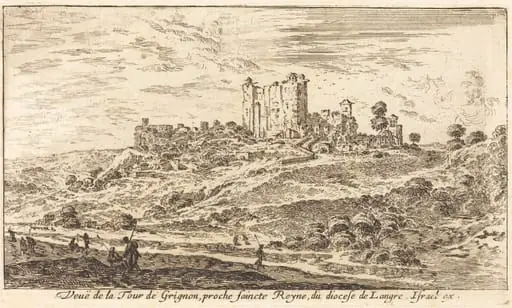 Veue de la Tour de Grignon