Artwork
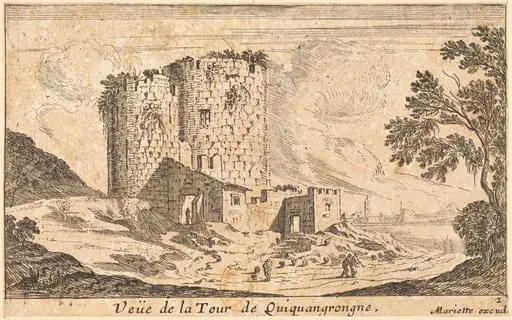
Veue de la Tour de Grignon
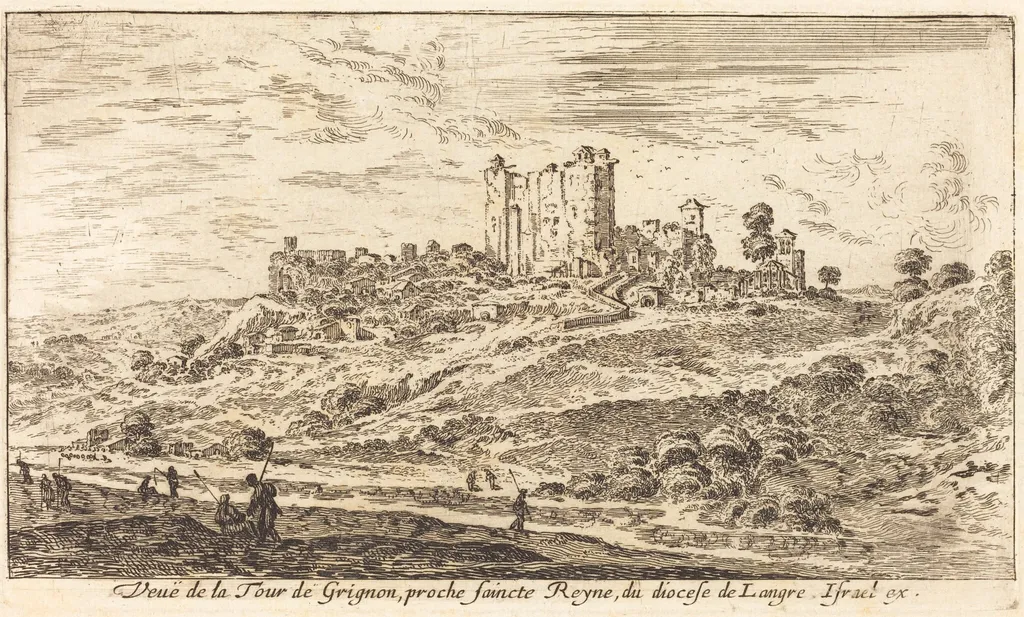
Veue de la Tour de Grignon is an ink print by the Baroque artist Israël Silvestre. It dates from 1650 and is held in the collection of the National Gallery of Art. This 1650 etching by Israel Silvestre presents a topographical study of the Tour de Grignon, a structure near Sainte-Reyne in France.
About this work
Overview
This 1650 etching by Israel Silvestre presents a topographical study of the Tour de Grignon, a structure near Sainte-Reyne in France.
This 1650 etching by Israel Silvestre presents a topographical study of the Tour de Grignon, a structure near Sainte-Reyne in France. Silvestre, trained in Paris under his uncle’s guidance, specialized in meticulous renderings of architectural and landscape subjects. The print exemplifies his approach to capturing spatial relationships and local detail, often publishing such works as independent sheets or within larger series.
Subject & Meaning
The composition centers on the Tour de Grignon, positioned atop a hill overlooking a riverside settlement. Dense clusters of buildings line the shore, while figures engage in everyday activities—rowing boats or standing along the water’s edge. The scene functions as both a record of place and an exploration of human presence within a natural and built environment, reflecting Silvestre’s interest in documenting notable sites.
Technique & Style
Silvestre employed etching to achieve fine linear detail, using acid to incise a metal plate. The method allowed for controlled variation in line weight, evident in the textured depiction of choppy water and atmospheric sky. His handling of perspective reinforces spatial depth, while the interplay of light and shadow guides the viewer’s eye across the scene. The technique underscores the precision characteristic of his topographical work.
History & Provenance
Created in 1650, the print emerges from Silvestre’s broader practice of producing views of French, Spanish, and Italian locales. His training under his uncle, a print-seller connected to Jacques Callot, shaped his early career. While the specific early ownership of this etching remains unrecorded, it aligns with Silvestre’s output of individually issued or serialized prints, intended for collectors and patrons interested in accurate representations of notable sites.
Context
Silvestre’s work reflects the 17th-century demand for topographical prints, which served both documentary and decorative purposes. His travels across Europe enabled him to compile sketches later translated into etchings, catering to an audience that valued visual records of landscapes and architecture. The Tour de Grignon, like other subjects he depicted, was likely chosen for its local significance or picturesque qualities.
Legacy
Silvestre’s etchings contributed to the development of French topographical printmaking, offering precise and accessible images of sites that might otherwise remain visually undocumented. His works preserve details of 17th-century architecture and urban organization, providing later viewers with insights into the period’s built environments. The prints also exemplify the technical and aesthetic possibilities of etching as a medium.
Artist & collection
Artist
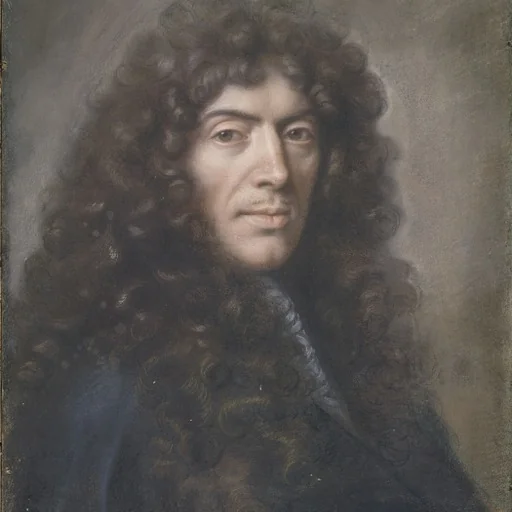
Israel Silvestre (13 August 1621 in Nancy – 11 October 1691 in Paris), called the Younger to distinguish him from his father, was a prolific French draftsman, etcher and print dealer who specialized in topographical views and perspectives…

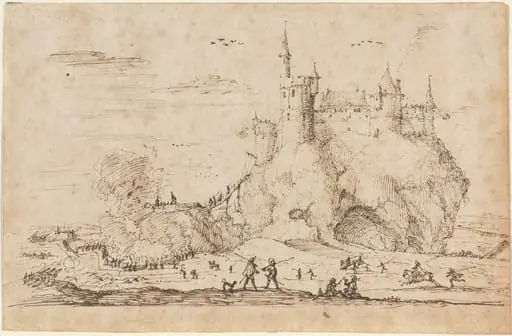 Castle under Siege
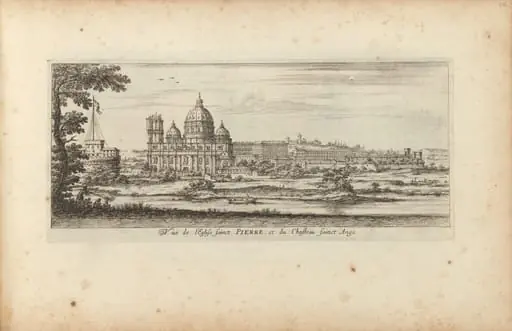 Vuë de l'Eglise sainct Pierre, et du Chasteau Sainct Ange
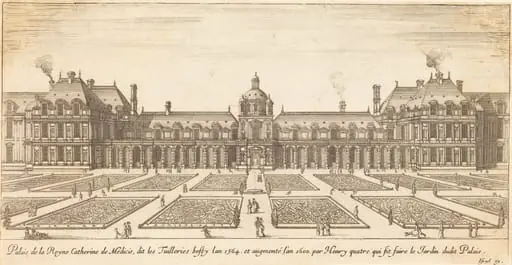 Palais de la Reyne Catherine de Medicis
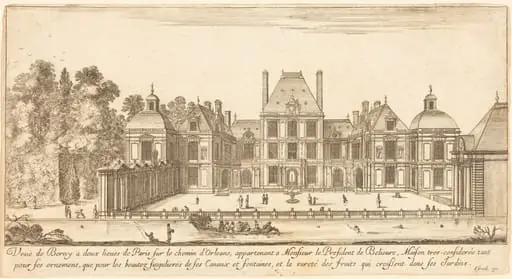 Veue de Berny a deux lieues de Paris sur le chemin d'Orléans
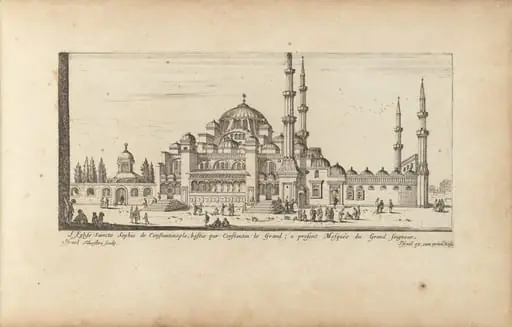 L'Eglise Saincte Sophie de Constantinople, bastie par Constantin le Grand; a present Mosquée du Grand seigneur
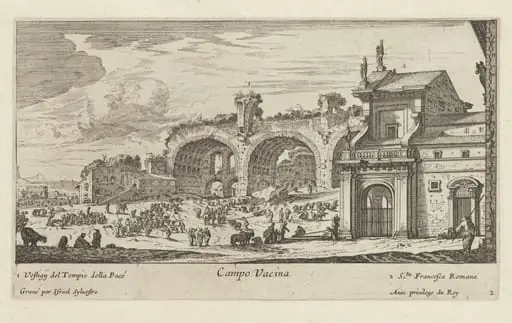 Campo Vacina
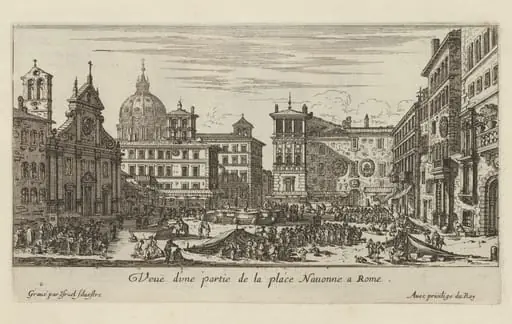 Veuë d'une partie de la place Navonne a Rome
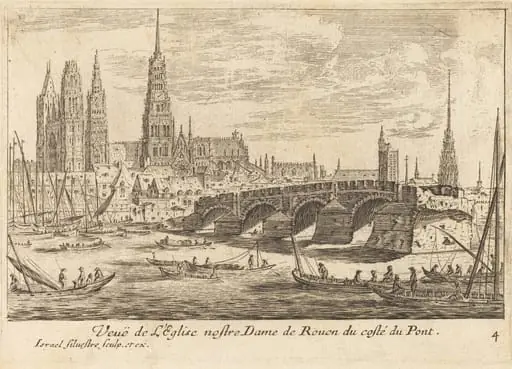 Veue de l'Eglise nostre Dame de Rouen
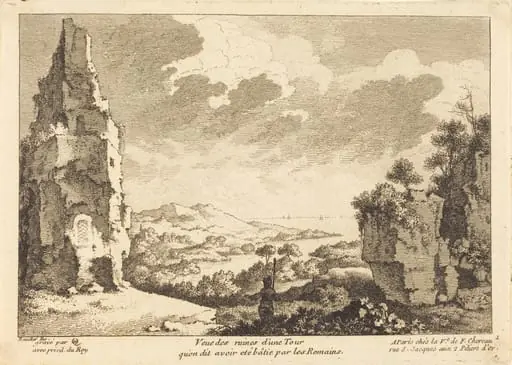 Veue des ruines d'une Tour qu'on dit avoir ete batie par les Romains
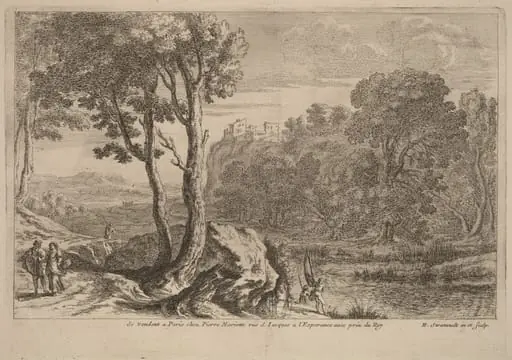 The Fishermen
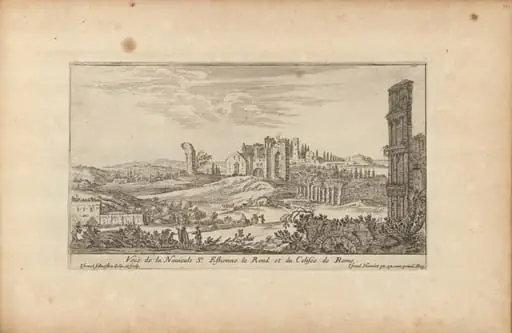 Veuë de la Navicule St. Estienne le Rond et du Colisée de Rome
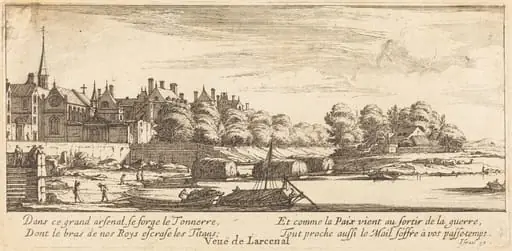 Veue de Larcenal
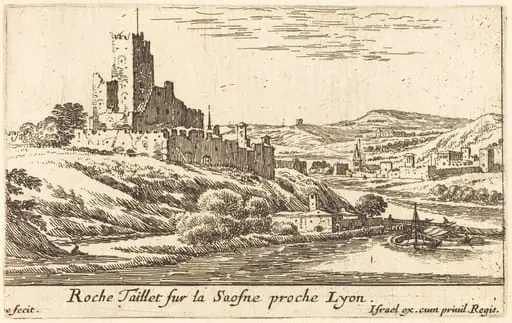 Roche Taillet sur la Saosne proche Lyon
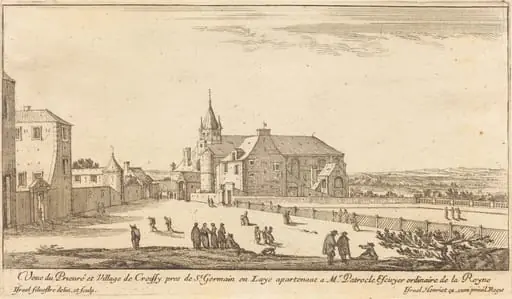 Veue de Prieure et Village de Croissy
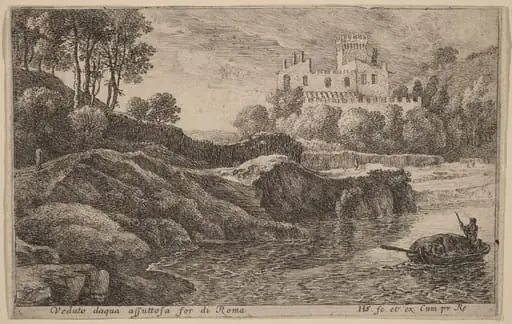 View of the Aqua Acetosa
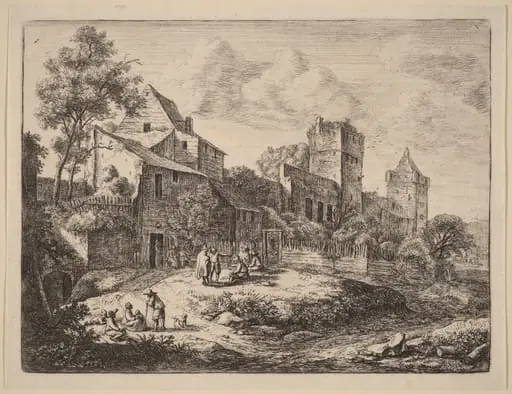 Square in Front of an Inn
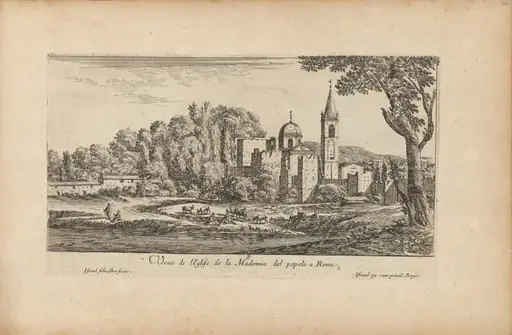 Veue de l'Eglise de la Madonna del popolo à Rome
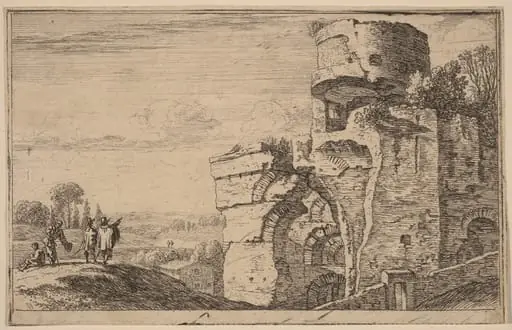 Ruins on the Palatine Hill
 Veuë du Colisée du Temple du Soleil, et de l'Arc de Titus a Rome
 Veue de la Tour de Quinquangrongne