Artwork
Genealogy of the state of Muscovy
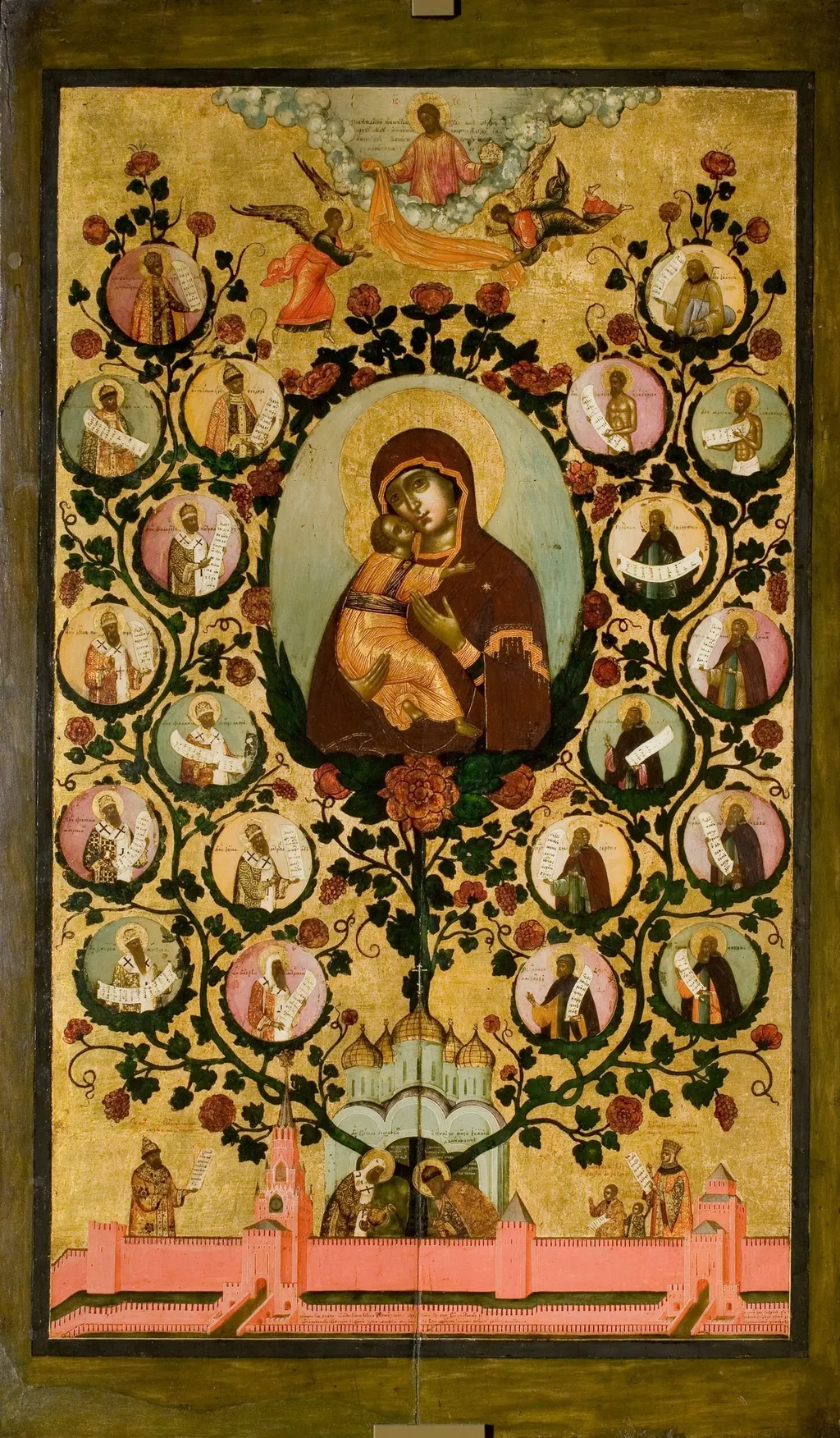
Genealogy of the state of Muscovy is a tempera painting by the Byzantine icon painting artist Simon Ushakov. It dates from 1668 and is held in the collection of the Tretyakov Gallery.
About this work
Overview
Painted in 1668 by Simon Ushakov, this tempera work presents a visual genealogy tracing the lineage of the Muscovite state.
Painted in 1668 by Simon Ushakov, this tempera work presents a visual genealogy tracing the lineage of the Muscovite state. Executed in the traditional Byzantine style, it blends sacred iconography with emerging secular elements. The painting’s scale and complexity reflect its role as both a devotional object and a political statement, commissioned during a period of religious and institutional reform in Russia.
Subject & Meaning
At the center is the Theotokos, depicted as the Virgin Mary holding the Christ Child, symbolizing divine sanction for the Muscovite rulers. Surrounding her are small portraits of tsars, patriarchs, and biblical ancestors, arranged to establish a continuous line of sacred authority from biblical times to the contemporary Russian state. The floral border reinforces the theme of divine growth and legitimacy.
Technique & Style
Ushakov employed tempera, using egg yolk as a binder for pigments, a method traditional in Russian icon painting. The palette is restrained, dominated by earth tones—browns, muted greens, and soft pinks—creating a solemn, contemplative atmosphere. Fine brushwork and delicate detailing in the smaller portraits demonstrate technical precision, while the composition adheres to hierarchical spatial conventions of Byzantine art.
History & Provenance
Commissioned during the reforms of Patriarch Nikon, the painting reflects efforts to standardize religious imagery and reinforce state-church unity. Ushakov, a court artist and member of the Kremlin icon-painting workshop, produced it as part of a broader cultural project. It entered the Tretyakov Gallery’s collection in the late 19th century, where it remains as a key example of 17th-century Russian religious art.
Context
Created amid the Orthodox Church’s efforts to centralize doctrine and suppress regional variations, the painting served to visually affirm Moscow’s claim as the Third Rome. Ushakov’s work straddled tradition and innovation: while rooted in Byzantine models, his inclusion of identifiable historical figures marked a shift toward secular portraiture, aligning with broader trends in Muscovite political culture.
Legacy
Ushakov’s *Genealogy of the State of Muscovy* influenced later Russian religious art by integrating historical portraiture into sacred frameworks. It stands as a testament to the fusion of spiritual authority and political identity in early modern Russia. Though stylistically conservative, its compositional ambition and symbolic density made it a reference point for subsequent iconographers and state-sponsored imagery.
Artist & collection
Artist
Simon (Pimen) Fyodorovich Ushakov (Russian: Симон (Пимен) Фёдорович Ушаков; c. 1626 – 25 June 1686) was a Russian icon painter. Together with Fyodor Zubov and Fyodor Rozhnov, he is associated with the comprehensive…

 Maica Domnului cu Pruncul
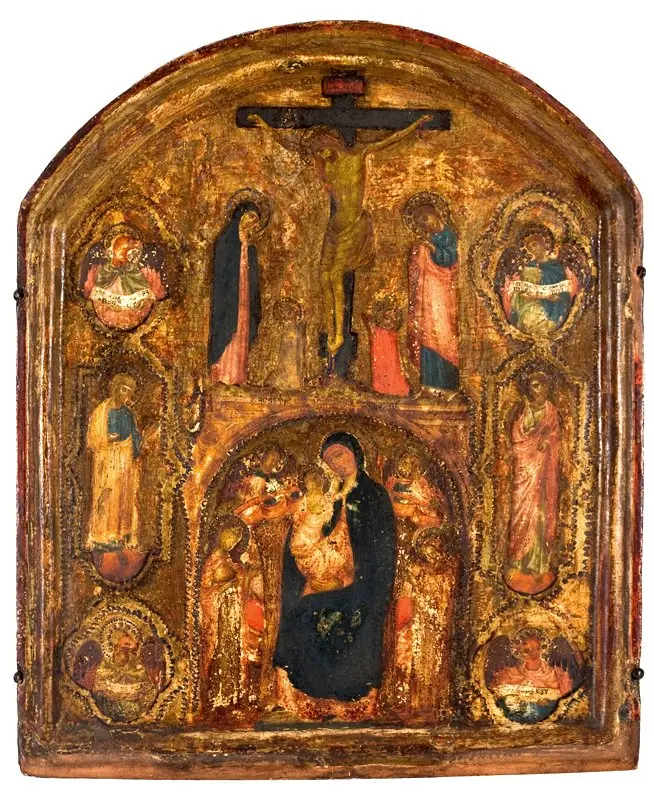 The Crucifixion with the Virgin and Child among Saints, Angels and the Symbols of the Evangelists
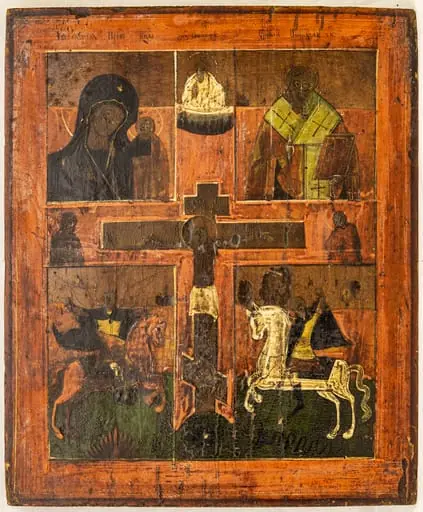 Icoană în patru registre, în centru Iisus Crucificat
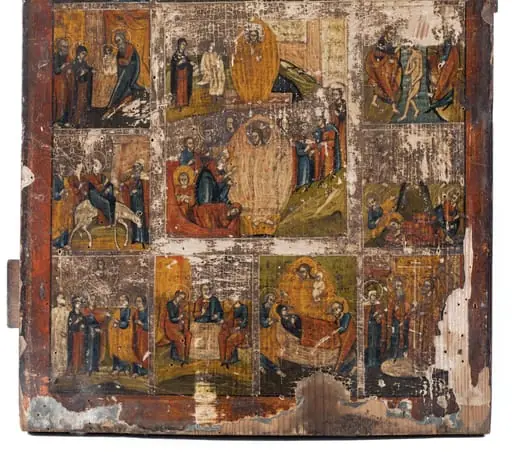 Scene biblice
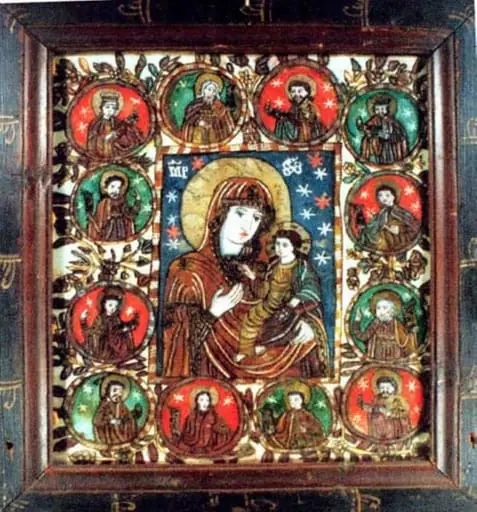 Maica cu Pruncul cu Apostolii
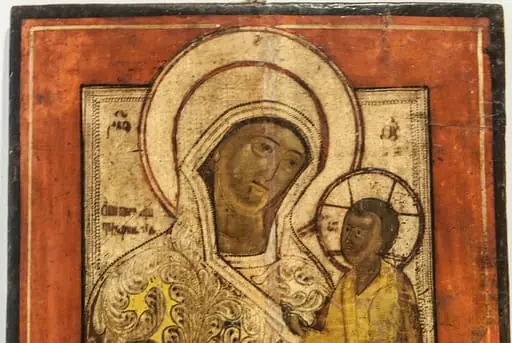 Icoan in
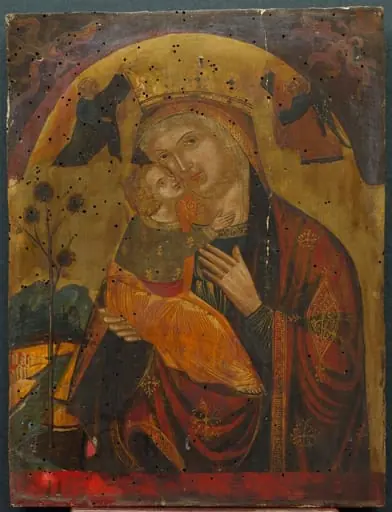 Virgin and Child
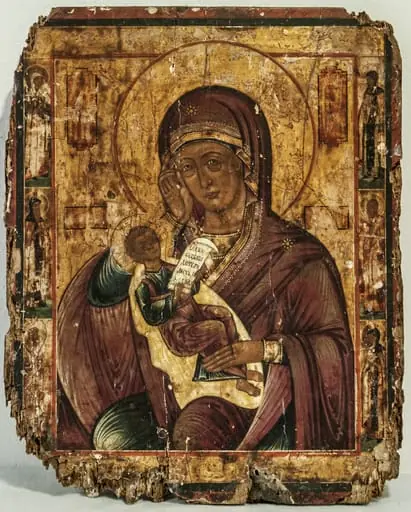 Icoana „Potolește întristările noastre” o înfățișează pe Maica Domnului ținând mâna stângă sub cap, care este ușor înclinat. Aceasta sugerează că Născătoarea de Dumnezeu ascultă lacrimile și rugăciunile tuturor credincioșilor care apelează la ea, în nevoile, necazurile și întristările lor. Cu mâna dreaptă, Fecioara Maria ține Pruncul Iisus. Mântuitorul ține în mâinile Sale un sul desfăcut, pe care sunt înscrise următoarele cuvinte: „Judecați cu dreptate, arătând milă unii față de alții, nu jigniți văduvele și orfanii și nu țineți răutate în inima voastră față de fratele vostru”.Maica este pictată pe fondul foiței aurite, cu o expresie blândă. Înveșmântată cu maforion grena, cu borduri aurite , dublate de o dantelărie fină, albă, pe umeri și frunte stelele întreitei feciorii. Stola verde cu galon lat aurit, la gât și mâneci. Pruncul , culcat în brațele Maicii pe o pânză albă, are o expresie tristă. Picioarele desculțe. Nimb cruciger, cu însemnele consacrate. Nimbul Fecioarei, trasat cu roșu, depășește bordura lată, aurită. Lateral, pe chenar, câte trei sfinți, în picioare. Se poate descifra doar inscripția de pe aureola sfântului Zosim și a sfintei Xenia(stânga). Inscripțiile referitoare la Iisus și Maica Domnului sunt casetate pe fondul aurit. Linia desenului foarte fină, drapajul veșmintelor bogat, cu unele accente de repictare(tușele de alb). Icoana prezintă degradări ale stratului pictural(eroziuni, clacuri, desprinderi, lacune, vernis îmbătrânit) și ale suportului(atac xilofag mai vechi care a fragilizat lemnul)
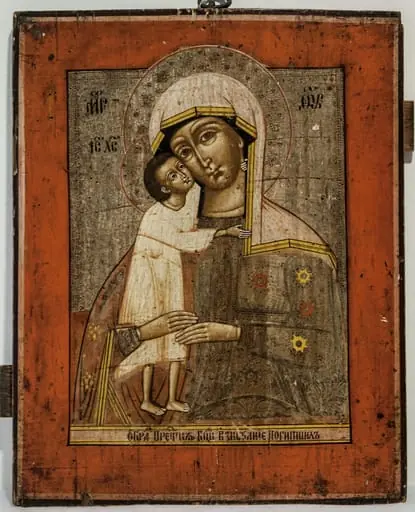 Maica Domnului, tipul Eleusa(dulcea sărutare, Mângâietoarea) îl ține strâns în brațe pe Iisus prunc, în picioare, cu obrazul lipit de cel al Maicii și o mână petrecută pe după gâtul ei. Iisus are nimbul cruciger, marcat cu motive florale punctate, Este înveșmântat într-o tunică 3/4 alb-gălbuie, care lasă să i se vadă picioarele. Maica poartă un maforion alb, bordat cu galben, partea din stânga a veșmântului din foiță metalică, decorată cu motive florale pictate cu roșu și galben, motive fitomorfe și geometrice incizate. În partea dreaptă veșmântul este roșu, decorat cu motive florale de culoare galbenă, foița fiind prezentă doar la mânecă. Nimbul decorat cu motive florale punctate în stratul de foiță metalică, Figurile modelate din culoare (alb, ocru) cu accente grafice fine, albe, sunt specifice icoanei rusești. Cromatica: alb, galben, roșu, auriu, brun, negru, foiță metalică, chenar roșu deschis, mărginit de două linii în nuanțe de roșu deschis și brun.Chenarul interior dublat de două șiruri de cercuri ștanțate în foiță. Inscripția dispusă pe o bandă dreptunghiulară în partea de jops a icoanei : Icoana Preacuratei Fecioare Prevăzând Jertfa (lui Iisus).
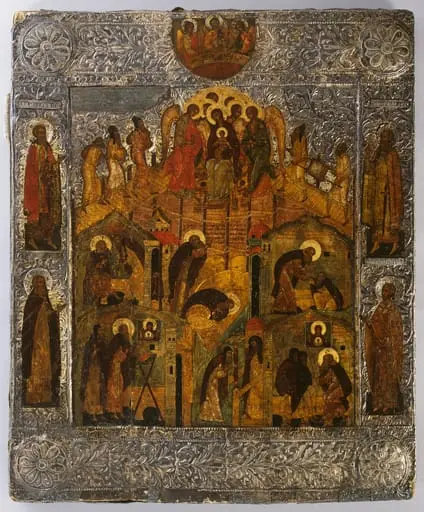 Neitsyt Marian ilmestyminen pyhittäjä Aleksanteri Syväriläiselle kirkon perustuksella
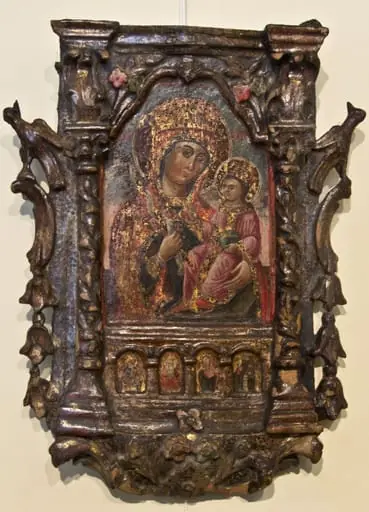 Maica Domnului cu pruncul Rodon to amaranton; Trandafirul neveștejit
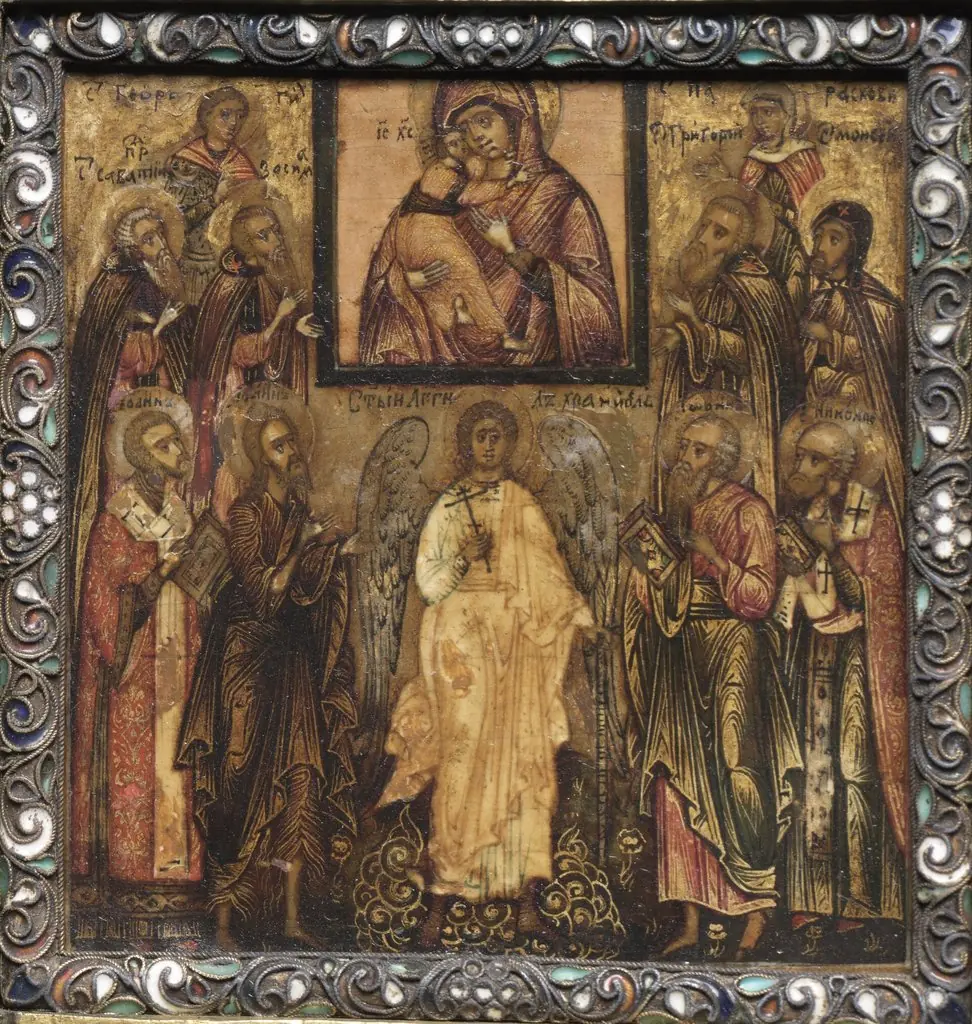 Portable Triptych Icon: Adoration of the Miracle-Working Icon of the Vladimir Mother of God