Artwork
Children sleeping in the Himalayas
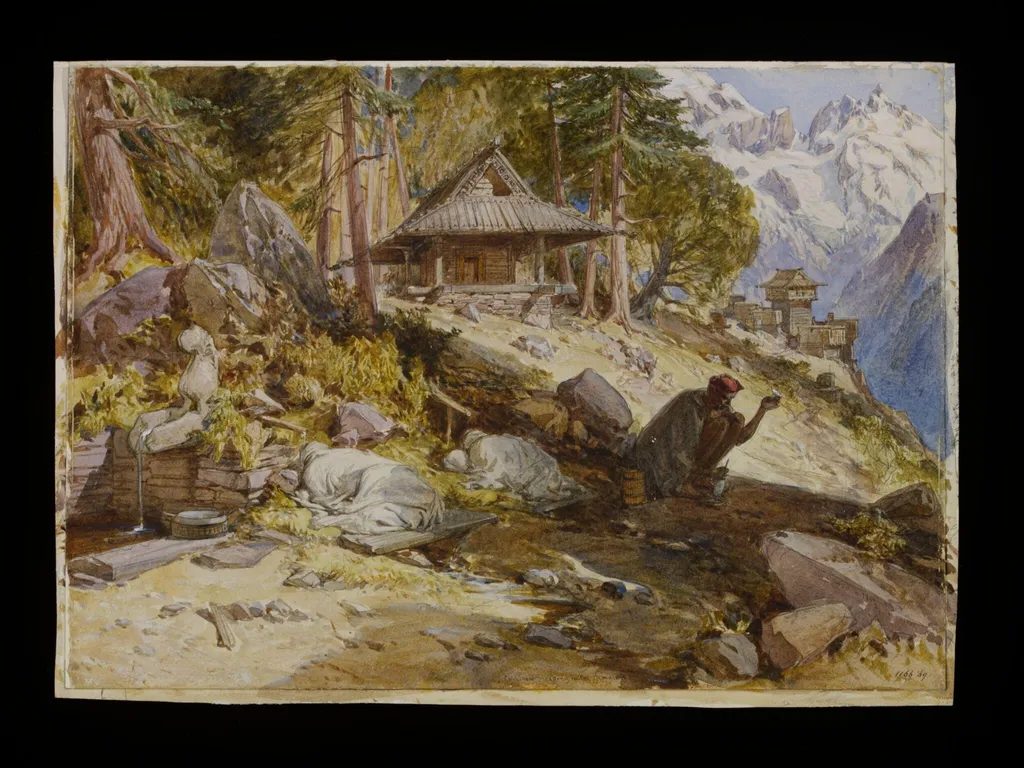
Children sleeping in the Himalayas is a paint painting by the British Romanticist artist William Simpson. It dates from 1864 and is held in the collection of the Victoria and Albert Museum. Created in 1864, this watercolour depicts two young children lying on the floor of a modest Himalayan village.
About this work
This painting shows two kids asleep on the floor. They’re wrapped in simple cloth, one with a bare foot sticking out. The light comes from an unseen window, casting soft shadows.
Simpson made this in 1864. It’s quiet and humble—no drama, just a real moment. He was a war artist before this, but here he paints peace instead.
Look up the Victoria and Albert Museum to see more of Simpson’s work.
Overview
Created in 1864, this watercolour depicts two young children lying on the floor of a modest Himalayan village. They are swaddled in plain cloth, one with a bare foot protruding, while a diffused light from an unseen window casts gentle shadows across the scene, emphasizing its quiet intimacy.
Subject & Meaning
The composition captures a fleeting, everyday moment of rest, offering a glimpse into the domestic life of rural Himalayan inhabitants. By focusing on the simple act of sleep, the work conveys a sense of vulnerability and tranquility, contrasting with the artist’s earlier war-related subjects.
Technique & Style
Simpson employed delicate pencil sketches made during his Indian travels as the basis for the final watercolour, which he completed after returning to London. His use of luminous washes and careful attention to light creates a soft atmospheric effect, while the precise rendering of fabric and anatomy reflects his background in detailed observational drawing.
History & Provenance
The artist, a noted British war correspondent and watercolourist, traveled extensively in India after arriving in Calcutta in 1859. The study for this painting was likely drawn on site, then refined in his London studio. The work entered the collection of the Victoria and Albert Museum, where it remains part of their 19th‑century British art holdings.
Context
Produced during a period when Simpson was shifting from documenting conflict to portraying peaceful scenes, the painting reflects a broader Victorian interest in exotic locales and the lives of ordinary people within the British Empire. Its serene tone offers a counterpoint to the tumultuous events of the 1857 Indian Rebellion that had previously occupied his attention.
Artist & collection