Artwork
Jacques III, Roy d'Angleterre (James III, Prince of Wales)
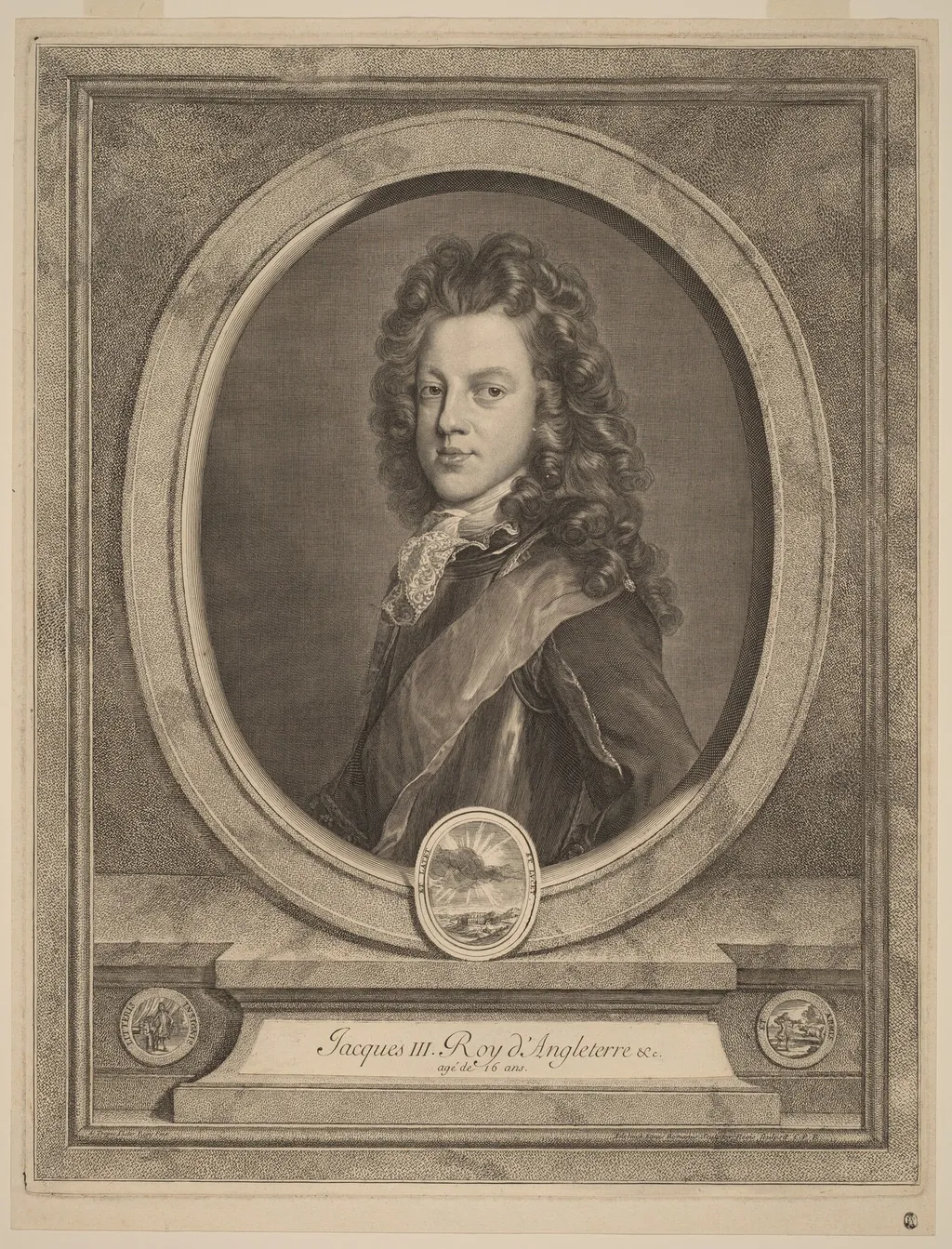
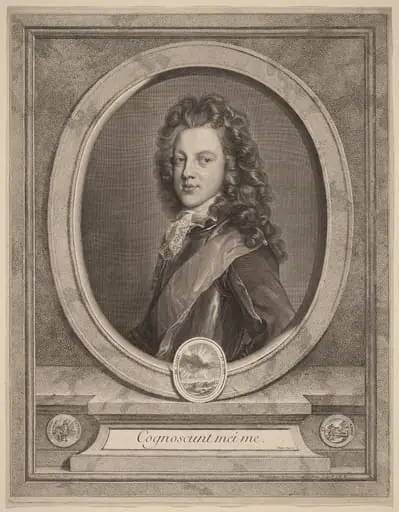
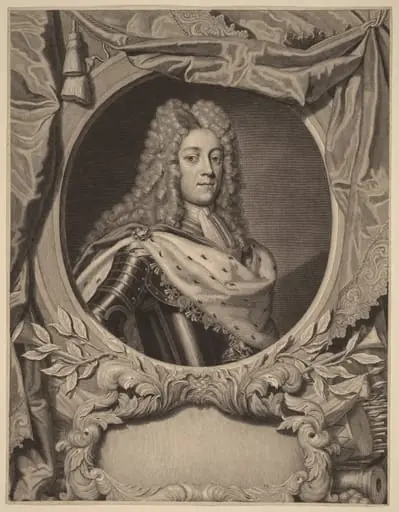
Jacques III, Roy d'Angleterre (James III, Prince of Wales) is an ink print by the Baroque artist Gerard Edelinck. It dates from 1706 and is held in the collection of the National Gallery of Art. This 1706 print by Gérard Edelinck depicts James Francis Edward Stuart, the exiled Jacobite claimant to the British throne, as 'James III.
About this work
Overview
This 1706 print by Gérard Edelinck depicts James Francis Edward Stuart, the exiled Jacobite claimant to the British throne, as 'James III.
This 1706 print by Gérard Edelinck depicts James Francis Edward Stuart, the exiled Jacobite claimant to the British throne, as 'James III.' Executed in etching and engraving on laid paper, the portrait follows the tradition of reproductive printmaking, translating painted likenesses into widely distributable images. Edelinck, a Flemish artist active in Paris, specialized in precise, detailed engravings of notable figures, helping to circulate political and royal imagery across Europe during a period of dynastic conflict.
Subject & Meaning
The subject is James Francis Edward Stuart, then in his late teens, portrayed with the regal bearing of a monarch despite his lack of actual rule. His title, 'King of England,' reflects Jacobite propaganda asserting his legitimate succession. The inclusion of small landscape and allegorical scenes at the base reinforces his claim to sovereignty and divine right. His solemn expression and elaborate attire convey dignity and authority, countering his political marginalization in exile.
Technique & Style
Edelinck employed fine-line etching and engraving to render texture and form with clarity. The crisp contours of the sitter’s lace collar, curled hair, and embroidered coat demonstrate mastery of metalplate techniques. The surrounding vignettes—landscape and two small scenes—are rendered with equal precision, integrating symbolic elements without overwhelming the central portrait. The use of laid paper enhances the tonal subtlety, typical of high-quality 18th-century reproductive prints.
History & Provenance
Created in 1706, the print emerged during the height of Jacobite efforts to sustain support for the Stuart cause after the Glorious Revolution. Edelinck, a favored engraver of the French court, likely produced it under royal patronage or for sympathetic collectors. Its circulation among European nobility and Jacobite sympathizers helped maintain the Stuart claim’s visibility. The print’s survival in institutional collections attests to its historical significance as political imagery.
Context
In early 18th-century Europe, engraved portraits served as tools of political messaging, especially for exiled dynasties. With Britain under Hanoverian rule, Jacobites relied on visual propaganda to legitimize their cause. Edelinck’s work aligned with French support for the Stuarts, reflecting broader continental alliances. The format—formal bust with subsidiary scenes—followed established conventions in royal portraiture, blending realism with symbolic narrative to reinforce legitimacy.
Legacy
Edelinck’s engraving remains a key example of how printmaking sustained political narratives beyond the reach of painting. It preserved the visual identity of the Jacobite heir for generations, influencing later depictions of Stuart claimants. As a specimen of French engraving at its technical peak, it also contributed to the broader European tradition of reproductive art, bridging artistic craftsmanship and historical documentation.
Artist & collection
Artist
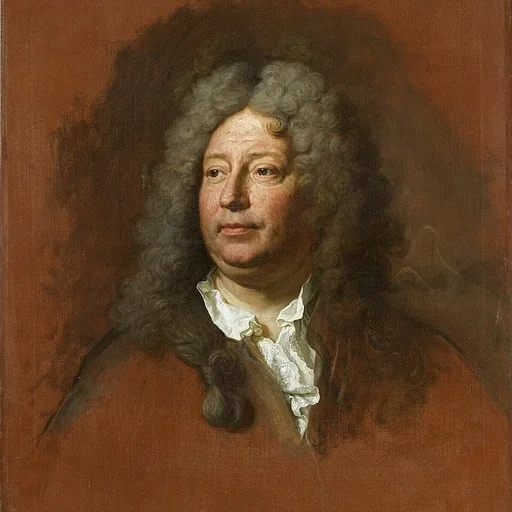
Gérard Edelinck (20 October 1640 (baptized) – 2 April 1707) was a copper-plate engraver and print publisher of Flemish origin, who worked in Paris from 1666 and became a naturalized French citizen in 1675.