Artwork
John Locke
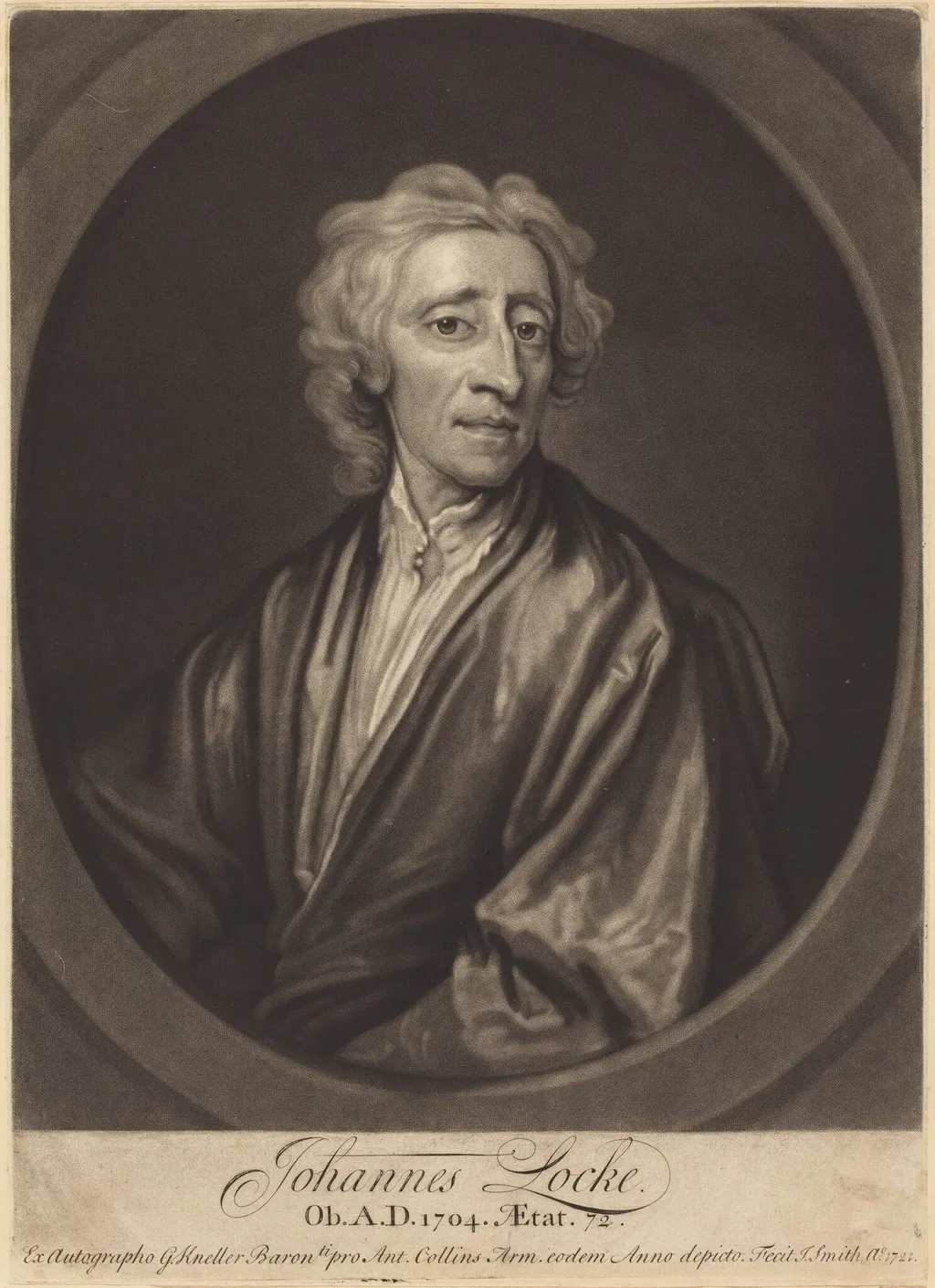
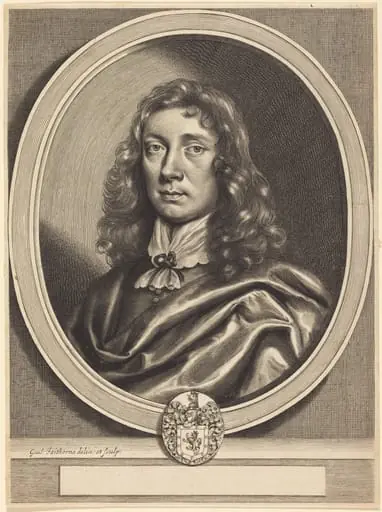
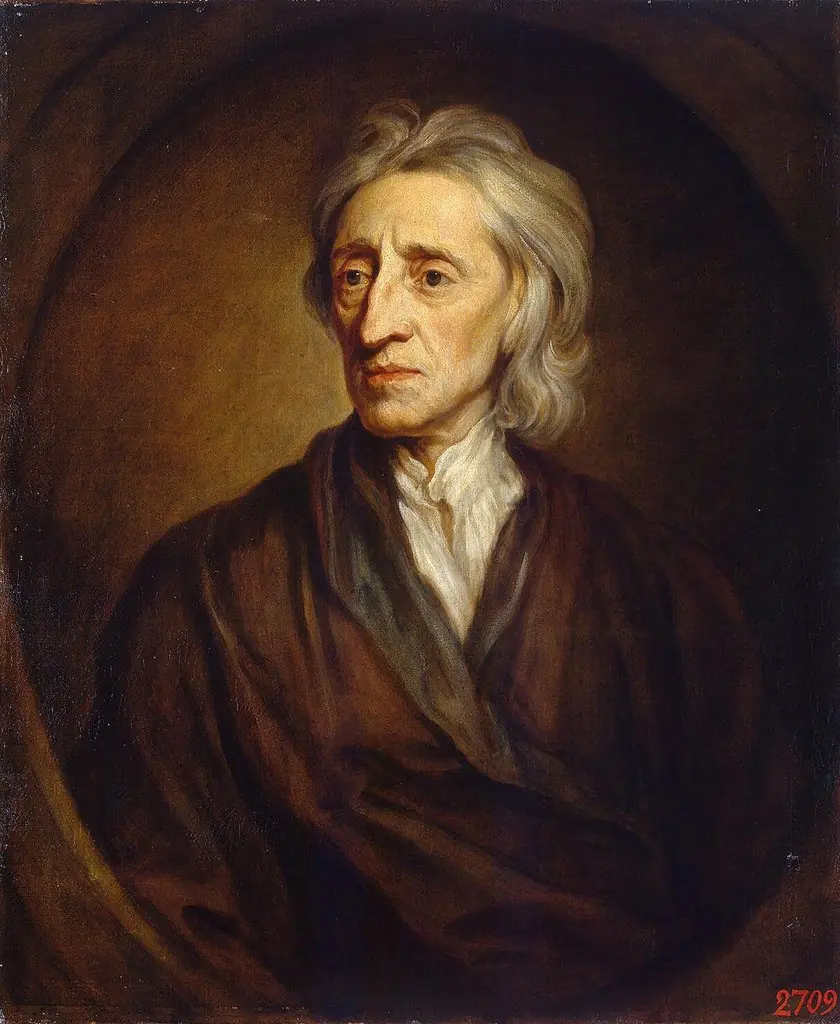
John Locke is an ink print by the Baroque artist John Smith. It dates from 1721 and is held in the collection of the National Gallery of Art.
About this work
Overview
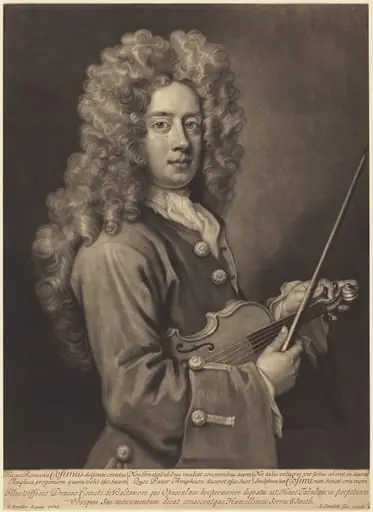
This mezzotint portrait, produced in 1721 by John Smith, depicts the English philosopher John Locke. Executed in black and white on laid paper, it presents a formal, full-length view of the subject against a dark, unadorned background. The technique emphasizes tonal gradations to model the figure, a hallmark of mezzotint’s capacity for rich shadow and subtle light transitions.
Subject & Meaning
The portrait captures Locke in middle age, his expression composed and introspective, reflecting his reputation as a thinker.
The portrait captures Locke in middle age, his expression composed and introspective, reflecting his reputation as a thinker. Dressed in a high-collared dark coat with hands clasped before him, his posture conveys dignity and intellectual restraint. The Latinized inscription 'Johannes Locke' aligns with scholarly conventions of the period, reinforcing his status as a figure of European intellectual authority.
Technique & Style
John Smith employed mezzotint, a printmaking method that achieves depth through textured copper plates scraped and burnished to hold ink. The portrait’s soft transitions from deep black to mid-gray model Locke’s face and hands with sculptural precision. The plain background isolates the figure, directing focus to the nuanced chiaroscuro that defines his features without relying on line or outline.
History & Provenance
Created shortly after Locke’s death in 1704, this print was part of a broader 18th-century effort to circulate portraits of prominent thinkers. Though based on earlier painted likenesses, Smith’s version reflects the conventions of posthumous commemoration rather than direct observation. Its production in 1721 suggests demand for Locke’s image among educated audiences in Britain and beyond.
Context
In the early 1700s, mezzotints were widely used to reproduce portraits of philosophers, statesmen, and artists for a literate public. Locke’s ideas on government and epistemology had gained influence across Europe, making his image a symbol of Enlightenment thought. This print served not merely as representation but as a material artifact of intellectual legacy.
Legacy
The print contributed to the visual canon of Locke, shaping how later generations perceived his persona. Though not an original likeness, its widespread reproduction helped standardize his iconography in textbooks and collections. Its restrained aesthetic aligns with Enlightenment ideals of reason over ornament, reinforcing the philosopher’s enduring cultural presence.
Artist & collection