Artwork
Old Cawnpoor
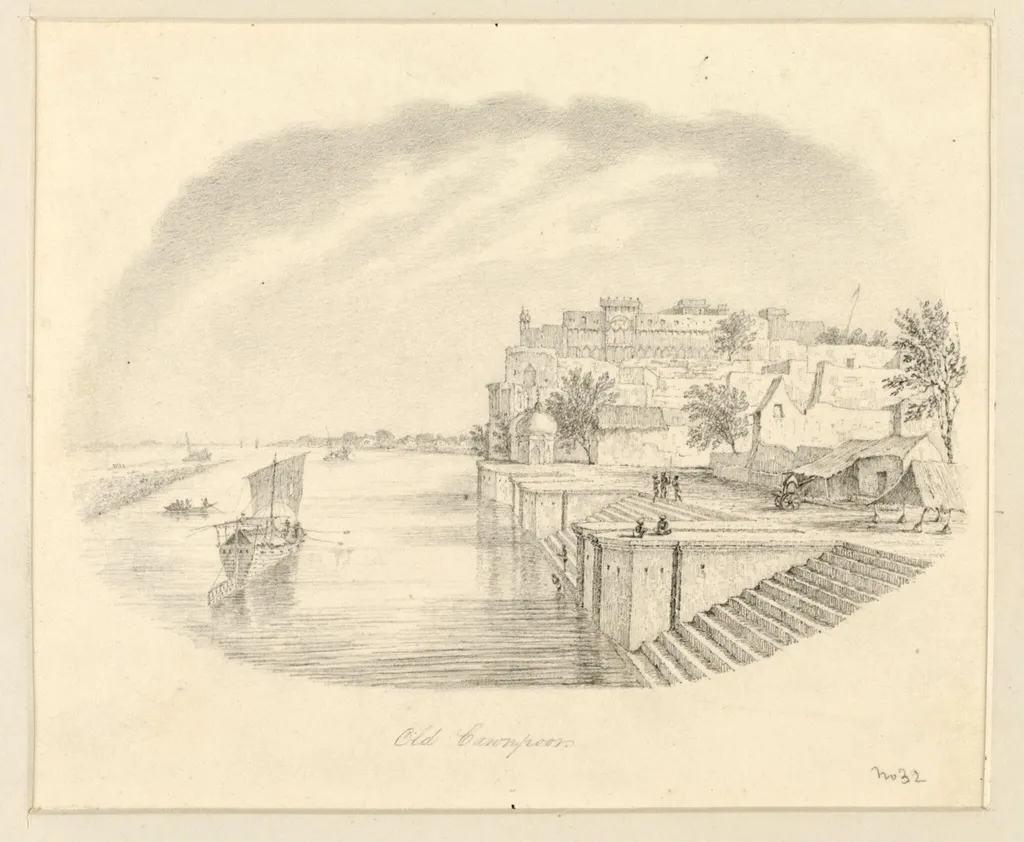
Old Cawnpoor is a drawing by the Romanticist artist Robert Captain Smith. It dates from 1830 and is held in the collection of the Victoria and Albert Museum.
About this work
Overview
This pencil drawing, dated 1830, is one of 65 illustrations compiled by Robert Captain Smith during his travels in northern India between 1828 and 1832.
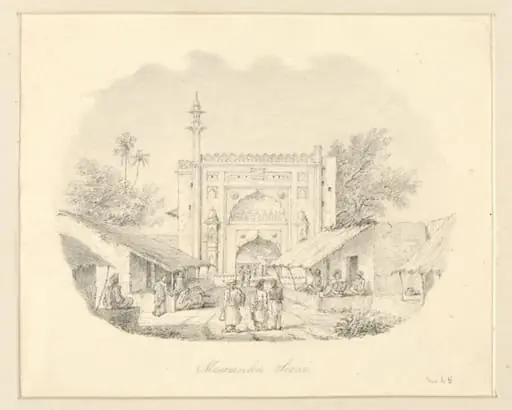
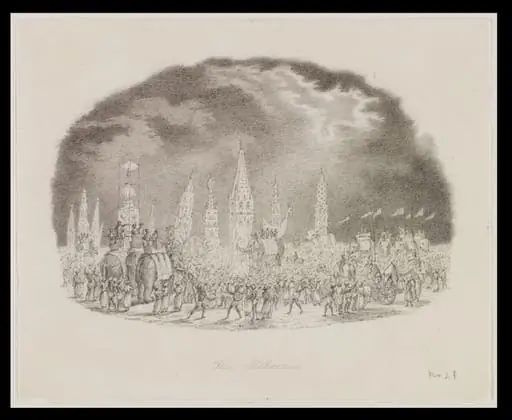
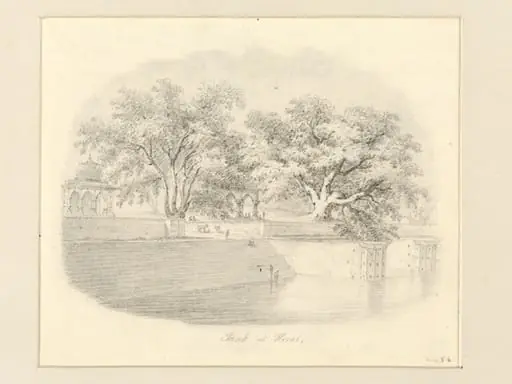
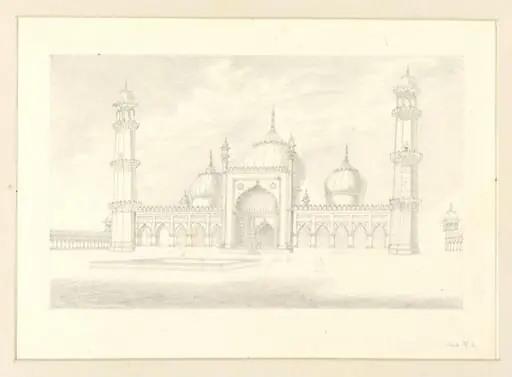
This pencil drawing, dated 1830, is one of 65 illustrations compiled by Robert Captain Smith during his travels in northern India between 1828 and 1832. Titled Old Cawnpoor, it forms part of an unpublished manuscript later known as the 'Pictorial Journal of Travels in Hindustan.' Smith, a retired British army officer, created these sketches as personal records of his journey along the Ganges, capturing landscapes and architecture with quiet observation rather than grandeur.
Subject & Meaning
The scene depicts a riverside landing at Cawnpore, with stone steps descending to the water and a small boat approaching a low platform. Behind, a mix of structures—some aged, others newer—clings to a gentle slope, crowned by a domed building near the shore. Tents and scattered trees suggest transient or local habitation. The composition conveys a sense of everyday activity, emphasizing the river’s role as a lifeline for transport, trade, and community life in early 19th-century northern India.
Technique & Style
Smith employed delicate, light pencil strokes to suggest texture and form without heavy shading. The water’s surface is rendered with faint, wavy lines; the steps and building surfaces are indicated with minimal hatching, leaving much to the viewer’s perception. The pale sky and soft contours create a muted, atmospheric tone. The style is observational rather than idealized, prioritizing accuracy of place over dramatic effect, consistent with the journal’s documentary intent.
History & Provenance
After retiring to Ireland in 1833, Smith continued refining his travel journal until 1845, though it remained unpublished. The drawing entered institutional collection in 1915, when it was donated by W. M. Biden of Hampton-on-Thames. Its inclusion in the museum’s holdings reflects its value as a firsthand visual record of colonial-era India, preserved not as official documentation but as a private, personal archive of a British officer’s experiences.
Context
Smith’s drawings emerged during a period of heightened British interest in Indian topography and culture, following decades of administrative expansion. Unlike official surveys, his work avoided political or military emphasis, focusing instead on quiet, unremarked moments of daily life. His sketches of Cawnpore, Agra, Delhi, and Lucknow offer a counterpoint to grander imperial narratives, revealing the textures of local existence along the Ganges.
Legacy
Though never published in Smith’s lifetime, the 'Pictorial Journal' survives as a rare, unfiltered glimpse into early 19th-century India through the eyes of a non-professional artist. The drawings are now valued for their understated realism and historical specificity. They contribute to broader scholarly understanding of how British individuals engaged with Indian landscapes outside the framework of colonial documentation or propaganda.
Artist & collection

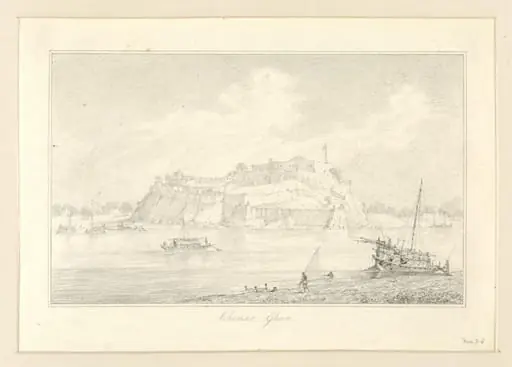 Chunar Ghur
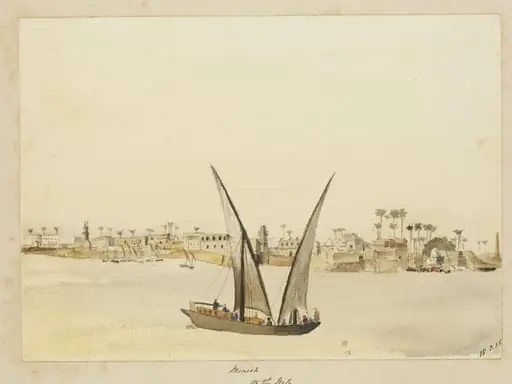 `Minieh On the Nile'
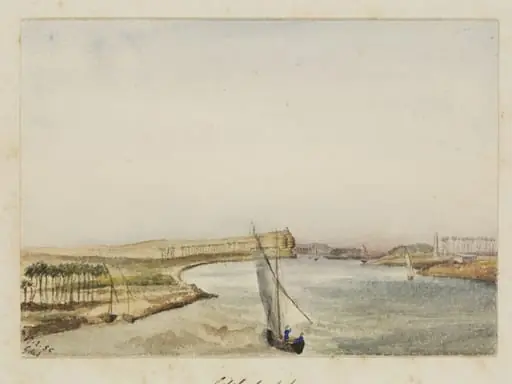 `Gibel-el-dab'
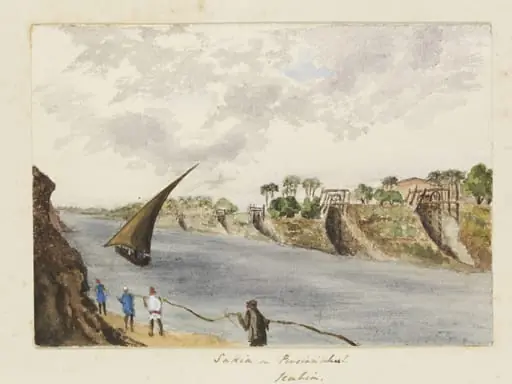 `Sakia or Persian wheel Nubia'
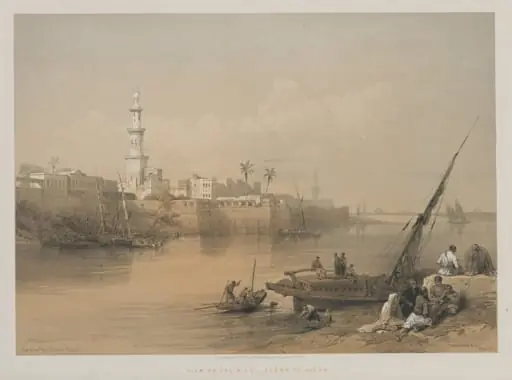 Egypt and Nubia, Volume III: View on the Nile, Ferry to Gizeh
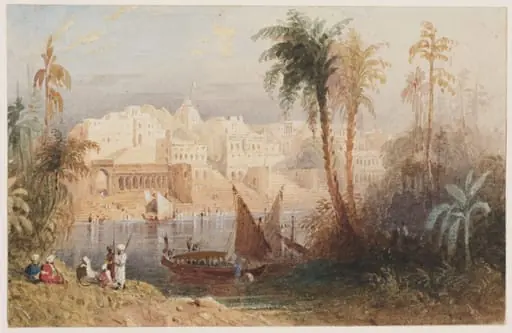 A view of an Indian city beside a river
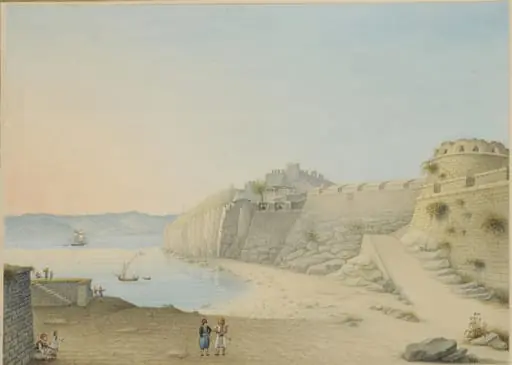 Η περιοχή Αρβανιτιά στο Ναύπλιο
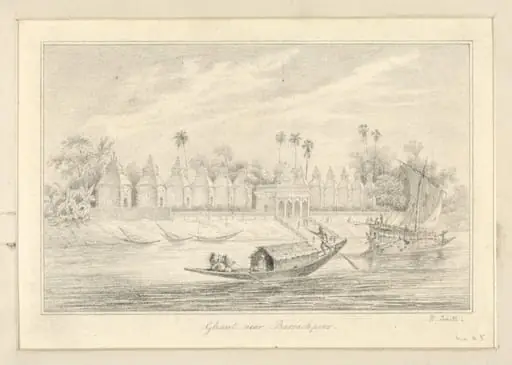 Ghaut near Barrackpoor
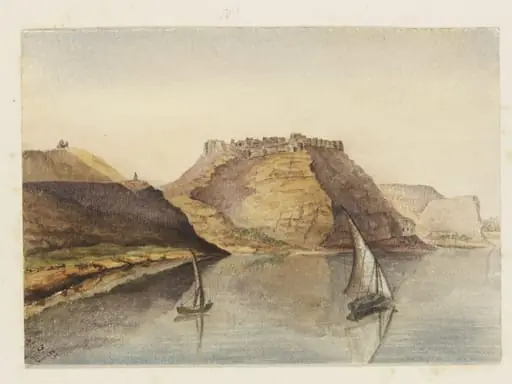 `Castle of Ibreem or Premnis, Nubia. Taken from our Boat'
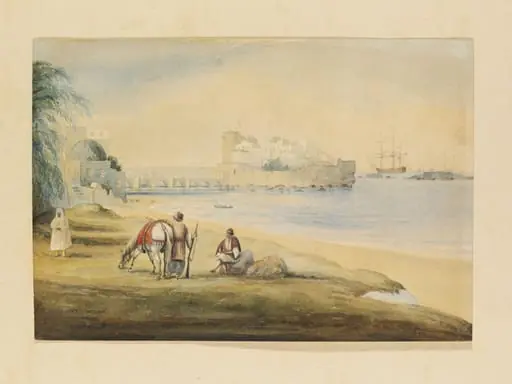 View of the Sea Castle (Sidon)
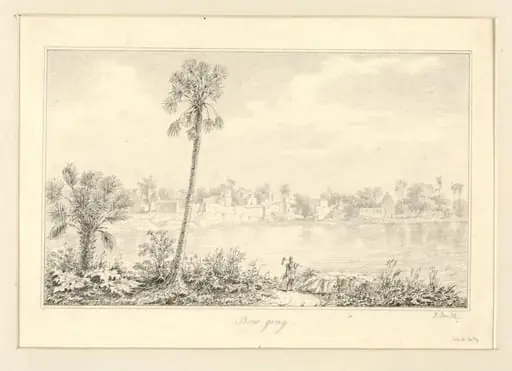 Bow Gong
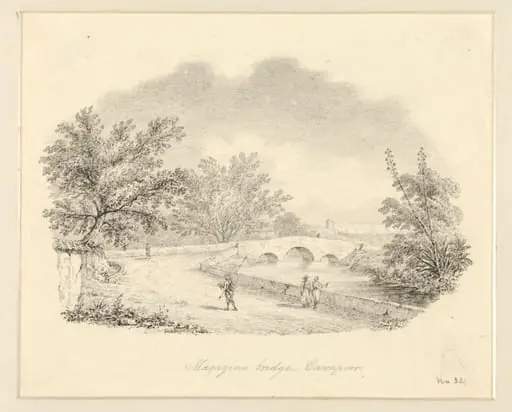 Magazine Bridge, Cawnpoor