Artwork
Untitled
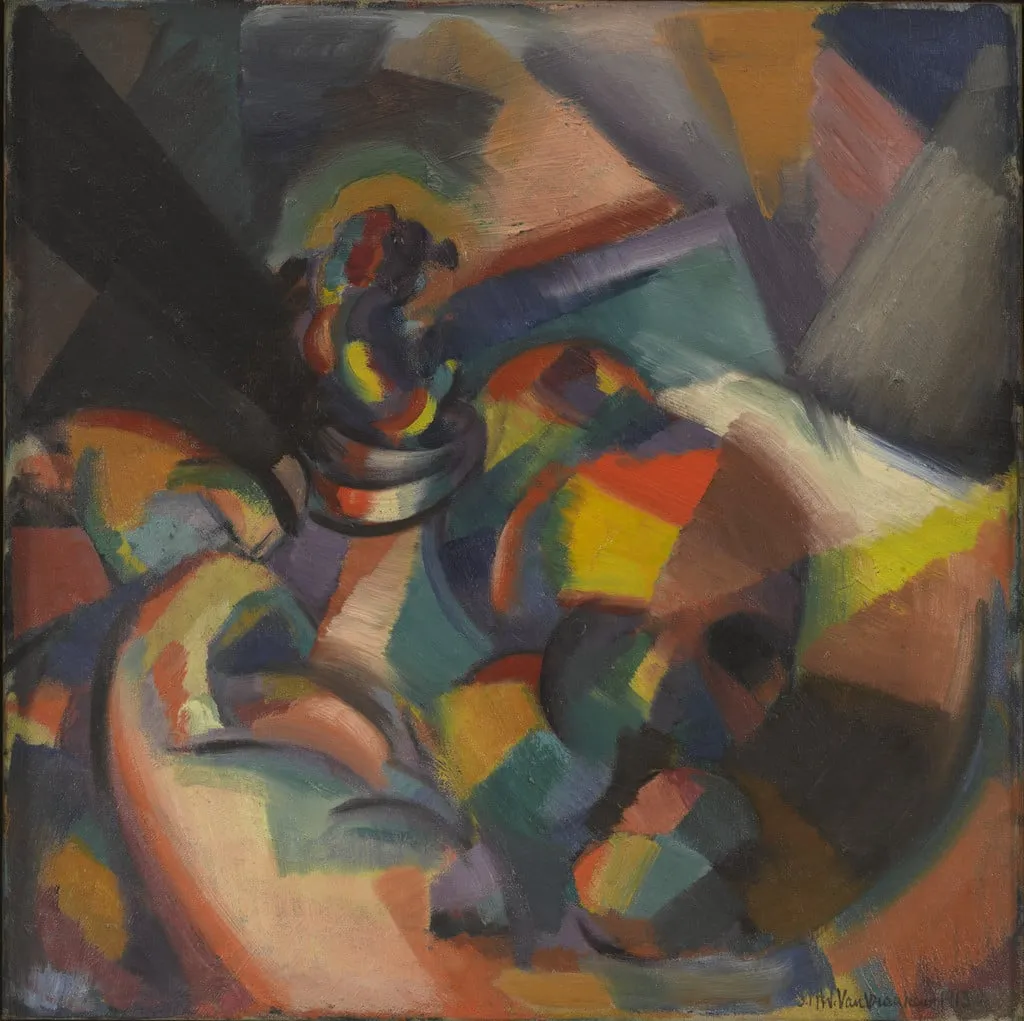
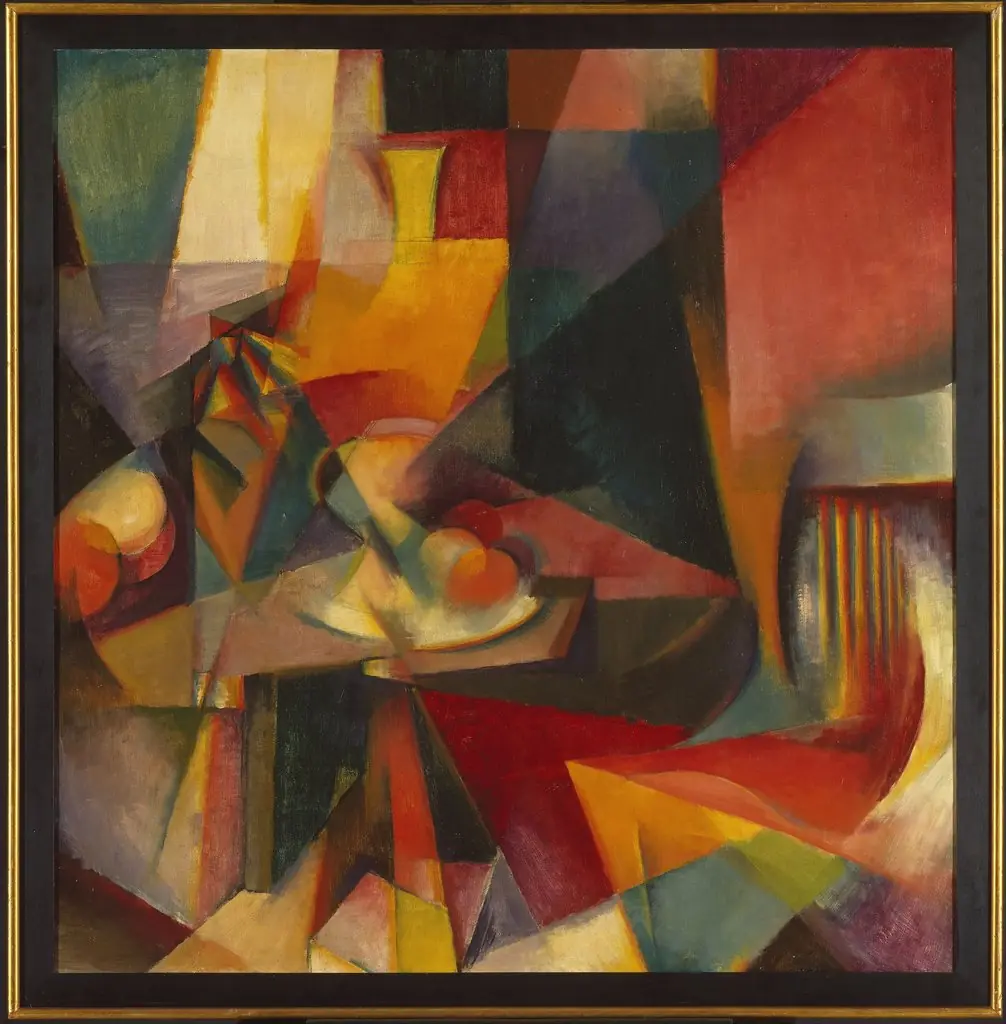
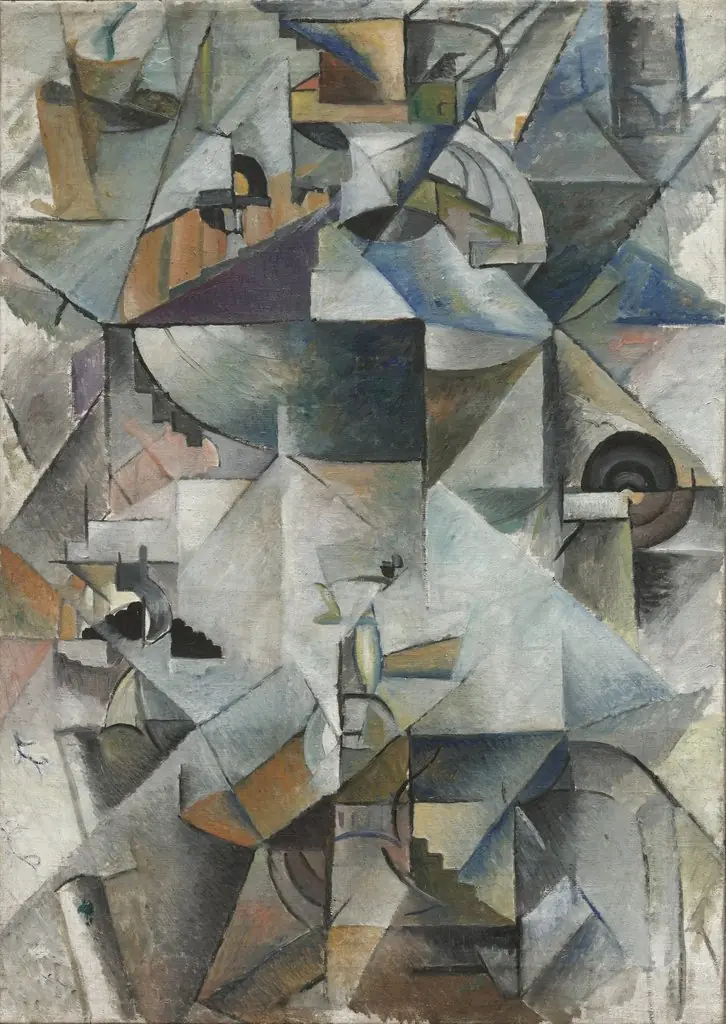
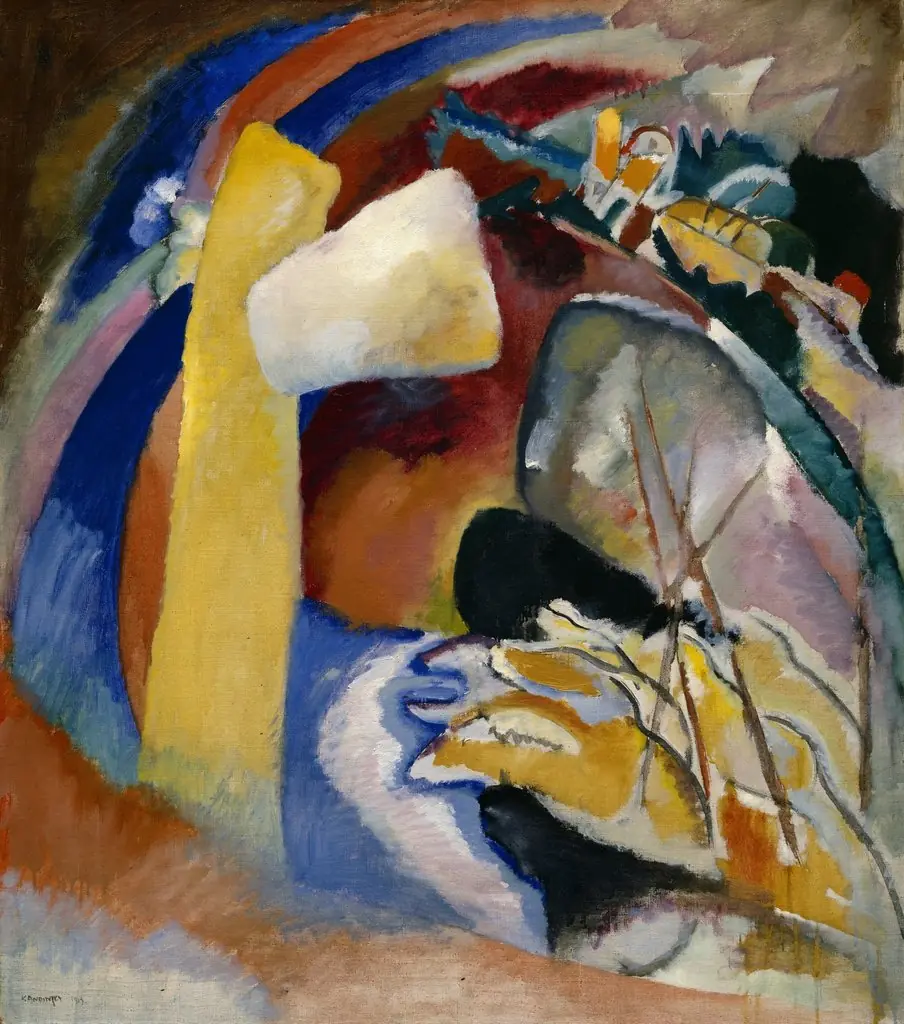
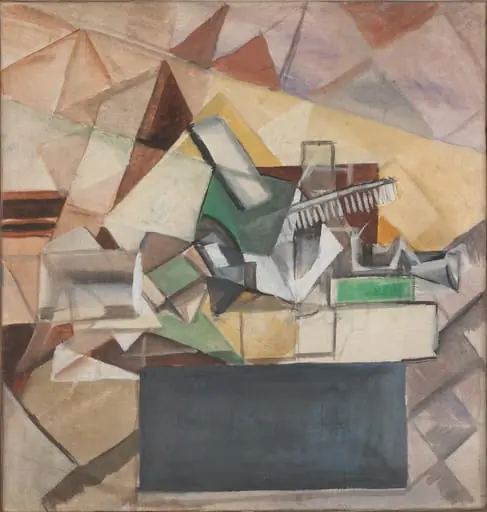
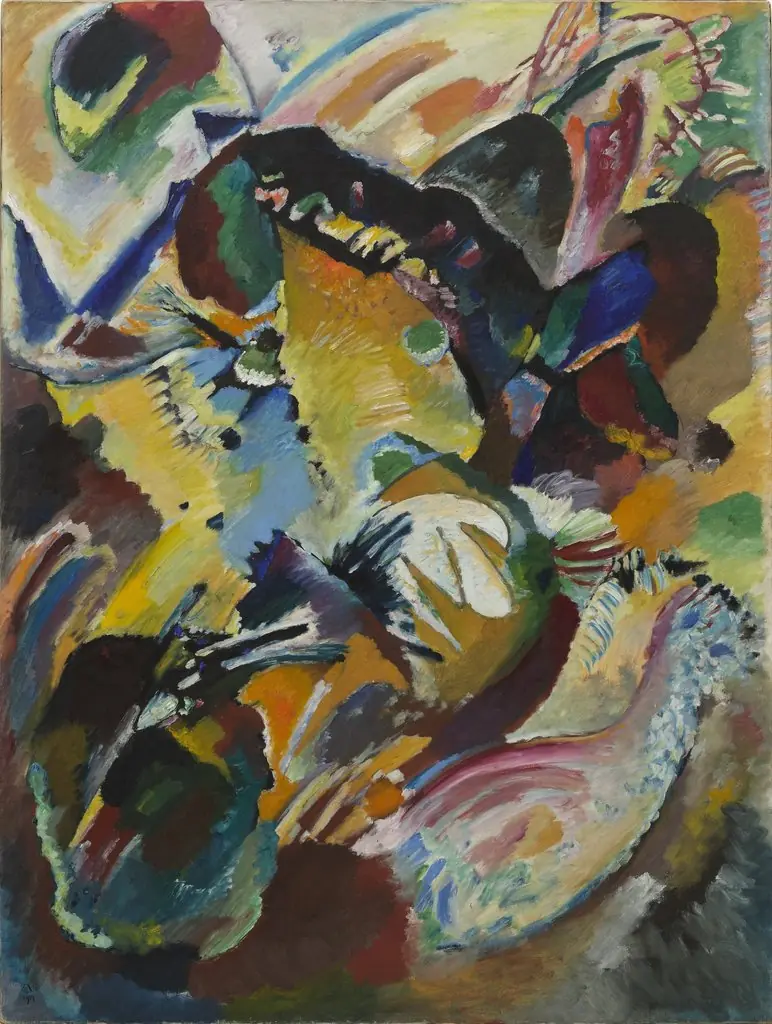
Untitled is an oil painting by Stanton Macdonald-Wright. It dates from 1913 and is held in the collection of the Museum of Modern Art.
About this work
Overview
As a co-founder of Synchromism, he sought to align color with musical structure, treating hue and tone as primary compositional forces.
Stanton Macdonald-Wright painted this oil on canvas in 1913, during the early phase of his engagement with abstract form. As a co-founder of Synchromism, he sought to align color with musical structure, treating hue and tone as primary compositional forces. The work resides in The Museum of Modern Art’s collection, representing a pivotal moment in American modernism’s shift away from representation toward chromatic abstraction.
Subject & Meaning
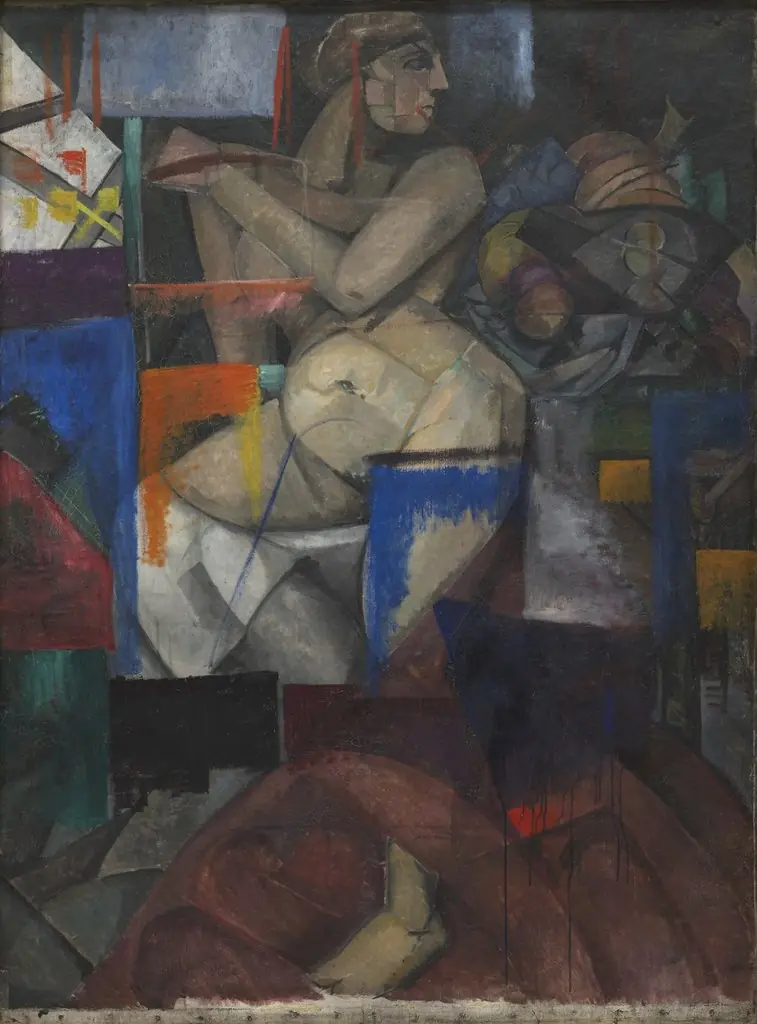
The figure is a seated woman, her body contorted in a fluid, inward twist, legs drawn close and head tilted upward. Though recognizable as human, her form is dissolved into expressive brushwork and saturated color. The pose suggests motion held in suspension, not narrative or emotion, but rather an exploration of bodily energy as a vehicle for color relationships. The subject is less a person than a vector of visual force.
Technique & Style
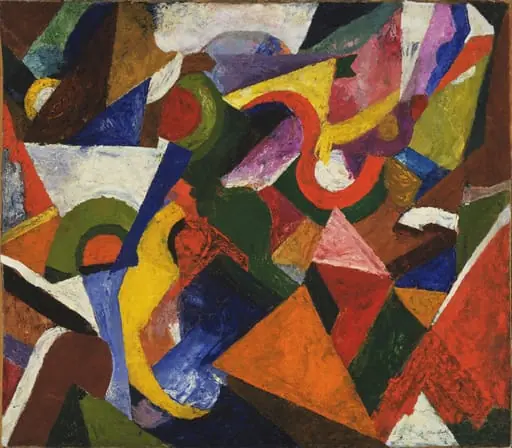
Macdonald-Wright applied oil paint with vigorous, directional strokes, building form through layered hues rather than line or shading. The background swirls with geometric bands of blue, green, yellow, and orange, creating rhythmic tension against the figure’s more organic contours. Color functions structurally: warm tones advance, cool tones recede, generating depth without perspective. The brushwork is deliberate yet unrefined, prioritizing dynamism over polish.
History & Provenance
Painted in 1913, the work emerged from Macdonald-Wright’s time in Europe, where he encountered avant-garde developments in Paris and Munich. It was among the first Synchromist pieces to be exhibited in the United States, helping to introduce European abstraction to American audiences. The painting entered MoMA’s collection in the 1930s, during the museum’s formative years of acquiring early modernist works.
Context
In 1913, American art was still largely tied to realism and Impressionism. Synchromism, developed by Macdonald-Wright and Morgan Russell, proposed color as the sole architect of composition—parallel to how musical harmony organizes sound. This painting reflects a broader transatlantic search for non-representational expression, aligning with contemporaneous experiments in Cubism and Futurism, yet distinct in its chromatic focus.
Legacy
Though Synchromism remained a short-lived movement, this work stands as one of its clearest early statements. It influenced later American abstract painters who sought to liberate color from descriptive roles. Macdonald-Wright’s insistence on color as structure prefigured developments in Color Field painting, and this piece remains a touchstone for understanding the roots of abstraction in U.S. modern art.
Artist & collection
Artist
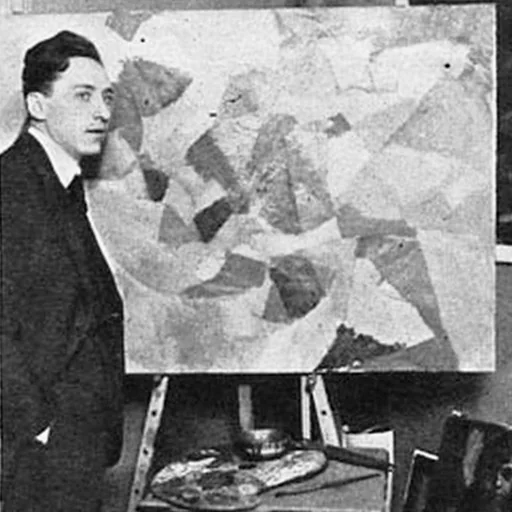
Stanton Macdonald-Wright (July 8, 1890 – August 22, 1973), was a modern American artist.