Artwork
Vale of Llangollen
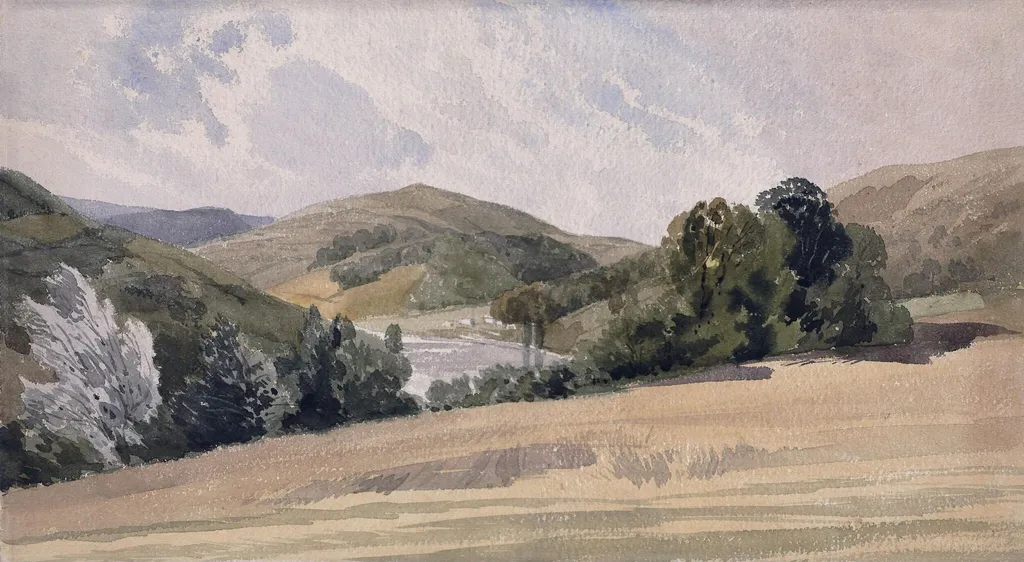
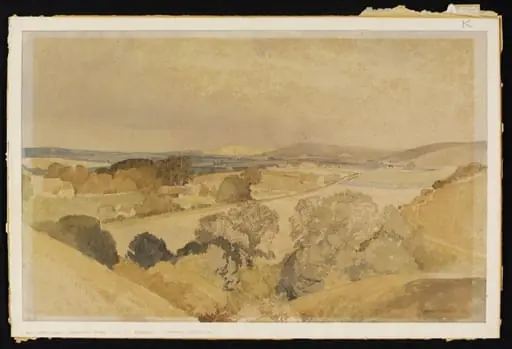
Vale of Llangollen is a watercolor work on paper by Thomas Shotter Boys. It dates from 1850 and is held in the collection of the Victoria and Albert Museum.
About this work
Overview
The work is a quiet, atmospheric rendering of the valley, rendered in transparent pigments on paper.
Thomas Shotter Boys created this watercolour in 1850, depicting the Vale of Llangollen in Wales. The work is a quiet, atmospheric rendering of the valley, rendered in transparent pigments on paper. Its delicate handling and restrained palette reflect the artist’s interest in capturing natural light and spatial depth without overt detail, aligning with mid-nineteenth-century British landscape traditions.
Subject & Meaning
The scene presents a tranquil rural valley, with a meandering river, scattered trees, and distant buildings. A single chimney suggests modest human presence, neither dominating nor disrupting the landscape. The composition emphasizes harmony between land and habitation, conveying a sense of stillness rather than narrative. There is no indication of activity—only the quiet persistence of place.
Technique & Style
Boys employed loose, fluid brushwork and layered washes to suggest form through tone rather than line. The dry, golden hills are built with pale washes, while the trees appear as muted green smudges. The sky, lightly clouded, blends seamlessly into the distance. The watercolour’s transparency allows the paper’s white to contribute to the luminosity, enhancing the hazy, atmospheric effect.
History & Provenance
The painting was completed during a period when British artists increasingly turned to domestic landscapes for subject matter. It entered the Victoria and Albert Museum’s collection as part of a broader effort to document topographical watercolours from the era. Its preservation reflects its value as an example of skilled, non-dramatic landscape representation in the medium.
Context
In the mid-1800s, watercolour was widely used for both artistic expression and topographical record. Boys, known for his travels and illustrations, contributed to publications documenting British and European scenery. This work fits within a tradition of quiet observation, contrasting with the grandeur of oil paintings, and aligns with the growing appreciation for intimate, everyday landscapes.
Legacy
The painting remains a representative example of Victorian watercolour practice, valued for its restraint and sensitivity to light. It contributes to the historical record of how British artists interpreted rural Wales during a time of industrial change. Though not widely exhibited, it continues to inform studies of landscape aesthetics and medium-specific techniques of the period.
Artist & collection
Artist
Thomas Shotter Boys (1803–1874) was an English watercolour painter and lithographer, mostly producing cityscapes and images of buildings, although he produced some rural landscapes and marine subjects.

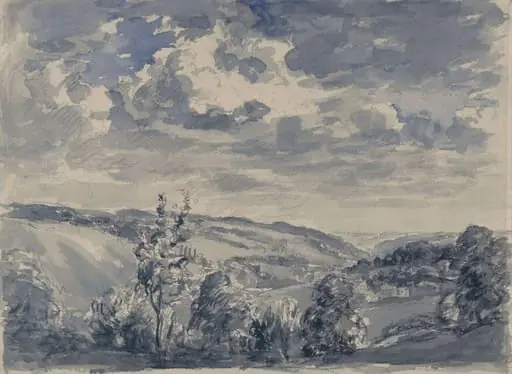 Stroud, Gloucestershire
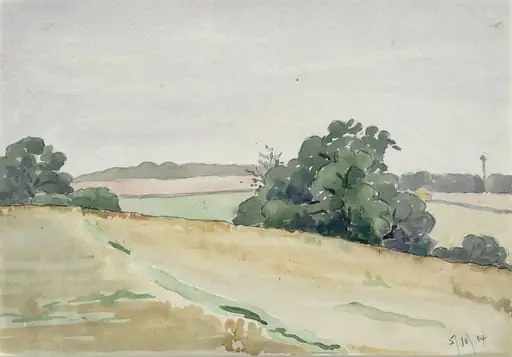 Untitled
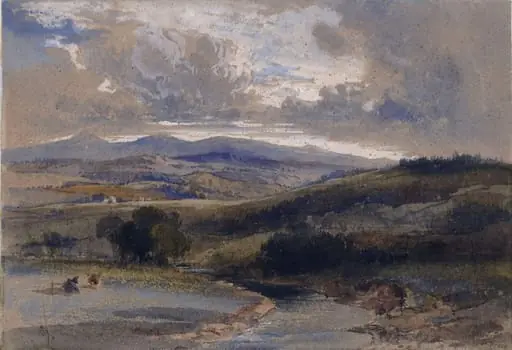 Landscape
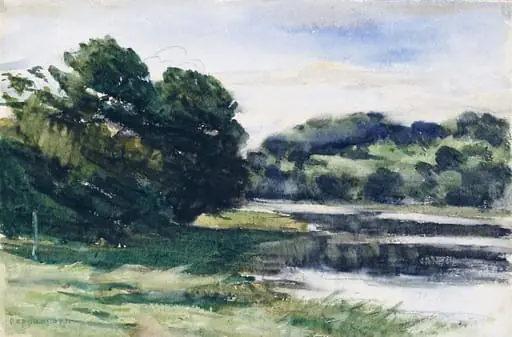 Landscape with river
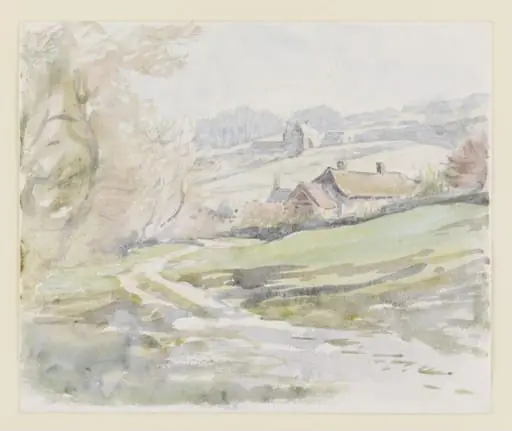 Landscape near Sidmouth, with cottages surrounded by fields and woods
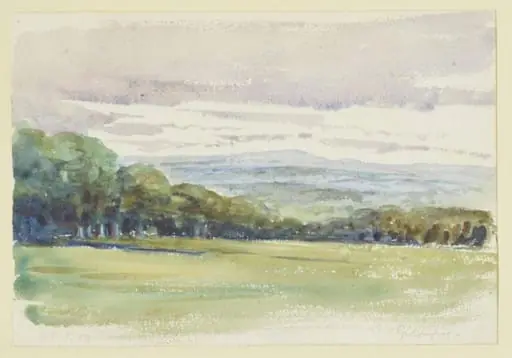 Sketch of a wooded landscape viewed from Gwaynynog, Denbigh
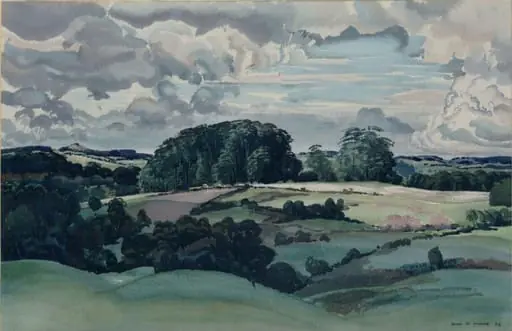 Landscape near Robertson, New South Wales
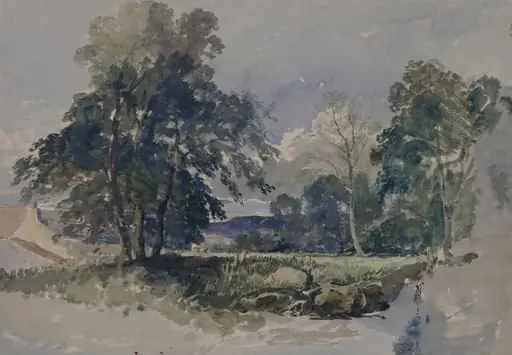 Woody Landscape with rocks and a cottage
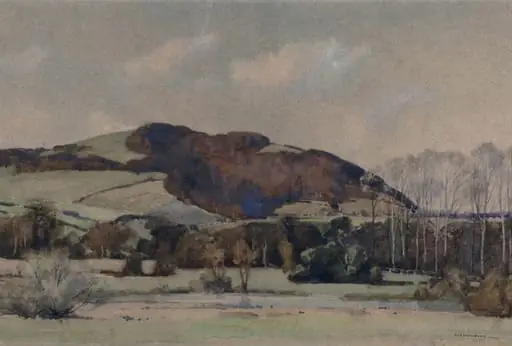 Duncton Hill, Sutton, Sussex
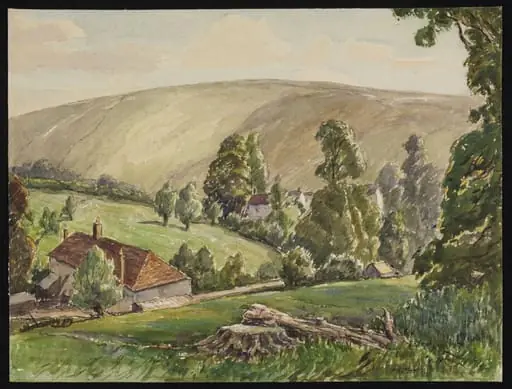 Bowerchalke
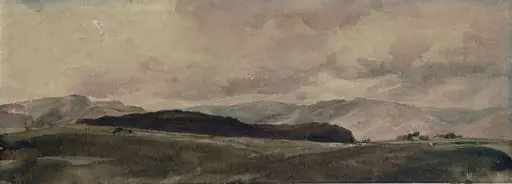 Shap Fells, Westmorland
 The Southdown, Underhill Road; Edburton, and the Road Eastwards