Artwork
The Coconut Merchant
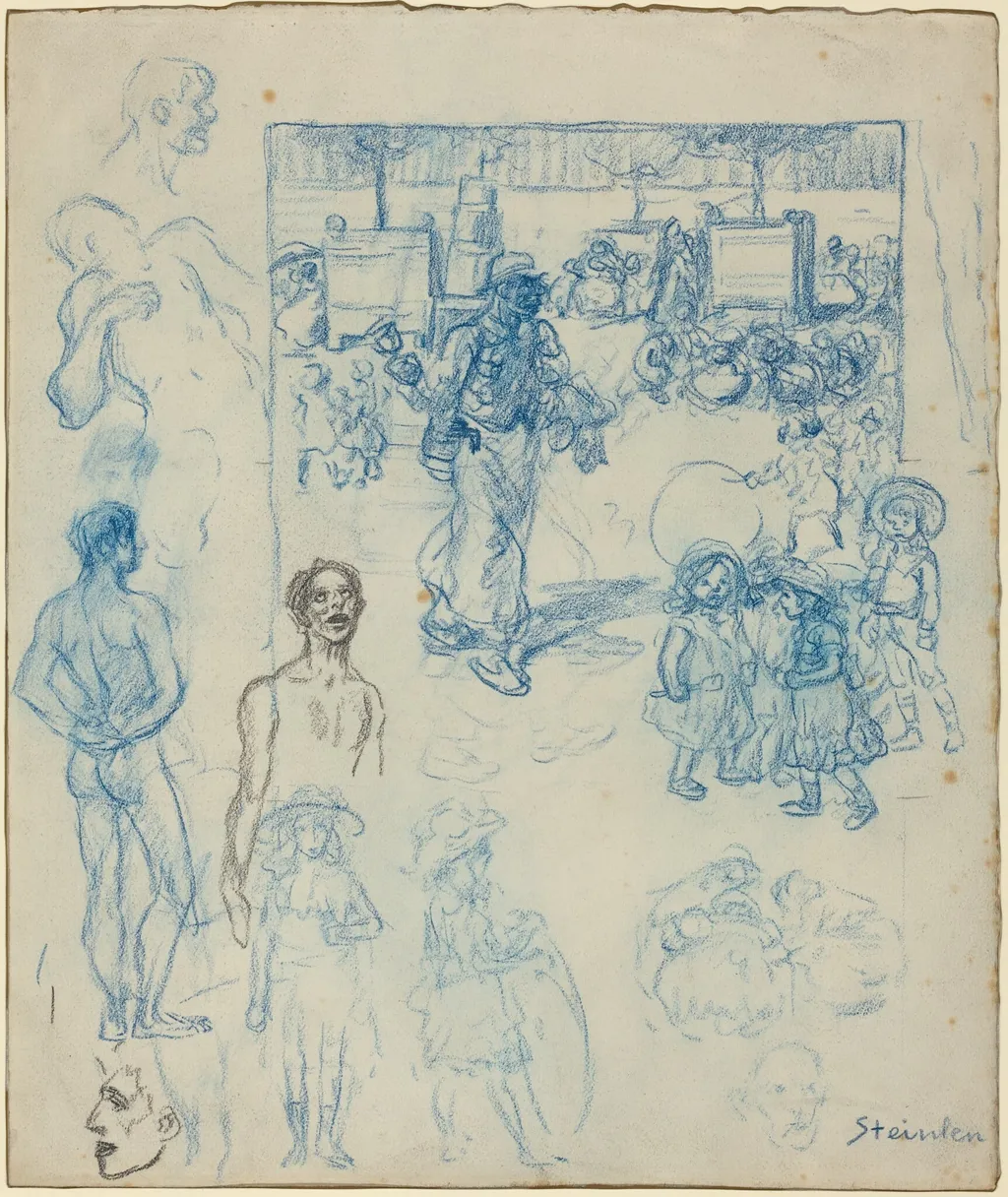
The Coconut Merchant is a chalk drawing by the Impressionist artist Théophile Alexandre Steinlen. It dates from 1891 and is held in the collection of the National Gallery of Art.
About this work
Overview
Created in 1891, *The Coconut Merchant* is a drawing by Théophile Alexandre Steinlen, executed in blue and black chalk.
Created in 1891, *The Coconut Merchant* is a drawing by Théophile Alexandre Steinlen, executed in blue and black chalk. It captures a fleeting moment in urban Parisian life, rendered with rapid, expressive strokes. Unlike finished illustrations, the work embraces spontaneity, emphasizing motion and atmosphere over precision. Steinlen’s choice of medium and technique aligns with his interest in documenting ordinary people and public spaces.
Subject & Meaning
The drawing centers on a shirtless vendor holding a coconut, surrounded by pedestrians in varied postures of movement. No single figure dominates; instead, the scene conveys the rhythm of street life. Steinlen, active in socialist circles, often depicted laborers and the working class without romanticization. Here, the merchant is neither idealized nor marginalized—he is simply present, part of the city’s unremarkable yet vital fabric.
Technique & Style
Steinlen employed only blue and black chalk to build form through loose, overlapping lines. The drawing lacks shading or detail, relying instead on gestural marks to suggest volume and motion. Background elements—buildings, trees—are reduced to minimal contours, reinforcing the sketch’s immediacy. This approach reflects Art Nouveau’s affinity for fluid lines, though here the style serves documentary realism rather than ornamental decoration.
History & Provenance
The drawing was made during Steinlen’s most active period in Paris, when he contributed illustrations to radical publications such as *La Revue Blanche*. While its early ownership is undocumented, it likely originated as a preparatory study or independent work for personal or journalistic use. It entered institutional collections in the 20th century, valued for its candid portrayal of urban labor and its technical economy.
Context
In late 19th-century Paris, street vendors like the coconut seller were common sights, especially near markets and ports. Steinlen’s interest in such figures coincided with broader social reforms and growing public attention to working conditions. His drawings, often published in leftist journals, offered visual testimony to the lives of those excluded from elite artistic narratives, situating this work within a larger documentary tradition.
Legacy
Though not widely exhibited during Steinlen’s lifetime, *The Coconut Merchant* exemplifies his commitment to capturing everyday life with empathy and speed. Its influence is seen in later generations of illustrators and social realists who prioritized authenticity over polish. The drawing remains a quiet but persistent record of urban labor, valued for its unembellished humanity and technical restraint.
Artist & collection
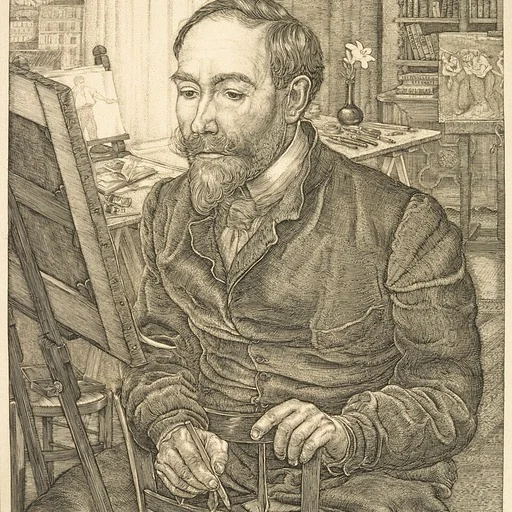
Artist
Théophile Alexandre Steinlen (November 10, 1859 – December 13, 1923), was a Swiss-born French Art Nouveau painter and printmaker. He was politically engaged and collaborated with the anarchist and socialist press.

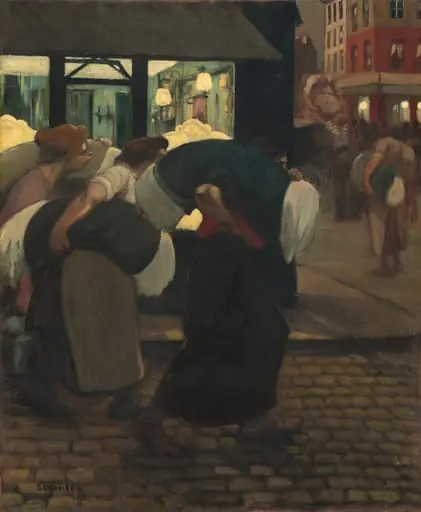
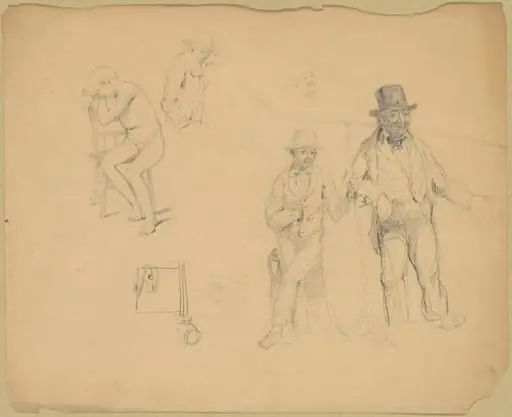 Studies of Men and Boys
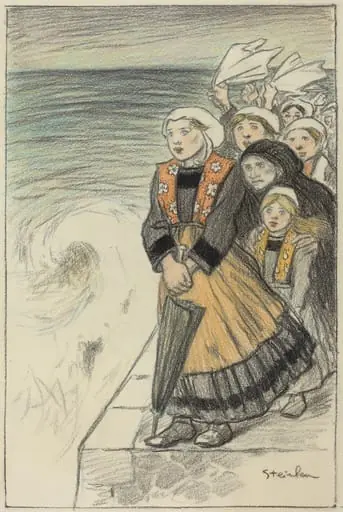
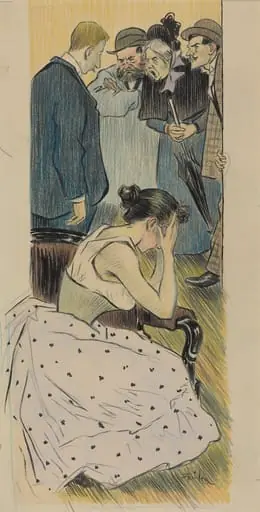
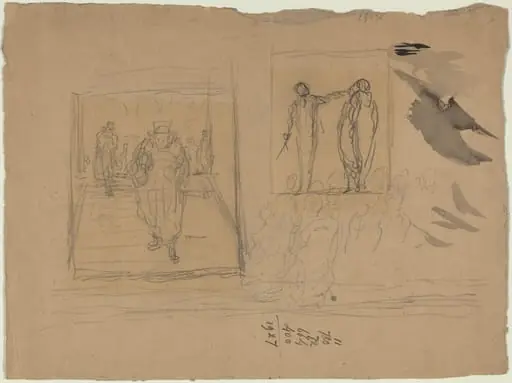 Scene in a Palace of Justice
![A Man Leaning on a Wall with Five Other Studies; Two Bearded Men Wearing Hats, and Five Other Studies [recto], by Paul Gauguin](https://artifactworldgallery.com/img/paul-gauguin--a-man-leaning-on-a-wall-with-five-other-studies-two-bearded--2df262058c2bfe48-w320.webp) A Man Leaning on a Wall with Five Other Studies; Two Bearded Men Wearing Hats, and Five Other Studies [recto]
A Man Leaning on a Wall with Five Other Studies; Two Bearded Men Wearing Hats, and Five Other Studies [recto]![Studies of Crowing Rooster and Reclining Figures [recto and verso], by John Flaxman](https://artifactworldgallery.com/img/john-flaxman--studies-of-crowing-rooster-and-reclining-figures-recto-and-v--6ae88f69b8f5a01b-w320.webp) Studies of Crowing Rooster and Reclining Figures [recto and verso]
Studies of Crowing Rooster and Reclining Figures [recto and verso]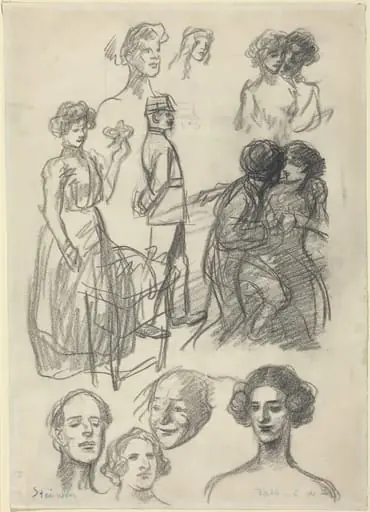 Sketches for "Lovers on a Bench"
![Sheet of Studies, including Warrior with Child [recto and verso], by John Flaxman](https://artifactworldgallery.com/img/john-flaxman--sheet-of-studies-including-warrior-with-child-recto-and-vers--5c5dd1ec083169b5-w320.webp) Sheet of Studies, including Warrior with Child [recto and verso]
Sheet of Studies, including Warrior with Child [recto and verso]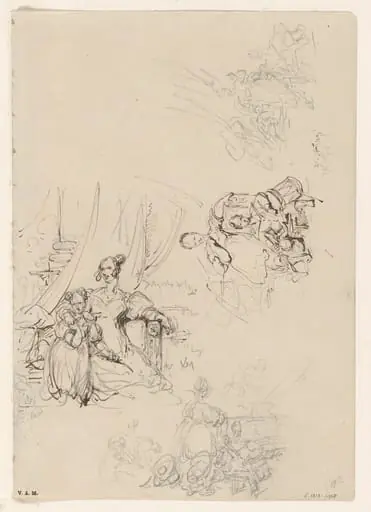 A Western woman with her children in Macau
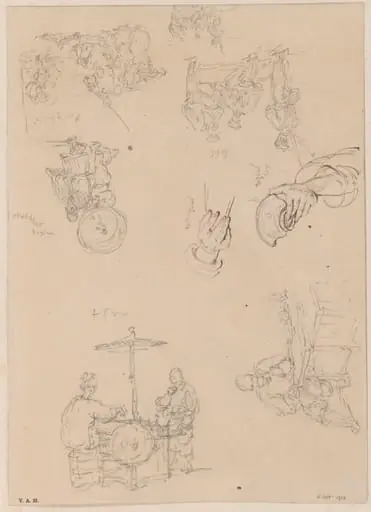 Chinese figures, soldiers, and details of hands
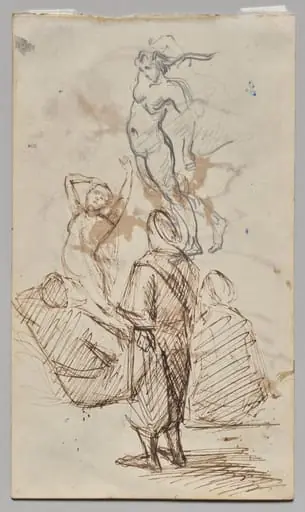 Sheet of Studies
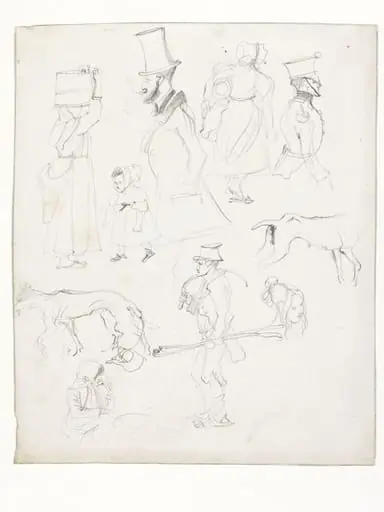 Drawing of figures
![Studies of Figures [verso], by Perry, Enoch Wood, Jr.](https://artifactworldgallery.com/img/perry-enoch-wood-jr--studies-of-figures-verso--08cd7fa67b50c519-w320.webp) Studies of Figures [verso]
Studies of Figures [verso]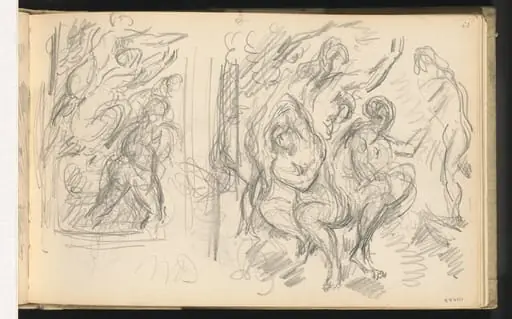 Two Studies for "The Judgement of Paris" or "The Amorous Shepherd"