Artwork
Watching the Crowd
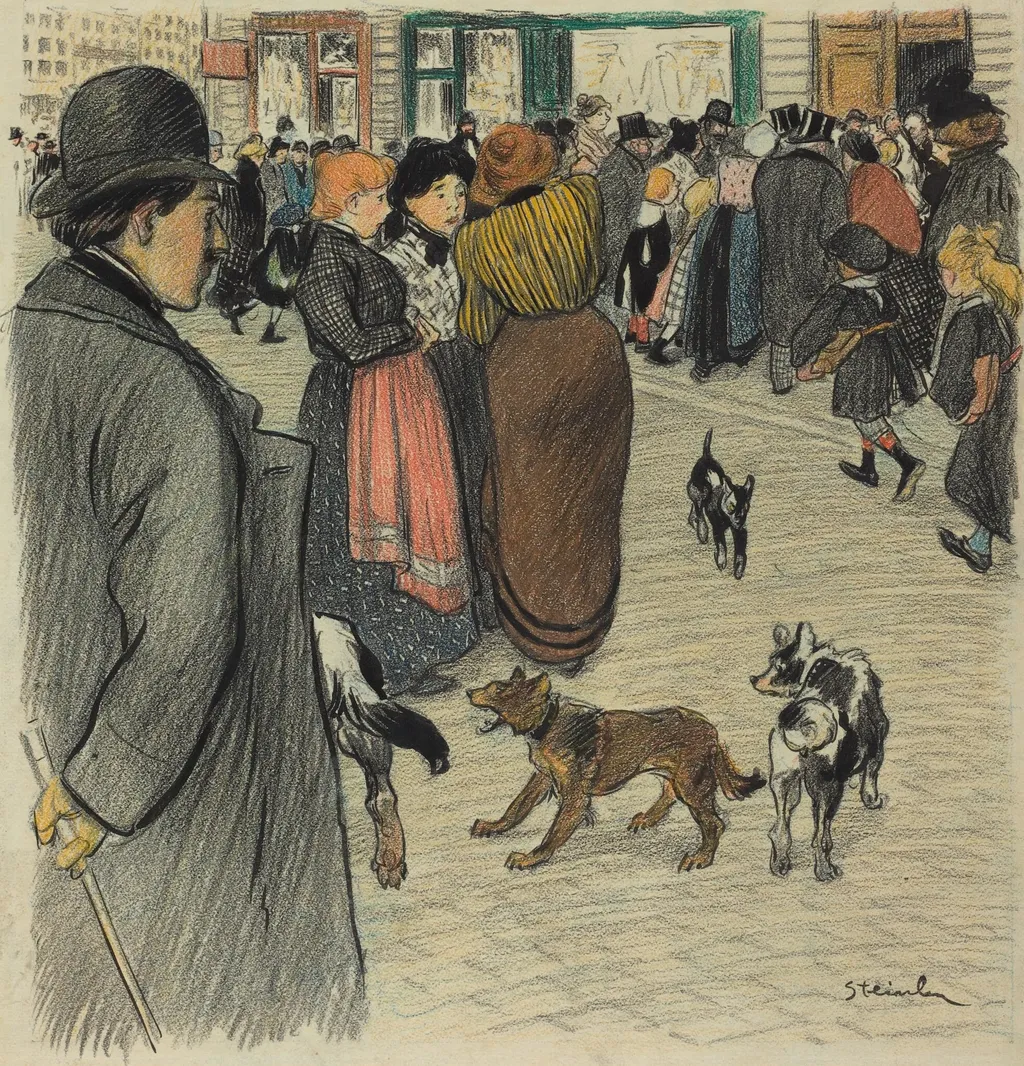
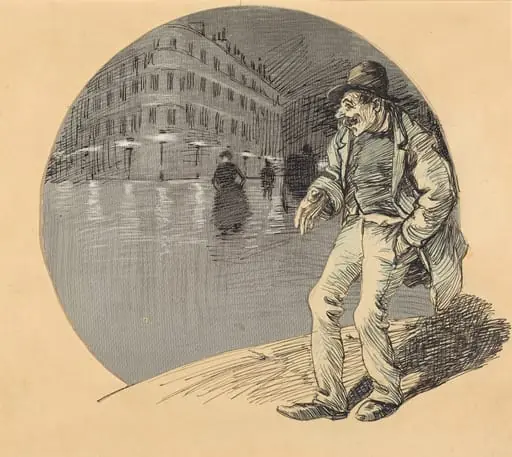
Watching the Crowd is an ink drawing by the Impressionist artist Théophile Alexandre Steinlen. It dates from 1891 and is held in the collection of the National Gallery of Art.
About this work
Overview
Executed in pen, black ink, black chalk, and colored crayon, it captures a moment of quiet observation amid urban motion.
Created in 1891, *Watching the Crowd* is a drawing by Théophile Alexandre Steinlen, a Swiss-born artist based in France. Executed in pen, black ink, black chalk, and colored crayon, it captures a moment of quiet observation amid urban motion. Steinlen, known for his illustrations in radical publications, used this medium to explore everyday life with sensitivity and precision, avoiding overt narrative in favor of atmospheric presence.
Subject & Meaning
The drawing centers on a solitary man in a long coat and hat, standing still at the foreground while a diffuse crowd moves behind him. He holds a cane, his gaze directed outward, suggesting contemplation rather than participation. The figure becomes a silent witness to the rhythm of city life, reflecting Steinlen’s interest in the individual’s place within the social fabric, without romanticizing or condemning the scene.
Technique & Style
Steinlen employed varied materials to distinguish focus and movement: precise pen lines define the observer, while loose, energetic strokes of chalk and crayon suggest the blur of passersby. The limited palette—dominated by black and muted tones—enhances contrast and depth. This interplay of detail and abstraction conveys motion without literalism, aligning with contemporary draftsmanship that valued expressive economy over finish.
History & Provenance
The work emerged during Steinlen’s most prolific period, when he contributed illustrations to anarchist and socialist journals such as *La Révolte*. Though not published in a periodical, *Watching the Crowd* shares the observational ethos of his editorial work. Its survival as a standalone drawing suggests it may have been a study or personal exercise, preserved for its compositional strength rather than political messaging.
Context
In late 19th-century Paris, urban expansion and industrialization transformed public space, making crowds a recurring subject in visual culture. Steinlen’s drawing responds to this shift, aligning with artists like Degas and Toulouse-Lautrec who depicted modern life with psychological nuance. Unlike the theatricality of some contemporaries, Steinlen favored quiet moments, emphasizing the anonymity and solitude within collective environments.
Legacy
Though less celebrated than his posters and political cartoons, *Watching the Crowd* exemplifies Steinlen’s ability to convey social observation through understated draftsmanship. Its influence is seen in later illustrators who prioritized mood over spectacle, and in the tradition of urban sketching that values the unposed moment. The work remains a quiet testament to the artist’s enduring attention to the rhythms of ordinary life.
Own this work as a print
Artist & collection
Artist
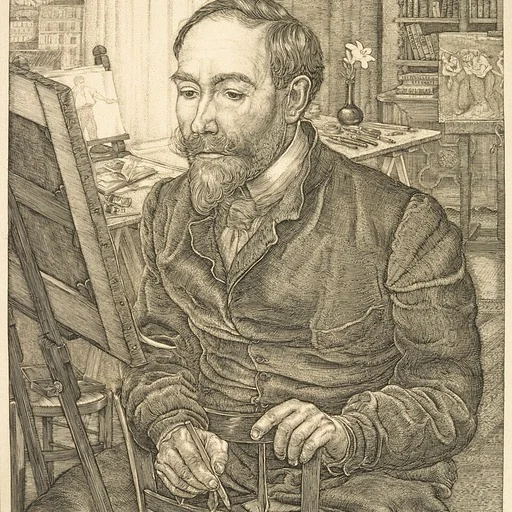
Théophile Alexandre Steinlen (November 10, 1859 – December 13, 1923), was a Swiss-born French Art Nouveau painter and printmaker. He was politically engaged and collaborated with the anarchist and socialist press.

 Alfred la Guigne
 Place Saint Georges
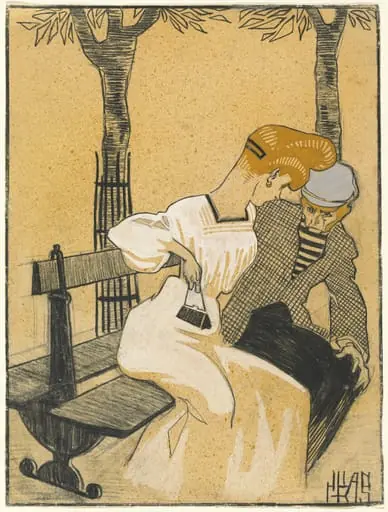 Man and Woman on Bench
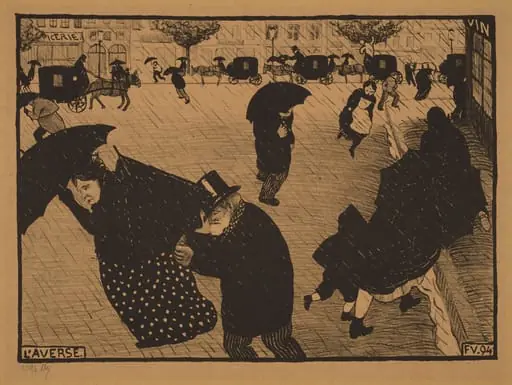 L'Averse (The Shower)
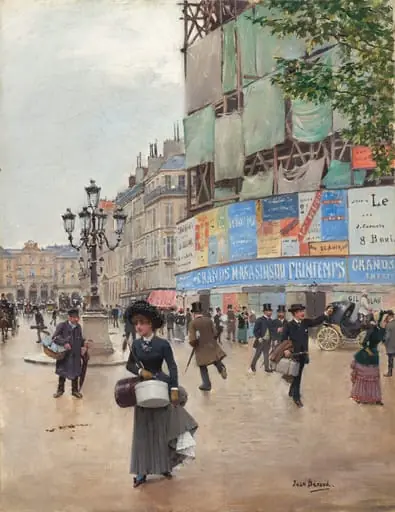 Paris, rue du Havre
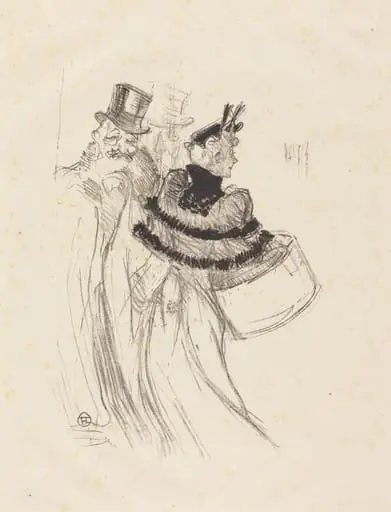 The Old Gentlemen (Les vieux messieurs)
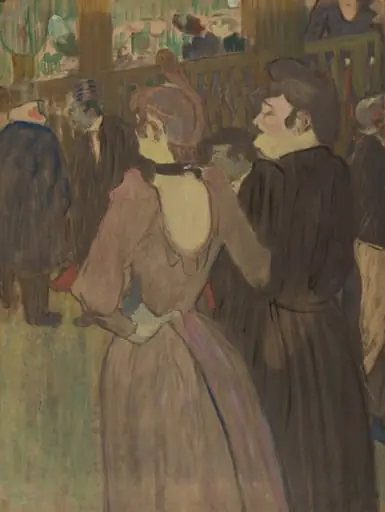 La Goulue and Her Sister
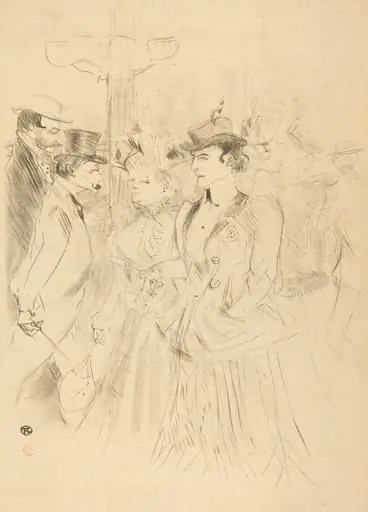 Promenade (Promenoir)
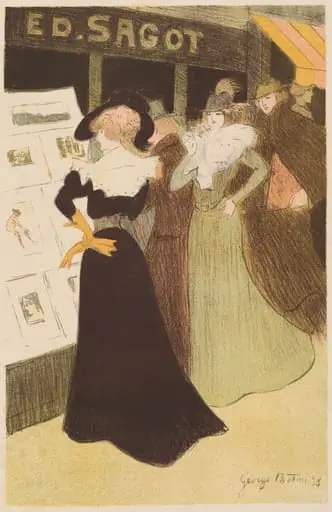 The Sagot Address
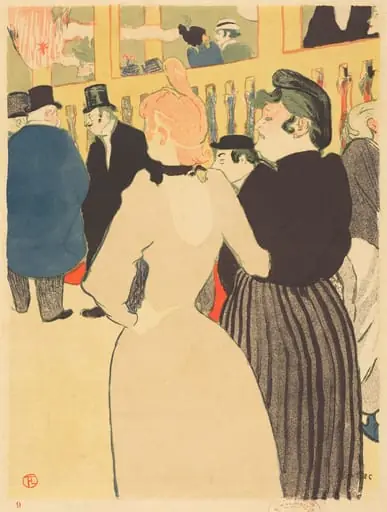 At the Moulin Rouge, la Goulue and Her Sister (Au Moulin Rouge, la Goulue et sa soeur))
 Milliners (Modistes)
 Untitled