Artwork
Woman Running Past a Willow Tree in a Breeze
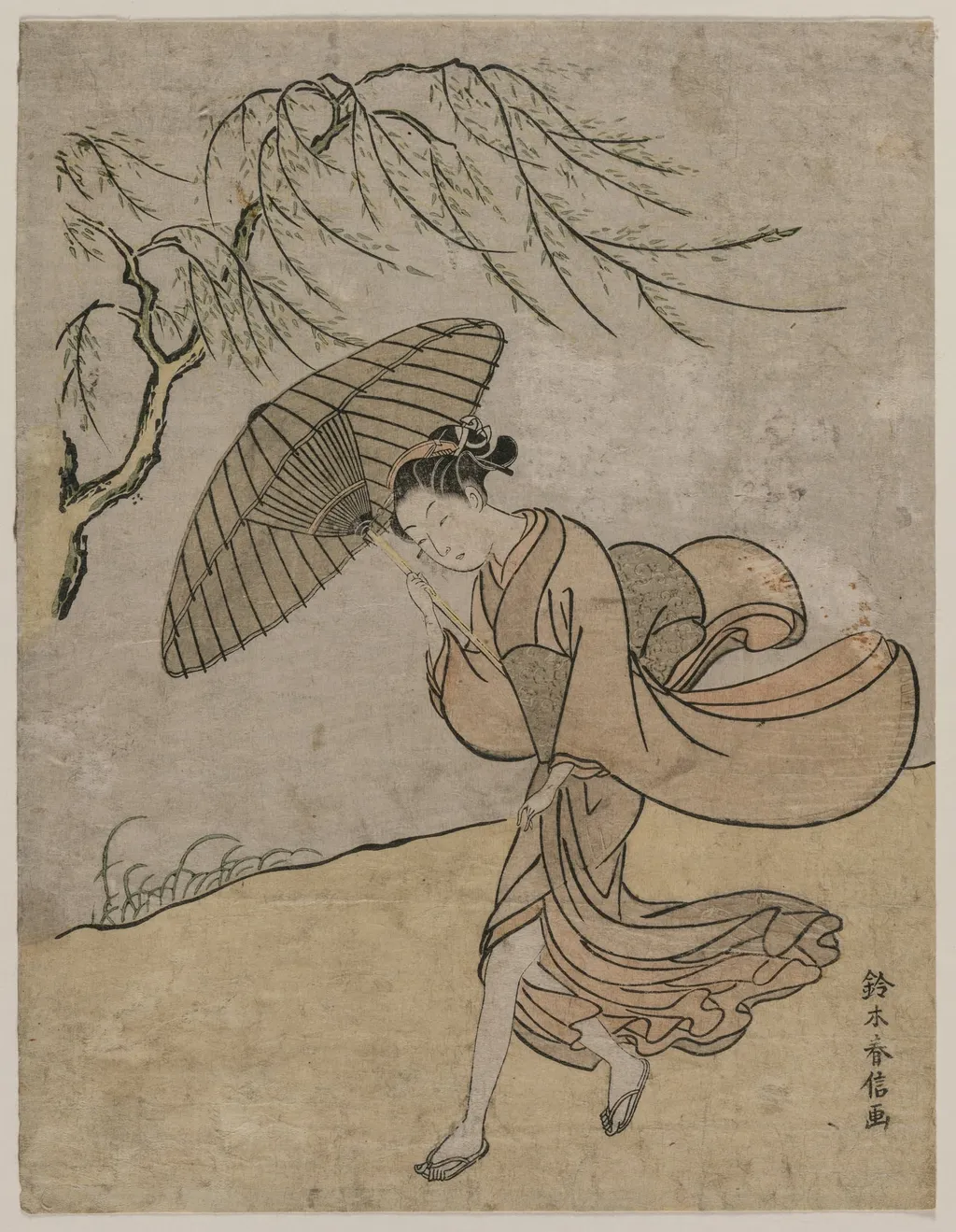
Woman Running Past a Willow Tree in a Breeze is a print by the Romanticist artist Suzuki Harunobu. It dates from 1766 and is held in the collection of the Cleveland Museum of Art.
About this work
A woman runs past a willow tree in a breeze.
The scene is serene, with the woman's kimono flowing behind her. This painting shows everyday life in Japan during the Edo period, giving us a glimpse of what people wore and how they interacted with nature.
Check out the work of artist Suzuki Harunobu (Japanese, 1724–1770) to see more scenes like this.
Overview
Woman Running Past a Willow Tree in a Breeze, a 1766 print by Suzuki Harunobu, captures a fleeting moment of everyday life in Edo period Japan, conveying serenity through the interaction of a woman, nature, and subtle movement.
Subject & Meaning
The print depicts a woman in motion, her kimono billowing behind her, as she passes beneath a willow tree swaying in the breeze. This scene offers a glimpse into the attire and natural interactions of ordinary people during the Edo era.
Technique & Style
While specific technical details of this print are not highlighted, it embodies the characteristic elegance and attention to natural detail of Harunobu's ukiyo-e works, suggesting meticulous woodblock printing techniques to achieve the serene, dynamic scene.
History & Provenance
Created in 1766 by Suzuki Harunobu, the print is now part of The Cleveland Museum of Art's collection, though the path of its acquisition is not specified here.
Context
This work reflects the ukiyo-e tradition's focus on capturing moments of daily life and the beauty of nature, popular during the Edo period (1603–1867), when such scenes appealed to a growing urban audience.
Legacy
As part of Harunobu's oeuvre, the print contributes to the artist's reputation for depicting serene, everyday moments, influencing subsequent generations of Japanese artists and remaining a window into 18th-century Japanese life.
Artist & collection

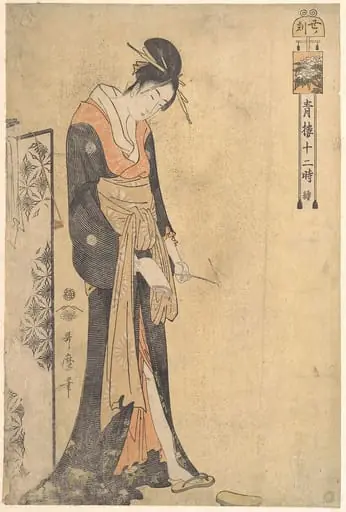 Ushi no Koku|青楼十二時 続 丑の刻|The Hour of the Ox (1 A.M.–3 A.M.)
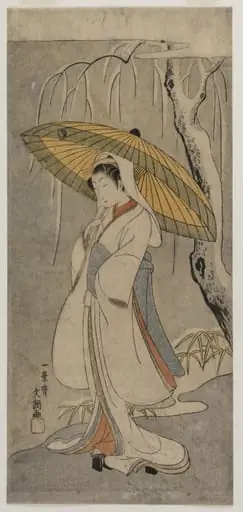 Segawa Kikunojo II as the Heron Maiden (from the series Ichimura Theater)
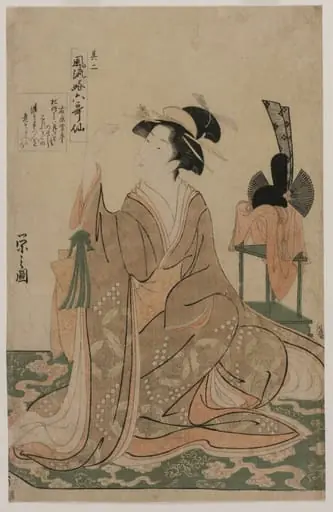 Young Woman Kneeling by a Stand with a Ceremonial Cap (from the series The Six Immortal Poets in Elegant Modern Dress)
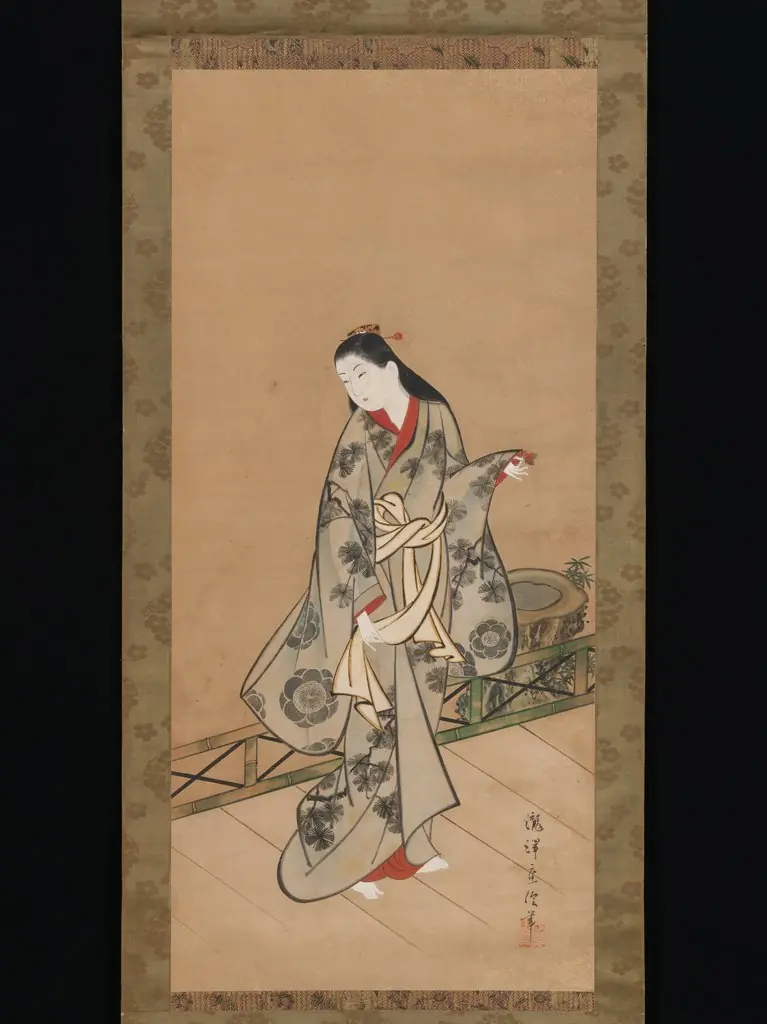 Woman on Veranda
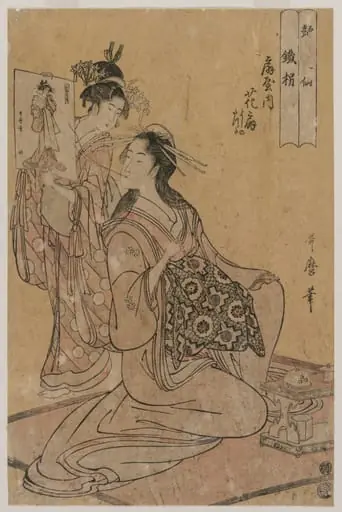 The Courtesan Hana-ogi of Ogiya as the Sennin Tekkai (from the series Eight Immortals of Sensuality)
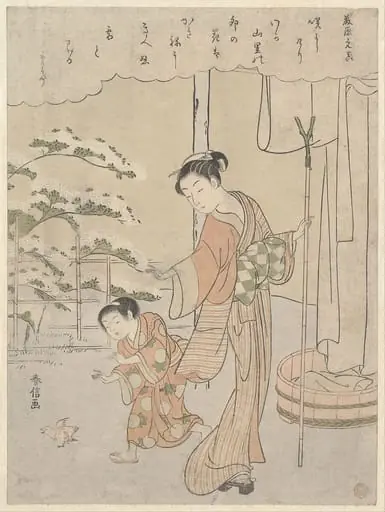 百人一首 藤原元真|Poem by Fujiwara no Motozane (ca. 860) from the Series Thirty-Six Poets
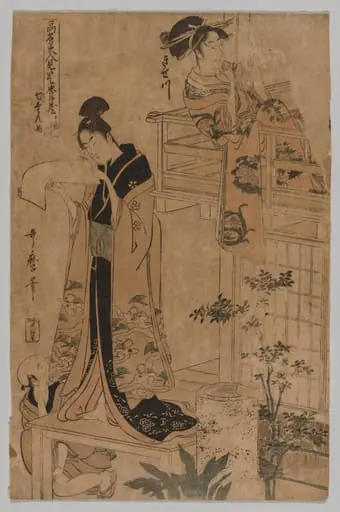 Act VII from the series The Storehouse of Loyal Retainers As Portrayed by Famous Beauties in Twelve Leaves
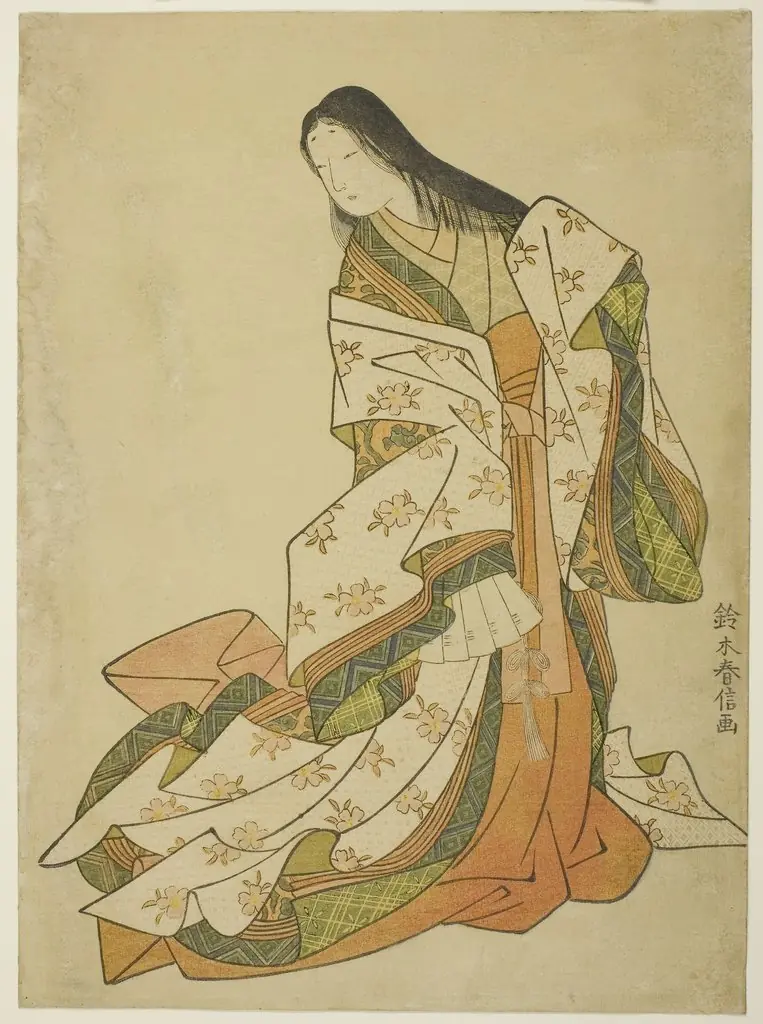 The Poetess Ono no Komachi
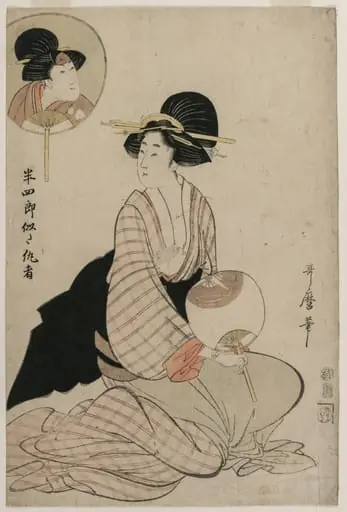 An Attractive Woman Who Looks Like the Actor Iwai Hanshiro V
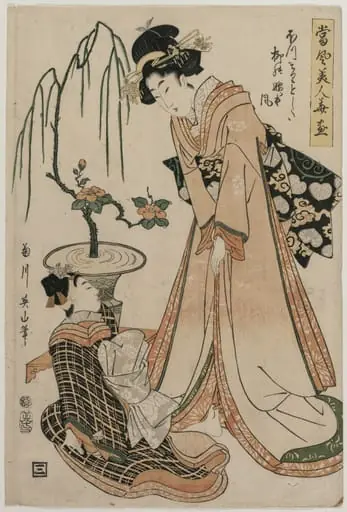 A Lady-in-Waiting with Waist as Slender as a Willow from the series Flowers and Modern Beauties
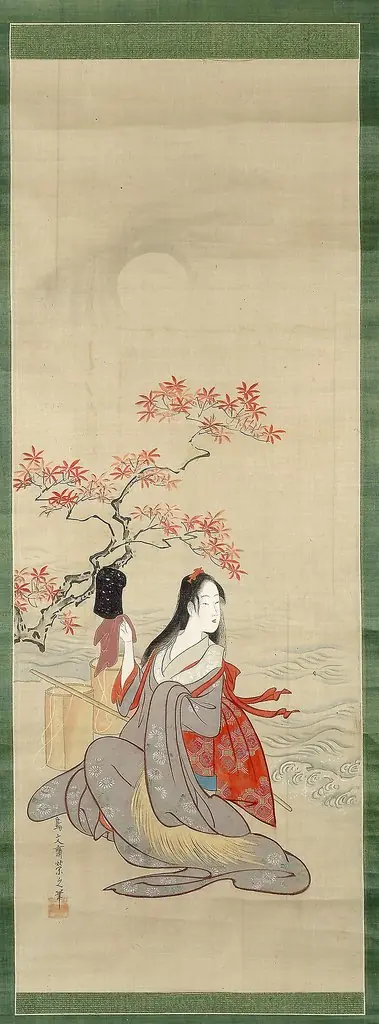 The Salt Maidens, Murasame with Yukihira's Hat
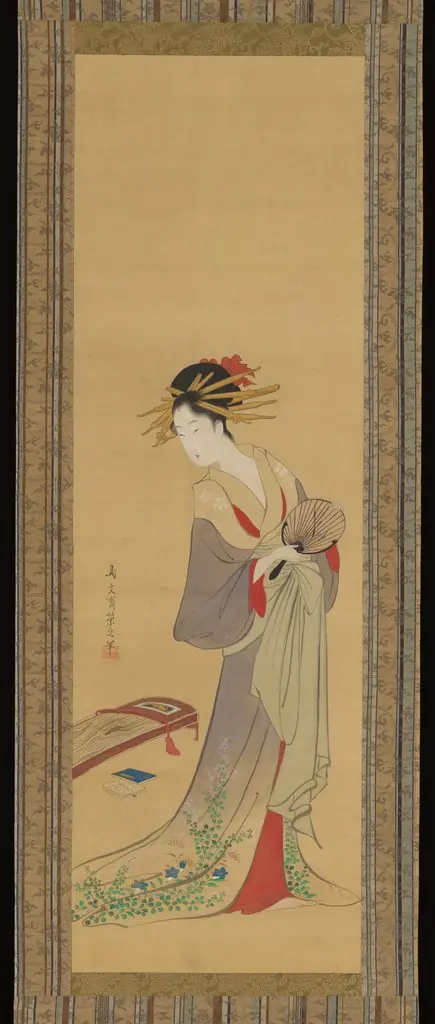 Courtesan with Fan and Koto