Artwork
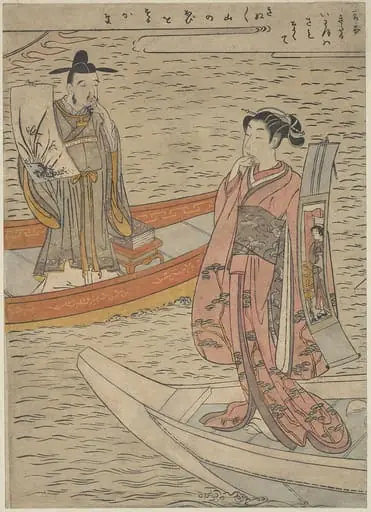
The Call of the Cuckoo from above the Clouds (parody of Minamoto no Yorimasa)
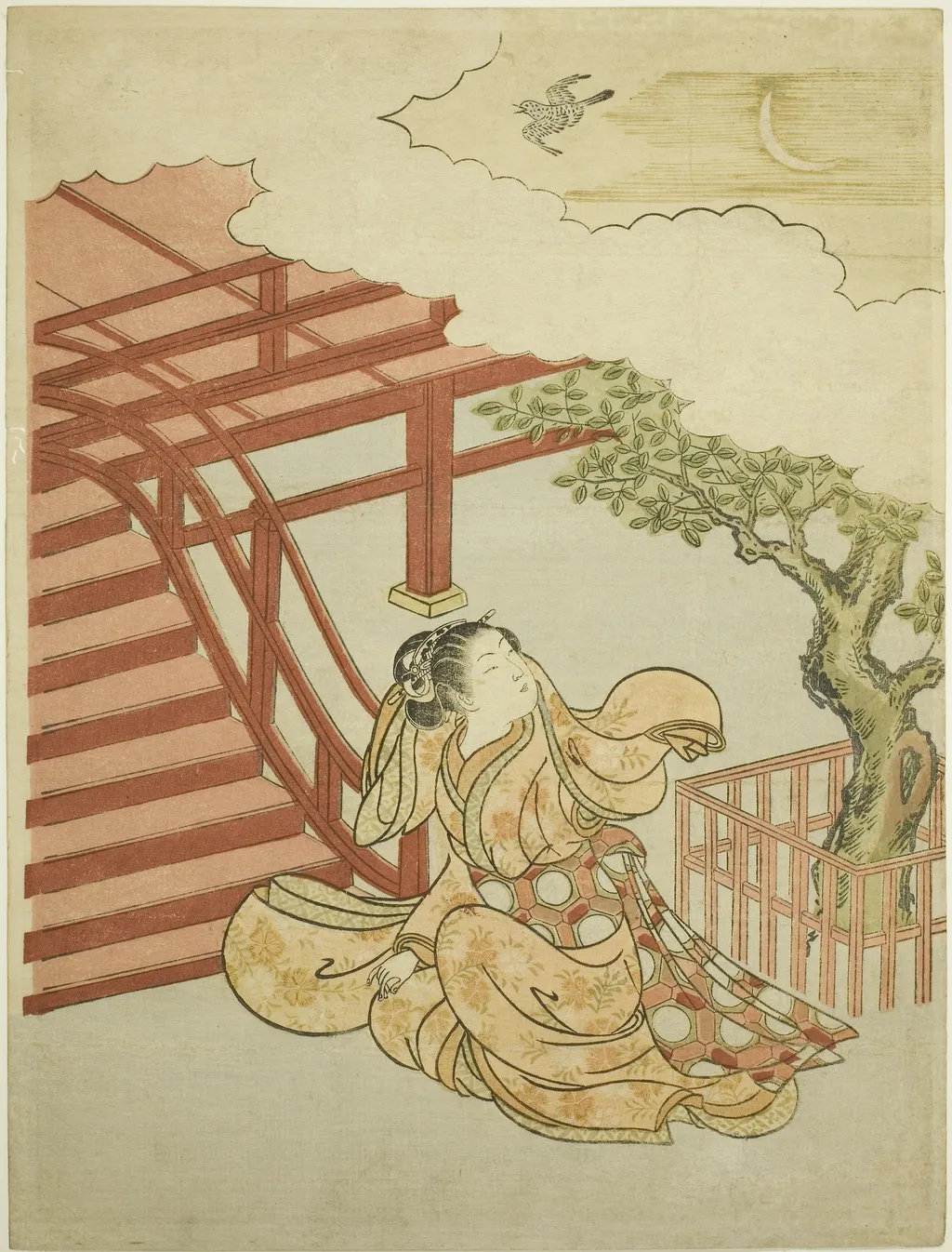
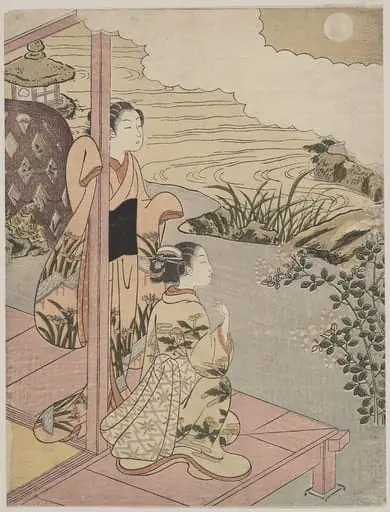
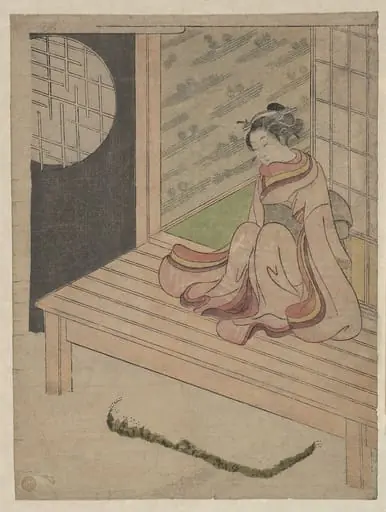
The Call of the Cuckoo from above the Clouds (parody of Minamoto no Yorimasa) is an unspecified painting by the Ukiyo-e artist Suzuki Harunobu. It dates from 1766 and is held in the collection of the Art Institute of Chicago.
About this work
Overview
Rather than depicting martial heroism, Harunobu substitutes the warrior with a serene, contemplative figure, shifting focus from battle to quiet observation.
Created in 1766 by Suzuki Harunobu, this woodblock print is a playful reimagining of the legendary samurai Minamoto no Yorimasa’s encounter with a supernatural cuckoo. Rather than depicting martial heroism, Harunobu substitutes the warrior with a serene, contemplative figure, shifting focus from battle to quiet observation. The work belongs to the ukiyo-e tradition and exemplifies the artist’s mastery of color printing.
Subject & Meaning
The scene replaces the mythic moment of Yorimasa shooting the cuckoo with a tranquil figure gazing upward, as if listening rather than acting. The cuckoo, traditionally a symbol of fleeting time or divine warning, becomes an object of meditative reflection. Harunobu’s parody softens the warrior’s legend into a poetic meditation on nature and impermanence, aligning with Edo-period aesthetic values.
Technique & Style
Harunobu employed nishiki-e, a multi-block color printing technique that allowed subtle gradations and delicate hues. The composition is spare, with soft lines and muted tones emphasizing atmosphere over detail. The figure’s posture and the cloud-like forms suggest movement without action, reflecting the artist’s signature blend of elegance and restraint.
History & Provenance
The print was produced during Harunobu’s most innovative period, shortly after he pioneered full-color woodblock printing. It entered the Art Institute of Chicago’s collection in the 20th century, likely through early Western interest in Japanese prints. Its survival in good condition reflects careful preservation and scholarly recognition of Harunobu’s influence.
Context
In mid-18th century Edo, ukiyo-e artists increasingly drew from classical literature and folklore, reinterpreting them for urban audiences. Harunobu’s parody reflects a cultural shift: samurai legends were no longer just martial tales but vessels for emotional and aesthetic expression. This work aligns with a broader trend of literary allusion in popular art.
Legacy
Harunobu’s reinterpretation of Yorimasa’s story helped redefine the boundaries of ukiyo-e, expanding its capacity for nuance and literary reference. While not widely copied, the print influenced later artists seeking to blend historical narrative with quiet, personal emotion. It remains a key example of how traditional myths were reshaped for a civilian audience.
Own this work as a print
Artist & collection

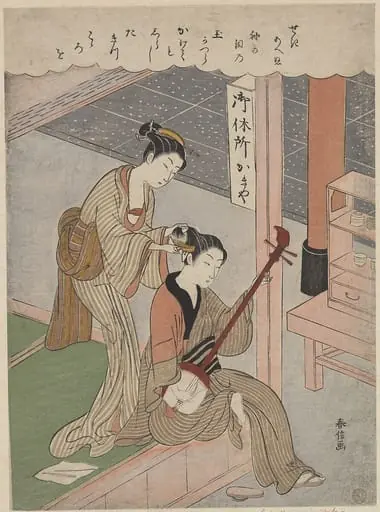
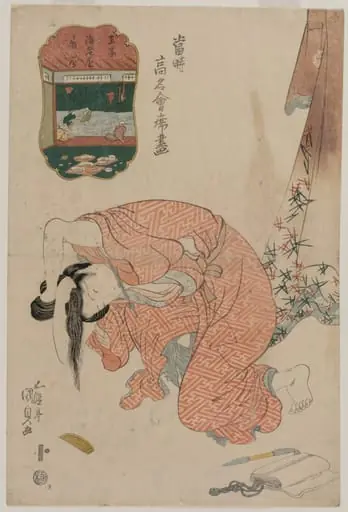 Woman Tying Her Hair (from the series Famous Restaurants of the Present Day)
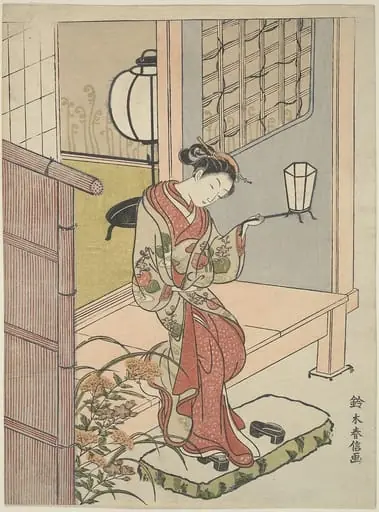 Untitled
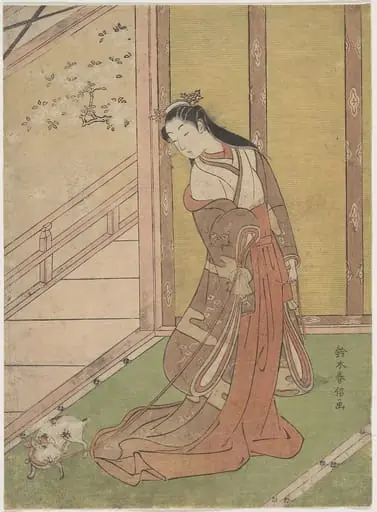 Untitled
 Untitled
 Untitled
 Descending Geese at Katata (From the series Elegant Women and the Eight Views of Lake Biwa)
 The Kabuki Actor Ichikawa Danjûrô II (1689-1758)
 Untitled
 Young Woman Kneeling by a Stand with a Ceremonial Cap (from the series The Six Immortal Poets in Elegant Modern Dress)
 Woman Running Past a Willow Tree in a Breeze
 Muraogi, from the series The False Murasaki's Rustic Genji (Nise Murasaki Inaka Genji)