Artwork
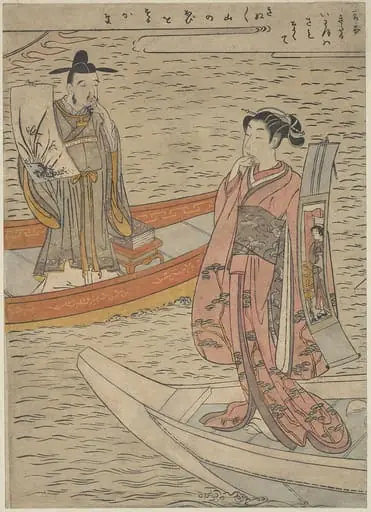
井手の玉川|The Tama River at Ide, Yamashiro Province
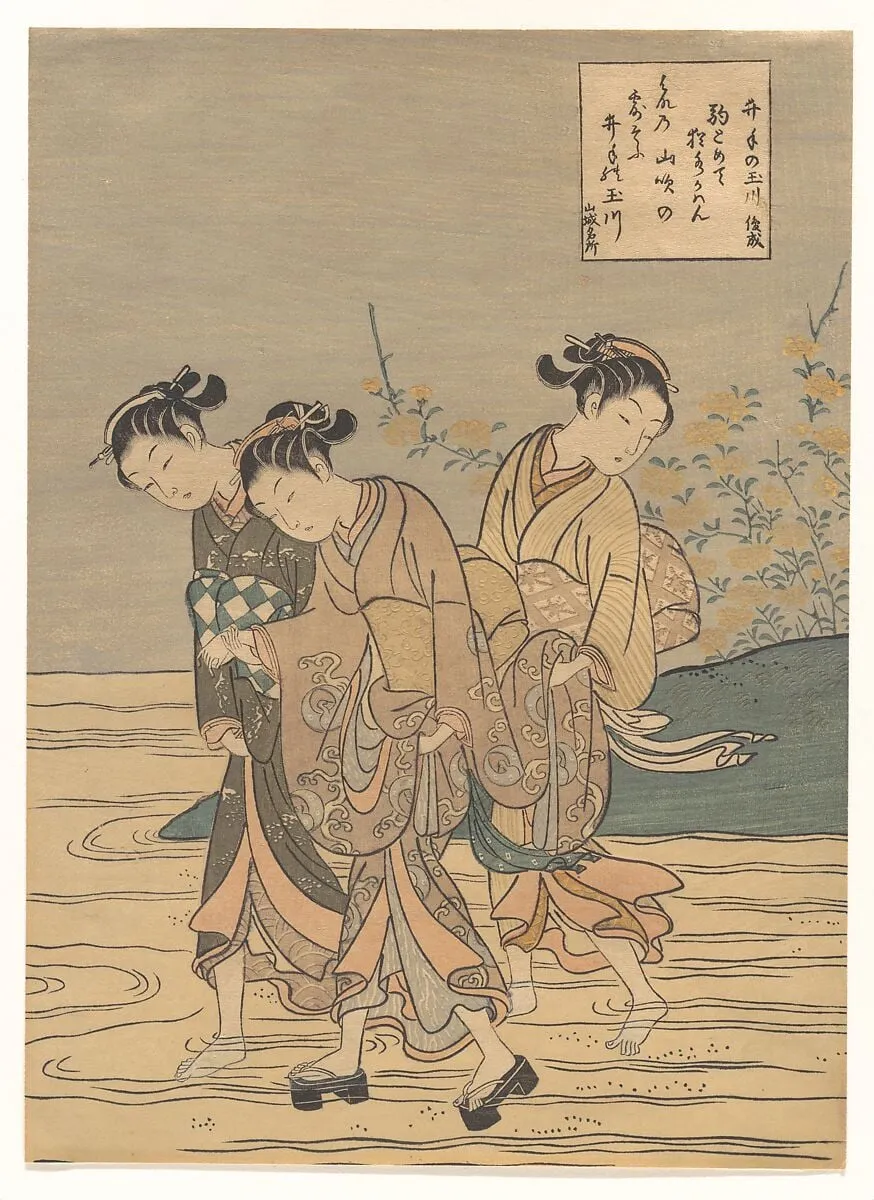
井手の玉川|The Tama River at Ide, Yamashiro Province is an ink print by the Romanticist artist Suzuki Harunobu. It dates from 1766 and is held in the collection of the Metropolitan Museum of Art.
About this work
Overview
The work is part of the collection at The Metropolitan Museum of Art, where it exemplifies the refined aesthetic of mid-Edo period civilian life.
Created around 1766, this woodblock print by Suzuki Harunobu depicts a quiet riverside scene in Yamashiro Province. Rendered in ink and color on paper, it belongs to the ukiyo-e tradition of Japanese printmaking. The work is part of the collection at The Metropolitan Museum of Art, where it exemplifies the refined aesthetic of mid-Edo period civilian life. Its delicate composition and muted palette reflect a shift toward intimate, lyrical subjects in print art.
Subject & Meaning
Three women stroll along the bank of the Tama River, their long robes swaying with subtle motion. Two carry fans, suggesting a leisurely outing, perhaps during spring or early summer. The calm water and distant hills evoke tranquility, while the pale yellow blossoms and green shrubs hint at seasonal change. The scene avoids narrative drama, instead emphasizing quietude and the dignity of everyday movement in a natural setting.
Technique & Style
Harunobu employed nishiki-e, a multi-block printing method that allowed for subtle gradations of color. Soft hues—pale yellows, muted greens, and light blues—blend seamlessly, enhancing the scene’s serenity. Fine lines define the folds of the robes and the ripples in the water, while the patterns on the garments are rendered with intricate yet restrained detail. The overall effect is one of gentle motion, achieved through delicate line work and minimal contrast.
History & Provenance
The print was produced during Harunobu’s mature period, when he pioneered full-color woodblock printing for civilian audiences. It likely circulated as a single-sheet print, collected by urban patrons drawn to poetic landscapes and scenes of daily life. The work entered The Metropolitan Museum of Art’s collection in the 20th century, where it remains a key example of Edo-period printmaking, preserved in its original condition.
Context
In mid-18th century Japan, urban culture flourished, and prints like this one catered to a growing middle class seeking beauty in ordinary moments. Harunobu’s focus on women in natural settings aligned with a broader trend toward emotional subtlety in ukiyo-e. Unlike earlier prints emphasizing theater or courtesans, this work reflects a quieter, more contemplative mode, mirroring the values of refined taste in Edo-period society.
Legacy
Harunobu’s use of soft color and lyrical composition influenced generations of printmakers, helping to elevate ukiyo-e beyond popular entertainment into a respected art form. This print, among others, contributed to the international appreciation of Japanese aesthetics in the 19th century. Its enduring presence in major collections underscores its role as a quiet but pivotal work in the evolution of Japanese graphic art.
Artist & collection

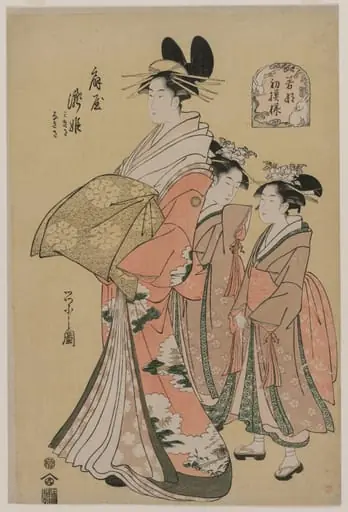 The Courtesan Takihime and Attendants (from the series New Patterns of Young Greens)
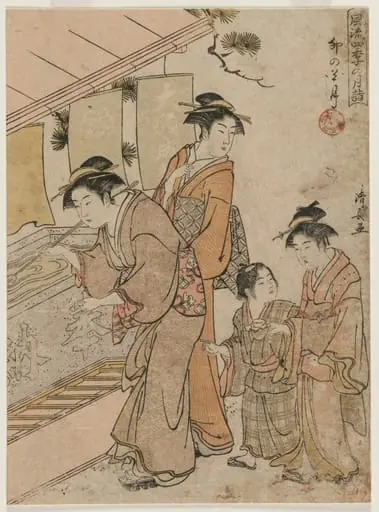 The Fourth Month (from the series Fashionable Monthly Visits to Temples in the Four Seasons)
 Ukiyoe Ga|The Beauty of the Floating World
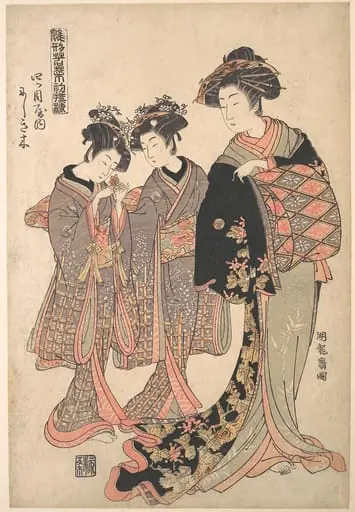 『雛形若菜初模様 四ツ目屋内 にしき木』|The Courtesan Nishikigi of the Yotsumeya Brothel, from the series “A Pattern Book of the Year’s First Designs, Fresh as Spring Herbs” (“Hinagata wakana hatsu moyō”)
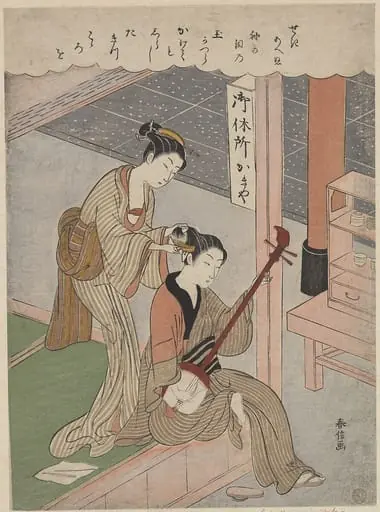
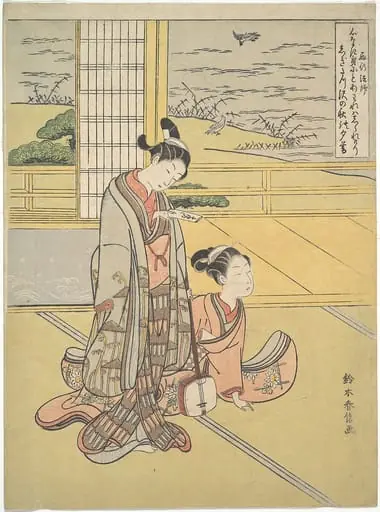 鈴木春信画 見立三夕 「西行法師」|A Young Man and Woman with a Shamisen; Monk Saigyō, from a series alluding to the Three Evening Poems (Sanseki waka)
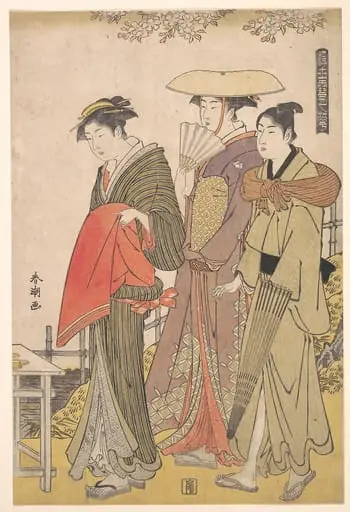
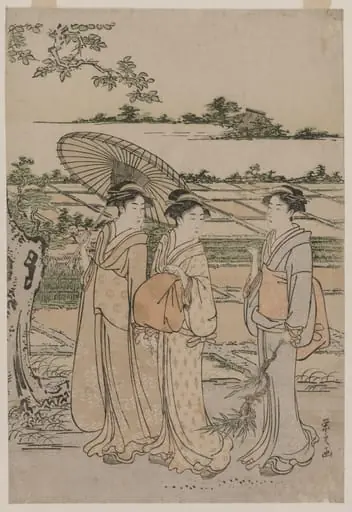 Three Women Strolling in the Countryside
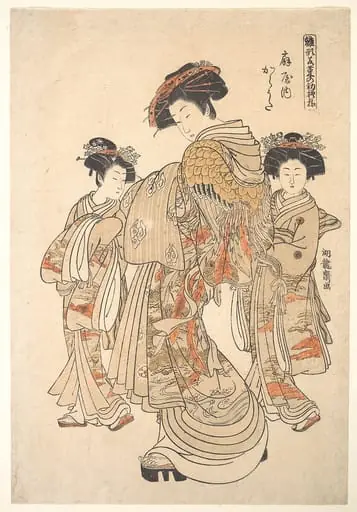 『雛形若菜の初模様 扇屋内 からうた』|The Courtesan Karauta of the Ōgiya Brothel, from the series “A Pattern Book of the Year’s First Designs, Fresh as Spring Herbs” (“Hinagata wakana no hatsu moyō”)
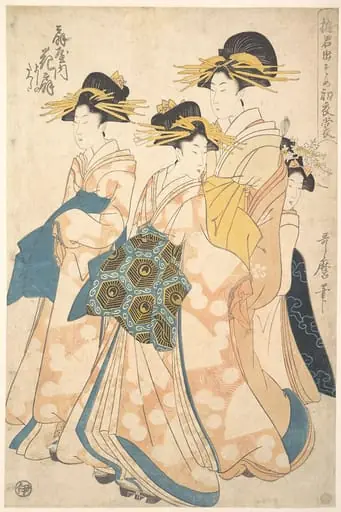 遊君出そめ初衣裳 扇屋内花扇|The Oiran Hanaogi of Ogiya attended by Two Shinzo and Her Kamuro Yoshino
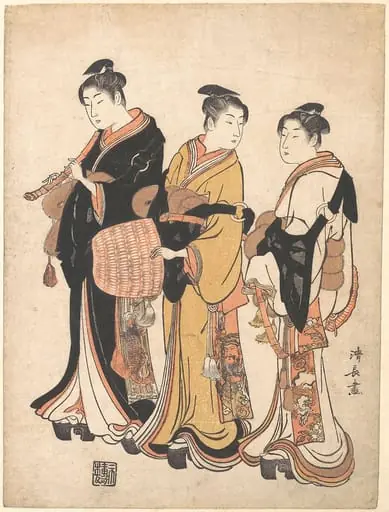 Untitled