Artwork
Untitled
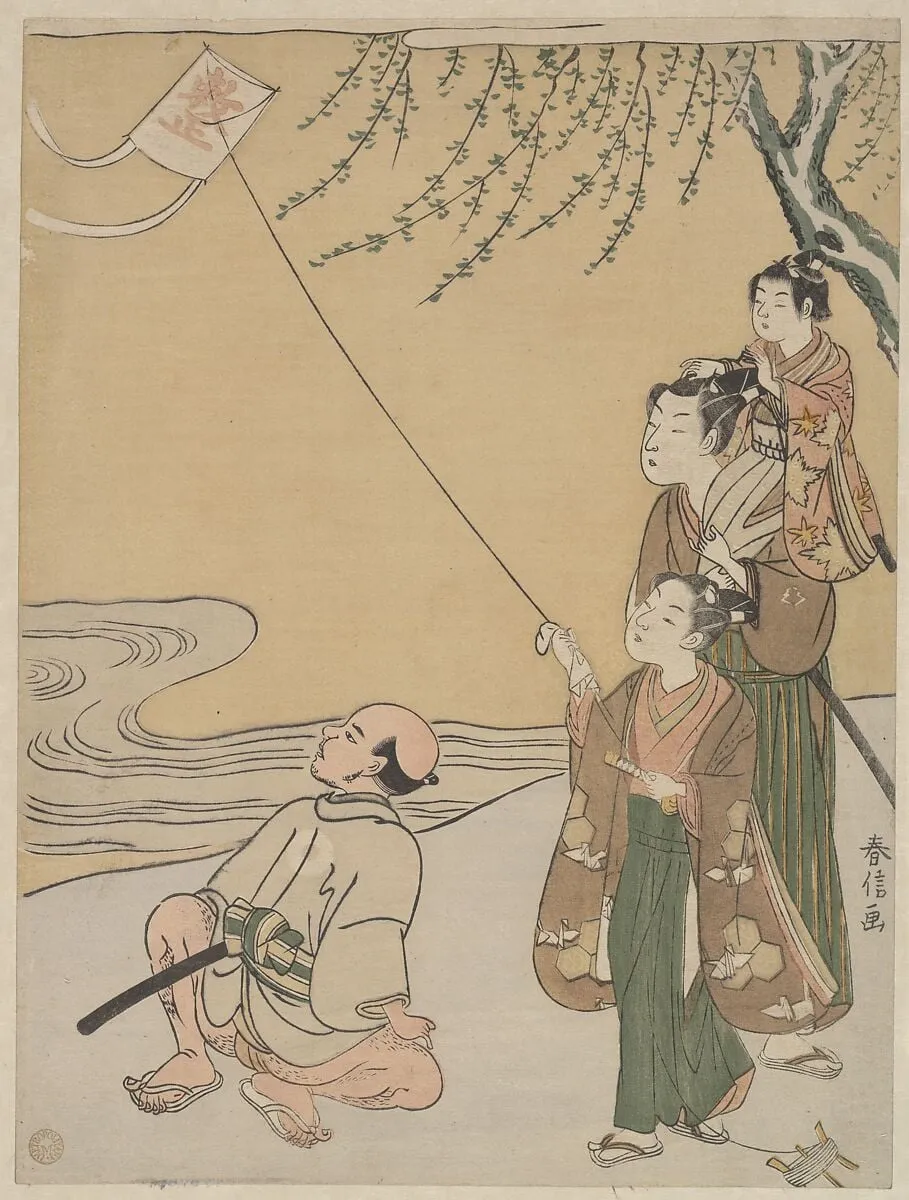
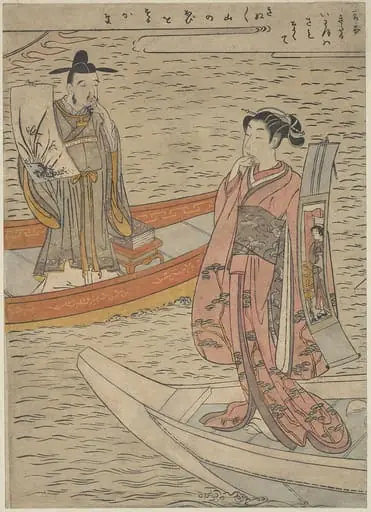
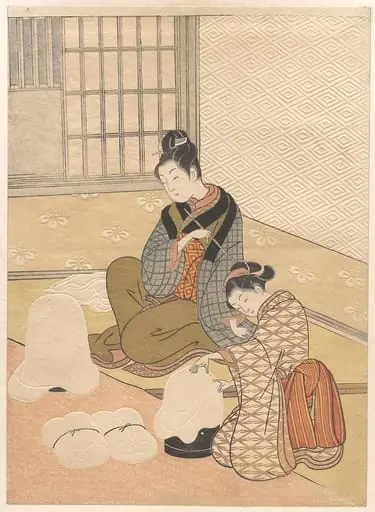
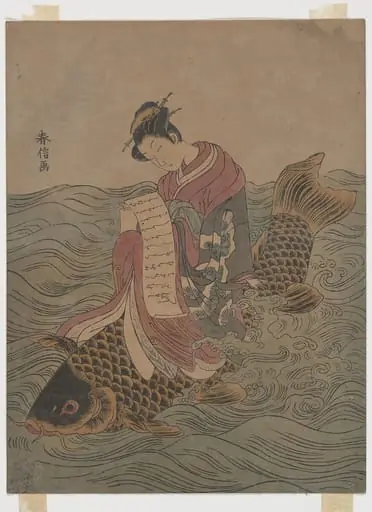
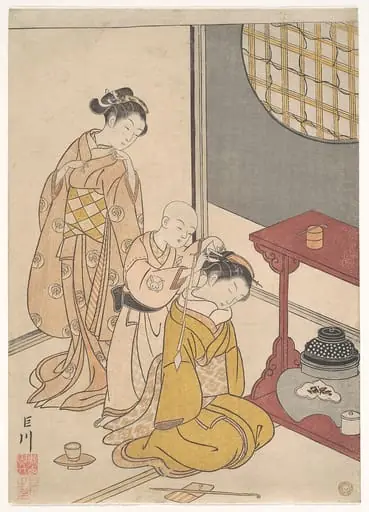
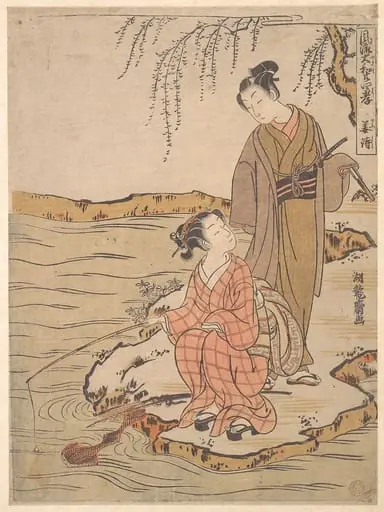
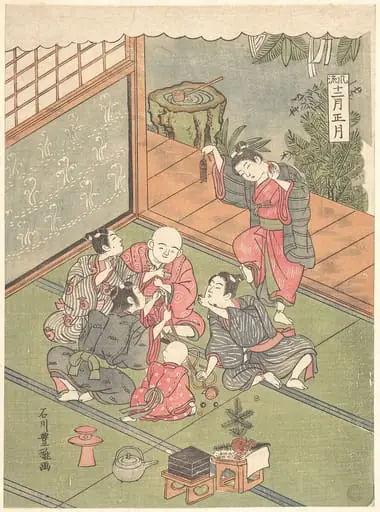
Untitled is an ink print by the Romanticist artist Suzuki Harunobu. It dates from 1766 and is held in the collection of the Metropolitan Museum of Art.
About this work
Overview
Created around 1766, this untitled woodblock print by Suzuki Harunobu presents a lively outdoor scene in which a woman in a pink kimono assists a young boy in launching a kite shaped like a carp. Two onlookers stand behind them, observing the activity under a muted gray sky. The composition is dominated by vivid reds, blues and greens that contrast with the background.
Subject & Meaning
The print captures a moment of everyday leisure in Edo‑period Japan, emphasizing family interaction and seasonal recreation. The carp‑shaped kite, a symbol of perseverance and good fortune, underscores the cultural significance of kite‑flying as a communal pastime, while the presence of both genders reflects the inclusive nature of such festivities.
Technique & Style
Harunobu employed a multi‑block color process, carving a separate woodblock for each hue and printing them sequentially onto a single sheet of paper. This method, relatively novel at the time, allowed for the bright, saturated palette evident in the red kimono, blue sky accents and green foliage, moving beyond the earlier reliance on monochrome or hand‑applied color.
History & Provenance
The work belongs to the early phase of nishiki-e, or full‑color woodblock prints, which emerged in the mid‑1760s. Prior to this development, most ukiyo‑e prints were produced in black ink with optional hand‑coloring. Harunobu’s innovation contributed to the rapid spread of polychrome prints throughout Japan, influencing subsequent artists and publishers.
Context
Set against a soft, overcast sky, the scene reflects the seasonal atmosphere of late spring or early summer, when kite‑flying was popular among urban residents. The inclusion of a young boy and his caretaker highlights the transmission of cultural practices across generations within the bustling neighborhoods of Edo.
Artist & collection

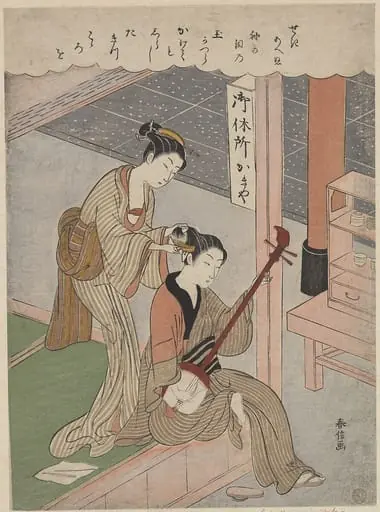
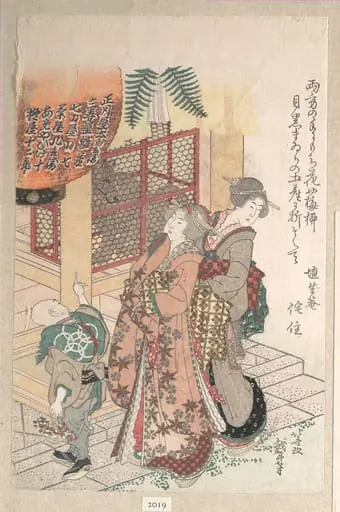 初詣|Young Women Visiting a Shinto Shrine
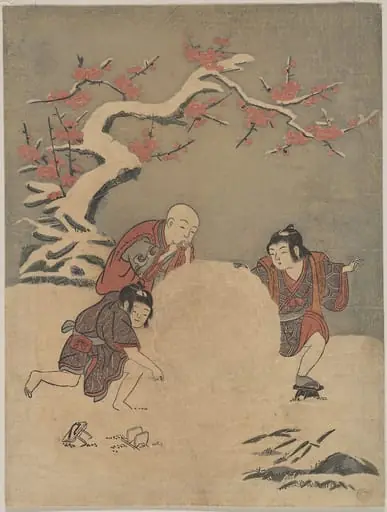 Untitled
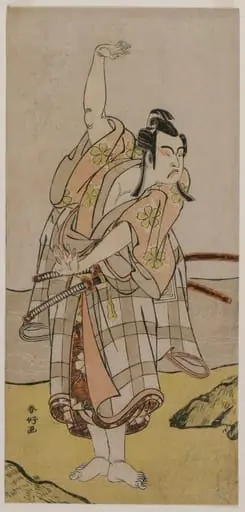 Actor Ichikawa Yaozō II as Sakuramaru
 Untitled
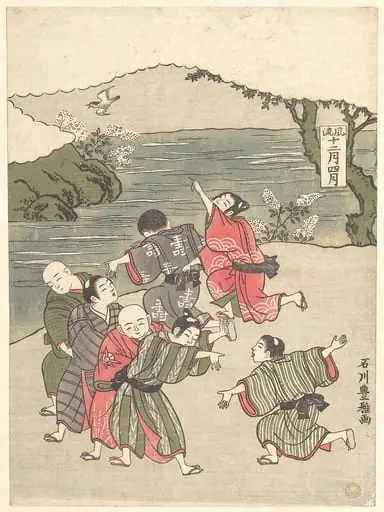 Shi Gatsu|The Fourth Month
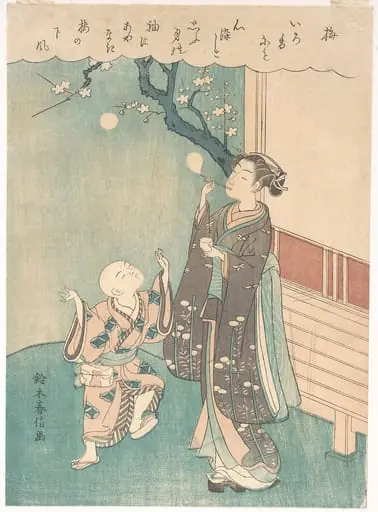 梅|Blowing Soap Bubbles Under the Plum Blossom
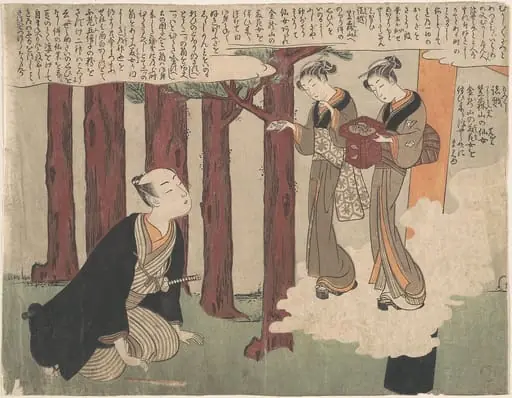 Untitled
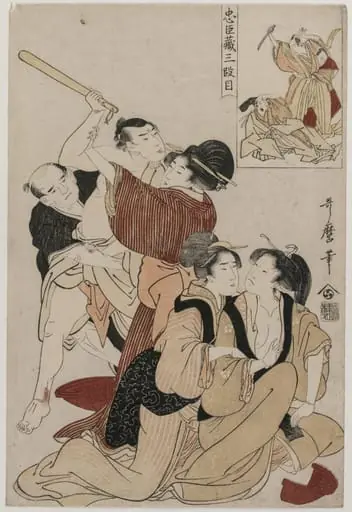 Chushingura: Act III of The Storehouse of Loyalty
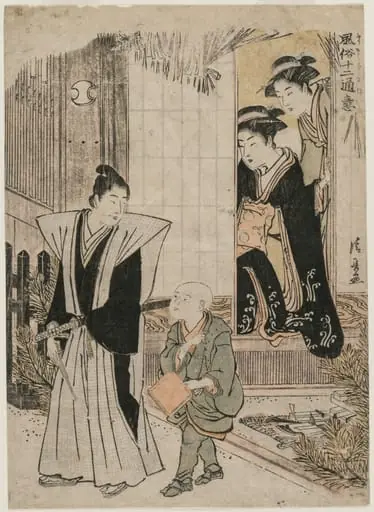 The First Month (from the series Popular Presentations)
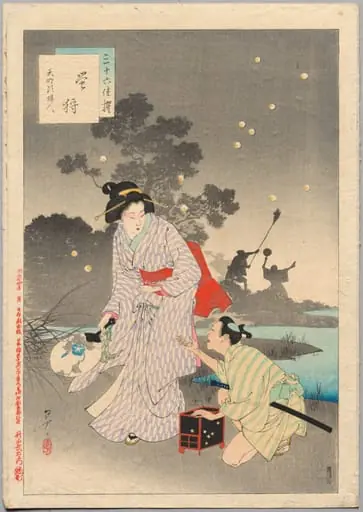 Chasing Fireflies, A Lady of the Tenmei Era (1781-1789), from the series Thirty-six Elegant Selections
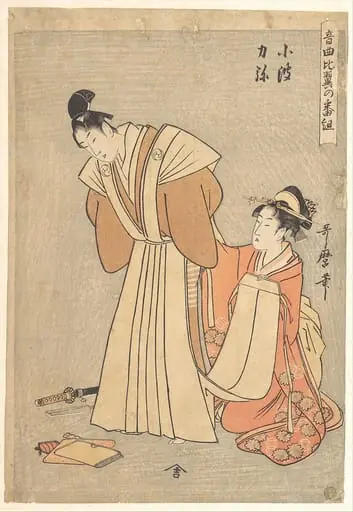 音曲比翼の番組 小波 力弥|Rikiya and Konami, from the series A Program with Music about Loving Couples (Ongyoku hiyoku no bangumi)
 Shō gatsu|The First Month