Artwork
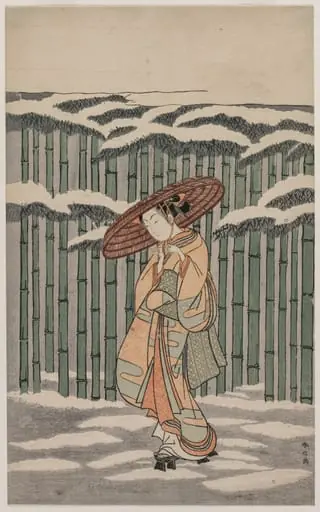
鈴木春信画 雪中に筍を掘る女 見立孟宗|Woman Digging Bamboo Shoots in the Snow, or Parody of Meng Zong (Mōsō), from Twenty-Four Paragons of Filial Piety
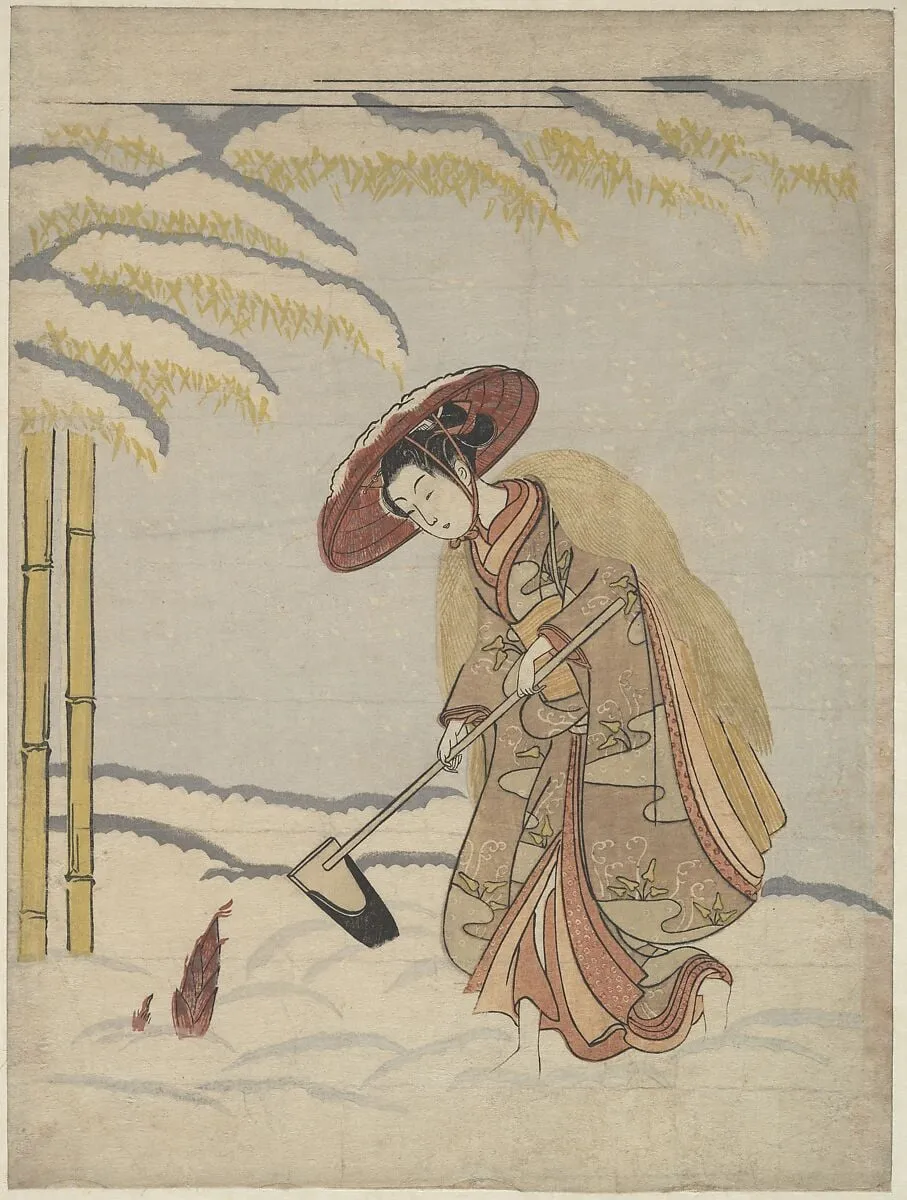
鈴木春信画 雪中に筍を掘る女 見立孟宗|Woman Digging Bamboo Shoots in the Snow, or Parody of Meng Zong (Mōsō), from Twenty-Four Paragons of Filial Piety is an ink print by the Romanticist artist Suzuki Harunobu. It dates from 1765 and is held in the collection of the Metropolitan Museum of Art.
About this work
Overview
The scene reimagines the legend of Meng Zong, who wept over his mother’s illness and caused bamboo to sprout in winter.
Created around 1765 by Suzuki Harunobu, this woodblock print is part of a series illustrating the Twenty-Four Paragons of Filial Piety, a Chinese moral tradition adapted into Japanese culture. The scene reimagines the legend of Meng Zong, who wept over his mother’s illness and caused bamboo to sprout in winter. Here, a woman performs the act, transforming the tale into a quiet, domestic moment grounded in Edo-period aesthetics.
Subject & Meaning
The print depicts a woman laboring in snow to unearth bamboo shoots, a direct reference to the legendary Meng Zong’s filial devotion. Rather than emphasizing dramatic emotion, Harunobu presents the act with calm resolve, suggesting that piety resides in daily endurance. The substitution of a woman for the original male figure reflects a broader cultural shift, softening the moral tale into a gentle, humanized narrative of care.
Technique & Style
Harunobu employs nishiki-e, a multi-block color printing technique, to achieve subtle gradations and delicate tones. The palette is restrained—soft earth tones, pale bamboo, and a touch of crimson in the hat—enhancing the winter stillness. Fine, flowing lines define the kimono folds and snowdrifts, while the absence of sharp contrasts lends the scene a hazy, lyrical quality characteristic of his mature style.
History & Provenance
The print entered the collection of The Metropolitan Museum of Art through established channels of early 20th-century Japanese art acquisition. It was likely produced during Harunobu’s peak years, when he revolutionized ukiyo-e by popularizing full-color prints for a broad urban audience. Its survival in good condition reflects its early appeal and careful preservation among collectors.
Context
In mid-18th century Edo, illustrations of filial piety were widely circulated, blending Confucian ideals with local sensibilities. Harunobu’s reinterpretation of Chinese parables into intimate, feminine scenes catered to the tastes of middle-class patrons. The work reflects a cultural moment where moral instruction merged with aesthetic refinement, making virtue feel personal rather than didactic.
Legacy
Harunobu’s reinterpretation of classical themes influenced later ukiyo-e artists to explore domestic and emotional dimensions of traditional stories. This print exemplifies how moral narratives were transformed into quiet, visually poetic moments, shifting focus from grandeur to subtlety. Its enduring presence in major collections underscores its role in redefining the expressive potential of woodblock printing.
Artist & collection

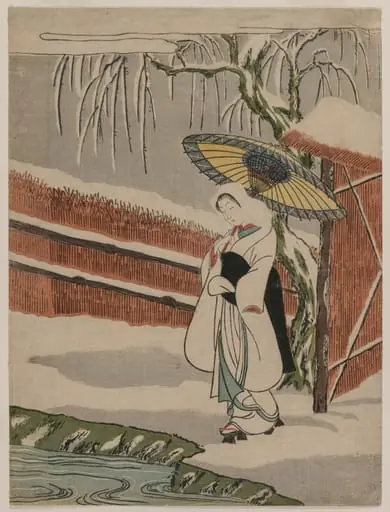 The Heron Maiden Standing Beneath a Willow Tree
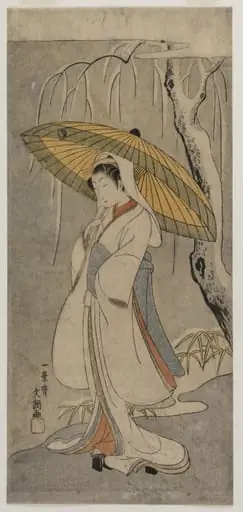 Segawa Kikunojo II as the Heron Maiden (from the series Ichimura Theater)
 Untitled
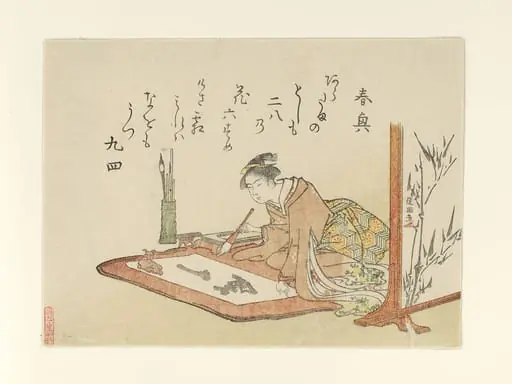 書初め図|Young Woman Writing Calligraphy
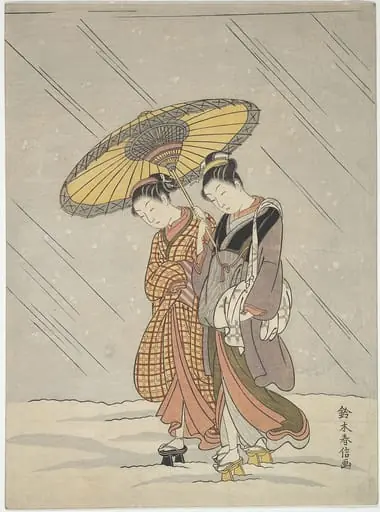 Untitled
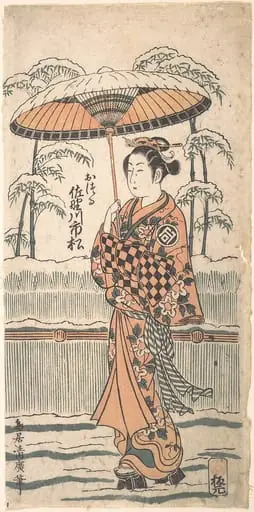 Untitled
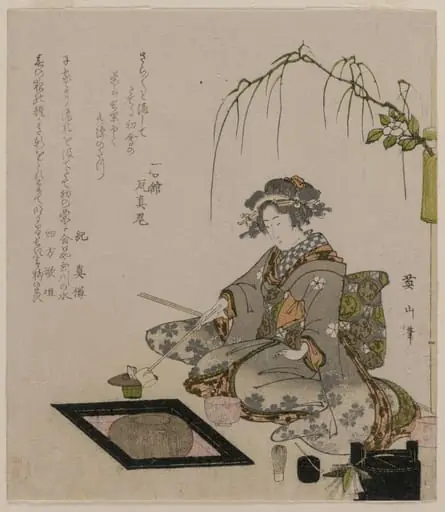 Woman Performing the Tea Ceremony
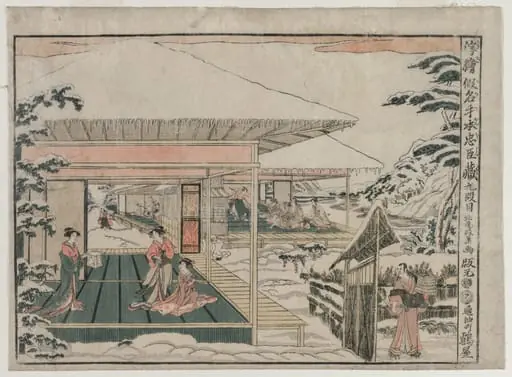 Chushingura: Act IX (from the series Perspective Pictures for The Treasure House of Loyalty)
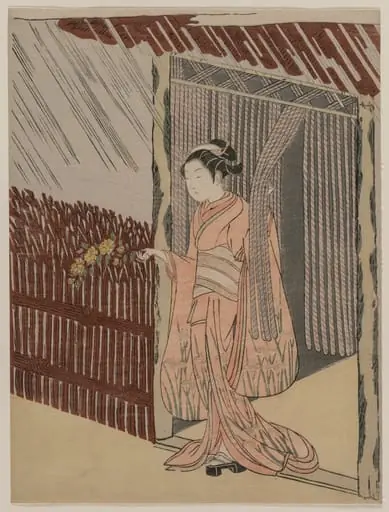 A Girl Dressing in Pink
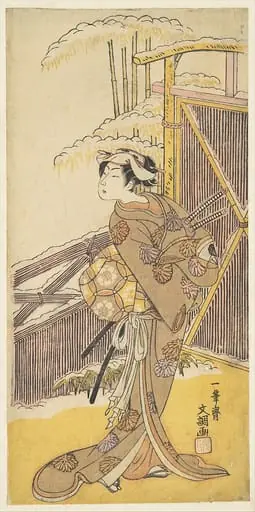 初世尾上菊五郎の戸無瀬|Onoe Kikugorō as Tonase, from Kanadehon Chūshingura (Kanadehon Chūshingura, Shosei Onoe Kikugorō no Tonase)
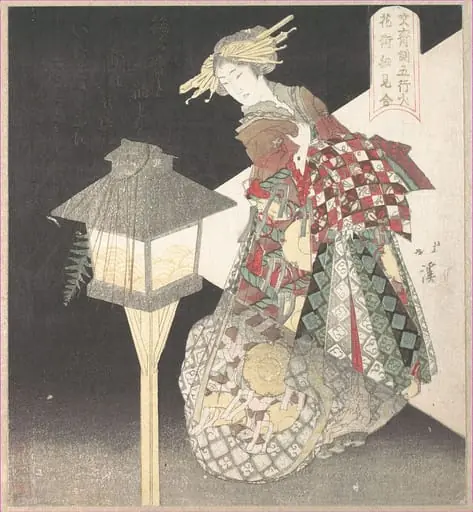 「文齊側五行火 花街細見合」|Courtesan by a Lantern, “Fire,” from the series Five Elements for the Bunsai Poetry Group, a Guide to the Yoshiwara Pleasure Quarters
 Passing the Bamboo Grove