Artwork
The Blessed in Paradise with the Virgin and St. John the Baptist before God
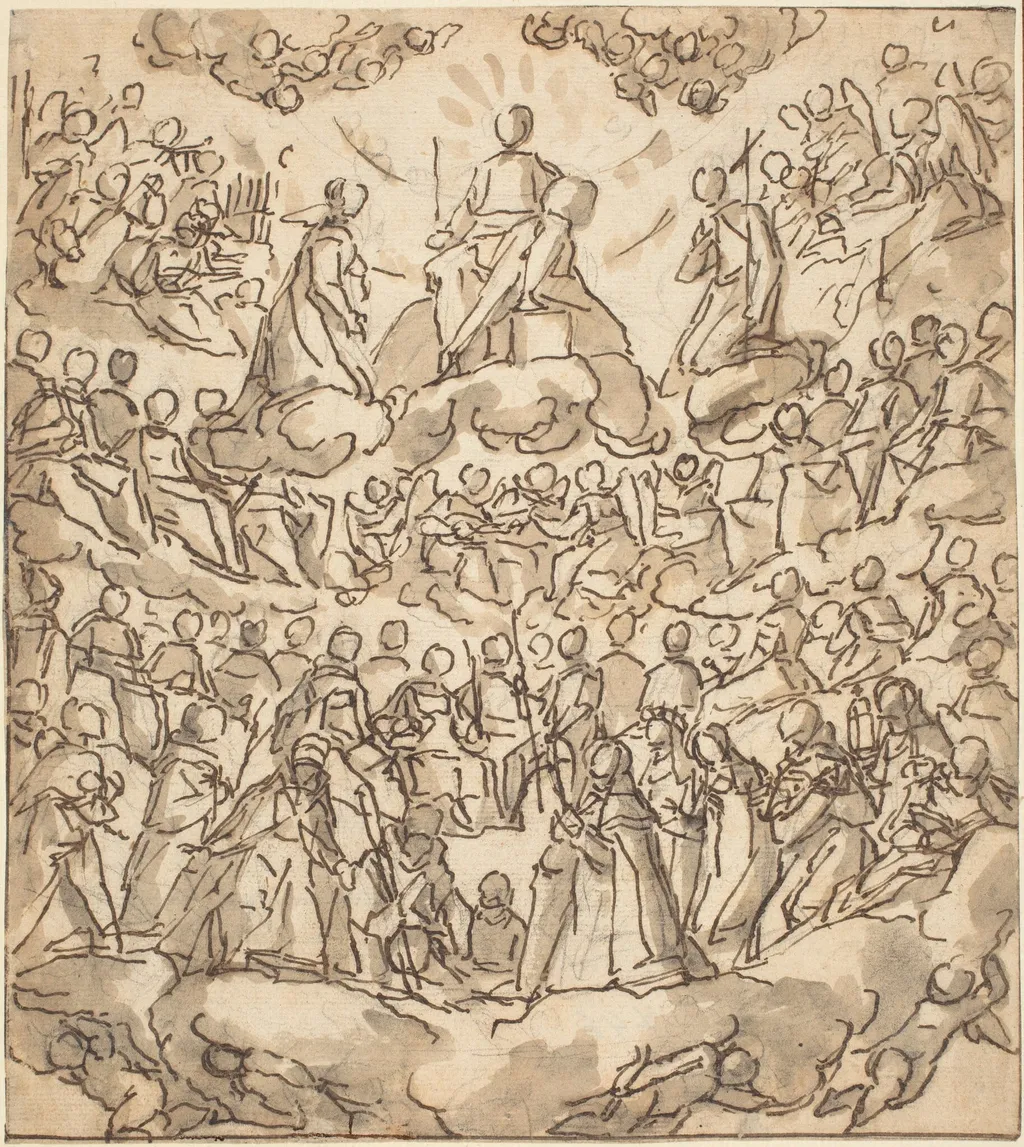
The Blessed in Paradise with the Virgin and St. John the Baptist before God is a chalk drawing by the Renaissance artist Lazzaro Tavarone. It dates from 1590 and is held in the collection of the National Gallery of Art.
About this work
Overview
Its intricate linework and layered shading reflect a meticulous approach to depicting spiritual hierarchy within a single plane.
This drawing by Lazzaro Tavarone, dated around 1590, is executed in pen and brown ink with wash over black chalk on laid paper. The composition densely fills the sheet with a multitude of small, interwoven figures, suggesting a celestial assembly. The work was later mounted on a support, preserving its fragile medium. Its intricate linework and layered shading reflect a meticulous approach to depicting spiritual hierarchy within a single plane.
Subject & Meaning
The scene portrays the blessed in paradise, flanked by the Virgin Mary and Saint John the Baptist, all oriented toward a divine presence above. Figures are arranged in tiers, with central figures appearing more composed—some holding staffs, others gazing upward—signaling reverence and ascension. The surrounding mass of bodies, in motion or suspended, evokes the multitude of souls in eternal contemplation, conveying a vision of heavenly order amid chaos.
Technique & Style
Tavarone employed rapid, swirling pen strokes and layered brown washes to model form and depth. Cross-hatching and varying ink density create a sense of volume and atmospheric tension. The underlying black chalk underdrawing guides the composition, while the sketchy, energetic lines suggest movement and spiritual energy. The background dissolves into a turbulent field of marks, blurring the boundary between sky and crowd.
History & Provenance
The drawing has been preserved through careful mounting and conservation. Its attribution to Tavarone is supported by stylistic parallels with his known works and archival records from late 16th-century Genoa. Though its early ownership is undocumented, it entered institutional collections in the modern era, where its technical complexity has drawn scholarly attention as an example of Genoese draftsmanship.
Context
Created during the Counter-Reformation, the image reflects Catholic devotional themes emphasizing the afterlife and intercessory saints. Tavarone, influenced by Lombard and Venetian traditions, adapted Mannerist tendencies toward crowded, dynamic compositions. This drawing aligns with contemporary religious imagery that sought to visualize divine realms for the faithful, blending theological symbolism with expressive draftsmanship.
Legacy
The work stands as a testament to Tavarone’s skill in translating spiritual concepts into linear form. While not widely reproduced, it contributes to understanding how Genoese artists approached sacred subjects through drawing. Its intricate layering and emotional intensity influenced later generations of draftsmen interested in depicting celestial realms with both precision and poetic ambiguity.
Artist & collection


 The Virgin, Queen of Heaven
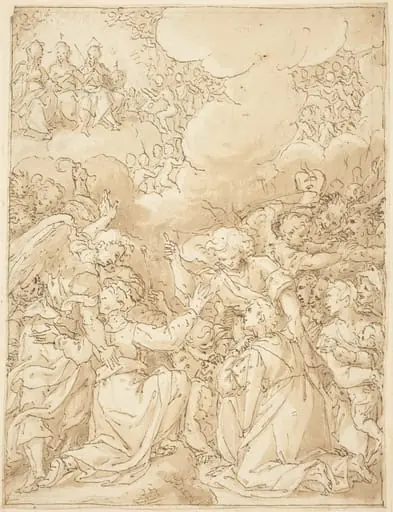 The Last Judgment
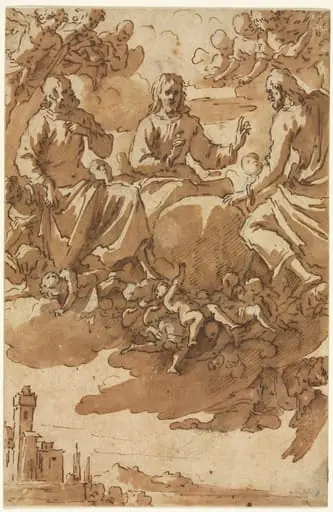 Christ in Glory with Two Saints
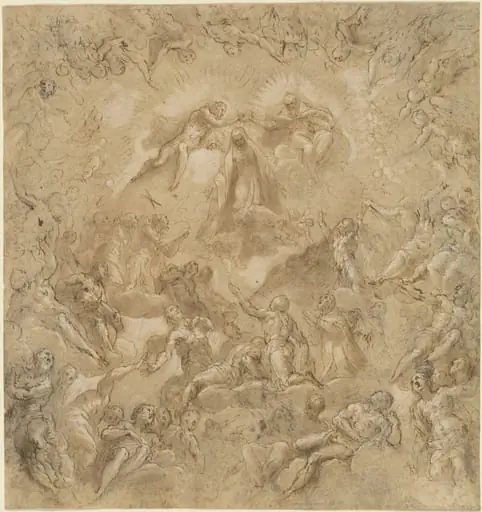 The Coronation of the Virgin
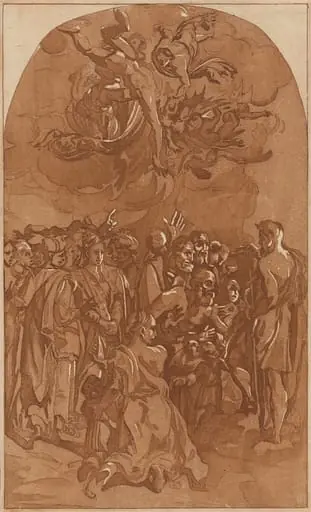 Saint John Preaching
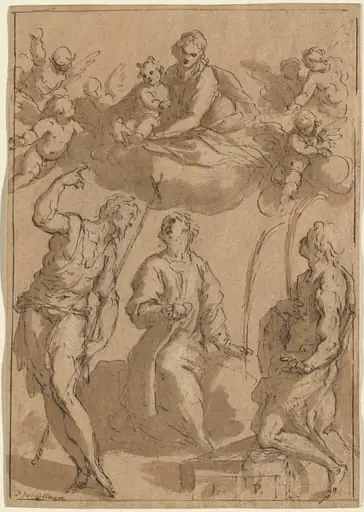 Madonna and Child in Glory with Saints John the Baptist, Stephen, and Lawrence
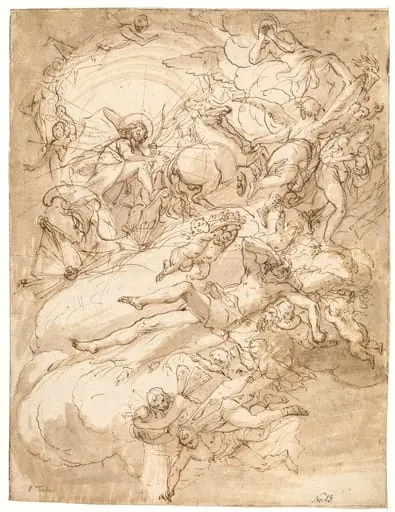 Apollo in his chariot, design for a ceiling painting
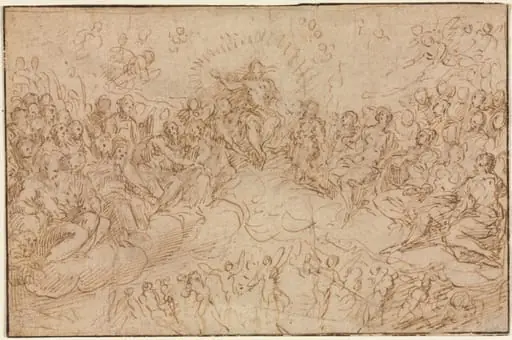 The Last Judgment
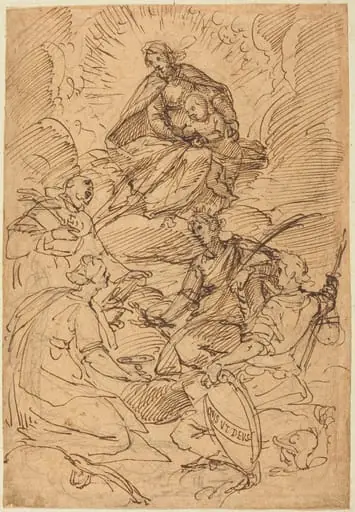 The Madonna and Child in Glory Adored by Saints
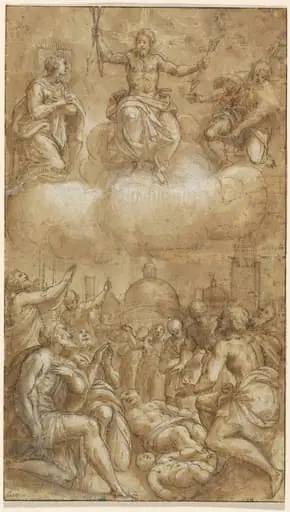 Plague Victims Pleading for Help from Christ, the Virgin, and Saint Roch
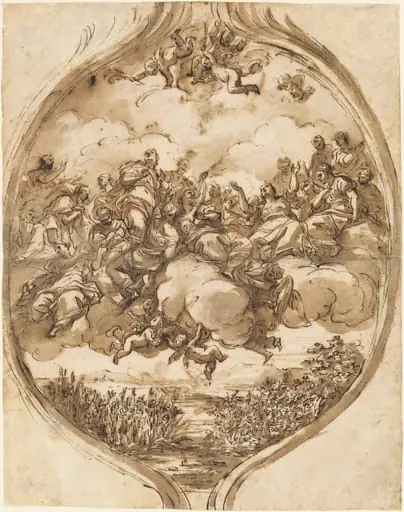 Cloud-Borne Saints above a Lake
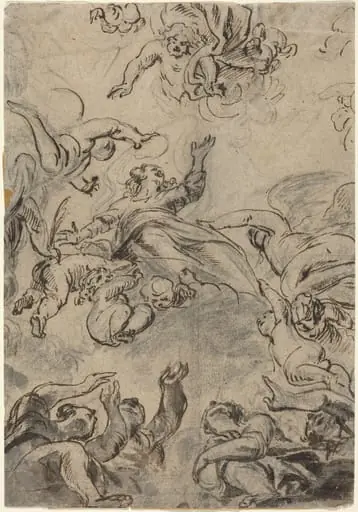 The Assumption of the Virgin