Artwork
Iron Laht at the Kootub, Old Delhi
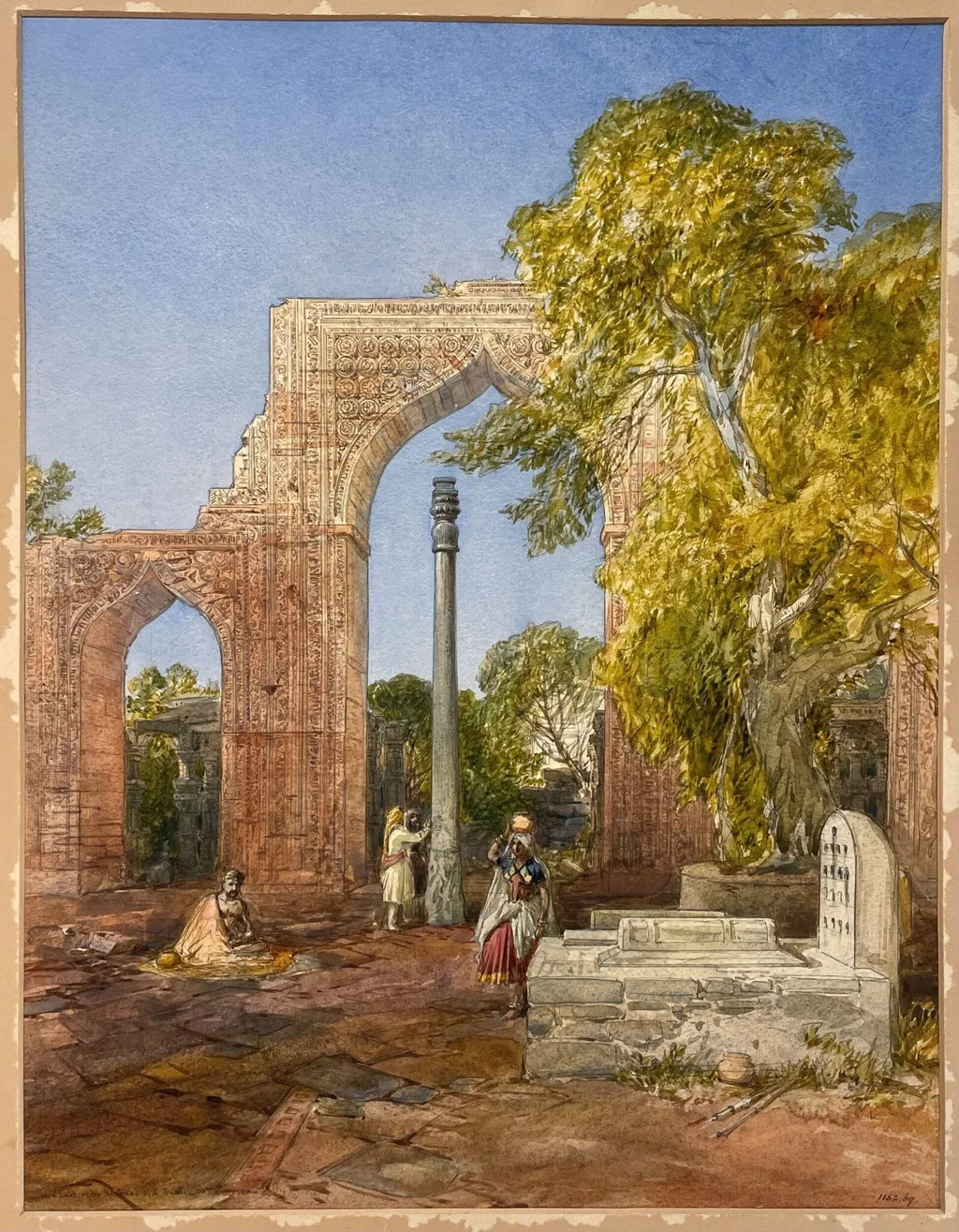
Iron Laht at the Kootub, Old Delhi is a paint painting by the Impressionist artist William Simpson. It dates from 1864 and is held in the collection of the Victoria and Albert Museum.
About this work
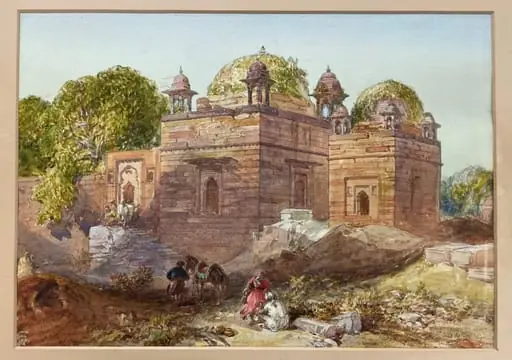
William Simpson painted a watercolour in 1864. It shows Iron Laht at Kootub in Old Delhi. Simpson made quick sketches in India, then finished the work later in London.
Simpson was known for war art. He travelled India after the 1857 revolt. This scene shows a famous iron pillar.
Look up the Victoria and Albert Museum for more by Simpson.
Overview
Iron Laht at the Kootub, Old Delhi is a watercolour painting created by William Simpson in 1864. The artwork depicts a scene from the Qutub Minar Complex in Delhi, India.
Subject & Meaning
The painting features the Iron Pillar, a notable monument within the Qutub Minar Complex. The scene is set in Old Delhi, a location significant to the 1857 Indian Revolt against British East India Company rule.
Technique & Style
Simpson's watercolour is characterized by its vivid colours and evocative representation of the landscape and architecture. The work was completed in London, based on sketches made during his travels in India.
History & Provenance
Simpson travelled to India in 1859, commissioned by Day and Sons to document sites associated with the 1857 Revolt. He visited Delhi on 29 December 1859 and made preparatory sketches, later refining them into finished watercolours in London.
Artist & collection

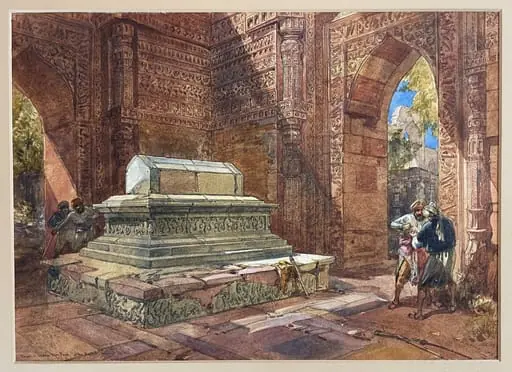 Tomb of Shams ud-Din Iltutmish at the Qutub Minar, Delhi
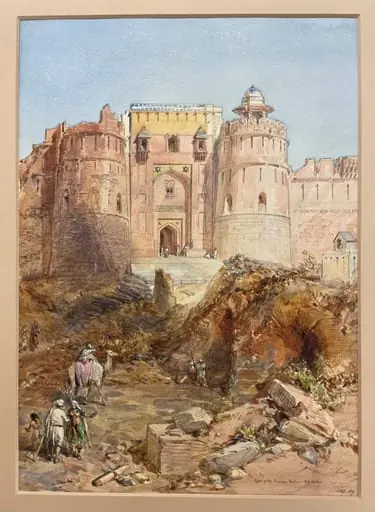 Gate of Purana Qila, Old Delhi
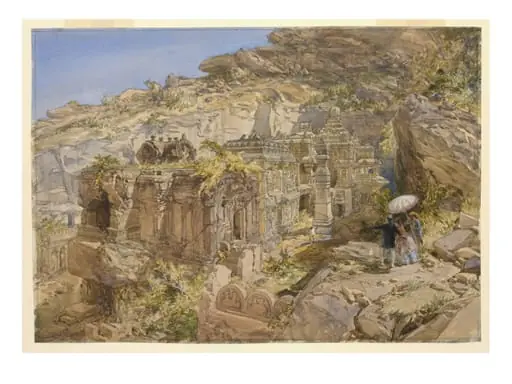 Kailasanatha temple, Ellora
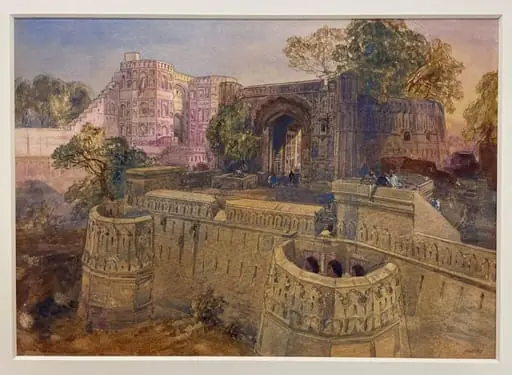 Taxali Darwaza, Lahore
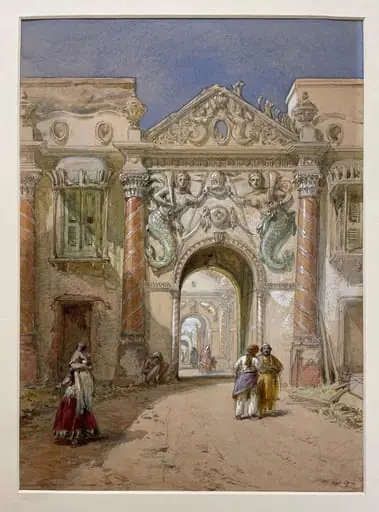 Mermaid gate, Kaiserbagh, Lucknow
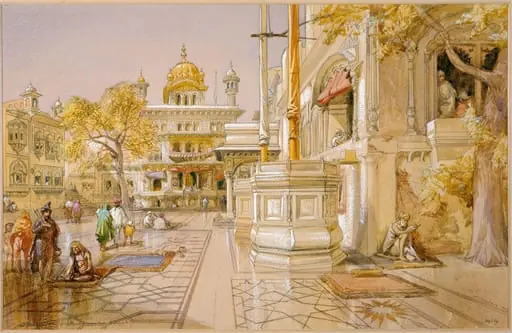 Akal Boonga at the Golden temple. Umritsar. Punjaub
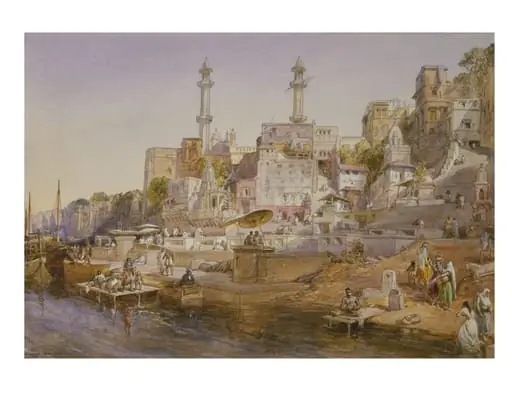 The Mosque of Aurangzeb and Panchganga Ghat from the Ganges, Benares.
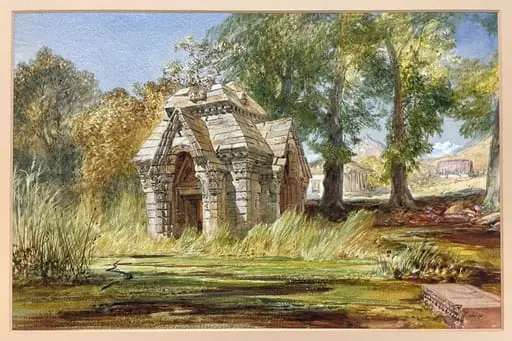 Pandrethan temple, Srinagar
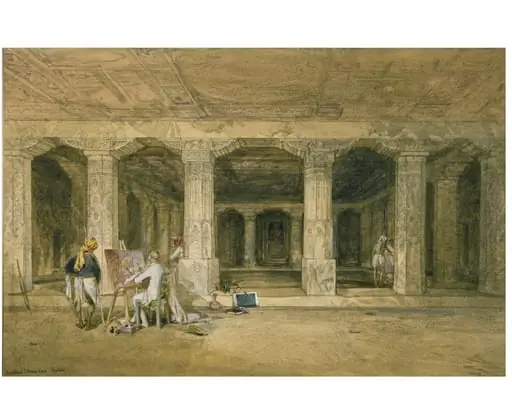 Buddhist vihara cave, Ajanta