Artwork
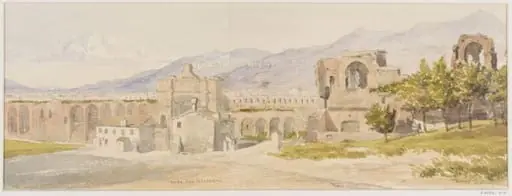
Porta San Giovanni, Rome
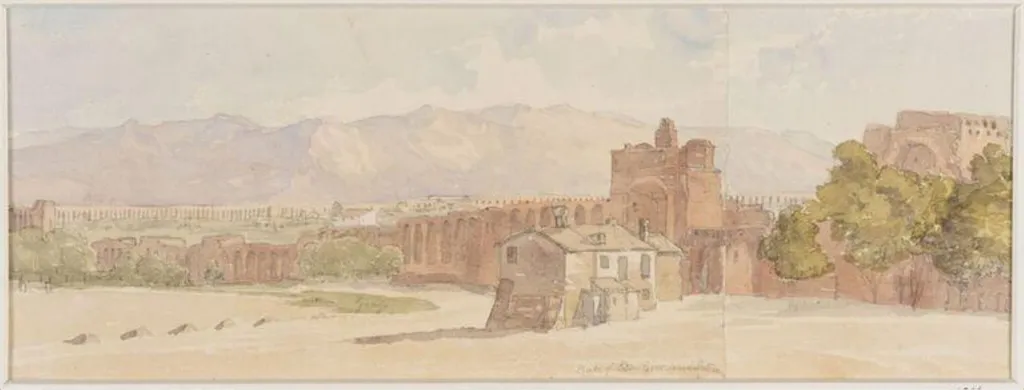
Porta San Giovanni, Rome is a watercolor work on paper by the Biedermeier artist Thomas Brittain Vacher. It dates from 1820 and is held in the collection of the Victoria and Albert Museum.
About this work
Overview
Thomas Brittain Vacher’s watercolour captures Porta San Giovanni, a historic gate in Rome’s Aurelian Walls. The scene is composed with quiet restraint, focusing on the gate’s weathered stone structure and the modest architecture just beyond. Soft atmospheric effects dominate, with distant mountains fading into a pale sky, reinforcing a sense of stillness and temporal distance.
Subject & Meaning
The painting presents the gate not as a monument but as an embedded element of everyday life. A small domestic building stands near the wall, suggesting the quiet coexistence of ancient infrastructure and ordinary habitation. The absence of figures or activity emphasizes solitude, inviting contemplation of time’s quiet erosion of urban grandeur.
Technique & Style
Vacher employs delicate watercolour washes to create a hazy, luminous atmosphere. Layers of translucent pigment suggest distance and air, while minimal detail in the gate and surrounding structures avoids visual clutter. The muted palette and soft edges reflect a preference for mood over precision, aligning with 19th-century topographical traditions that valued serenity over spectacle.
History & Provenance
Created during Vacher’s travels in Italy, the work belongs to a body of watercolours documenting Roman antiquities in their contemporary context. It likely originated as a personal record rather than a commissioned piece. The painting entered the Victoria and Albert Museum’s collection through later acquisition, preserving its role as a quiet witness to Rome’s evolving landscape.
Context
In the early 19th century, British artists frequently traveled to Italy to sketch ruins and cityscapes, often blending topographical accuracy with poetic mood. Vacher’s work fits within this tradition, where the focus shifted from grandeur to subtlety — capturing how ancient structures were absorbed into the rhythms of daily life, rather than standing as isolated relics.
Legacy
Though not widely exhibited, Vacher’s watercolours contribute to a broader archive of Romantic-era landscape observation. Their understated quality offers a counterpoint to more dramatic depictions of Rome, preserving a sense of intimacy and quiet endurance. Today, they remain valuable for their unembellished record of the city’s peripheral spaces.
Artist & collection
Artist
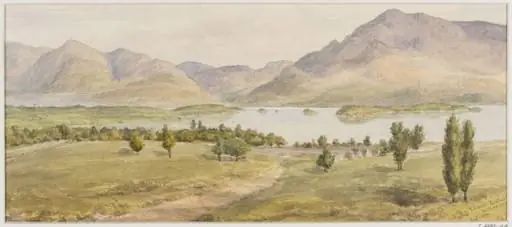
Thomas Brittain Vacher painted watercolours of skies, city streets and lakes in the 1800s.

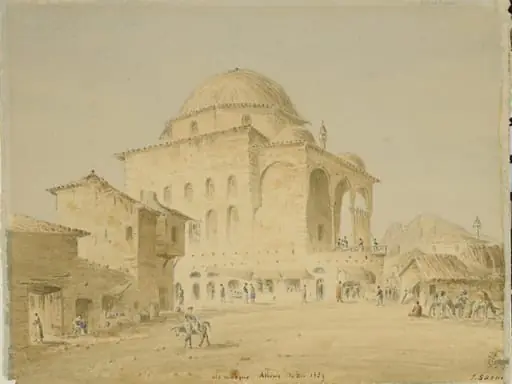 Το Τζαμί του Τζισδαράκη στο Μοναστηράκι
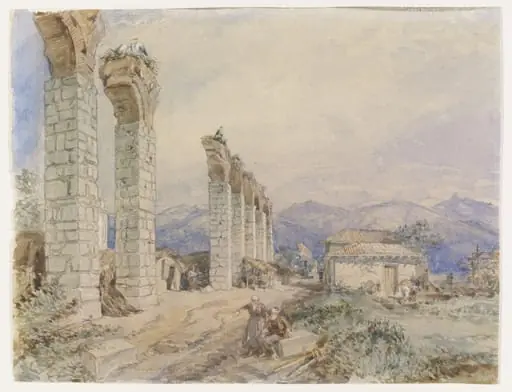 The Aqueduct - Ephesus
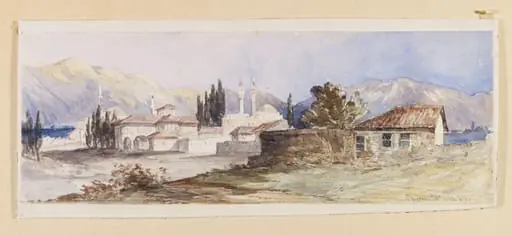 Smyrne
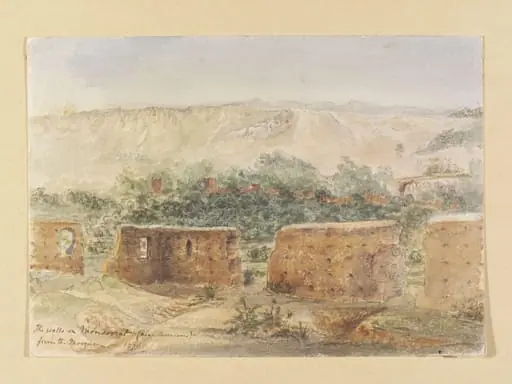 The walls on Monsoorat (near Tlemcen) from the Mosque
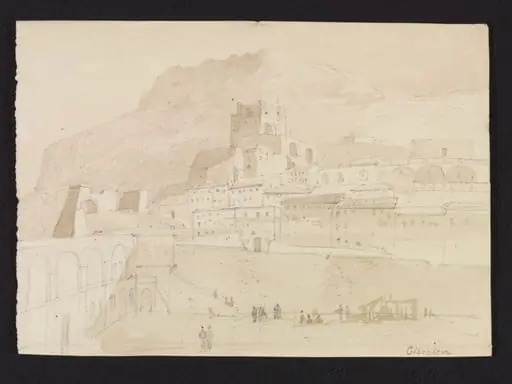 Gibralter
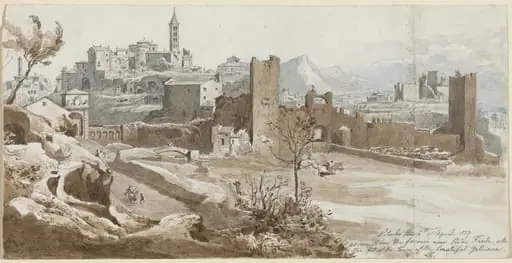 Viterbo
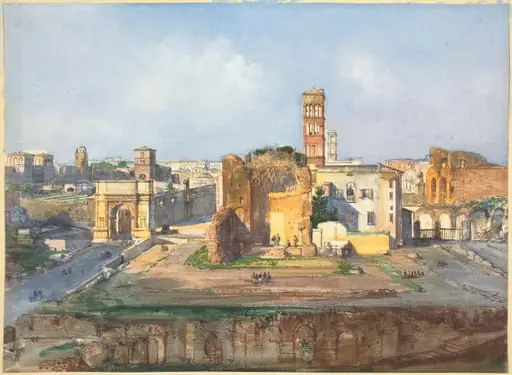 The Arch of Titus and the Temple of Venus and Rome near the Roman Forum
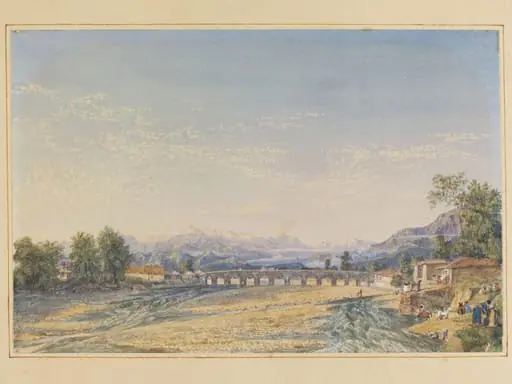 Bridge over the river Herauz at Amol, a town of Mazunderan
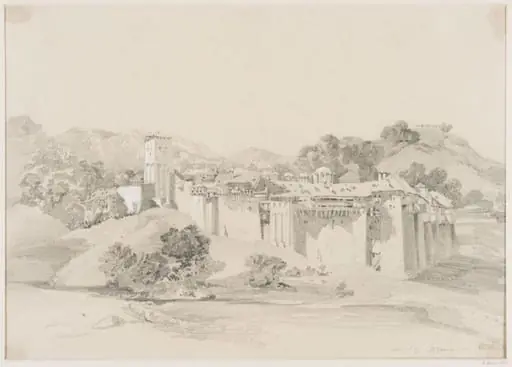 Convent of Niveron, or the Iberian
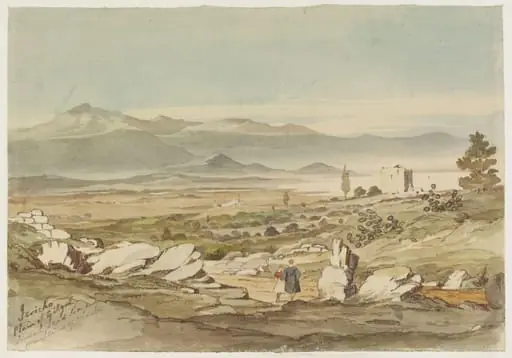 Jericho Plain of Gilgal, Jordan, Dead Sea, and Mountains of Moab