Artwork
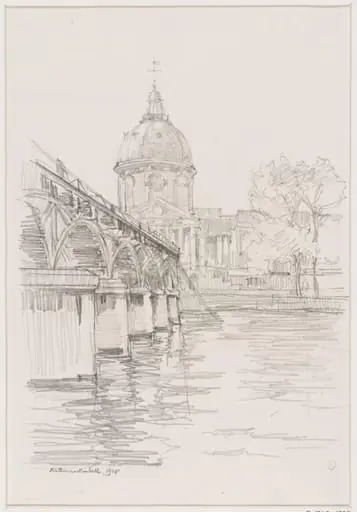
Ile de la Cité from the Institut, Paris
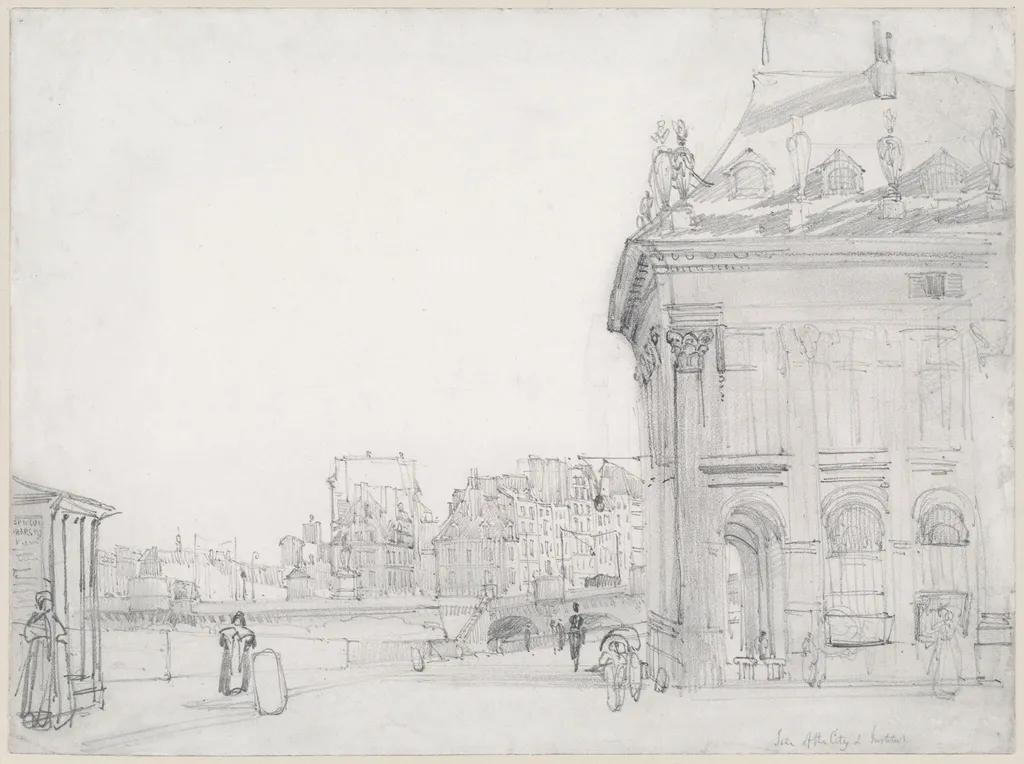
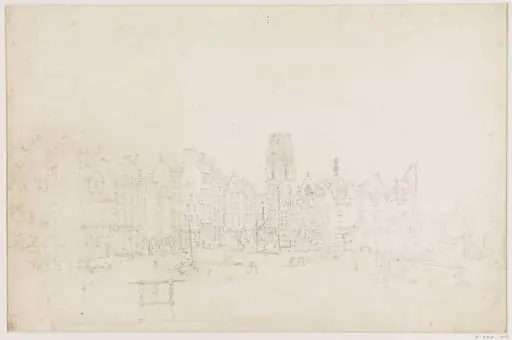
Ile de la Cité from the Institut, Paris is a graphite drawing by the Romanticist artist Thomas Shotter Boys. It dates from 1832 and is held in the collection of the National Gallery of Art.
About this work
Overview
Ile de la Cité from the Institut, Paris is a graphite drawing with stumping on wove paper, created by English artist Thomas Shotter Boys around 1832. The work captures a Parisian urban landscape from a vantage point near the Institut de France.
Subject & Meaning
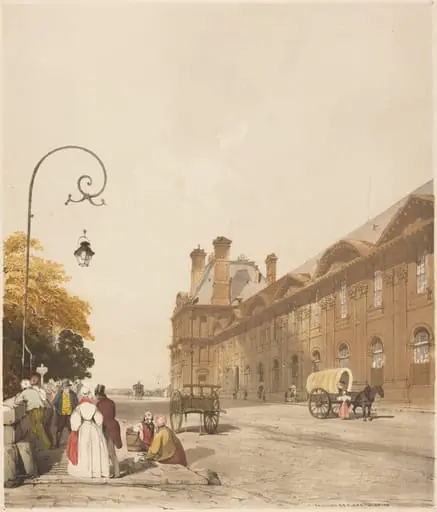
The drawing depicts a everyday Paris street scene, juxtaposing grand architectural elements—such as tall columns and a rooftop adorned with statues, including one resembling a horse-drawn chariot—with mundane activities: a woman by an open doorway, a horse-drawn carriage, and pedestrians on cobblestone streets.
Technique & Style
Boys employed loose, sketchy lines and stumping to quickly render light and shadow, achieving a sense of depth through chiaroscuro. This approach was characteristic of on-location drawing practices prevalent at the time.
History & Provenance
Created circa 1832 by Thomas Shotter Boys, an English watercolour painter and lithographer known for his cityscapes and architectural views. Specific provenance details are not provided.
Context
The work reflects the artistic practice of rapidly sketching outdoor scenes to capture immediate impressions of urban life and architecture, common among artists in the early 19th century.
Legacy
While specific legacy details of this piece are not provided, it contributes to the broader body of work documenting Parisian landscapes during the 19th century, reflecting the artistic and observational skills of Thomas Shotter Boys.
Artist & collection
Artist
Thomas Shotter Boys (1803–1874) was an English watercolour painter and lithographer, mostly producing cityscapes and images of buildings, although he produced some rural landscapes and marine subjects.