Artwork
Pavillon de Flore, Tuileries
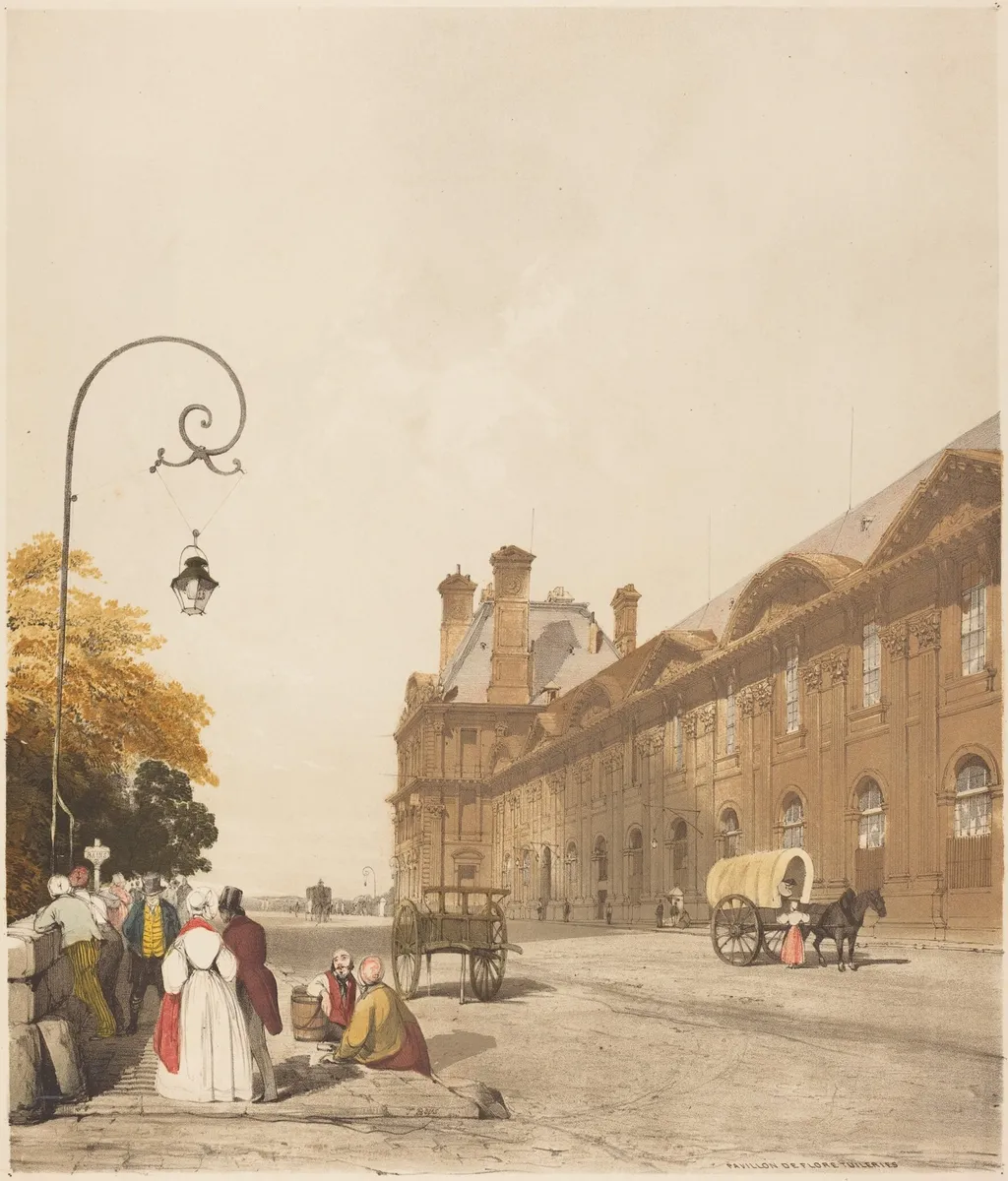
Pavillon de Flore, Tuileries is an ink print by the Romanticist artist Thomas Shotter Boys. It dates from 1839 and is held in the collection of the National Gallery of Art.
About this work
Overview
Thomas Shotter Boys created a color lithograph titled *Pavillon de Flore, Tuileries* in 1839. Executed on wove paper, the print captures a street view of the Pavillon de Flore within the Tuileries Gardens, juxtaposing the building’s classical façade with the everyday activity of passersby.
Subject & Meaning
The scene presents a bustling Parisian street: a group gathered near a lamppost, a woman in a white dress carrying a basket, a man seated on the curb repairing an object, and a horse‑drawn wagon parked before the pavilion’s tall windows and chimneys. The composition reflects the Romantic interest in ordinary life set against monumental architecture.
Technique & Style
Boys employed color lithography, a process that allowed him to reproduce subtle tonal variations and fine architectural detail on wove paper. His background as a watercolourist informs the delicate handling of light and atmosphere, evident in the pale sky and the muted greens of the surrounding trees.
History & Provenance
Although primarily known for watercolours, Boys turned to lithography for cityscapes and architectural subjects during the 1830s. This work, dated 1839, exemplifies his French series of urban views, produced while he was active in the English market and likely circulated among collectors interested in continental scenery.
Context
The Pavillon de Flore, a modest palace annex of the Tuileries, was a frequent subject for artists documenting Parisian landmarks. Boys’ choice to depict ordinary figures alongside the building aligns with the broader Romantic tendency to merge the grandeur of historic structures with the vitality of contemporary street life.
Artist & collection
Artist
Thomas Shotter Boys (1803–1874) was an English watercolour painter and lithographer, mostly producing cityscapes and images of buildings, although he produced some rural landscapes and marine subjects.

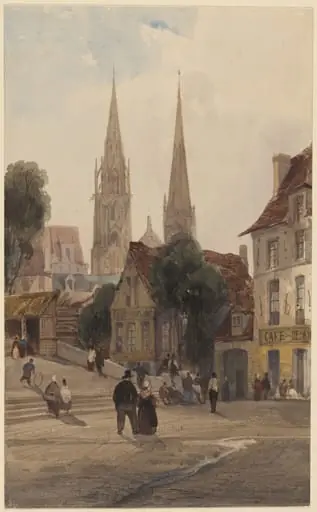
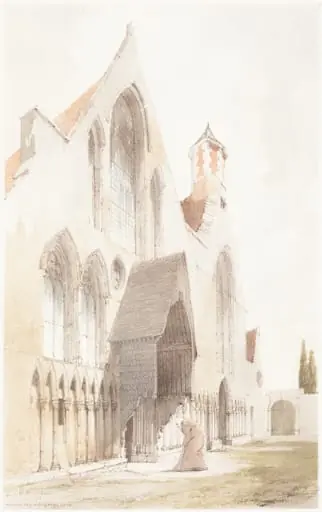
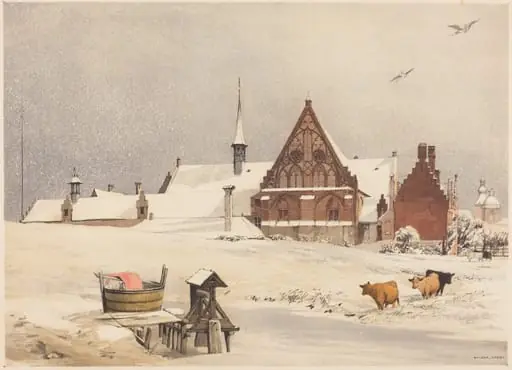
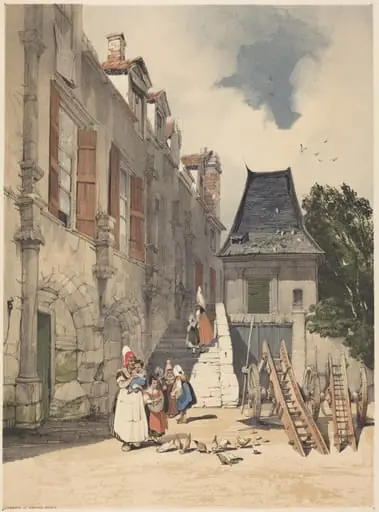
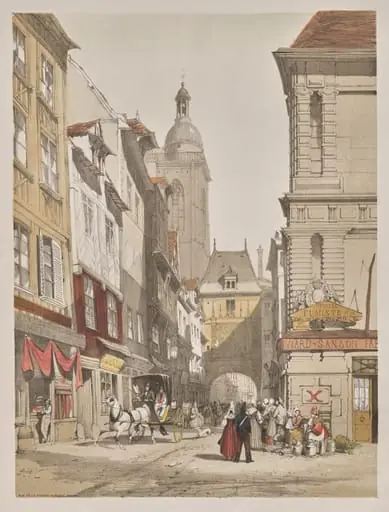 Picturesque Architecture in Paris, Ghent, Antwerp, Rouen: Rue de la Crosse Horlogue, Rouen, France
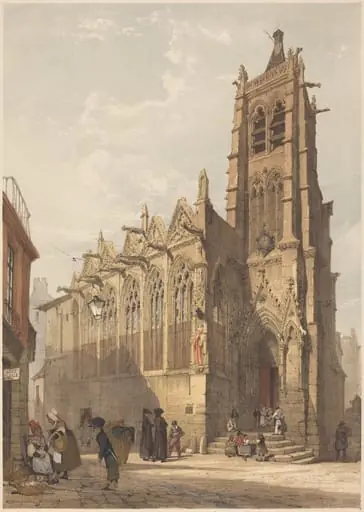
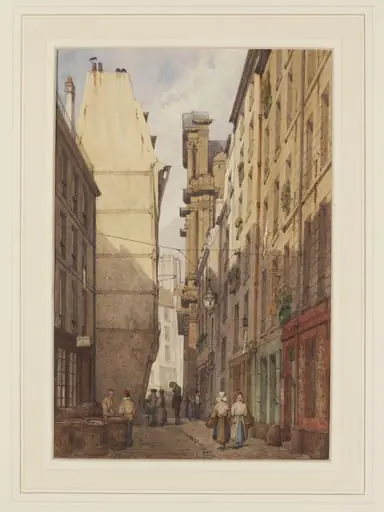 The Church of St Gervais, Paris
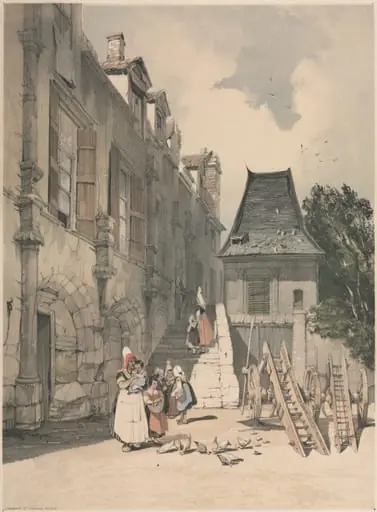 L'Abbaye St. Amand, Rouen
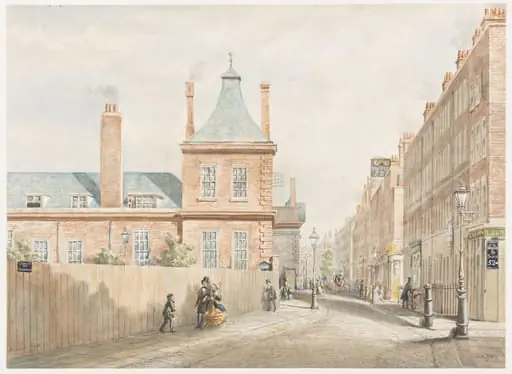 West View of Old Montague House
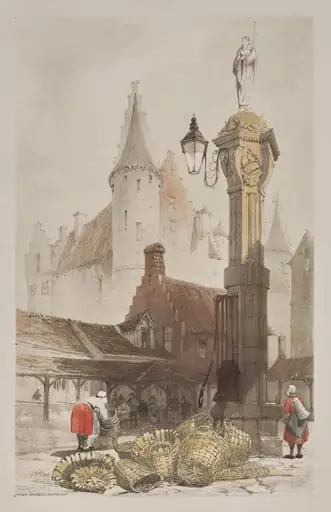 Picturesque Architecture in Paris, Ghent, Antwerp, Rouen: Fish Market, Antwerp, Belgium
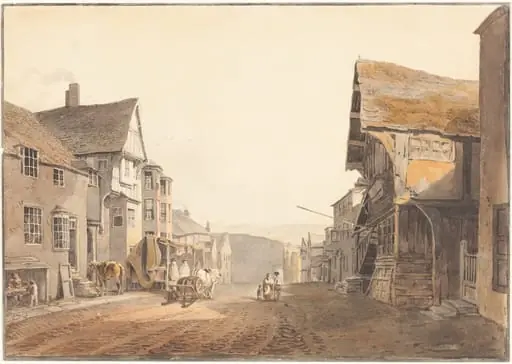 Conway in North Wales
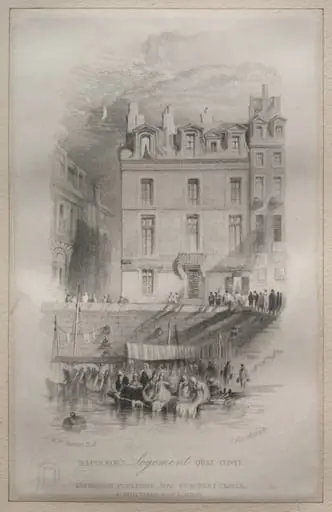 Napoleon's Logement, Quai Conti
 H Beard Print Collection
 Picturesque Architecture in Paris, Ghent, Antwerp, Rouen: Tour de Remy, Dieppe, France
 Quai de la Greve, Paris