Artwork
Picturesque Architecture in Paris, Ghent, Antwerp, Rouen
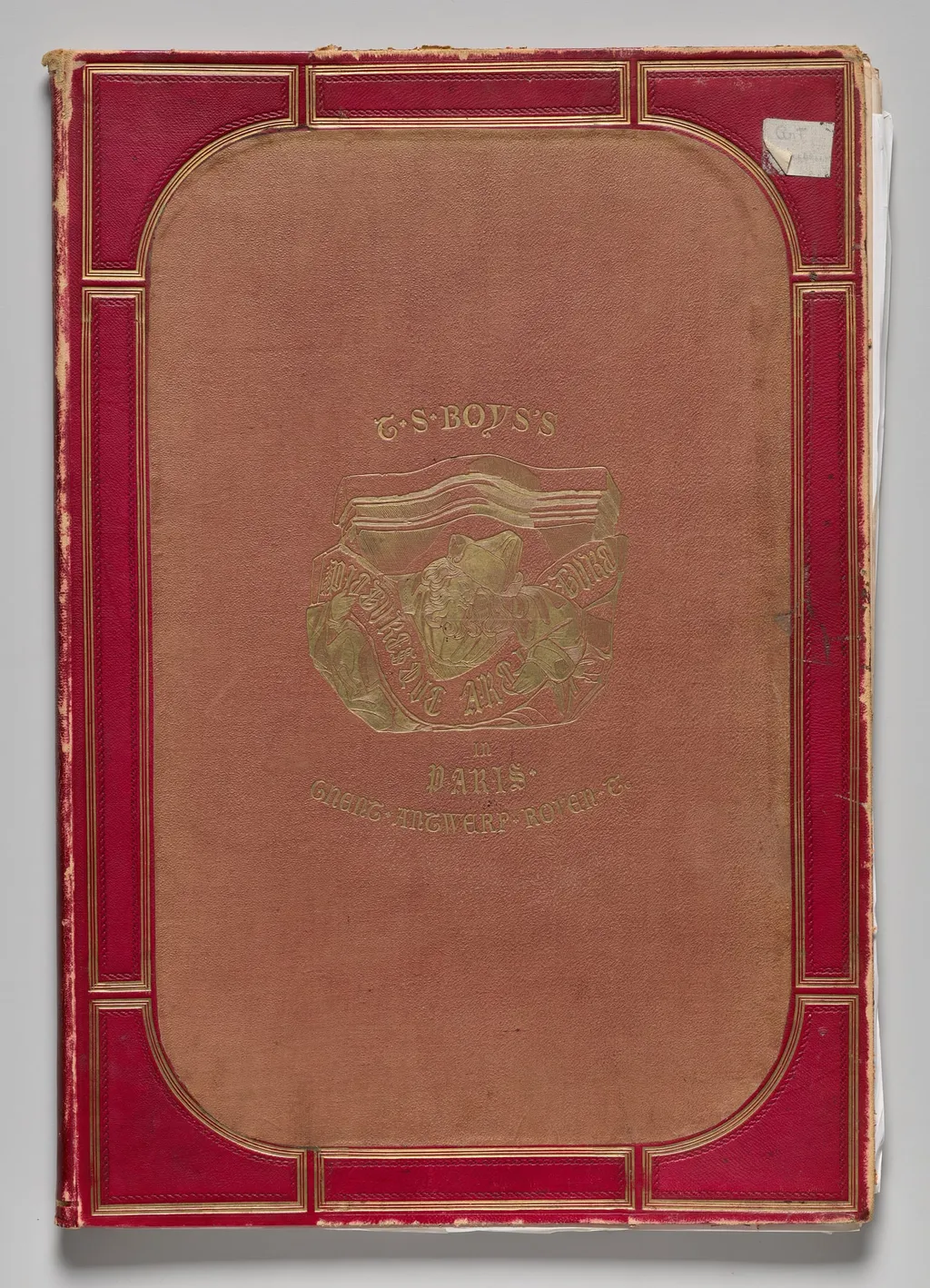
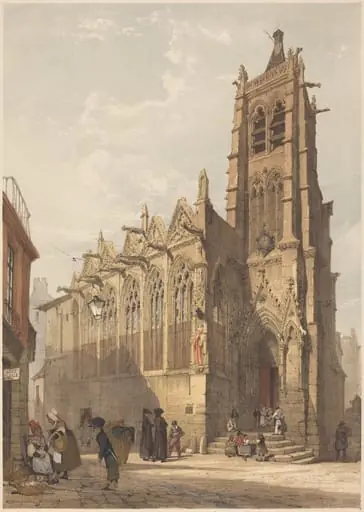
Picturesque Architecture in Paris, Ghent, Antwerp, Rouen is a work on paper by the Romanticist artist Thomas Shotter Boys. It dates from 1839 and is held in the collection of the Cleveland Museum of Art.
About this work
Overview
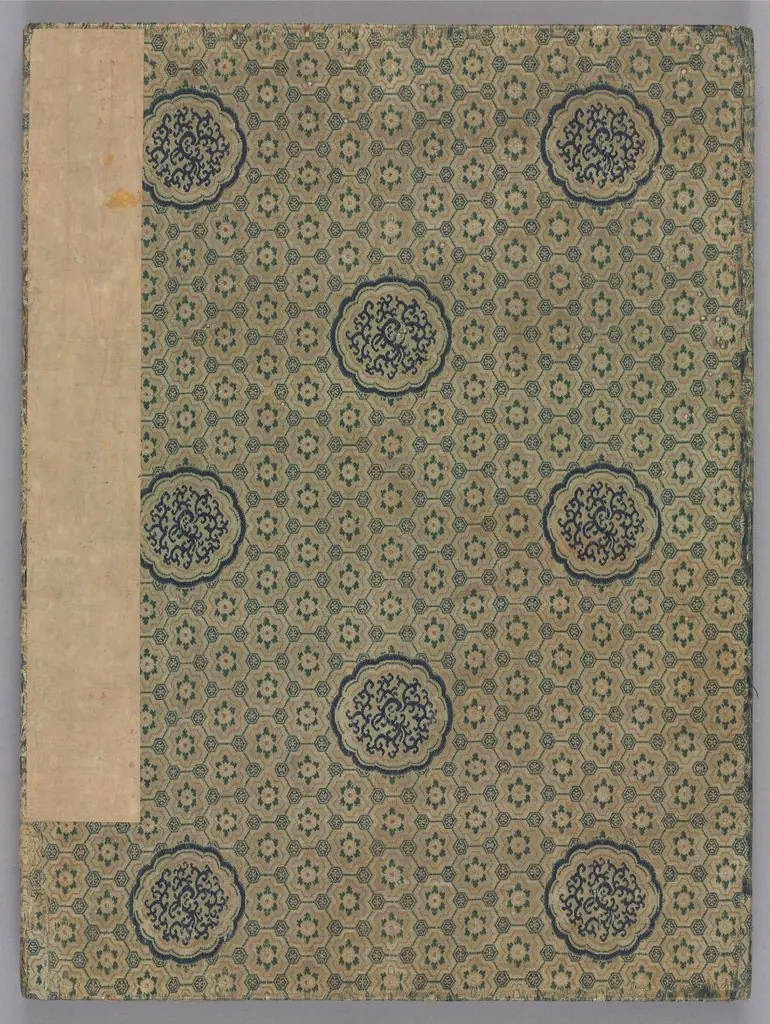
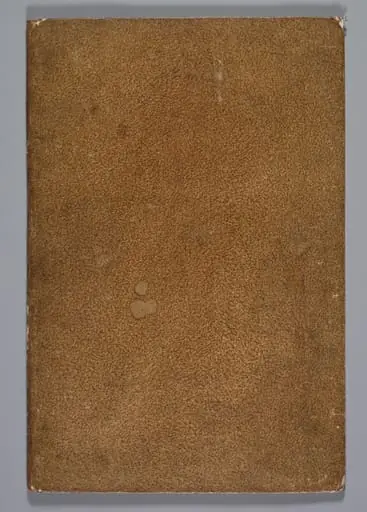
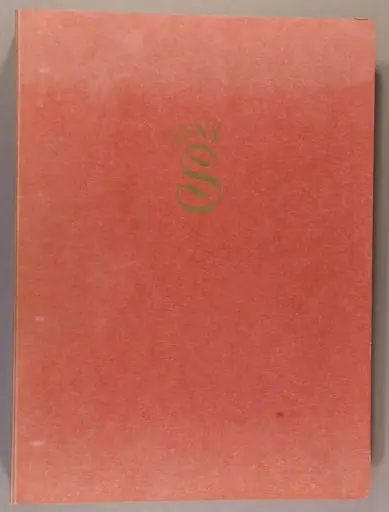
Its physical form—a faded red and brown binding with gold-stamped lettering—aligns with the aesthetic of illustrated travel publications of the era.
Thomas Shotter Boys compiled a portfolio of architectural views depicting Paris, Ghent, Antwerp, and Rouen in 1839. Published as a bound volume, it combines watercolor drawings with lithographic prints, intended for a British audience interested in continental urban landscapes. The work reflects the 19th-century fascination with documenting European cities through precise, atmospheric renderings. Its physical form—a faded red and brown binding with gold-stamped lettering—aligns with the aesthetic of illustrated travel publications of the era.
Subject & Meaning
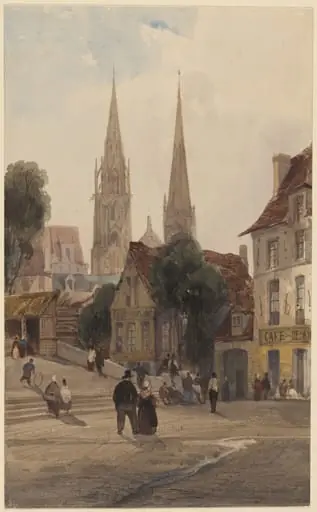
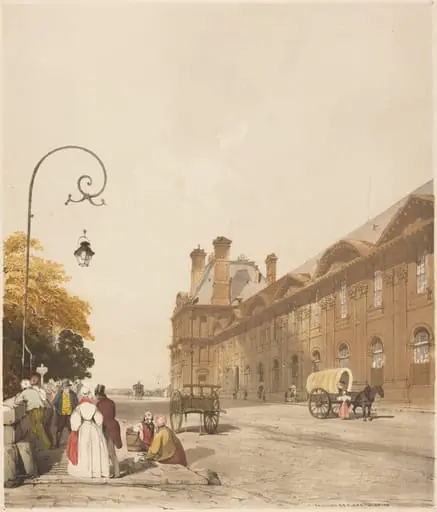
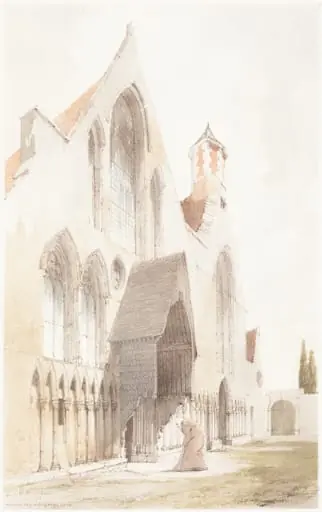
The portfolio presents secular architecture—churches, civic buildings, and streetscapes—without human figures, emphasizing form and structure over narrative. Each view captures the distinctive character of its city: the Gothic spires of Ghent, the classical facades of Paris, the stepped gables of Antwerp, and the medieval towers of Rouen. The selection suggests a deliberate curation of architectural heritage, valuing historical continuity and regional identity over romanticized fantasy.
Technique & Style
Boys employed fine-line watercolor washes and detailed lithography to achieve clarity and tonal subtlety. His approach favored accuracy over expressive brushwork, with careful attention to perspective, texture, and light. The gold-embossed cover design and printed plates reflect the technical standards of high-quality illustrated books of the period. The restrained palette and controlled composition convey a sense of order, aligning with contemporary ideals of topographical precision.
History & Provenance
Created in 1839, the portfolio was likely produced for private collectors and institutions interested in European architecture. It entered the collection of The Cleveland Museum of Art, where it remains preserved as an example of 19th-century British print culture. The worn binding and faded gold stamping indicate regular handling, suggesting it was once a valued reference or decorative object in a domestic or scholarly setting.
Context
During the 1830s, increased travel and the rise of the middle class fueled demand for illustrated guides to continental cities. Boys’s work emerged alongside similar publications by artists like J.M.W. Turner and Augustus Pugin, contributing to a broader cultural project of documenting and preserving architectural heritage. The portfolio reflects both a documentary impulse and a growing interest in national and regional identity through built form.
Legacy
Though not widely known today, Boys’s portfolio stands as a representative example of early Victorian topographical art. It preserves visual records of urban structures that have since changed or been altered, offering insight into how 19th-century observers perceived and valued European cities. Its preservation in a major museum underscores its role as a historical artifact of print culture and architectural documentation.
Artist & collection
Artist
Thomas Shotter Boys (1803–1874) was an English watercolour painter and lithographer, mostly producing cityscapes and images of buildings, although he produced some rural landscapes and marine subjects.

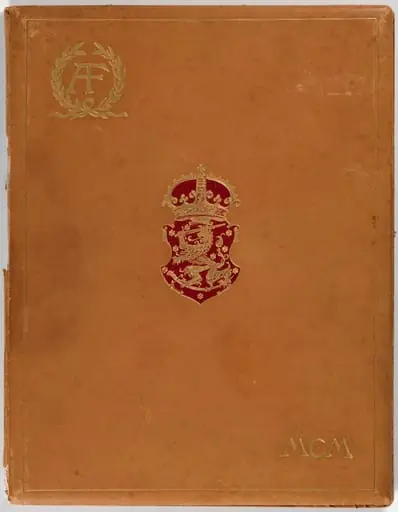 Adressi Anatole Francelle
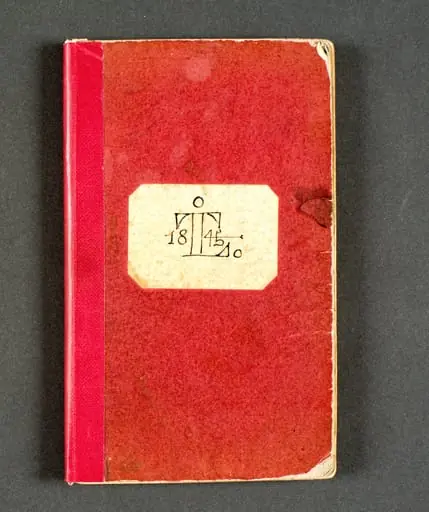 Skitse- og rejsedagbog. Danmark, Tyskland og Schweiz 1842 og 1845
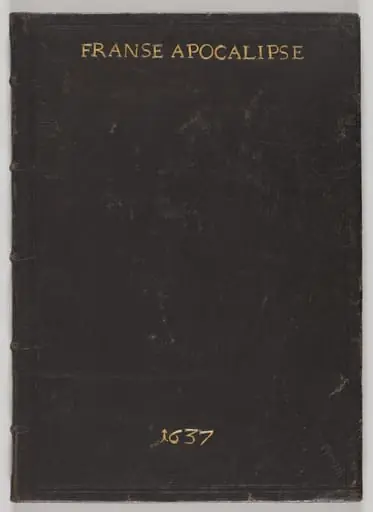 The Apocalypse (bound volume)
 Landscapes
 Landscapes
 Mascarade à la Grecque
 Aloys Senefelder, Inventor of Lithography
 Ensemble Picador au n° 74
 Drawing Book
 Printer's Device for the Plantin Press
 Dessinentwürfe
 Page from Tales of a Parrot (Tuti-nama): blank page