Artwork
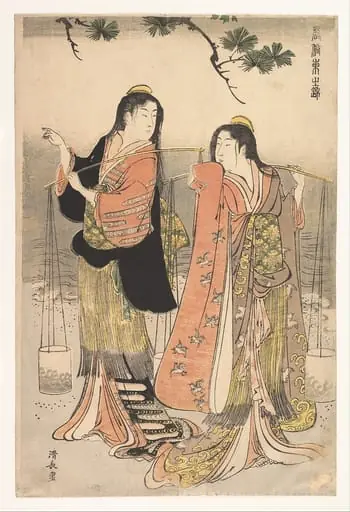
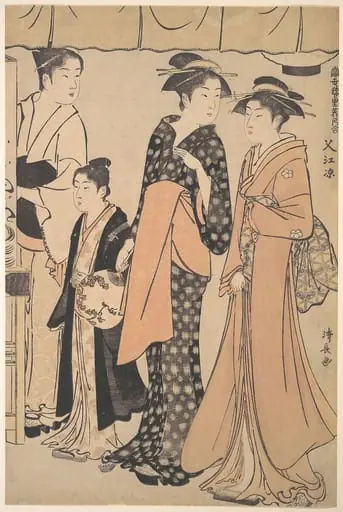
Shiokumi|The Dance of the Beach Maidens from the series Brocade of the East
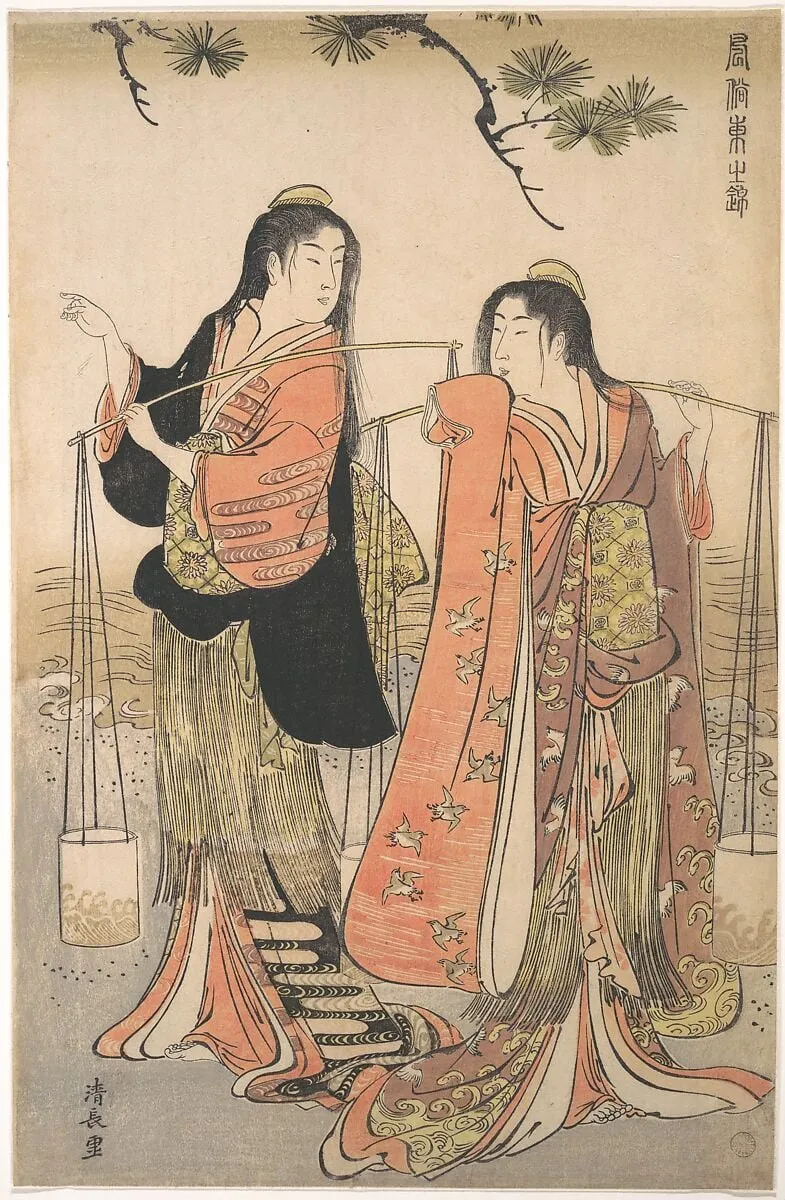
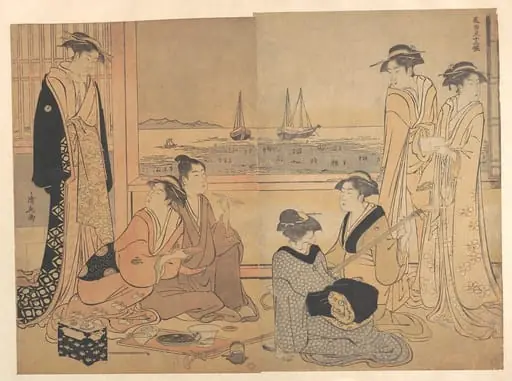
Shiokumi|The Dance of the Beach Maidens from the series Brocade of the East is an ink print by the Romanticist artist Torii Kiyonaga. It dates from 1770 and is held in the collection of the Metropolitan Museum of Art.
About this work
Overview
Shiokumi: The Dance of the Beach Maidens is a woodblock print from Torii Kiyonaga’s series Brocade of the East, produced around 1770. It belongs to the ukiyo-e tradition, depicting everyday scenes with refined elegance. The print is part of The Metropolitan Museum of Art’s collection and exemplifies the late 18th-century Japanese aesthetic that blended naturalism with stylized grace.
Subject & Meaning
The print portrays two women on a shoreline, engaged in a ceremonial dance likely tied to coastal rituals. Their poised stance and matching fan gestures suggest a ritualized performance, possibly linked to seasonal or spiritual customs. The beach setting evokes liminality — a space between land and sea — reinforcing themes of transience and harmony with nature common in Edo-period visual culture.
Technique & Style
The kimono patterns are rendered with delicate detail, contrasting the soft gradients of the sky and sea.
Kiyonaga employed precise linework and layered color printing to achieve subtle tonal transitions. The kimono patterns are rendered with delicate detail, contrasting the soft gradients of the sky and sea. The figures are elongated and balanced, reflecting the artist’s signature compositional restraint. Ink and pigments were applied through hand-carved woodblocks, a hallmark of ukiyo-e craftsmanship.
History & Provenance
Created during the height of Kiyonaga’s career, the print was part of a larger series celebrating regional customs across Japan. It circulated among urban elites as collectible art, often displayed in private homes. The Metropolitan Museum of Art acquired it in the 20th century, preserving its original condition and inscriptions, which include the artist’s seal and series title.
Context
In the 1770s, ukiyo-e prints documented the lives of commoners and performers, reflecting Edo’s growing consumer culture. Kiyonaga, trained in the Torii school, elevated genre scenes with dignified compositions. This print aligns with contemporary interests in regional identity and seasonal rituals, offering a quiet counterpoint to the more theatrical depictions of actors and courtesans.
Legacy
Shiokumi exemplifies Kiyonaga’s influence on later ukiyo-e artists through his emphasis on spatial harmony and refined figures. While not widely known outside specialist circles, it remains a key example of how everyday rituals were elevated into art. Its preservation in major collections ensures continued study of Edo-period visual language and gendered performance in print culture.
Artist & collection

 Untitled
 Untitled
 Untitled
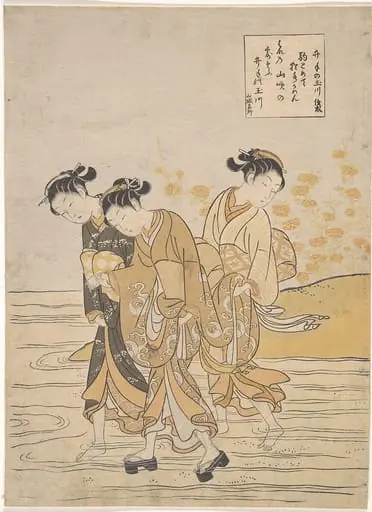 井手の玉川|Jewel River at Ide (Ide no Tamagawa)
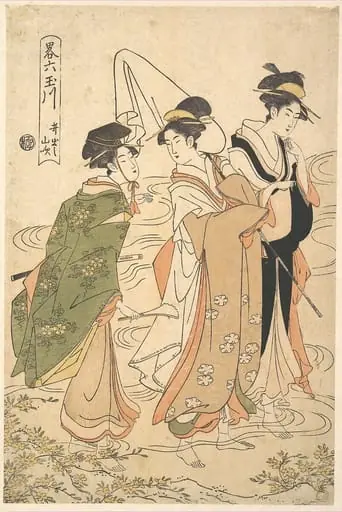 礫川亭永理 (鳥橋斎栄里)画 「畧六玉川 井出の山吹」|Mountain Roses of Ide (Ide no Yamabuki), from the series A Parodic Six Jewel Rivers (Yatsushi Mu-Tamagawa)
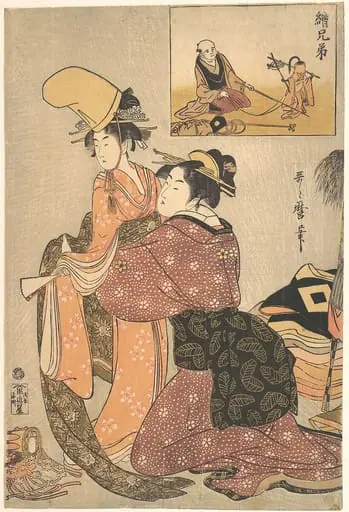 喜多川歌麿画 絵兄弟娘道成寺 見立猿廻し 「絵兄弟」|A Woman Dressing a Girl for a the Kabuki Dance “Musume Dojōji,” with “Brother Picture” (E-kyōdai) of a Monkey Trainer
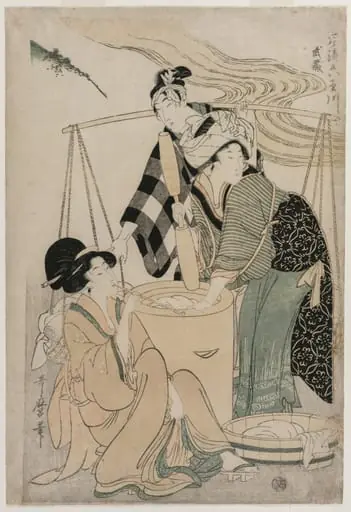 Settsu Province from the series Fashionable Six Jewel Rivers (Furyu Mu Tamagawa)
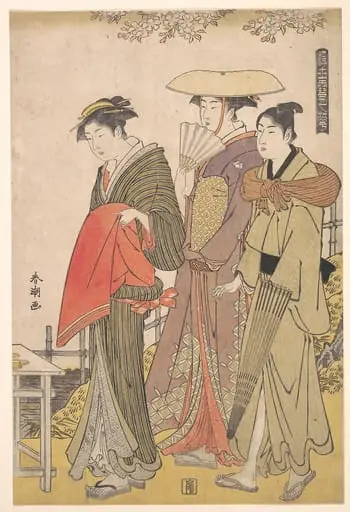 Ukiyoe Ga|The Beauty of the Floating World
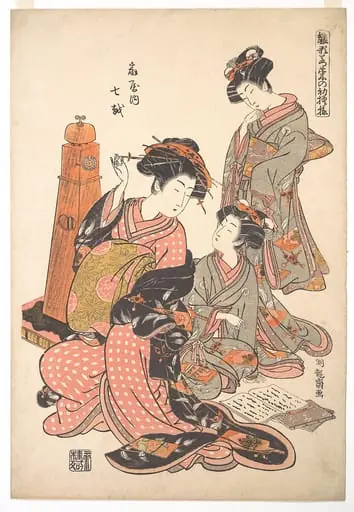 『雛形若菜の初模様 扇屋内 七越』|The Courtesan Nanakoshi of the Ōgiya Brothel, from the series “A Pat-tern Book of the Year’s First Designs, Fresh as Spring Herbs” (“Hinagata wakana no hatsu moyō”)
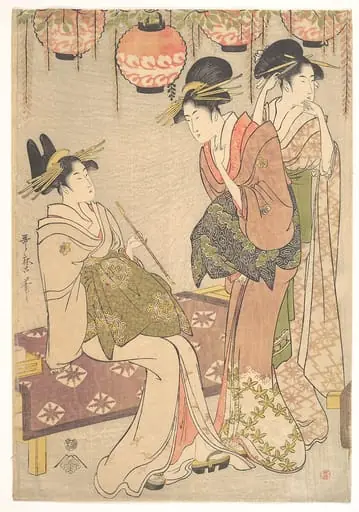 Untitled
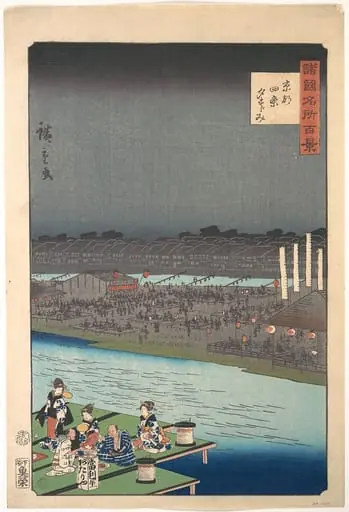 二代歌川広重画 「諸国名所百景 京都四条夕すずみ」|Enjoying the Evening Cool at Shijō in Kyoto, from the series One Hundred Famous Views in the Various Provinces (Shokoku meisho hyakkei)
 Sako no Suzumi|Cooling Off at Nakazu