Artwork
Settsu Province from the series Fashionable Six Jewel Rivers (Furyu Mu Tamagawa)
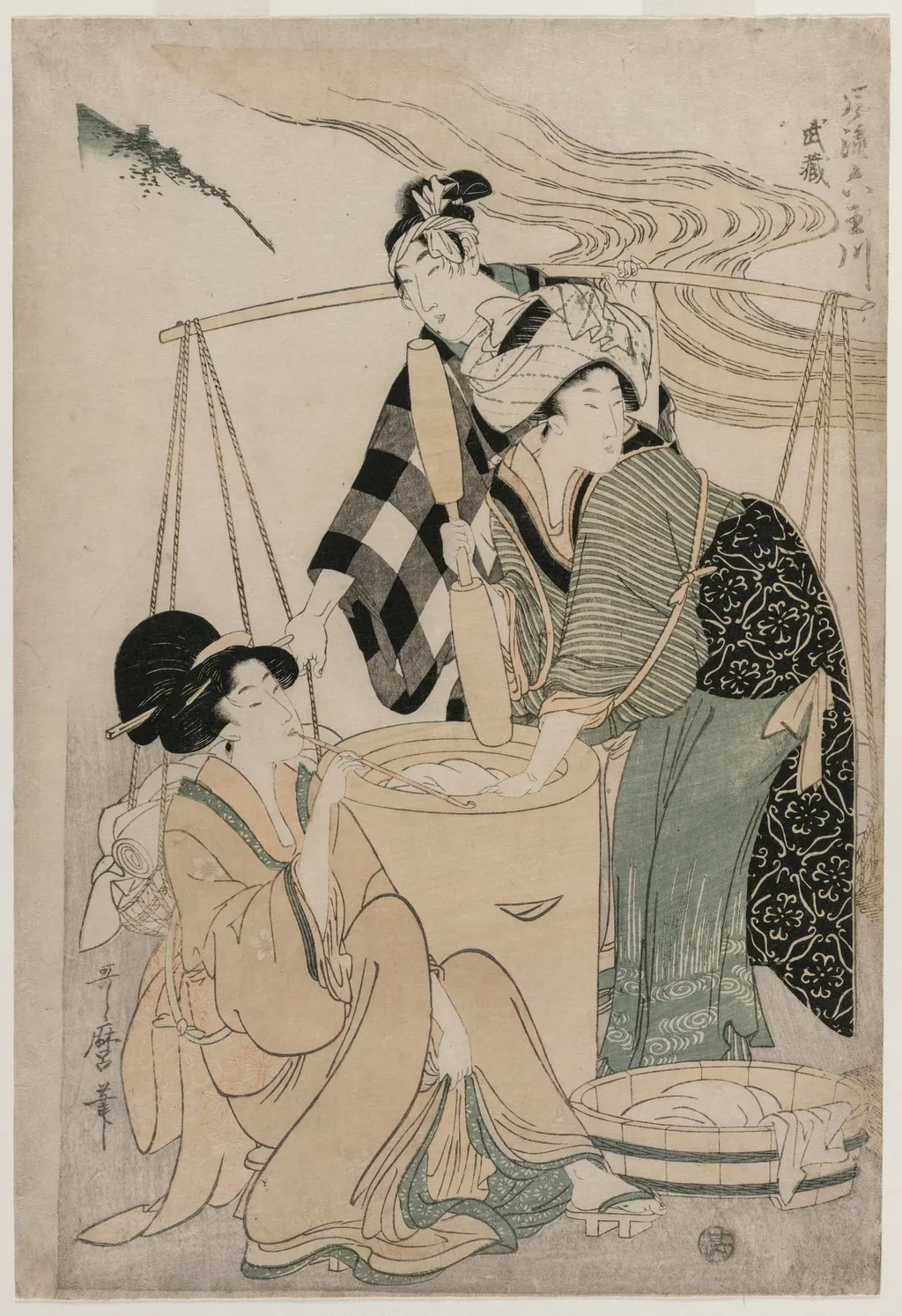
Settsu Province from the series Fashionable Six Jewel Rivers (Furyu Mu Tamagawa) is a print by the Romanticist artist Kitagawa Utamaro. It dates from 1804 and is held in the collection of the Cleveland Museum of Art. Created around 1804, this woodblock print by Kitagawa Utamō depicts a tranquil river scene in Settsu Province.
About this work
You see a calm river winding through a green landscape, with trees along the banks and people crossing a wooden bridge.
You see a calm river winding through a green landscape, with trees along the banks and people crossing a wooden bridge. A boat floats nearby, and soft clouds fill the pale sky. The scene feels quiet and peaceful, like a morning walk.
This print is part of a series showing six famous rivers in Japan, each from a different province. The artist focused on daily life, not grand views — farmers, travelers, and fishers go about their routines. The colors are soft, and the lines flow gently, like water. Utamaro is better known for portraits of women, but here he turns to nature and common people.
Look next at the subject: japan, edo period (1615–1868). (112 words)
Overview
Created around 1804, this woodblock print by Kitagawa Utamō depicts a tranquil river scene in Settsu Province. The composition shows a winding waterway bordered by verdant banks, a modest wooden bridge crossed by pedestrians, and a lone boat drifting nearby under a pale sky. The image conveys a quiet, early‑morning atmosphere, emphasizing the simple rhythms of everyday life.
Subject & Meaning
The work belongs to the "Fashionable Six Jewel Rivers" series, which presents six celebrated Japanese rivers, each linked to a different province. Rather than heroic landscapes, Utamō portrays ordinary activities—farmers tending fields, travelers on the bridge, and fishers in the water—highlighting the integration of human labor with the natural environment.
Technique & Style
Executed in the ukiyo‑e woodblock tradition, the print employs a restrained palette of soft hues and fluid line work that echo the movement of water. Delicate gradations of color and subtle shading give depth to the foliage and sky, while the gentle contours of figures and architecture reinforce the serene mood.
History & Provenance
The print is part of Utamō's early‑career output, a period when he explored subjects beyond his famed bijin-ga portraits. It entered the collection of the Cleveland Museum of Art, where it is currently conserved and displayed as an example of Edo‑period genre printing.
Context
Produced during the Edo period (1615–1868), the image reflects contemporary interest in regional scenery and the lives of common people. The series catered to a growing urban audience eager for visual records of Japan's diverse landscapes, aligning with the era's broader trend of documenting everyday experience through popular prints.
Own this work as a print
Artist & collection


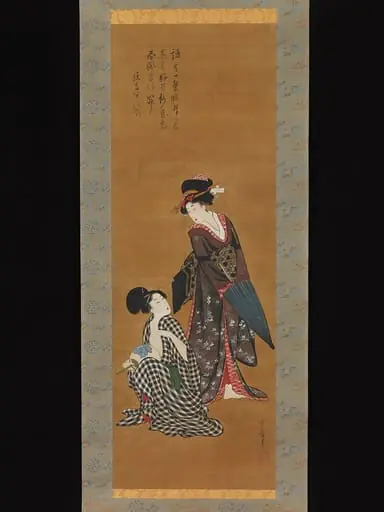 Untitled
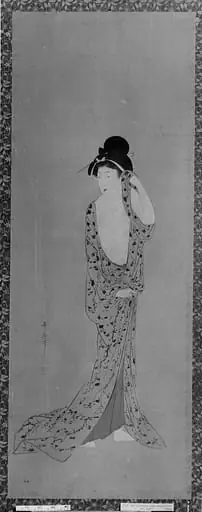 Untitled
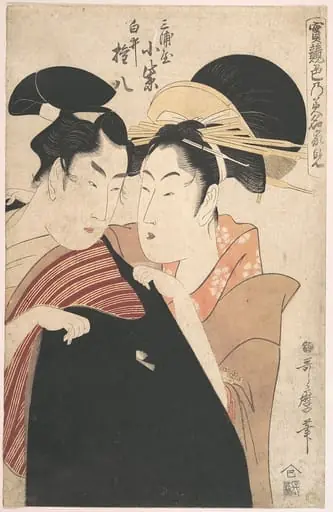 実競色乃美名家見 三浦屋小紫 白井権八|The Lovers Miura-ya Komurasaki and Shirai Gonpachi.
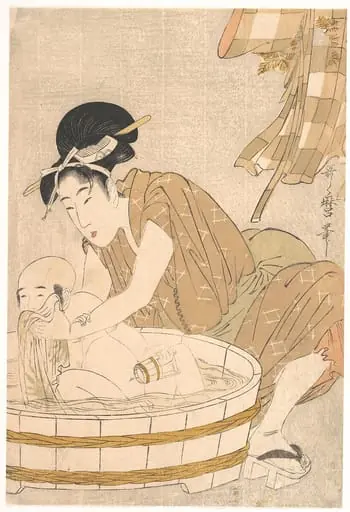 行水|Bathtime (Gyōzui)
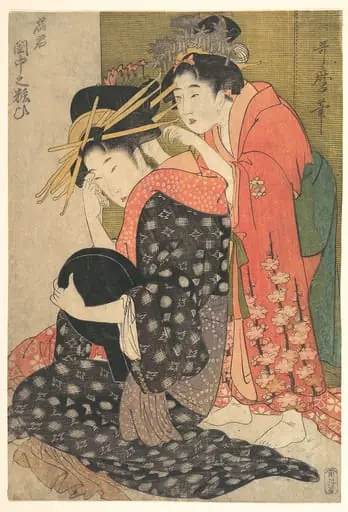 名君 閨中の粧ひ|The Oiran Yoso-oi Seated at Her Toilet
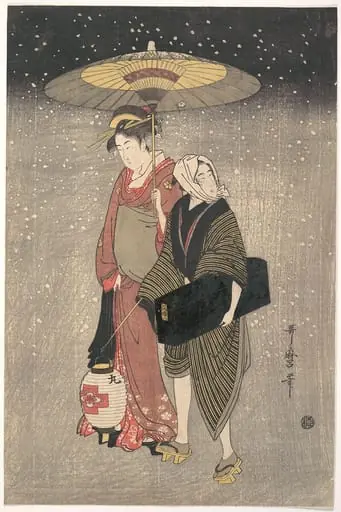 Untitled
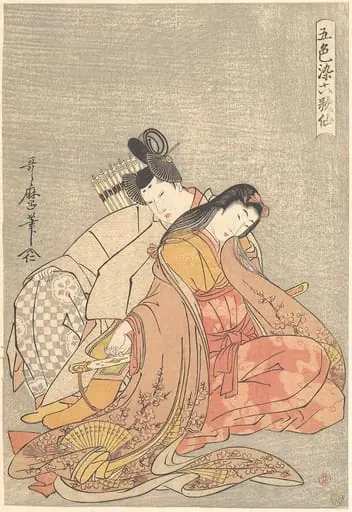 『五色染六歌仙』 在原業平と小野小町|“The Poet Ariwara no Narihira (825–880) and Ono no Komachi,” from the series Five Colors of Love for the Six Poetic Immortals (Goshiki-zome rokkasen)
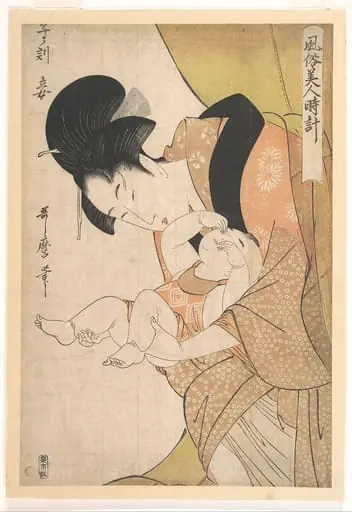 風俗美人時計 子ノ刻 妾|Midnight: Mother and Sleepy Child
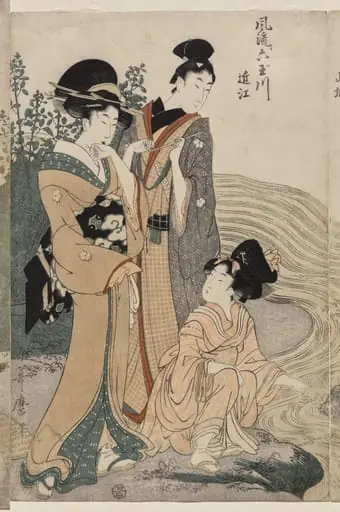 Omi Province from the series Fashionable Six Jewel Rivers (Furyu Mu Tamagawa)
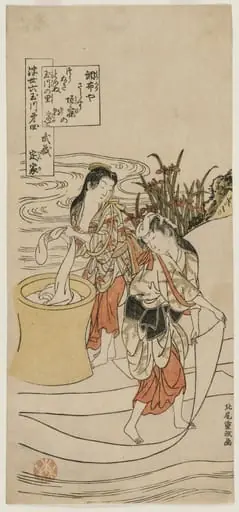 The Chofu Tama River in Musashi Province (from the series The Six Tama Rivers of the Floating World)
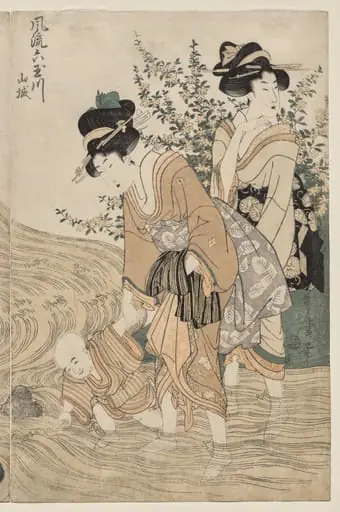 Yamashiro Province from the series Fashionable Six Jewel Rivers (Furyu Mu Tamagawa)
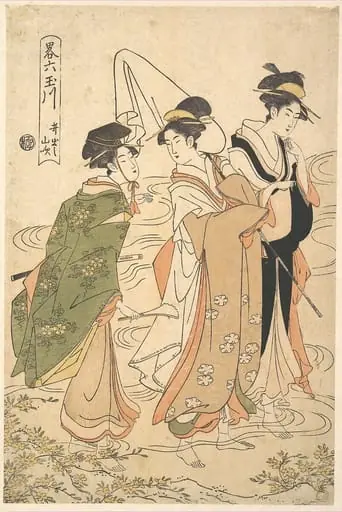 礫川亭永理 (鳥橋斎栄里)画 「畧六玉川 井出の山吹」|Mountain Roses of Ide (Ide no Yamabuki), from the series A Parodic Six Jewel Rivers (Yatsushi Mu-Tamagawa)
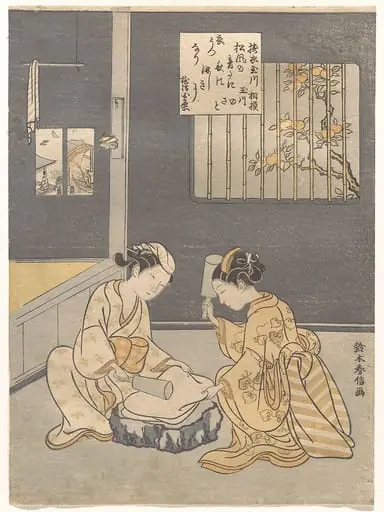 鈴木春信画 六玉川 「壔衣の玉川 摂津の名所」|Kōromō Uchi Tamagawa|The Cloth-Fulling Jewel River, a Famous Place in Settsu Province (Tōi no Tamagawa, Settsu no meisho), from an untitled series of Six Jewel Rivers (Mu Tamagawa)
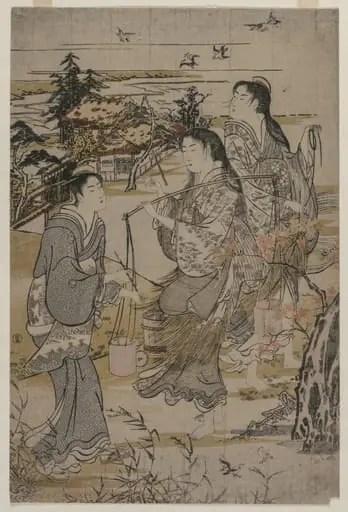 Women with Salt Pails; The Noda Tama River in Mutsu Province, from an untitled series of the Six Tama Rivers