Artwork
Ushi-no-toki mairi|Woman in the Rain at Midnight Driving a Nail into a Tree to Invoke Evil on Her Unfaithful Lover
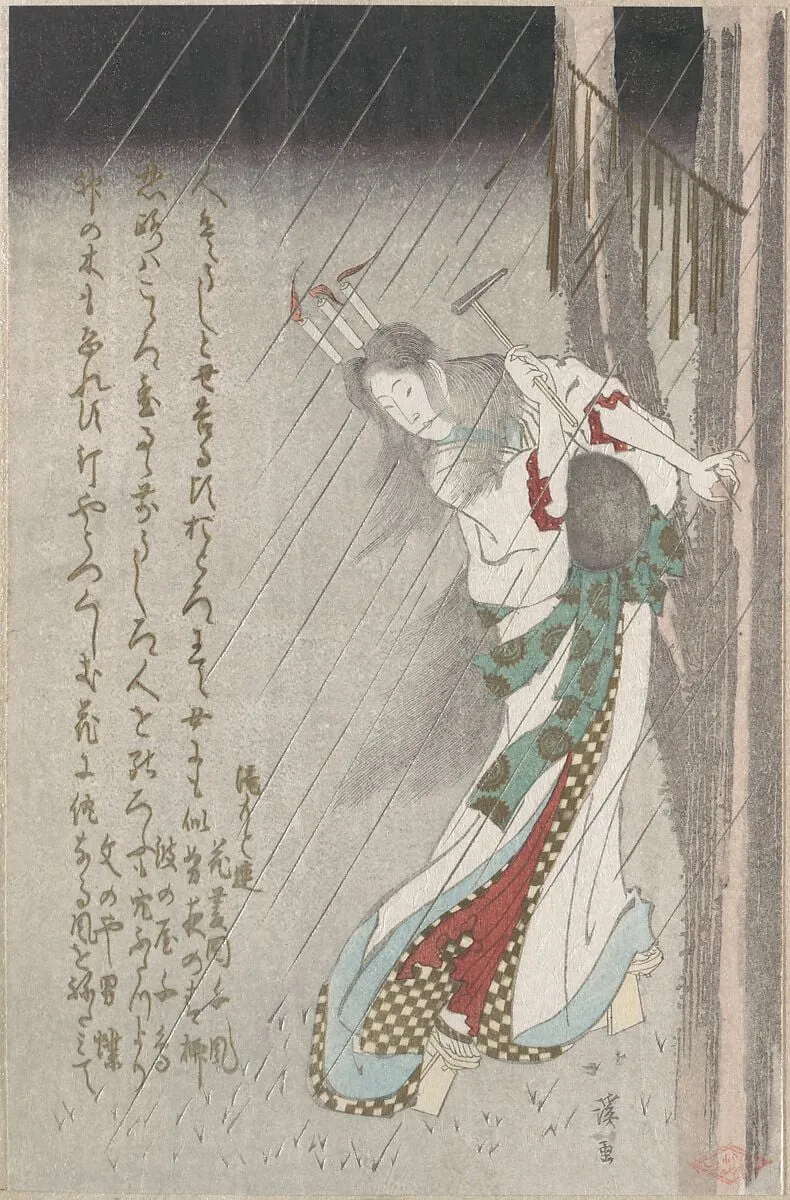
Ushi-no-toki mairi|Woman in the Rain at Midnight Driving a Nail into a Tree to Invoke Evil on Her Unfaithful Lover is an ink print by the Romanticist artist Totoya Hokkei. It dates from 1850 and is held in the collection of the Metropolitan Museum of Art.
About this work
Overview
Totoya Hokkei’s 1850 woodblock print, titled Ushi‑no‑toki mairi (Woman in the Rain at Midnight Driving a Nail into a Tree to Invoke Evil on Her Unfaithful Lover), belongs to a surimono album of ink and color on paper. The work is part of the collection of the Metropolitan Museum of Art and exemplifies the narrative prints popular in mid‑nineteenth‑century Japan.
Subject & Meaning
The image depicts a solitary woman in a flowing white robe edged with red and blue, standing beneath a torrent of rain. She grips a hammer and drives a nail into a tree trunk, her expression concentrated and angry. Accompanying Japanese text suggests a ritualistic act intended to curse an unfaithful lover, turning a domestic scene into a dramatic moral tableau.
Technique & Style
Executed as a surimono, the print combines fine ink line work with subtle color washes. Hokkei employs cross‑hatching to render the rain’s texture and the tree’s bark, while the dark background and slanted rain lines create a sense of movement. The contrast between the luminous white garment and the stormy atmosphere highlights the figure’s emotional intensity.
History & Provenance
Created in 1850, the print was originally part of a limited‑edition album circulated among literati and poetry societies. It entered the Metropolitan Museum of Art’s collection through a 20th‑century acquisition, reflecting the museum’s effort to represent the breadth of ukiyo‑e print production beyond the more widely known commercial series.
Context
Surimono prints like this one were often commissioned for private gatherings, allowing artists such as Hokkei to experiment with narrative detail and sophisticated printing techniques. The work reflects Edo‑period beliefs in folk magic and the use of ritual objects—here a nail and hammer—to invoke supernatural retribution, a theme recurrent in contemporary literature and theater.
Artist & collection

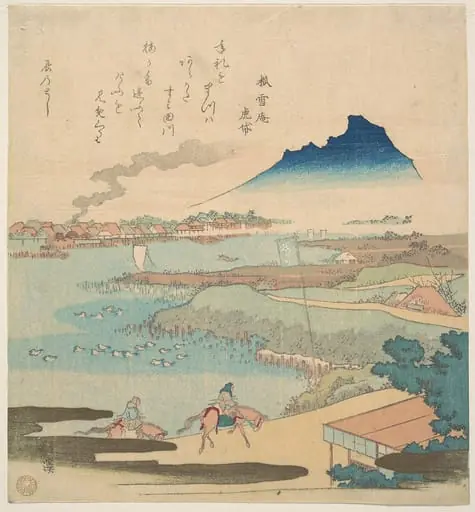 Sumidagawa|Sumida River
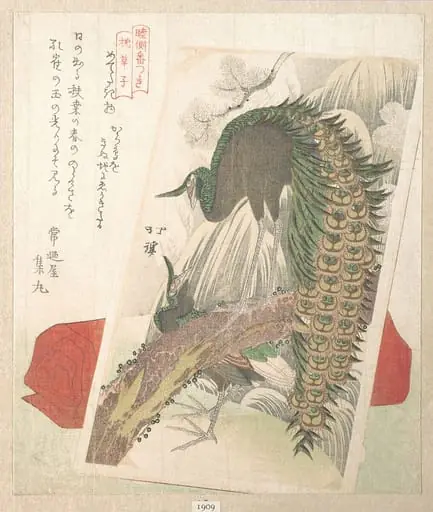 松・滝に孔雀図と緋毛氈|Painting of Peacocks, Pines, a Waterfall, and a Roll of Red Fabric
 Untitled
 Untitled
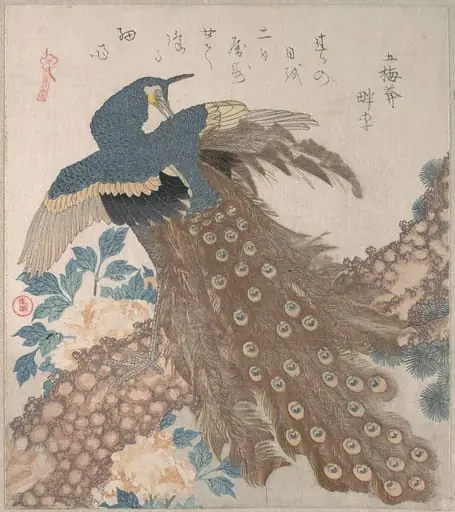 「三ひらの内」松・牡丹に孔雀|Peacock on Pine Tree and Peonies, from the series Three Sheets (Mihira no uchi)
 Untitled
 Untitled
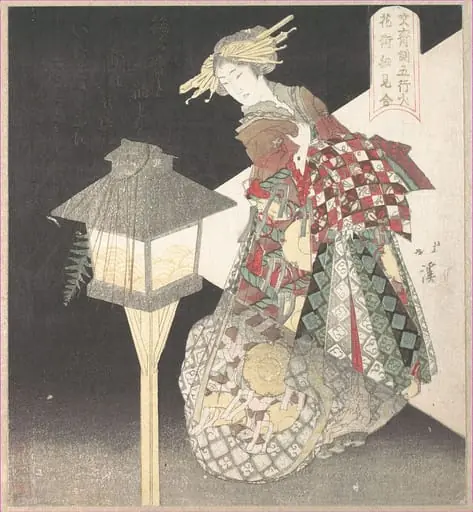 「文齊側五行火 花街細見合」|Courtesan by a Lantern, “Fire,” from the series Five Elements for the Bunsai Poetry Group, a Guide to the Yoshiwara Pleasure Quarters
 Untitled
 Untitled
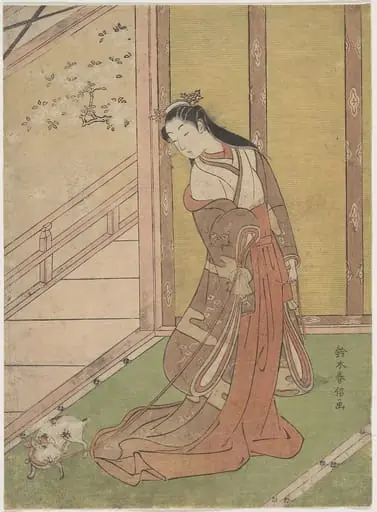 Untitled
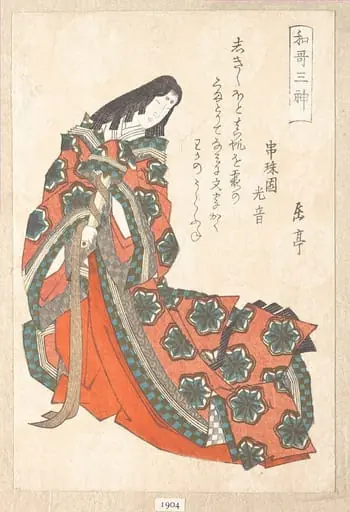 八島岳亭画 『和歌三神』 衣通姫|Sotoori-hime (early 5th century), One of the Three Gods of PoetryFrom the Spring Rain Collection (Harusame shū), vol. 1
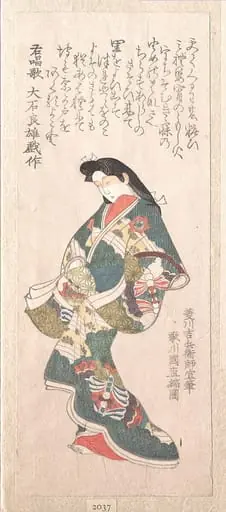 『春雨集』 摺物帖歌川国直画 元禄美人|Spring Rain Collection (Harusame shū), vol. 1: Genroku-style Courtesan
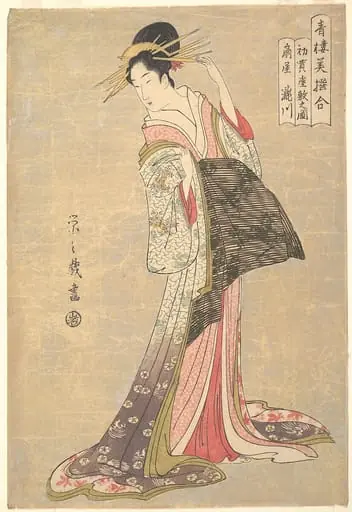 鳥文斎栄之画 「青楼美撰合 初売座敷之図 扇屋滝川」|Takigawa of the Ōgiya Brothel: The First Reception Room Appointment of the New Year (Hatsu-uri zashiki no zu: Ōgiya Takigawa), from the series A Comparison of Selected Beauties of the Pleasure Quarters (Seirō bisen awase)
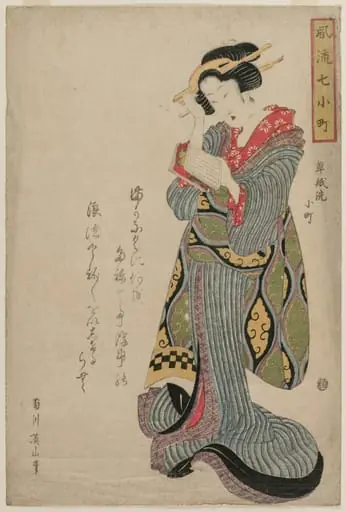 Komachi Washes the Book (from the series Seven Elegant Episodes from the Life of the Poetess Ono no Komachi)
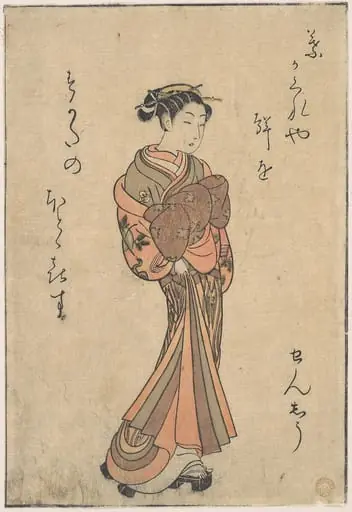 青楼美人合|The Courtesans, from the Series, "Seiro Bijin Awase Carver End Shigoro" (sic.)