Artwork
Christian, Margrave of Brandenburg-Bayreuth on his Deathbed
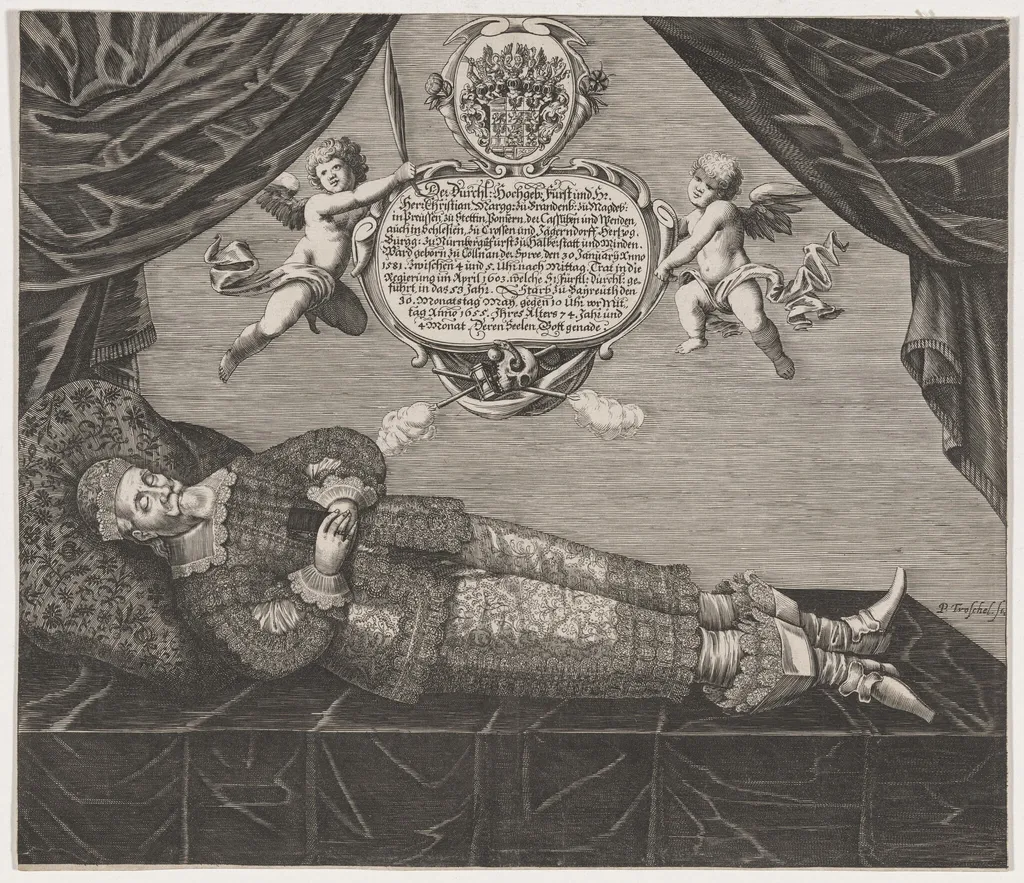
Christian, Margrave of Brandenburg-Bayreuth on his Deathbed is an ink print by the Baroque artist Peter Troschel. It dates from 1656 and is held in the collection of the National Gallery of Art.
About this work
Overview
Created in 1656 by Peter Troschel, this print depicts Christian, Margrave of Brandenburg-Bayreuth, moments before his death.
Created in 1656 by Peter Troschel, this print depicts Christian, Margrave of Brandenburg-Bayreuth, moments before his death. Executed in etching and engraving, the work combines fine line work with tonal contrasts to convey solemnity. The composition centers on the dying nobleman, surrounded by symbolic elements that merge earthly authority with the inevitability of death, reflecting early modern funerary visual traditions.
Subject & Meaning
The margrave lies recumbent in ceremonial robes, his crown and scepter placed nearby as emblems of his rank. Above, two cherubs hold a heraldic shield, signifying divine witness or legacy. A skull emerges subtly from the sheets, and dark, swirling clouds suggest spiritual transition. The central scroll bears an inscription, likely a eulogy or moral reflection, reinforcing the theme of transience and the futility of worldly power in the face of mortality.
Technique & Style
Troschel employed etching and engraving to achieve intricate detail and dramatic chiaroscuro. Fine, controlled lines define the folds of fabric and the texture of the skull, while deeper etched lines create shadow and depth. The ornate border framing the text reflects contemporary printmaking conventions, blending decorative elegance with narrative gravity. The technique allows for both precision and emotional weight, typical of German funerary prints of the mid-seventeenth century.
History & Provenance
The print was produced shortly after Christian’s death in 1655, likely commissioned by his family or court to commemorate his passing. It circulated among noble households and ecclesiastical circles as a memento mori. No record of its original ownership survives, but similar prints from the period were often kept in private collections as reminders of mortality and dynastic continuity, suggesting its role in elite memorial culture.
Context
This image belongs to a broader tradition of deathbed portraiture in early modern Europe, particularly among Protestant German principalities. Such prints served both as personal tributes and public affirmations of piety and lineage. The inclusion of heraldry and allegorical figures aligns with Lutheran moral teachings that emphasized humility before God, even for rulers. The format reflects the rise of print as a medium for disseminating religious and political ideals.
Legacy
Troschel’s print remains a representative example of 17th-century German memorial engraving. Though not widely reproduced today, it contributes to the understanding of how noble families used visual culture to negotiate death and legacy. Its stylistic elements influenced later commemorative prints, and it continues to be studied as a case of how power, faith, and mortality were visually synthesized in the aftermath of life.
Artist & collection

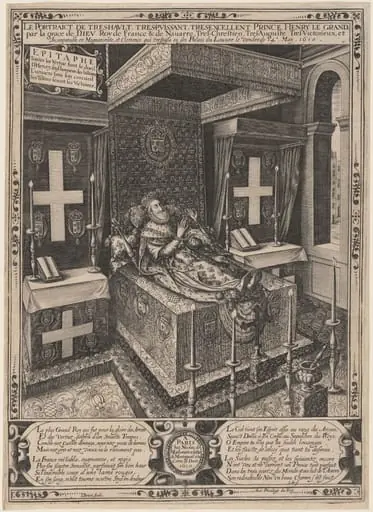 Le portraict de tres-haut...Henry Le Grand (Henri IV on His Deathbed)
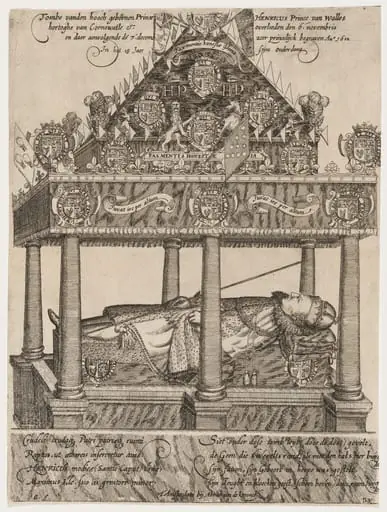 Prince Henry's Hearse
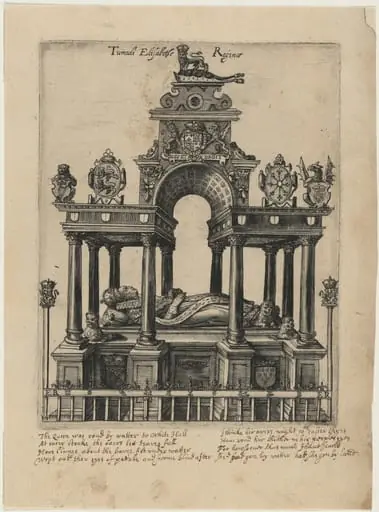 The Tomb of Elizabeth I
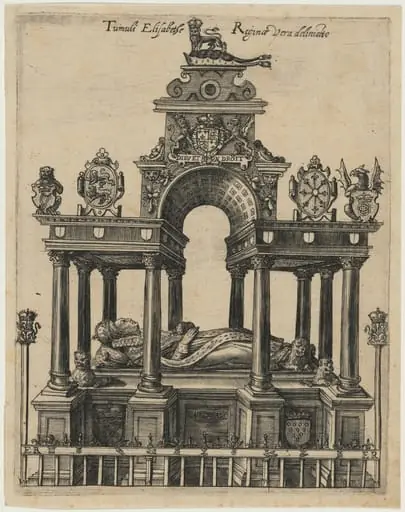 Elizabeth's Tomb
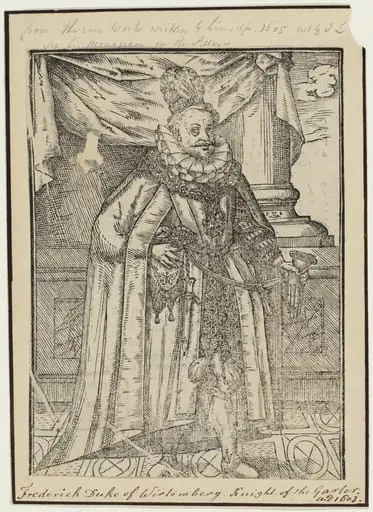 Frederick I, Duke of Wurtemberg
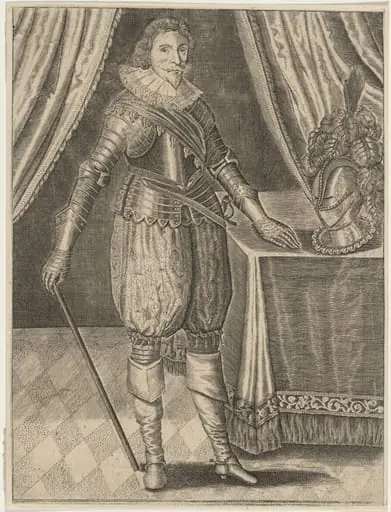 James, Second Marquis of Hamilton
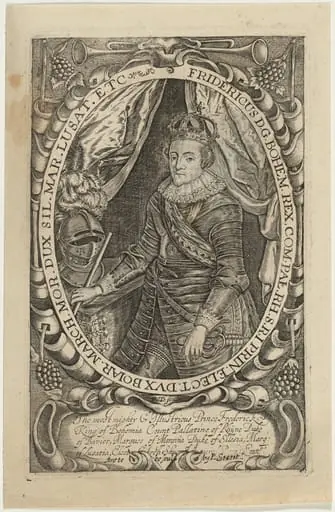 Fredericus D.G. Bohem. Rex (Frederick V, Kingof Bohemia)
 Lodovick Stuart, Duke of Richmond and Lennox
 Lady Jane Grey
 Frederick Henry of Nassau
 James II as Duke of York
 James I, King of England and Charles, Prince of Wales