Artwork
Prince Henry's Hearse
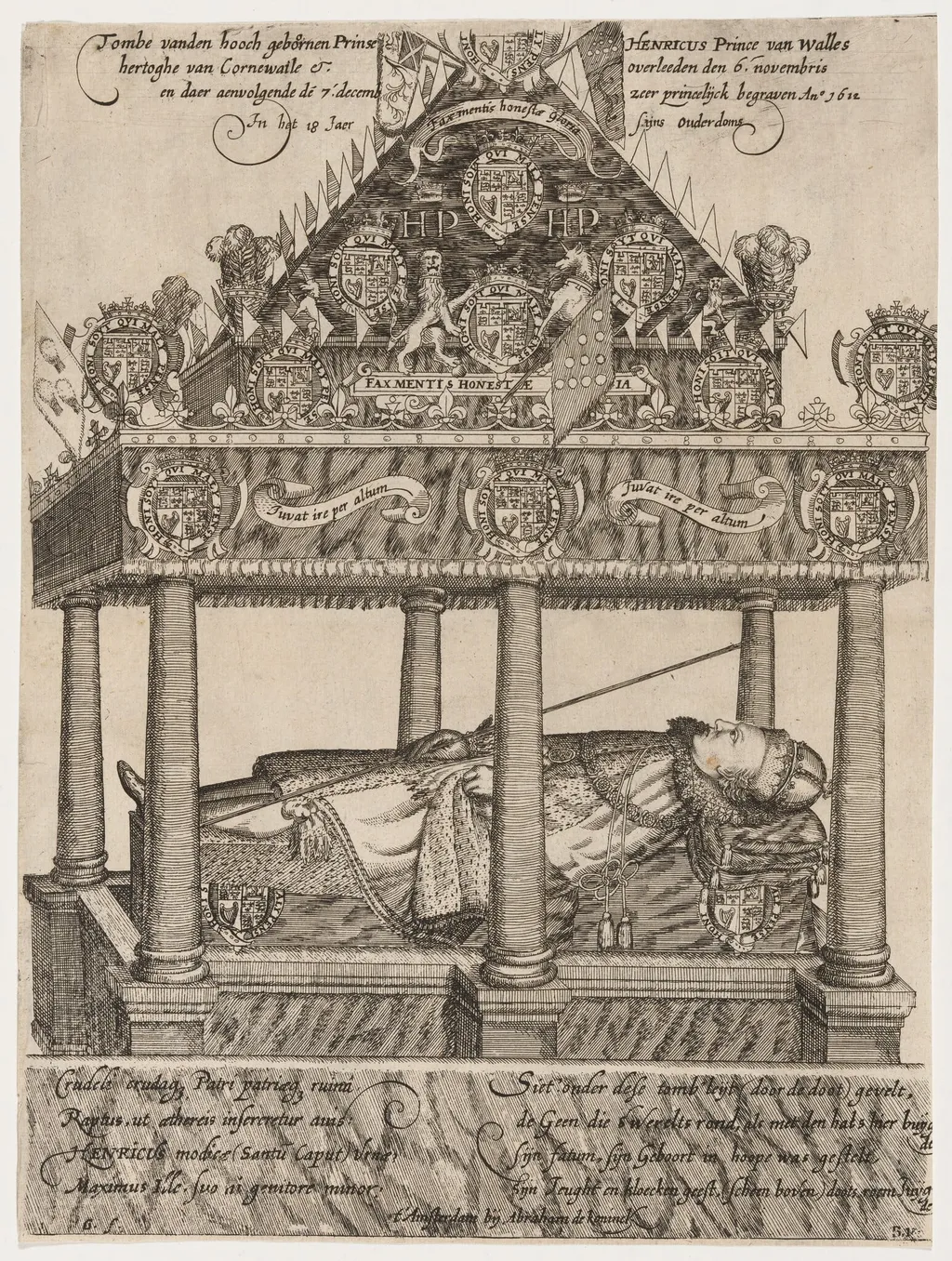
Prince Henry's Hearse is an ink print by the Renaissance artist William Hole. It dates from 1606 and is held in the collection of the National Gallery of Art.
About this work
The scene looks like a mix of mourning and honor, with lots of small symbols and text around the edges.
This image shows a detailed drawing of a funeral hearse carrying two draped figures. Above them is a tall, decorated structure with crests, shields, and Latin words. The scene looks like a mix of mourning and honor, with lots of small symbols and text around the edges.
The text at the top mentions a prince who died at 18 years old, buried in 1612. The Latin phrases and coats of arms suggest this was meant to show respect for someone important.
Look up etching to see how artists like Hole made prints like this.
Overview
Prince Henry's Hearse is a 1606 etching by William Hole, depicting a intricately detailed funeral scene. The print combines somber mourning elements with symbols of honor and nobility.
Subject & Meaning
The etching illustrates a hearse bearing two draped figures, topped by a decorated structure adorned with crests, shields, and Latin inscriptions. The composition balances mourning with veneration, suggesting a high-status subject. Text identifies the deceased as a prince who died at 18, buried in 1612.
Technique & Style
Created using the etching technique, the work showcases Hole's mastery of detailed line work and symbolic composition. The dense arrangement of symbols, text, and heraldic elements reflects the Baroque emphasis on intricacy and meaning.
History & Provenance
Produced in 1606, the etching commemorates Prince Henry, who died at 18 and was buried in 1612. The specific circumstances of its creation and early ownership are not detailed here, but its production coincides with a period of royal mourning.
Context
The etching's blend of Latin, heraldry, and funeral ritual situates it within early 17th-century European mourning practices for royalty. It reflects the era's use of art for commemoration and display of status.
Legacy
While specific lasting impacts or influences of 'Prince Henry's Hearse' on subsequent art are not highlighted, it remains a notable example of early 17th-century etching and royal commemorative art.
Artist & collection

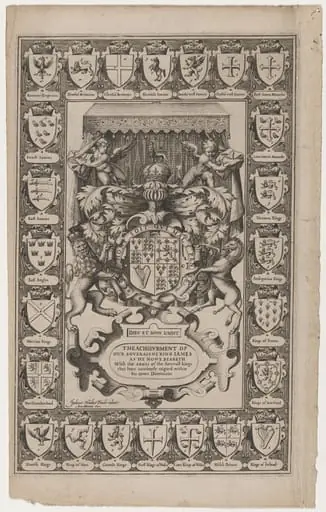
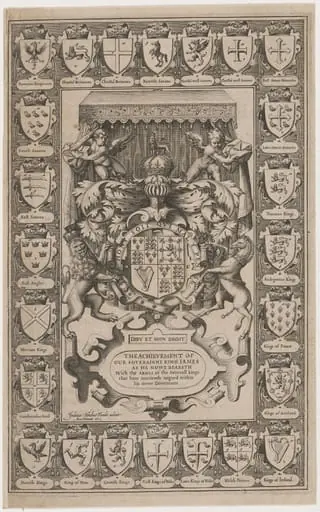 Title Page for the Achievement of our Soveraigne King James
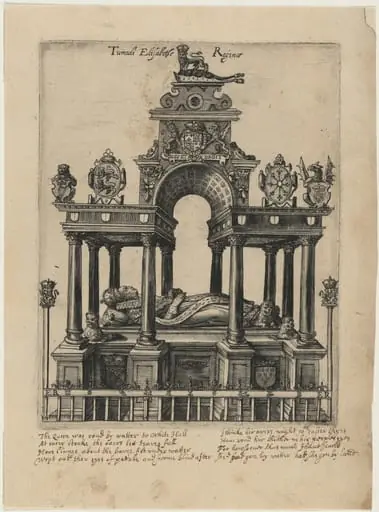 The Tomb of Elizabeth I
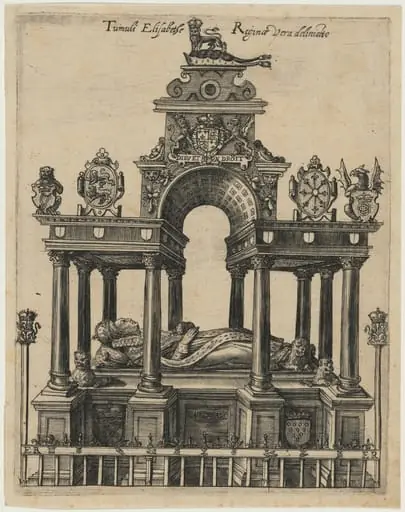 Elizabeth's Tomb
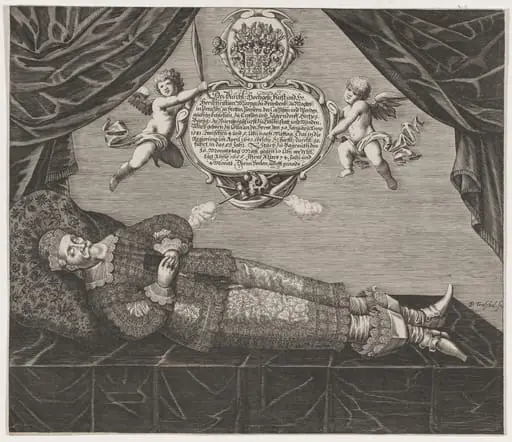 Christian, Margrave of Brandenburg-Bayreuth on his Deathbed
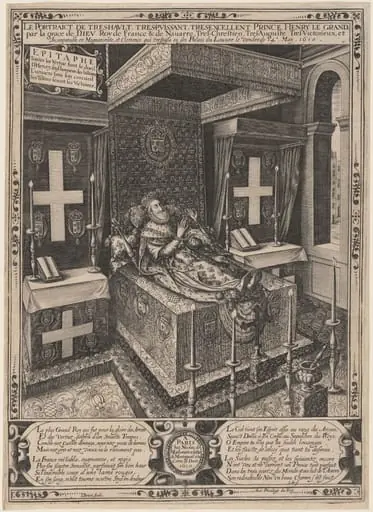 Le portraict de tres-haut...Henry Le Grand (Henri IV on His Deathbed)
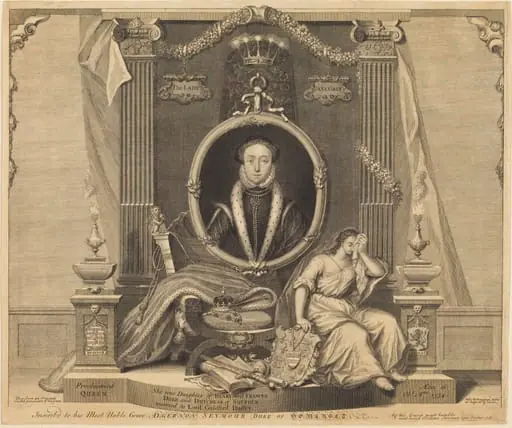 Lady Jane Grey
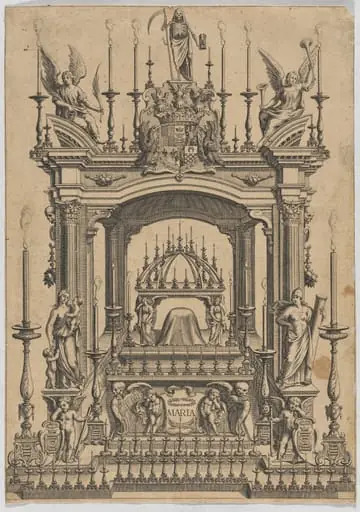 Catafalque for an Unknown Woman Named Maria
 Title Page for the Achievement of our Soveraigne King James
 The Statue of Mars, called 'Pyrrhus'
 Godfredus Aldemarus Alexandrino (Godfrey Adelmar)