Artwork
The Tomb of Elizabeth I
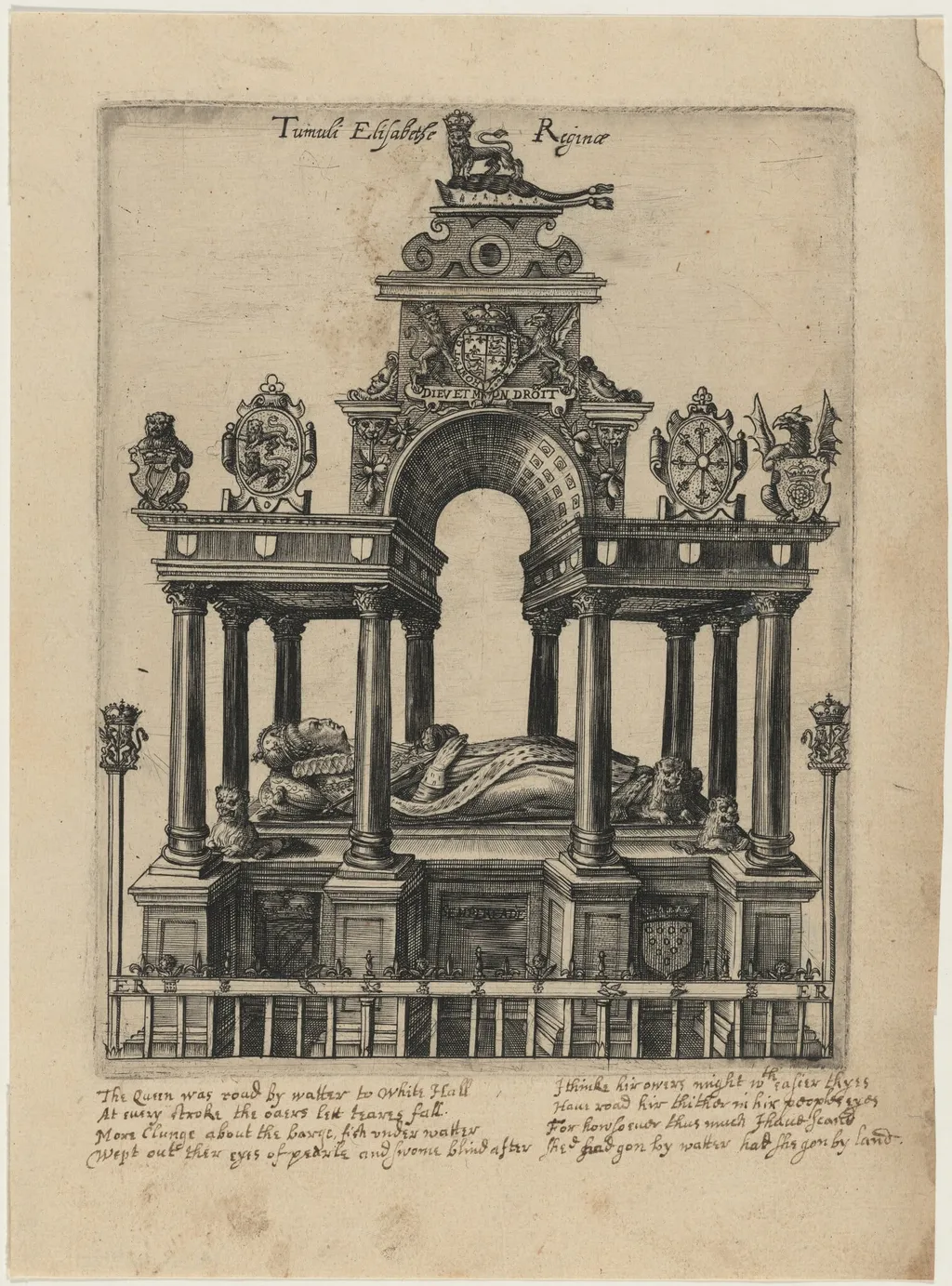
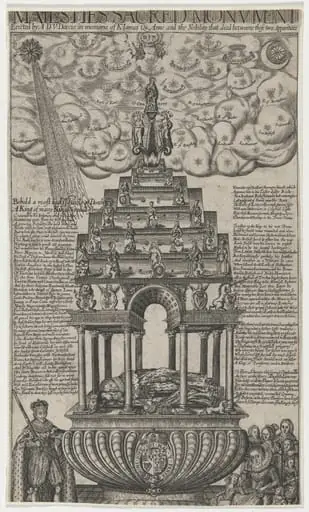
The Tomb of Elizabeth I is an ink print by the Baroque artist Magdalena van de Passe. It dates from 1620 and is held in the collection of the National Gallery of Art.
About this work
Overview
Additional sculptural elements, including lion statues and assorted creatures, frame the tomb, emphasizing its ceremonial grandeur.
Magdalena van de Passe’s 1620 engraving titled The Tomb of Elizabeth I presents a richly decorated funerary monument. Central to the composition is a reclining, cloaked figure crowned with a regal diadem, flanked by architectural columns and surmounted by a heraldic shield and lion. Additional sculptural elements, including lion statues and assorted creatures, frame the tomb, emphasizing its ceremonial grandeur.
Subject & Meaning
The image evokes the posthumous commemoration of England’s long‑reigning monarch, portraying her as a sovereign whose authority endures beyond death. The crown and coat of arms signal royal legitimacy, while the surrounding beasts, especially the lion, reinforce symbols of power, vigilance, and the continuity of the Tudor legacy.
Technique & Style
Executed in fine cross‑hatching, the print achieves depth through densely layered lines that model surfaces and suggest texture. Van de Passe’s meticulous line work renders intricate architectural details and the sumptuous drapery of the figure’s cloak, reflecting the elaborate visual language typical of early‑17th‑century Baroque printmaking.
History & Provenance
Created in 1620, the engraving emerges from the prolific van de Passe family workshop, known for portraiture and emblematic prints. While the work was likely intended for a learned audience familiar with royal iconography, surviving copies are held in several European print collections, attesting to its circulation among collectors of the period.
Context
The print belongs to a broader tradition of commemorative imagery that celebrated deceased monarchs through idealized tombs. In the early Stuart era, such representations reinforced dynastic continuity and served as visual affirmations of political stability amid shifting religious and political landscapes.
Artist & collection

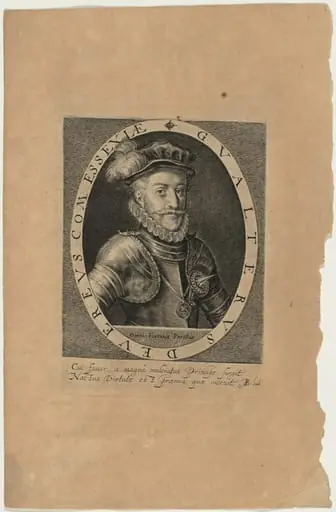 Walter Devereux, First Earl of Essex
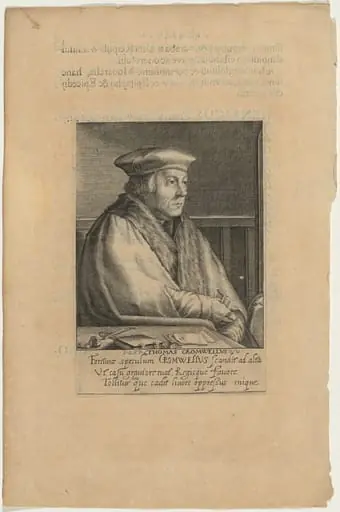 Thomas Cromwell, Earl of Essex
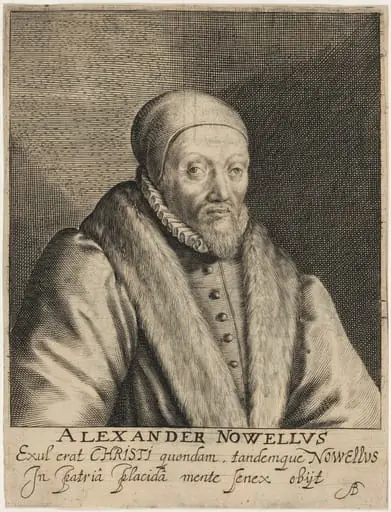 Alexander Nowell, Dean of Saint Paul's
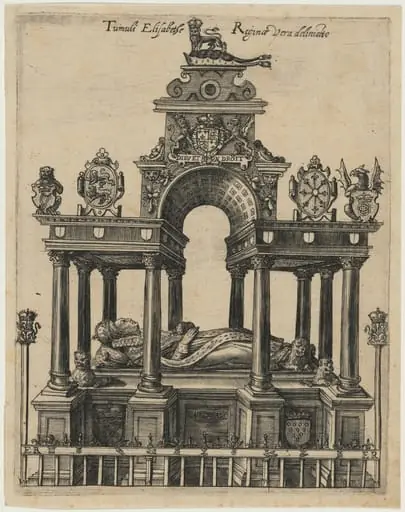 Elizabeth's Tomb
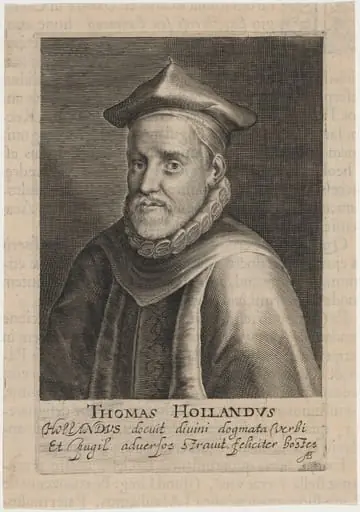 Thomas Holland, Regius Professor of Divinity at Oxford, and Rector of Exeter College
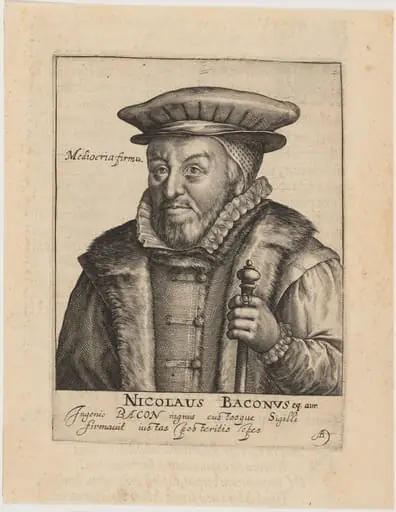 Sir Nicholas Bacon, Lord Keeper
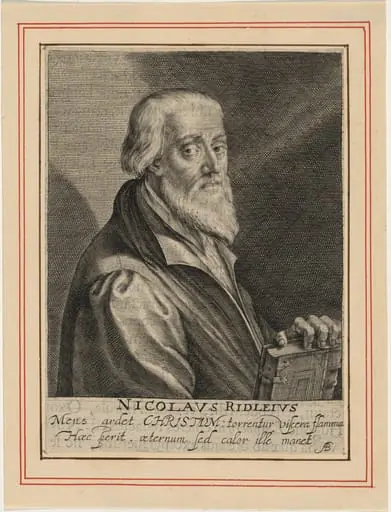 Nicholas Ridley, Bishop of London, Protestant Martyr
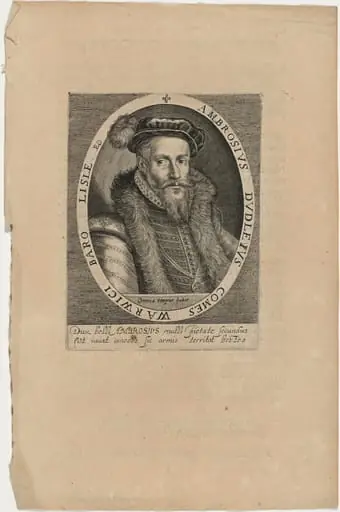 Ambrose Dudley, Earl of Warwick
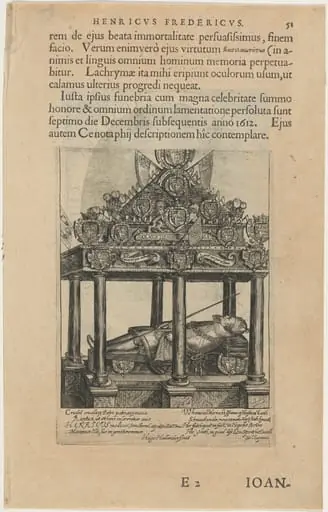 Prince Henry's Hearse
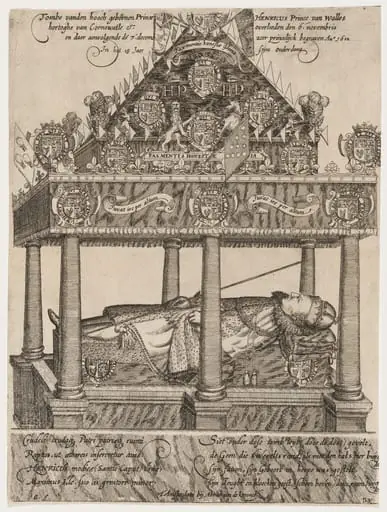 Prince Henry's Hearse
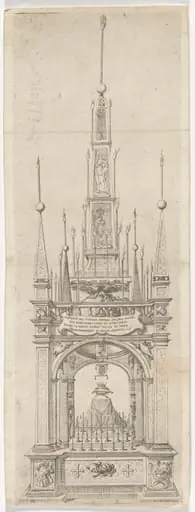 Catafalque for the Funeral of Giulio Thieni, Marquis of Scandiano
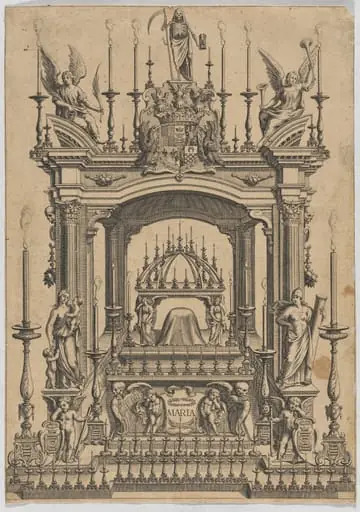 Catafalque for an Unknown Woman Named Maria
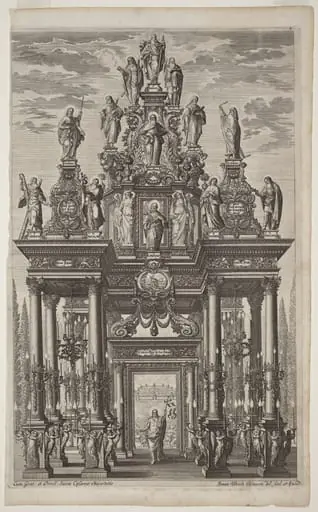 Frontispiece with Triumphal Arch with Christ and the Apostles
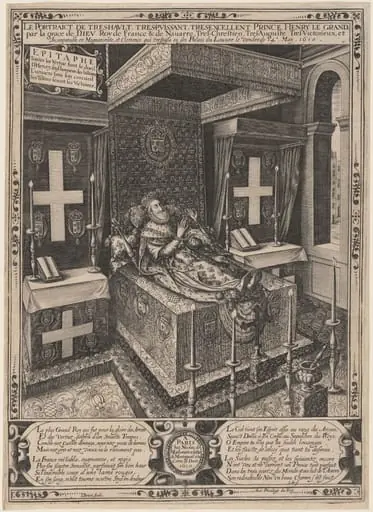 Le portraict de tres-haut...Henry Le Grand (Henri IV on His Deathbed)
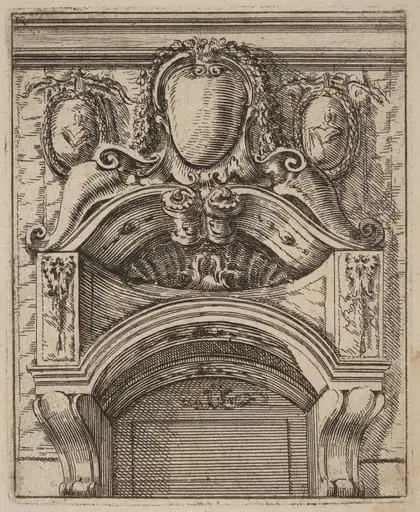 Architectural Motif with Three Shields, Two with Figures
 Majesties Sacred Monument
 Triumphal Arch for Lotharius II
 The Catafalque