Artwork
Le portraict de tres-haut...Henry Le Grand (Henri IV on His Deathbed)
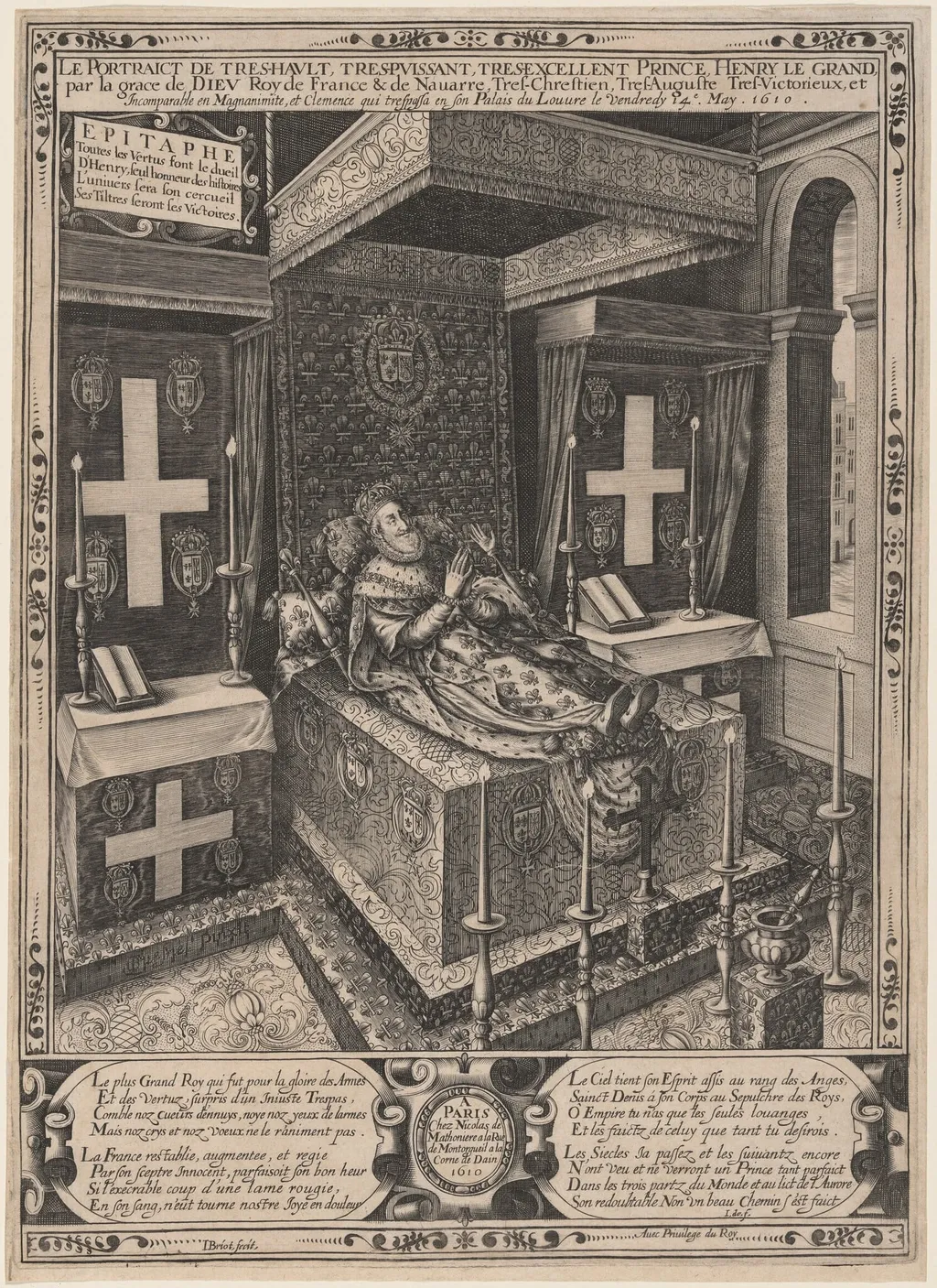
Le portraict de tres-haut...Henry Le Grand (Henri IV on His Deathbed) is an ink print by the Baroque artist Isaac Briot. It dates from 1610 and is held in the collection of the National Gallery of Art.
About this work
Overview
The work offers a rare visual record of a sovereign’s private, dying moments, contrasting with the more common celebratory royal portraits of the period.
Isaac Briot’s 1610 engraving, titled *Le portrait de tres‑haut… Henry le Grand*, depicts King Henri IV in his final hours. Executed on laid paper, the print presents the monarch lying on a bed, attended by a group of figures whose solemn expressions underscore the gravity of the scene. The work offers a rare visual record of a sovereign’s private, dying moments, contrasting with the more common celebratory royal portraits of the period.
Subject & Meaning
The composition centers on Henri IV, whose frailty is emphasized by his reclined posture and the attentive presence of courtiers, clergy, and possibly family members. The gathering conveys a sense of collective mourning and the transition of power, reflecting contemporary concerns about the king’s legacy and the stability of the French throne after his assassination.
Technique & Style
Briot employed a traditional intaglio engraving process, incising lines into a copper plate that were then transferred onto laid paper. The fine, cross‑hatching creates a rich tonal range, allowing intricate detailing of clothing, facial expressions, and interior furnishings. The work’s dramatic chiaroscuro and dynamic arrangement of figures align it with the early Baroque aesthetic, emphasizing emotional intensity and narrative depth.
History & Provenance
Created in 1610, shortly after Henri IV’s death, the print circulated among collectors interested in contemporary political events. While the original plate’s whereabouts are unknown, surviving impressions are held in several European print collections, attesting to the work’s continued relevance as a documentary image of a pivotal moment in French history.
Artist & collection