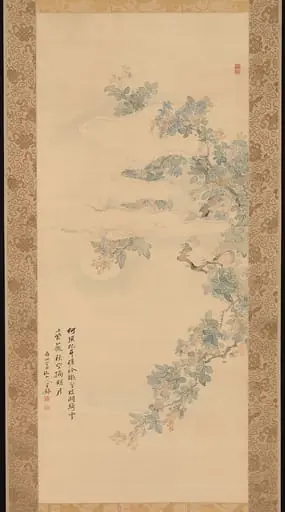
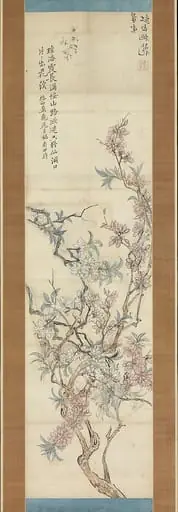
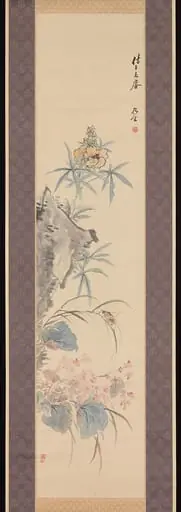
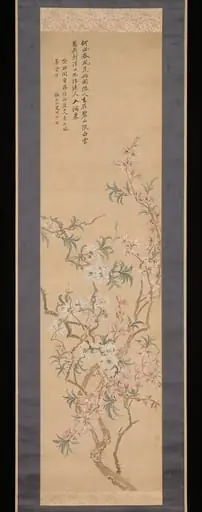
Artwork
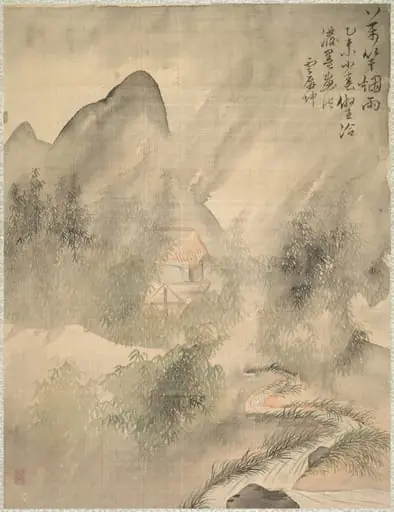
Hut Amidst the Trees
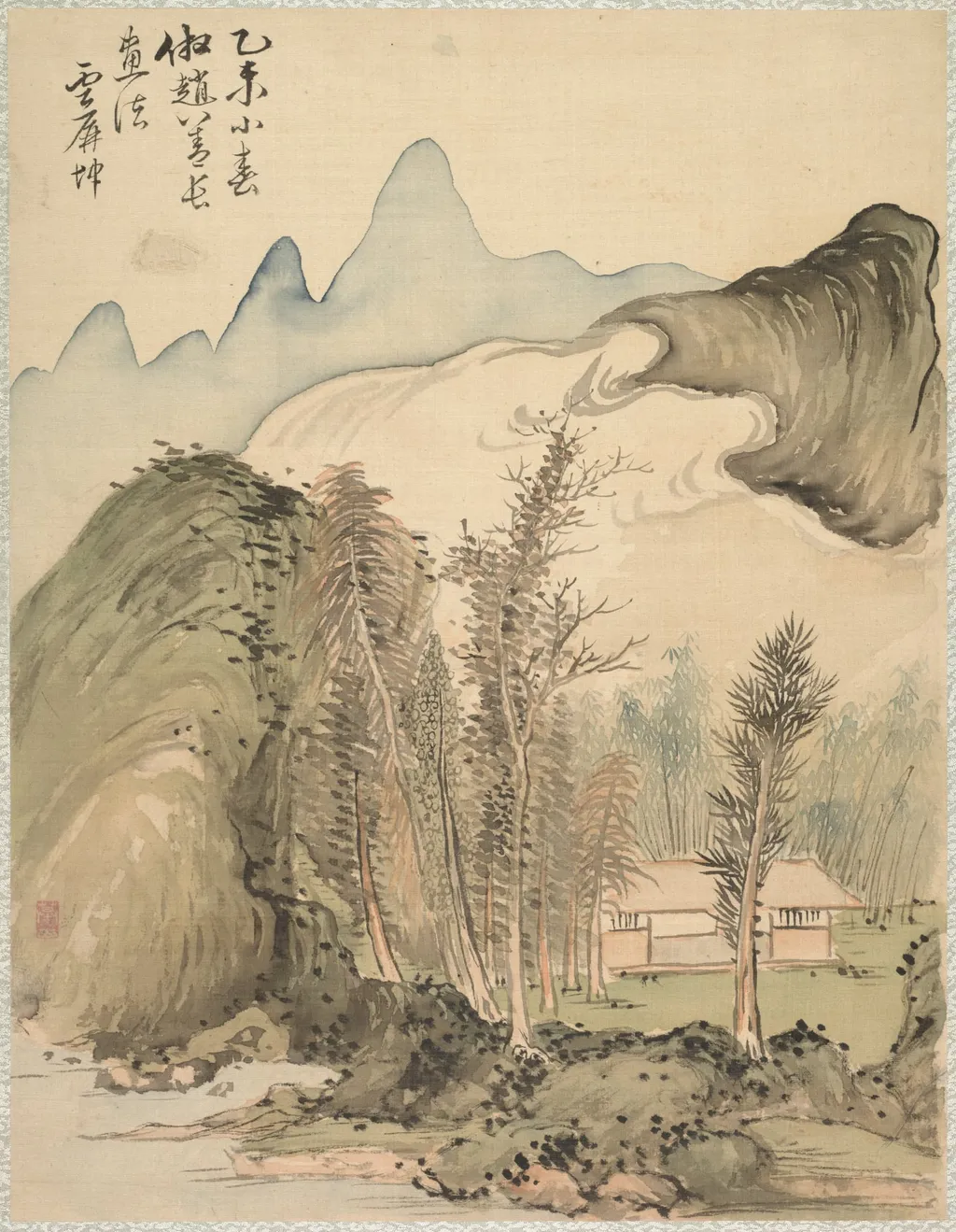
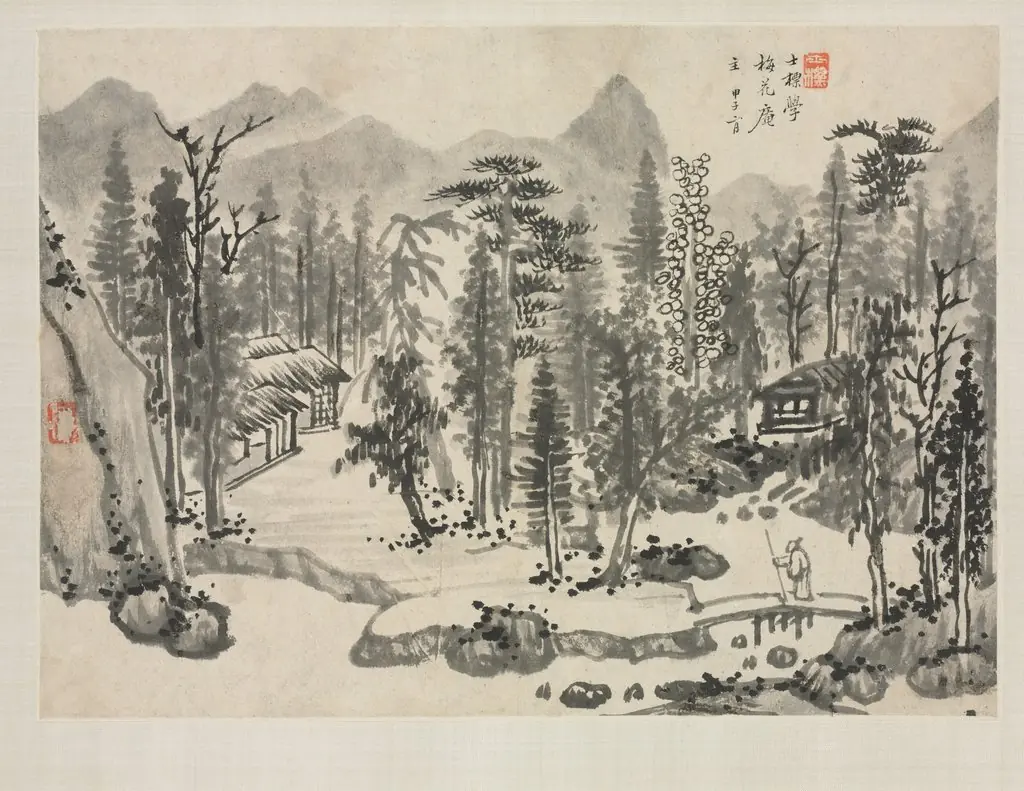
Hut Amidst the Trees is a work on paper by the Romanticist artist Tsubaki Chinzan. It dates from 1847 and is held in the collection of the Cleveland Museum of Art.
About this work
That mix of Japanese brushwork and Chinese tradition makes the painting feel quiet and layered.
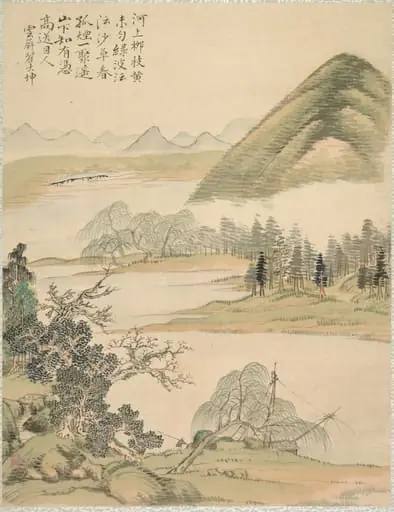
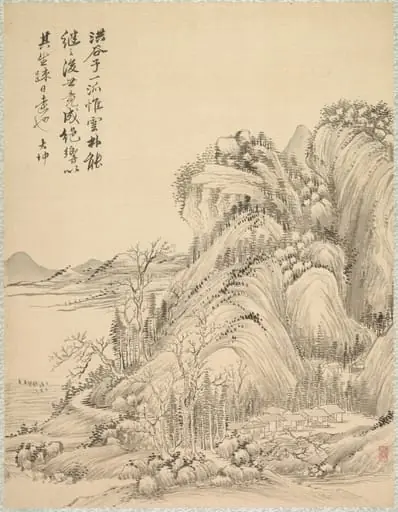
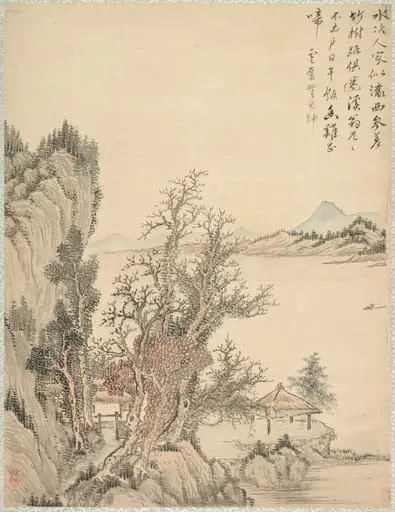
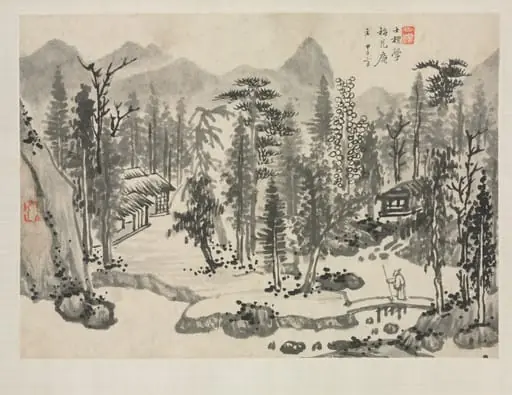
You see a small hut tucked between tall trees, their leaves done in quick, dark strokes.
Chinzan painted this scene after studying an 18th-century Chinese artist named Zhai Dakun. He didn’t just copy the picture—he also copied the old Chinese writing that went with it. That mix of Japanese brushwork and Chinese tradition makes the painting feel quiet and layered.
To see how other artists borrowed styles, look up *japan, edo period (1615–1868)*.
Overview
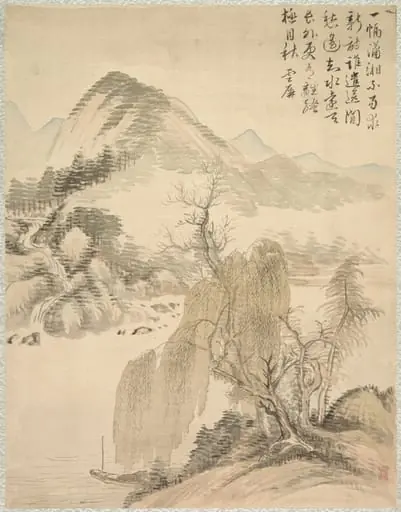
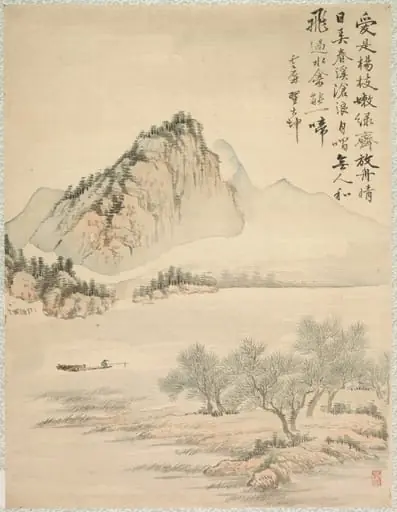
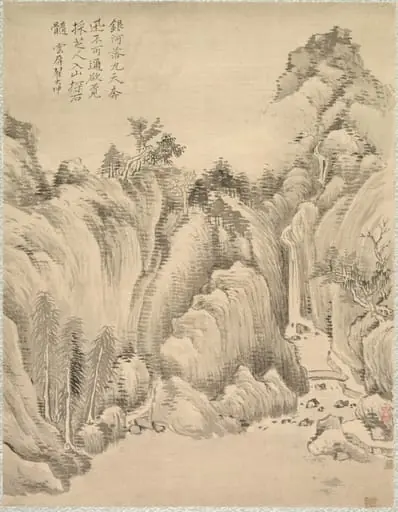
Hut Amidst the Trees is a landscape painting from a portfolio by Tsubaki Chinzan, created after the style of Zhai Dakun, an 18th-century Chinese artist.
Subject & Meaning
The painting depicts a serene scene of a small hut nestled among tall trees, with foliage rendered in swift, dark brushstrokes. The work combines Japanese technique with Chinese influences, resulting in a layered and contemplative atmosphere.
Technique & Style
Chinzan's painting blends traditional Japanese brushwork with the style of Zhai Dakun, incorporating copied inscriptions from the Chinese artist's works. This fusion of techniques contributes to the painting's distinctive character.
History & Provenance
Tsubaki Chinzan based his work on the paintings of Zhai Dakun, an 18th-century Chinese artist active between 1730 and 1804. Chinzan not only emulated Zhai's style but also replicated the inscriptions accompanying his paintings.
Context
This painting is part of a broader cultural exchange and artistic borrowing that occurred during the Edo period in Japan, when artists often studied and adapted the styles of other cultures.
Own this work as a print
Artist & collection

Artist
Tsubaki Chinzan, originally Tasuku was a Japanese painter in the nanga style. His other art names include Hekiin Sambō, Kyūan (休庵), Shikyūan (四休庵) and Takukadō (琢華堂).