Artwork
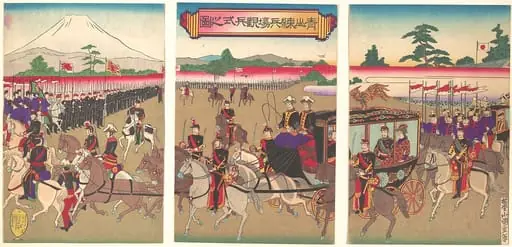
仏蘭西英吉利三兵大調錬之図|Maneuvers by Three Categories of French and English Soldiers (Furansu Igirisu sanhei ōchōren no zu)
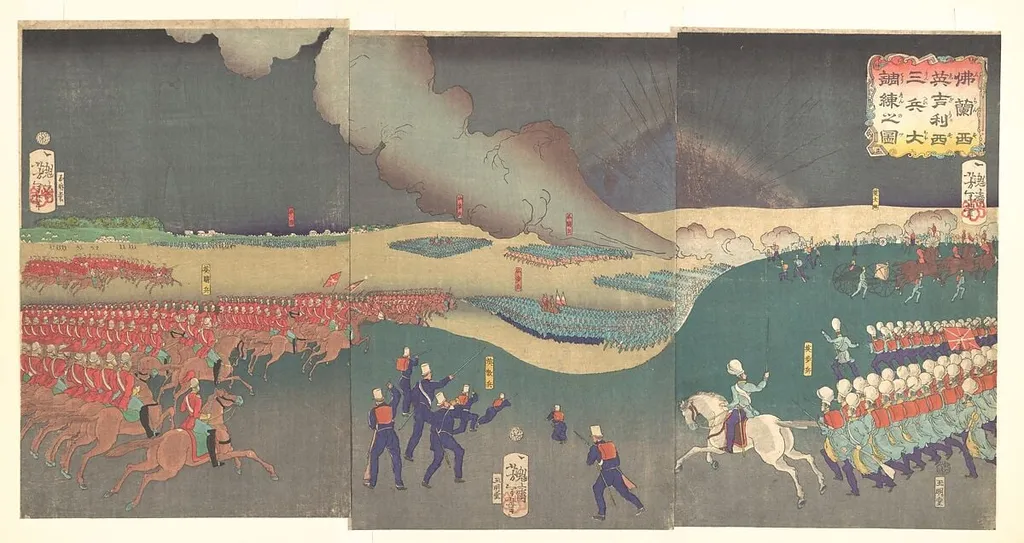
仏蘭西英吉利三兵大調錬之図|Maneuvers by Three Categories of French and English Soldiers (Furansu Igirisu sanhei ōchōren no zu) is an ink print by the Impressionist artist Yoshitoshi. It dates from 8 and is held in the collection of the Metropolitan Museum of Art.
About this work
Overview
The work is part of the Metropolitan Museum of Art’s collection, reflecting Japan’s engagement with global military imagery during the Meiji era.
This triptych by Tsukioka Yoshitoshi depicts a dynamic military exercise involving French and English troops, rendered in traditional Japanese woodblock technique. Created in 1877, it combines Western military subjects with ukiyo-e aesthetics. The three panels together form a continuous battlefield scene, emphasizing movement and coordination among infantry and cavalry. The work is part of the Metropolitan Museum of Art’s collection, reflecting Japan’s engagement with global military imagery during the Meiji era.
Subject & Meaning
The print portrays soldiers from France and England engaged in coordinated maneuvers, likely inspired by contemporary European military drills. Rather than depicting actual combat, it focuses on discipline and formation, suggesting admiration for Western military organization. The inclusion of both nations may reflect Japan’s interest in comparing two major colonial powers during its own modernization. Horses and foot soldiers are shown in varied poses, conveying order within motion.
Technique & Style
Yoshitoshi employed fine linework and layered color washes typical of late ukiyo-e, with subtle gradients in sky and terrain to suggest depth. The figures are rendered with precise detail in uniforms and weaponry, while the horses’ musculature and motion are captured through dynamic lines. The triptych format allows for a panoramic view, enhancing the sense of scale. Background elements like trees and clouds are simplified, directing focus to the soldiers’ activity.
History & Provenance
Produced in 1877, the triptych emerged during a period when Japan was rapidly adopting Western military practices. Yoshitoshi, already renowned for historical and warrior themes, turned to contemporary European subjects to appeal to public fascination with foreign armies. The work entered the Metropolitan Museum of Art’s collection through documented acquisition, likely in the early 20th century, as interest in Japanese prints grew in the West.
Context
In the Meiji period, Japanese artists frequently depicted Western military scenes as part of national efforts to understand and emulate global powers. Yoshitoshi’s work reflects this trend, blending Japanese print traditions with foreign subjects. Unlike earlier ukiyo-e focused on kabuki or courtesans, this piece signals a shift toward modernity and international themes, aligning with Japan’s broader cultural and political transformation.
Legacy
The triptych stands as an example of how Japanese artists reinterpreted Western subjects through indigenous techniques, influencing later generations of printmakers. While not widely known outside specialist circles, it remains a significant artifact of Japan’s engagement with global military culture during its modernization. Its preservation in major institutions underscores its value as a cross-cultural document of the late 19th century.
Artist & collection
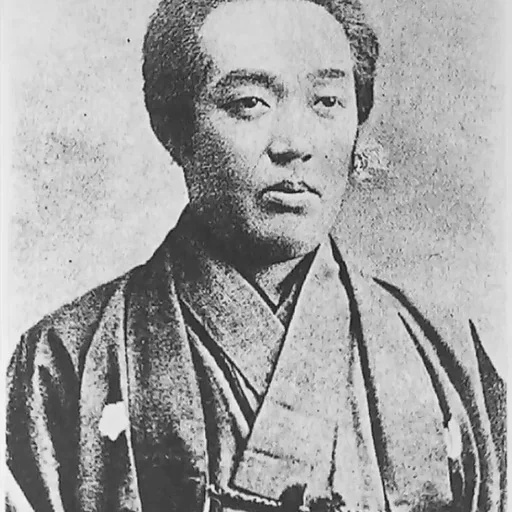
Artist
Tsukioka Yoshitoshi (Japanese: 月岡芳年; also named Taiso Yoshitoshi 大蘇芳年; 30 April 1839 – 9 June 1892) was a Japanese printmaker.

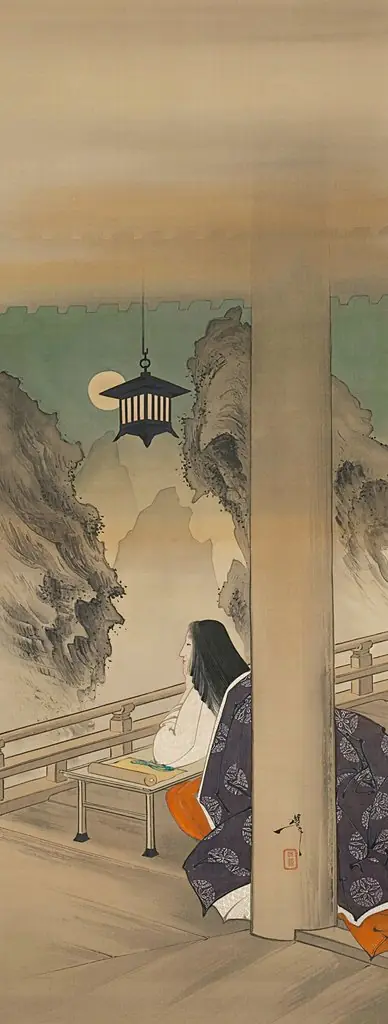 Murasaki Shikibu at Ishiyamadera Temple, based on the print “The Moon at Ishiyama,” from the series One Hundred Aspects of the Moon (Tsuki hyakushi: Ishiyama no tsuki)
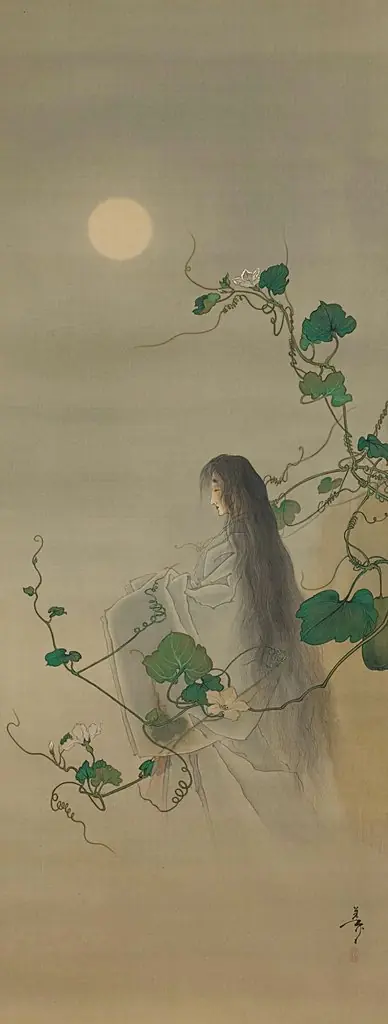 The Spirit of the Deceased Yūgao Entwined in Moonflower Vines, based on the print “The Lady of the Evening Faces,” from the series One Hundred Aspects of the Moon (Tsuki hyakushi: Genji Yūgao no maki)
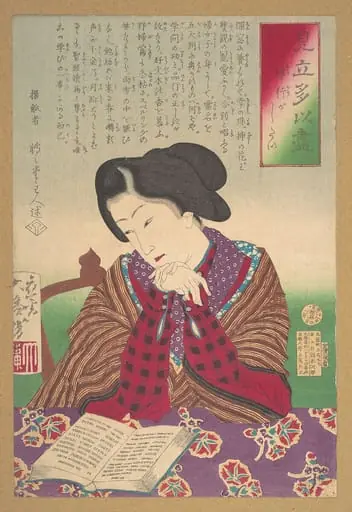 見立多以尽 - 洋行がしたい|Collection of Desires, Wish for Foreign Travel (Mitate Tai zukushi-yōkō ga shitai)
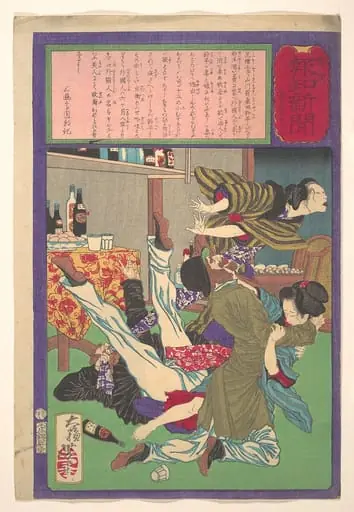 郵便報知新聞 645号|Postal Hōchi Newspaper no. 645, Englishman raping a wine shopkeeper's daughter (Yūbin Hōchi shinbun, roppyaku yonjū gogō)
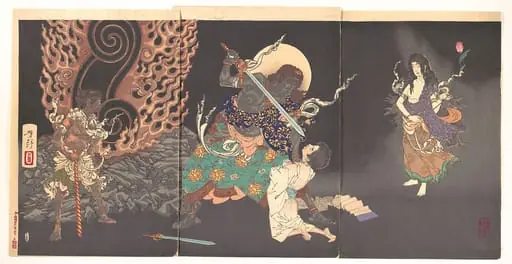 月岡芳年筆 不動明王∙祐天上人図|Fudō Myōō Threatening a Novice
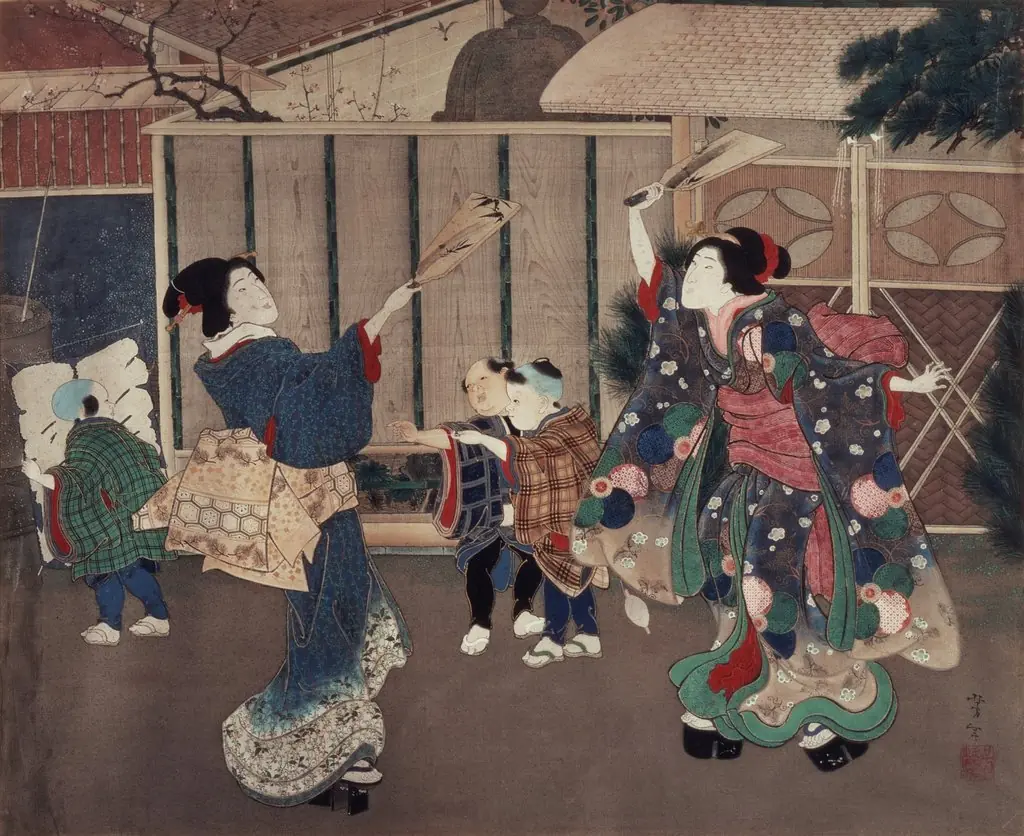 January: Celebrating the New Year
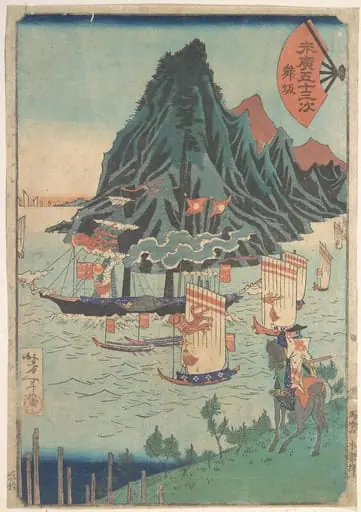 Untitled
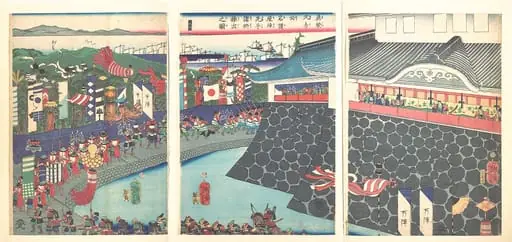 真柴秀吉公名護屋陣先手諸将繰出之図|Hideyoshi and His Troops Leaving Nagoya Camp (Mashiba Hideyoshi kō nagoya jin saki te no shoshō kuridashi no zu)
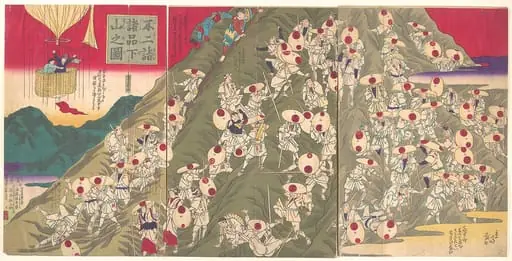 不二詣諸品下山之図|View of the Descent from a Mountain by Many from Pilgrimage to Mt. Fuji (Fuji mōde shoshina gesan no zu)
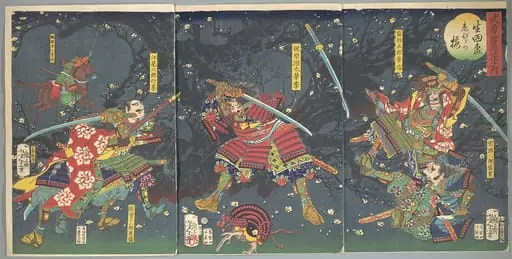 武勇雪月花之内 ゑびらの梅|Plum Blossoms in the Forrest of Ikuta, from the series Bravery-Beauty of the four seasons (Buyū setsugekka no uchi-Ikuta no mori, Ebira no ume)
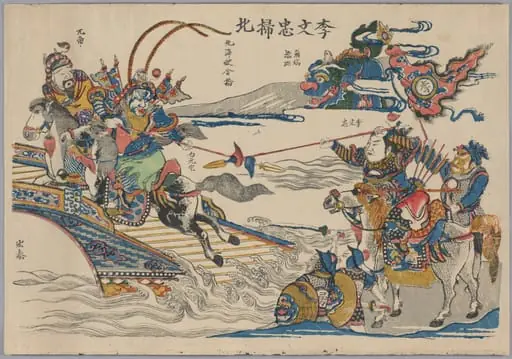 Li Wenzhong Clears the North
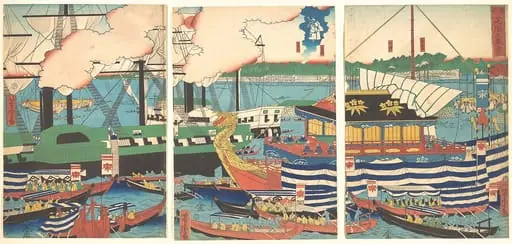 東都芝浦之風景|View of Shibaura, from the series Eastern Capital (Tōto, Shibaura no fūkei)
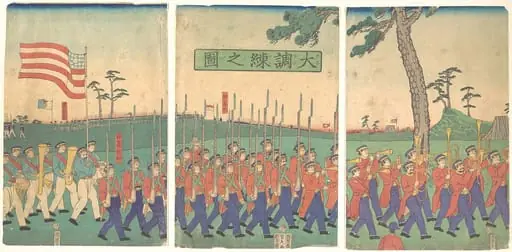 Uchoren no zu|Great Military Drill
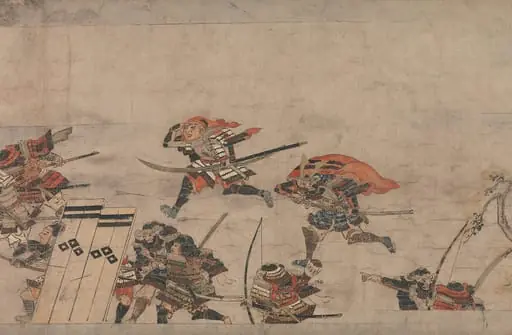 秋夜長物語|A Long Tale for an Autumn Night (Aki no yo nagamonogatari)
 Untitled
 源氏物語図屏風「御幸」・「浮船」・「関谷」|“An Imperial Excursion” (Miyuki), “A Boat Cast Adrift” (Ukifune), and “The Barrier Gate” (Sekiya)