Artwork
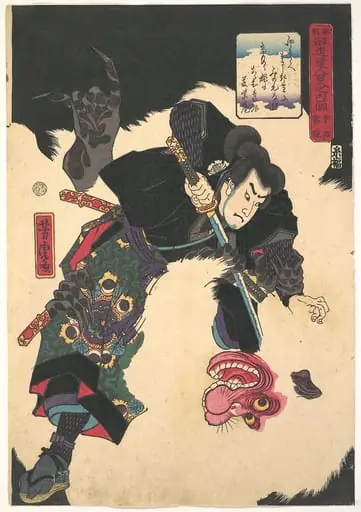
武勇雪月花之内 ゑびらの梅|Plum Blossoms in the Forrest of Ikuta, from the series Bravery-Beauty of the four seasons (Buyū setsugekka no uchi-Ikuta no mori, Ebira no ume)
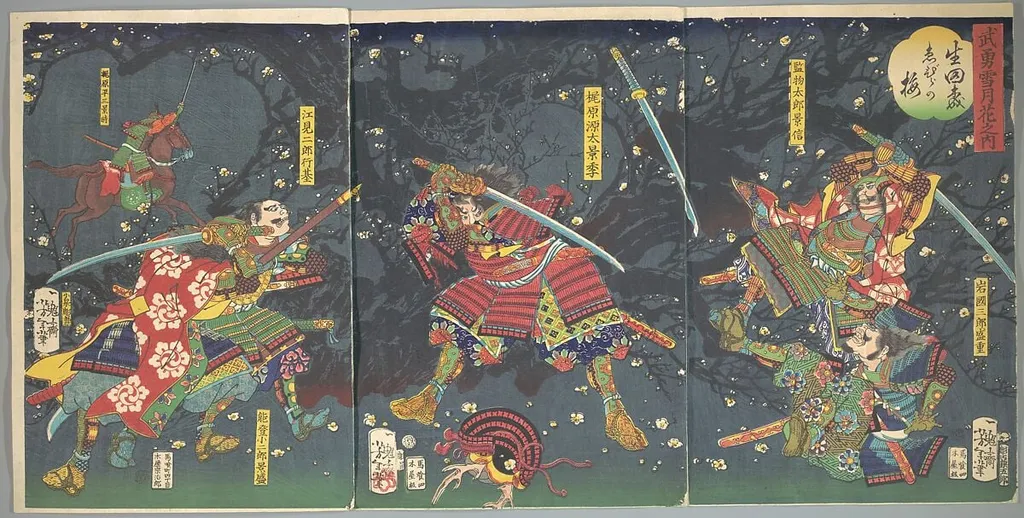
武勇雪月花之内 ゑびらの梅|Plum Blossoms in the Forrest of Ikuta, from the series Bravery-Beauty of the four seasons (Buyū setsugekka no uchi-Ikuta no mori, Ebira no ume) is an ink print by the Impressionist artist Yoshitoshi. It dates from 1867 and is held in the collection of the Metropolitan Museum of Art.
About this work
Overview
Created in 1867 by the prolific ukiyo‑e master Tsukioka Yoshitoshi, this work is a three‑panel woodblock print titled “Plum Blossoms in the Forest of Ikuta.” It forms part of the series “Bravery‑Beauty of the Four Seasons,” and is presently in the collection of the Metropolitan Museum of Art.
Subject & Meaning
The triptych depicts a dramatic encounter among three samurai within a dense, shadowy forest. A mounted warrior brandishes a sword while controlling his horse, and two foot soldiers clash, one of whom is shown falling. The inclusion of plum blossoms and the forest setting evokes seasonal symbolism and the fleeting nature of martial valor.
Technique & Style
Executed with ink and vivid pigments on paper, Yoshitosi employs the traditional multi‑block carving method to achieve sharp outlines and rich coloration. The composition balances dark, atmospheric backgrounds with bright, patterned armor, creating a dynamic sense of motion that guides the eye across the three panels.
History & Provenance
The print was produced during the late Edo period, a time when Yoshitoshi’s work often combined historical narrative with theatrical flair. After its original circulation as a popular print, it entered the Metropolitan Museum of Art’s collection, where it remains a representative example of mid‑19th‑century Japanese woodblock art.
Artist & collection
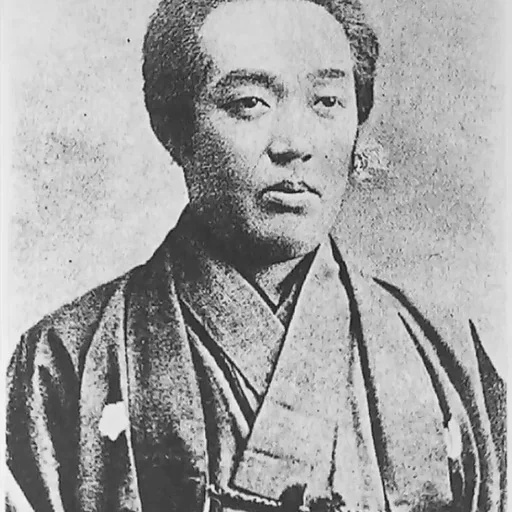
Artist
Tsukioka Yoshitoshi (Japanese: 月岡芳年; also named Taiso Yoshitoshi 大蘇芳年; 30 April 1839 – 9 June 1892) was a Japanese printmaker.

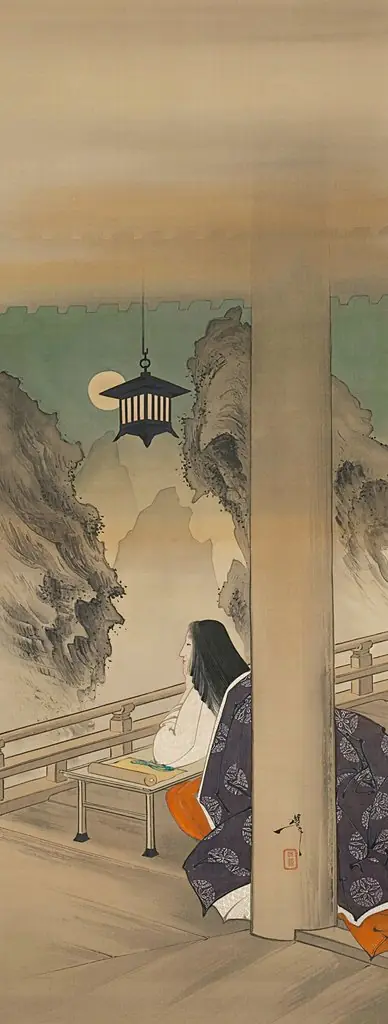 Murasaki Shikibu at Ishiyamadera Temple, based on the print “The Moon at Ishiyama,” from the series One Hundred Aspects of the Moon (Tsuki hyakushi: Ishiyama no tsuki)
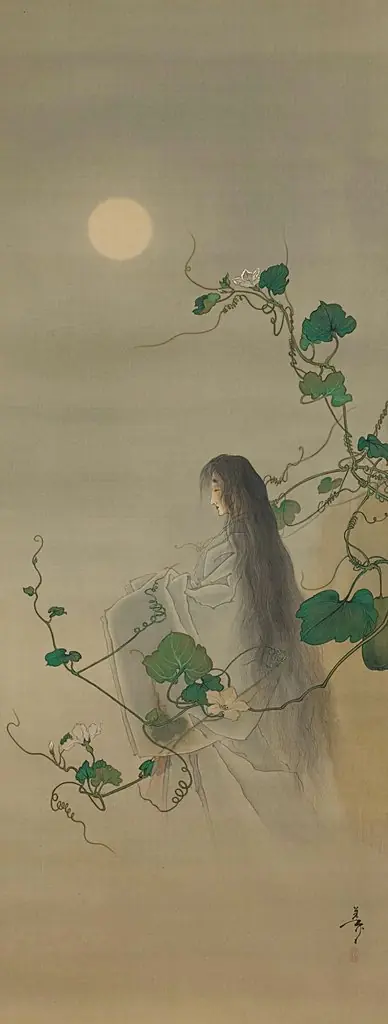 The Spirit of the Deceased Yūgao Entwined in Moonflower Vines, based on the print “The Lady of the Evening Faces,” from the series One Hundred Aspects of the Moon (Tsuki hyakushi: Genji Yūgao no maki)
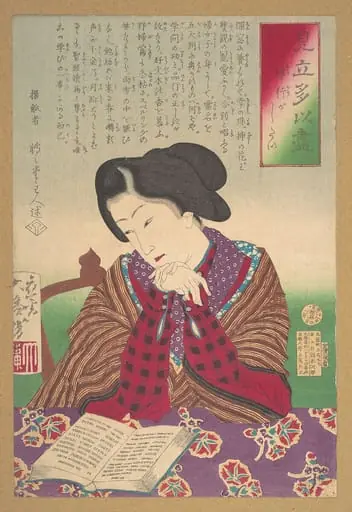 見立多以尽 - 洋行がしたい|Collection of Desires, Wish for Foreign Travel (Mitate Tai zukushi-yōkō ga shitai)
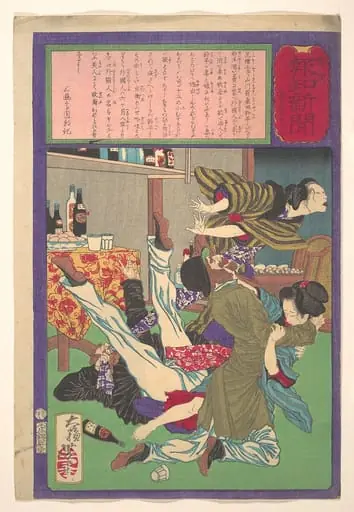 郵便報知新聞 645号|Postal Hōchi Newspaper no. 645, Englishman raping a wine shopkeeper's daughter (Yūbin Hōchi shinbun, roppyaku yonjū gogō)
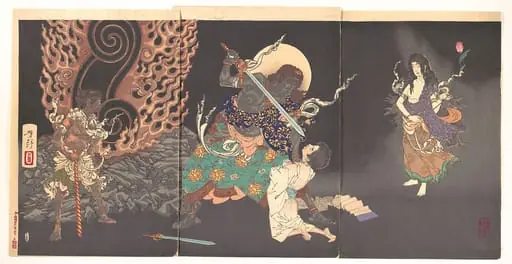 月岡芳年筆 不動明王∙祐天上人図|Fudō Myōō Threatening a Novice
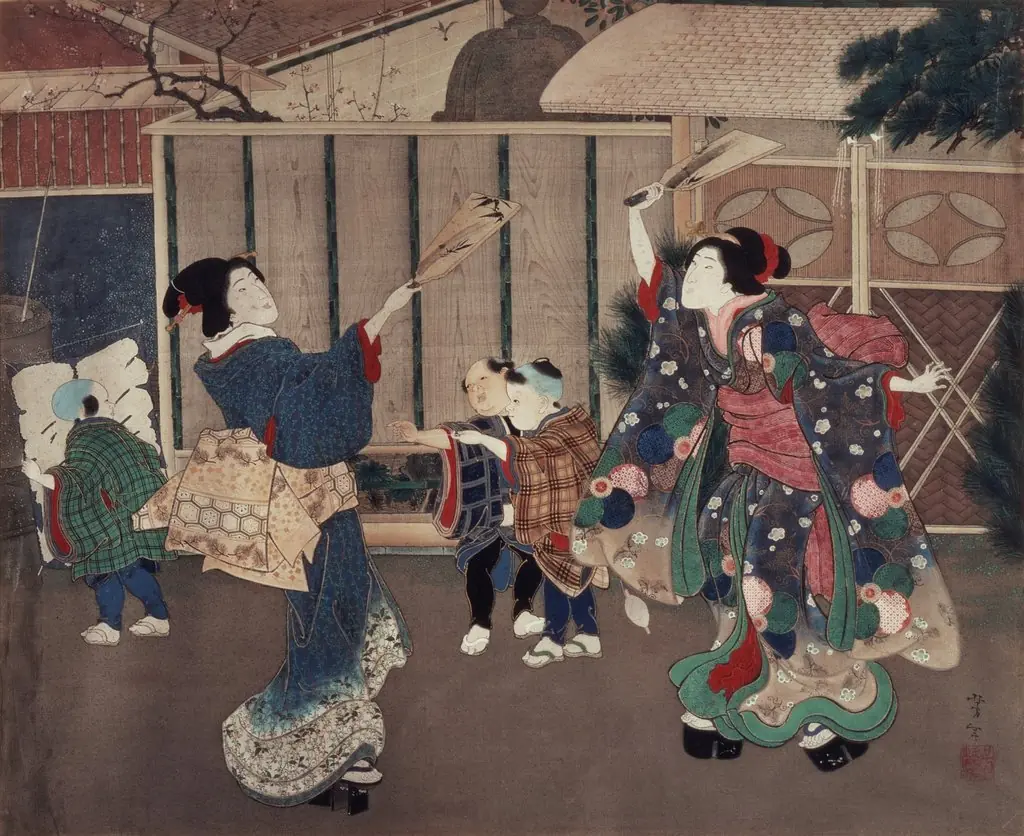 January: Celebrating the New Year
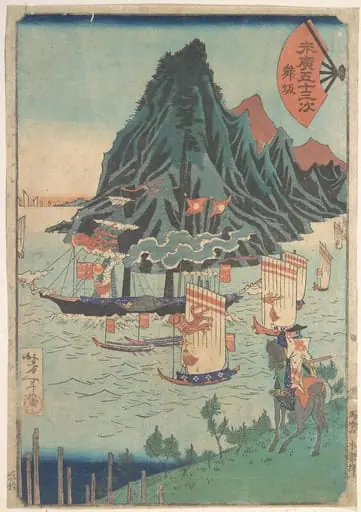 Untitled
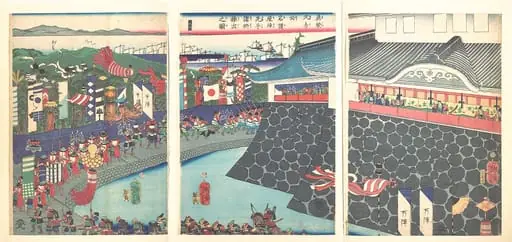 真柴秀吉公名護屋陣先手諸将繰出之図|Hideyoshi and His Troops Leaving Nagoya Camp (Mashiba Hideyoshi kō nagoya jin saki te no shoshō kuridashi no zu)
 Untitled
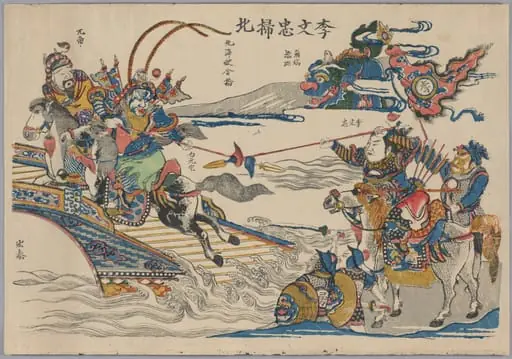 Li Wenzhong Clears the North
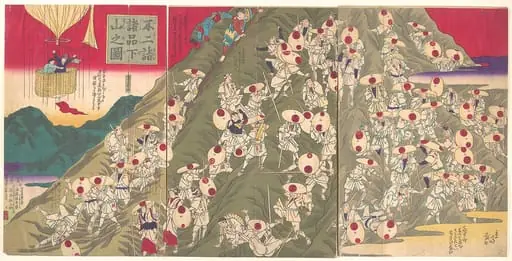 不二詣諸品下山之図|View of the Descent from a Mountain by Many from Pilgrimage to Mt. Fuji (Fuji mōde shoshina gesan no zu)
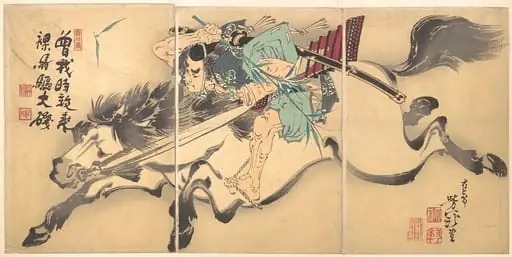 Untitled
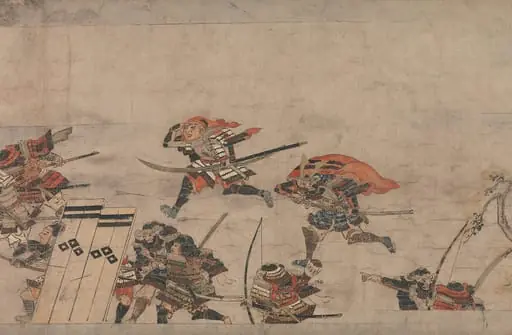 秋夜長物語|A Long Tale for an Autumn Night (Aki no yo nagamonogatari)
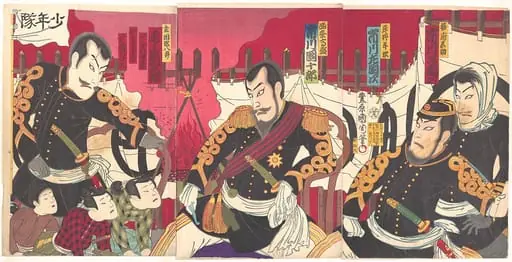 「摂府真助」「市川子團次」「岸野年秋 市川左團次」 「西条高盛 市川團十郎」 「倉田進八郎 尾上菊五郎」「正太郎 中村仲太郎」「孫市 尾上菊之介」「徳丸 市川幸作」西南雲晴朝東風|Ichikawa Kodanji as Seppu Shinsuke, Ichikawa Sadanji as Kishino Toshiaki, Ichikawa Danjūrō as Saijō Takamori, Onoe Kikugorō as Kurata Shinpachirō, Nakamura Chūtarō as Shōtarō, Onoe Kikunosuke as Magoichi, and Ichikawa Kōsaku as Tokumaru in the play Okige no kumo harau asa gochi
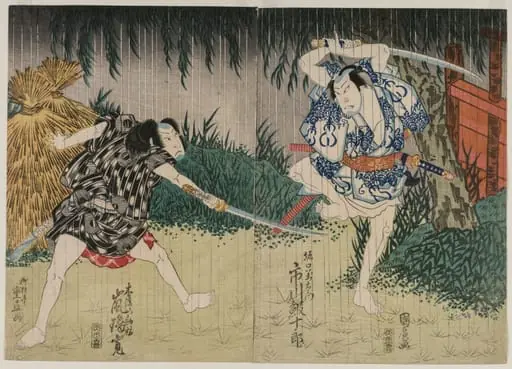 Arashi Rikan II as Kizu Kansuke; Ichikawa Ebijuro II as Horiguchi Manzaemon
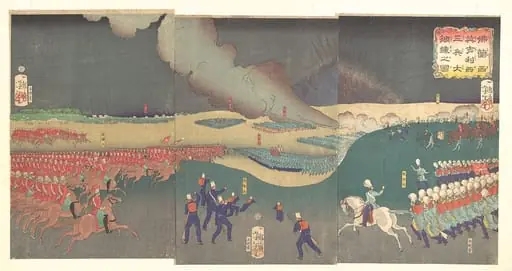 仏蘭西英吉利三兵大調錬之図|Maneuvers by Three Categories of French and English Soldiers (Furansu Igirisu sanhei ōchōren no zu)
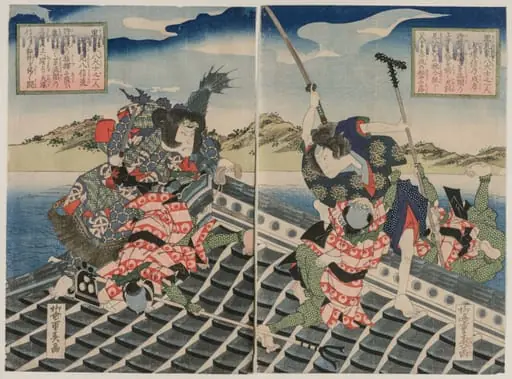 Arashi Rikan II as Inuzuka Shino Moritaka and Nakamura Utaemon III as Inukai Kenpachi Michinobu Battling (from the series The Eight Heroes of the Satomi Clan)
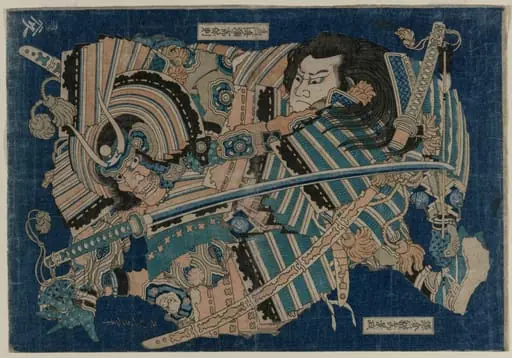 Kamakura no Gengoro Seizing Torinoumi Tasaburo
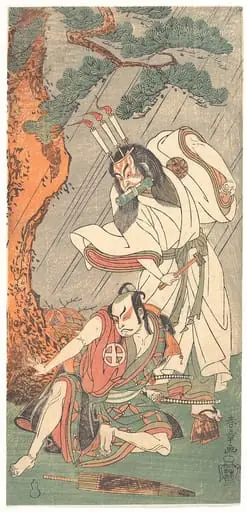 九代目市村羽左衛門・三代目大谷廣次|Kabuki Actors Ichimura Uzaemon IX as Ko-kakeyama and Ōtani Hiroji III as Kōga Saburō