Artwork
Oliver Cromwell
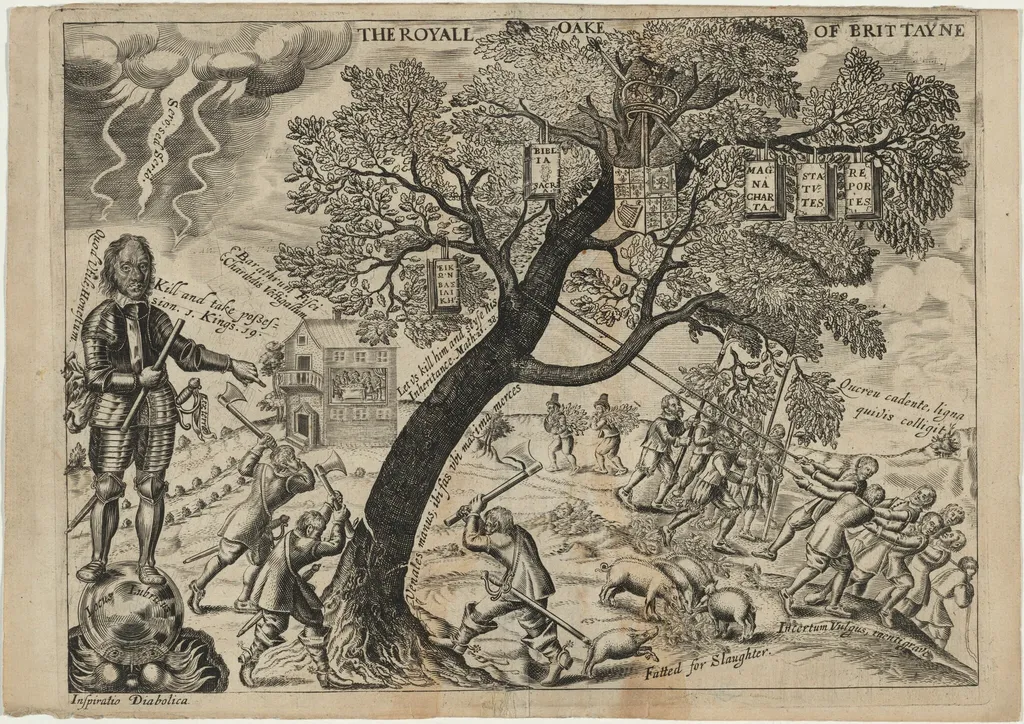
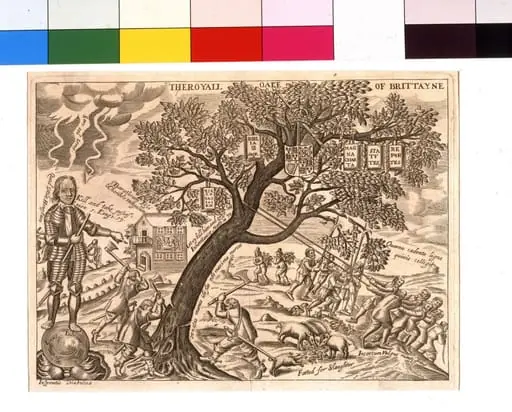
Oliver Cromwell is an ink print by the Romanticist artist Unknown 19th Century. It dates from 1850 and is held in the collection of the National Gallery of Art. The engraving presents a monumental oak, labeled as the "Royal Oak of Britain," dominating the composition.
About this work
Overview
The engraving presents a monumental oak, labeled as the "Royal Oak of Britain," dominating the composition. An armored figure points toward the tree while various figures around it engage in woodcutting, combat, or concealment, conveying a scene of turmoil. The lower part of the image includes a pig being slaughtered, accompanied by the inscription "Fatted for Slaughter."
Subject & Meaning
The surrounding chaos of violence and fear suggests commentary on political unrest and the exploitation of the nation’s resources.
The central oak functions as an allegorical representation of England’s historical lineage, its branches bearing symbols such as the crest of Britannia and the name of King James. The armored man likely embodies sovereign authority, directing attention to the tree’s significance. The surrounding chaos of violence and fear suggests commentary on political unrest and the exploitation of the nation’s resources.
Technique & Style
Executed as an engraving, the work relies on incised lines to render intricate detail, from the texture of bark to the expressions of the figures. The stark contrast between dark ink and white paper heightens the dramatic tension, while the dense composition packs multiple narrative elements into a compact visual field.
Context
The image reflects a period when allegorical prints were employed to critique or support political narratives, often circulating as pamphlets or broadsides. By invoking the historic Royal Oak—traditionally linked to the restoration of the monarchy—the print engages with contemporary debates over royal legitimacy and national identity.
Artist & collection

Artist

 The Royall Oake of Brittayne
 Landscape with Battle Scene
 Title Page to Francis Quarles, Shepherds Oracles
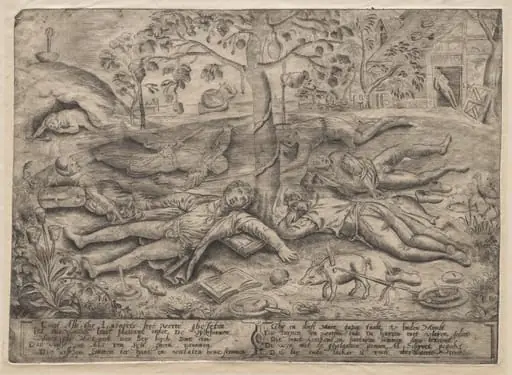 Gluttony (Land of Cockaigne)
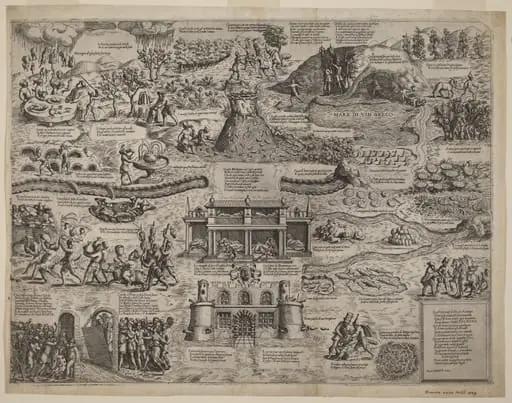 The Land of Cockaigne
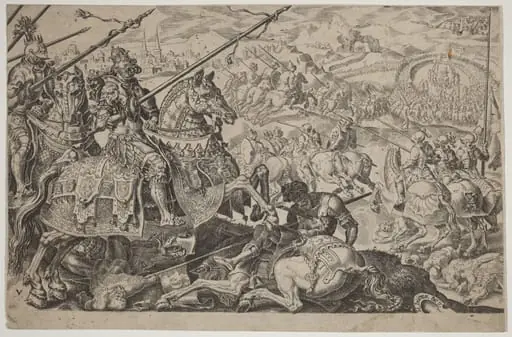 Suleiman the Magnificent Forced to Raise the Siege of Vienna
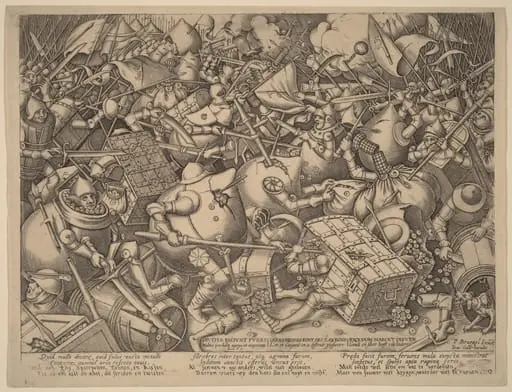 The Battle of the Moneybags and the Strongboxes
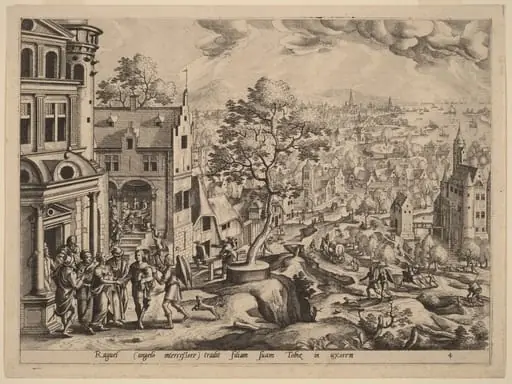 Tobias and the Angel Arriving at Raguel's House
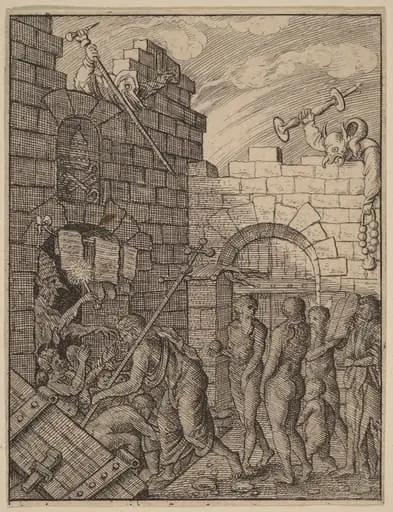 Descent into Hell
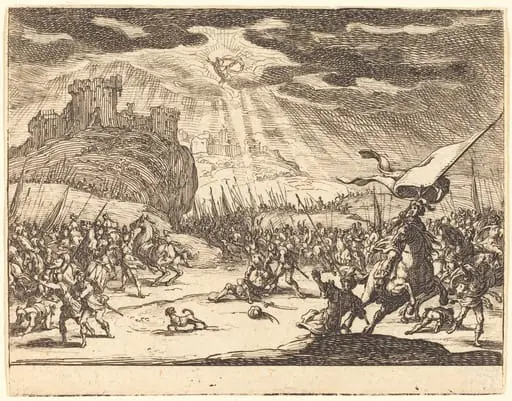 Conversion of Paul
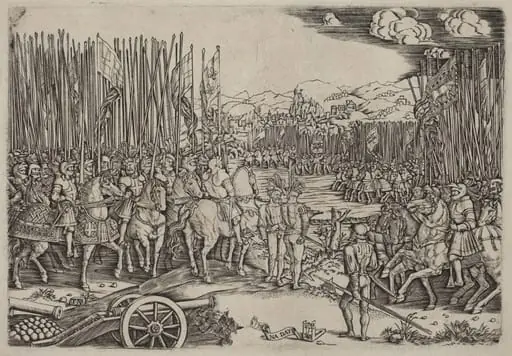 The Two Armies at the Battle of Ravenna
 Allegory of War