Artwork
The Land of Cockaigne
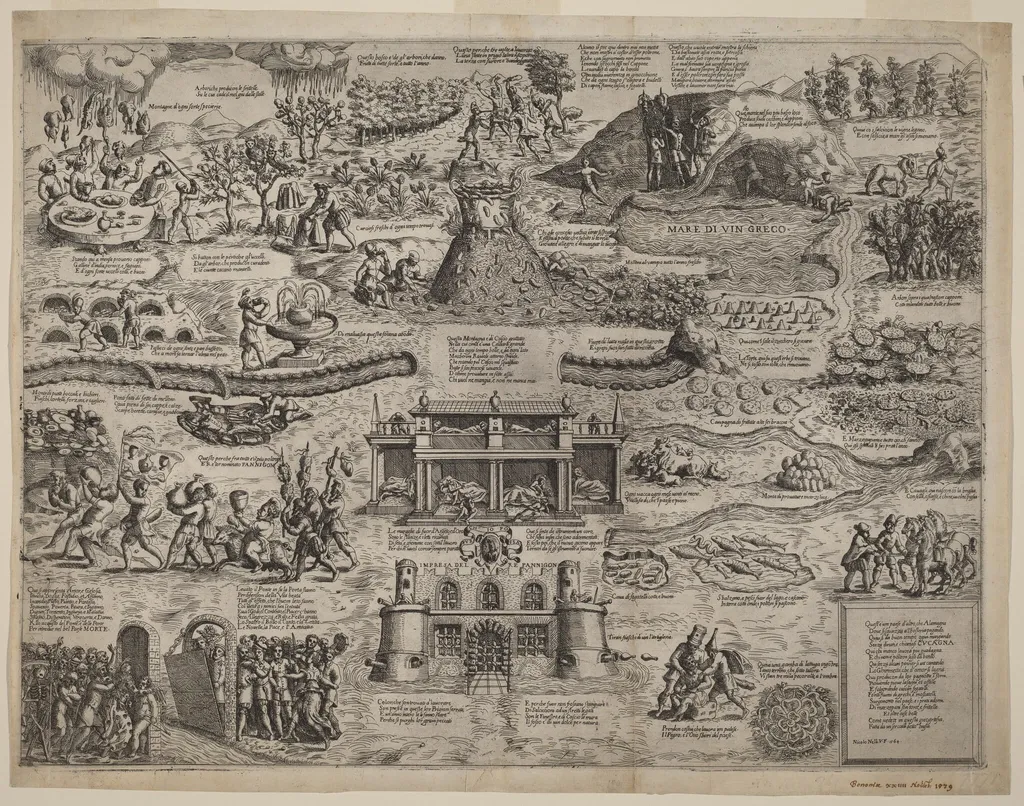
The Land of Cockaigne is an ink print by the Renaissance artist Niccolò Nelli. It dates from 1564 and is held in the collection of the National Gallery of Art.
About this work
Overview
Created in 1564 by Niccolò Nelli, this etching depicts a fantastical realm where food defies natural order. Rendered on laid paper, the print uses fine incised lines to convey a satirical vision of abundance, blending humor with social commentary. The technique allows for intricate detail, capturing a world where culinary fantasy overrides reality.
Subject & Meaning
The scene portrays a mythical land of excess: roasted pigs wander freely, pies hang from trees, and bread forms rooftops. Fish leap into nets as if drawn by instinct, and tables overflow without labor. These absurdities mock the medieval ideal of Cockaigne—a utopia of idleness and endless feasting—critiquing greed and the illusion of effortless plenty.
Technique & Style
Nelli employed etching, a method involving acid-bitten lines on a metal plate, to achieve fine, fluid detail. The composition is densely packed with whimsical figures and surreal architecture, arranged without perspective to emphasize chaos over order. The contrast between delicate lines and exaggerated forms heightens the satirical tone, typical of Northern Renaissance printmaking.
History & Provenance
The print emerged in mid-16th century Italy, a period when printed images circulated widely among urban audiences. While Nelli’s other works are scarce, this etching survives in several institutional collections, suggesting its popularity as a satirical novelty. Its survival reflects the era’s interest in visual humor and moral allegory conveyed through print.
Context
Cockaigne legends were common in European folklore, often used to ridicule laziness and gluttony. Nelli’s version aligns with broader Northern European traditions, such as Bruegel’s depictions of excess, but adapts them into a distinctly Italian visual language. The print likely appealed to literate urbanites familiar with moralizing tales and the tensions between aspiration and reality.
Legacy
Though not widely reproduced in later centuries, the etching remains a rare example of Italian Renaissance satire in print form. It contributes to the understanding of how visual humor functioned in pre-modern societies, offering insight into popular attitudes toward food, labor, and social order through imaginative exaggeration.
Artist & collection

 The Last Judgment
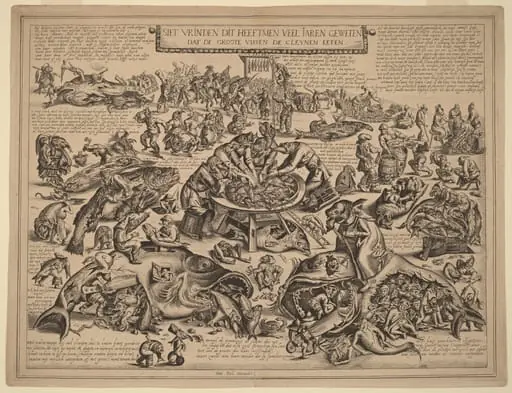 The Big Fish Eat the Little Fish
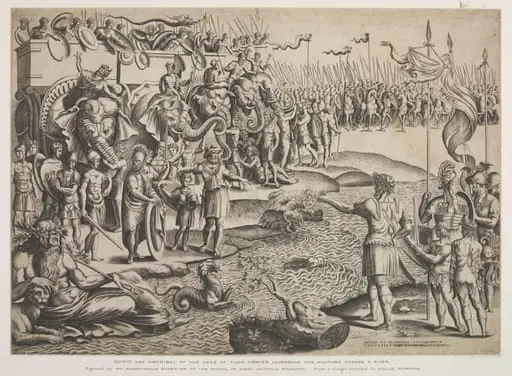 Untitled
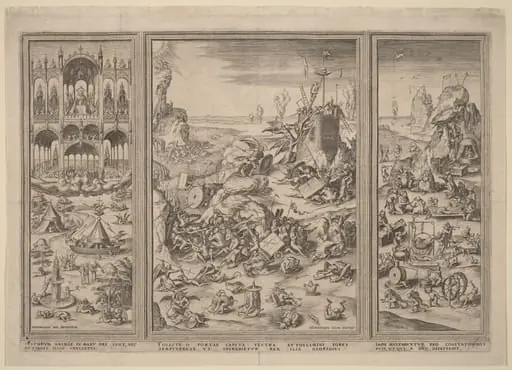 The Last Judgment Triptych
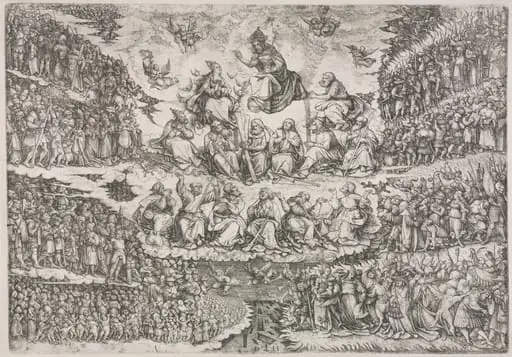 Last Judgment
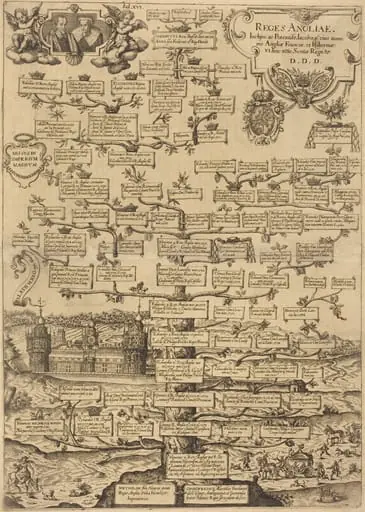 Reges Anglia
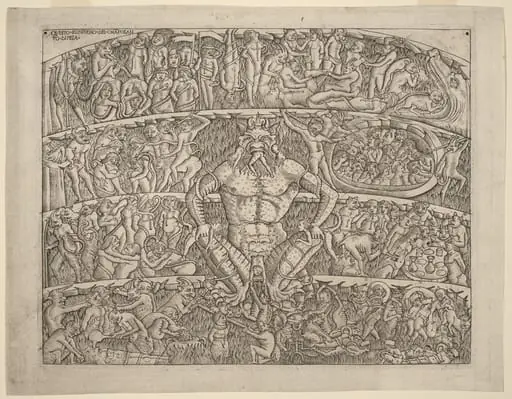 The Inferno, after the Fresco in the Camposanto of Pisa
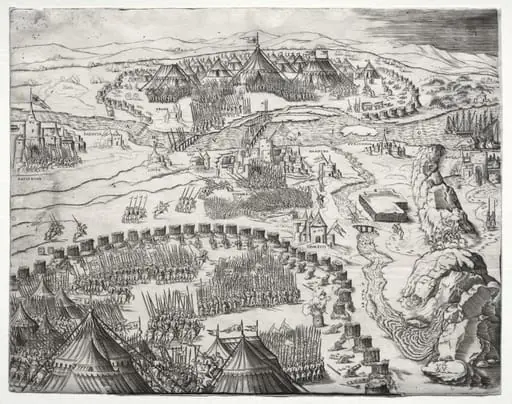 The Position and Camp of the Armies of Charles V and Soliman II
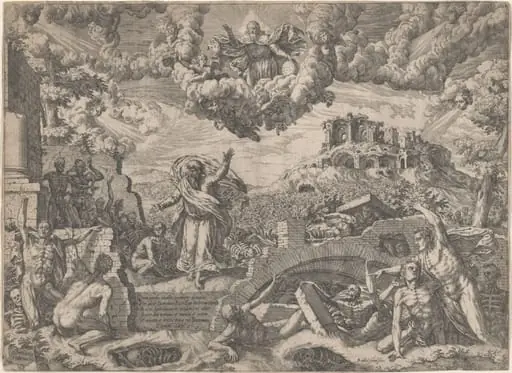 The Vision of Ezekiel
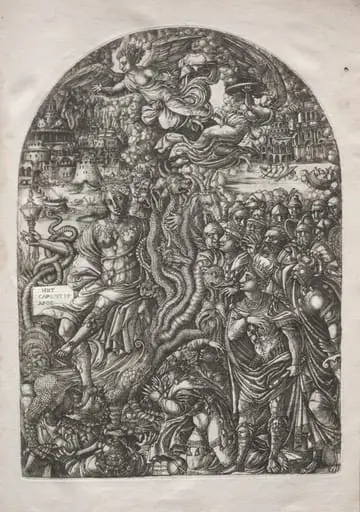 The Apocalypse: Babylon the Harlot, Seated on the Seven-headed Beast
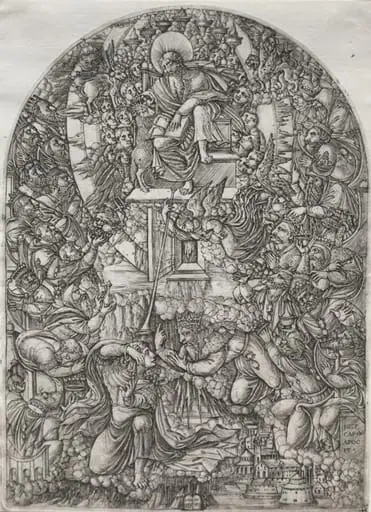 The Apocalpse: St. John Summoned to Heaven
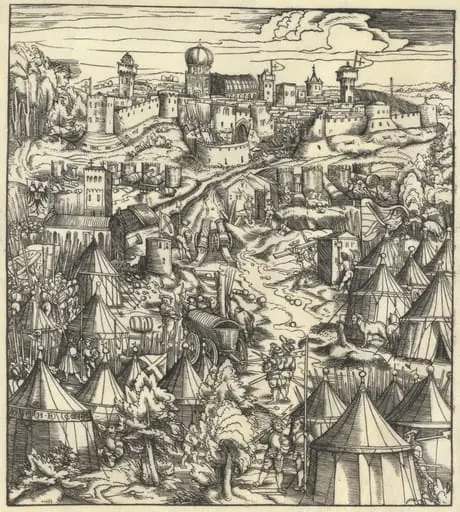 The Battle of Padua