Artwork
The Royall Oake of Brittayne
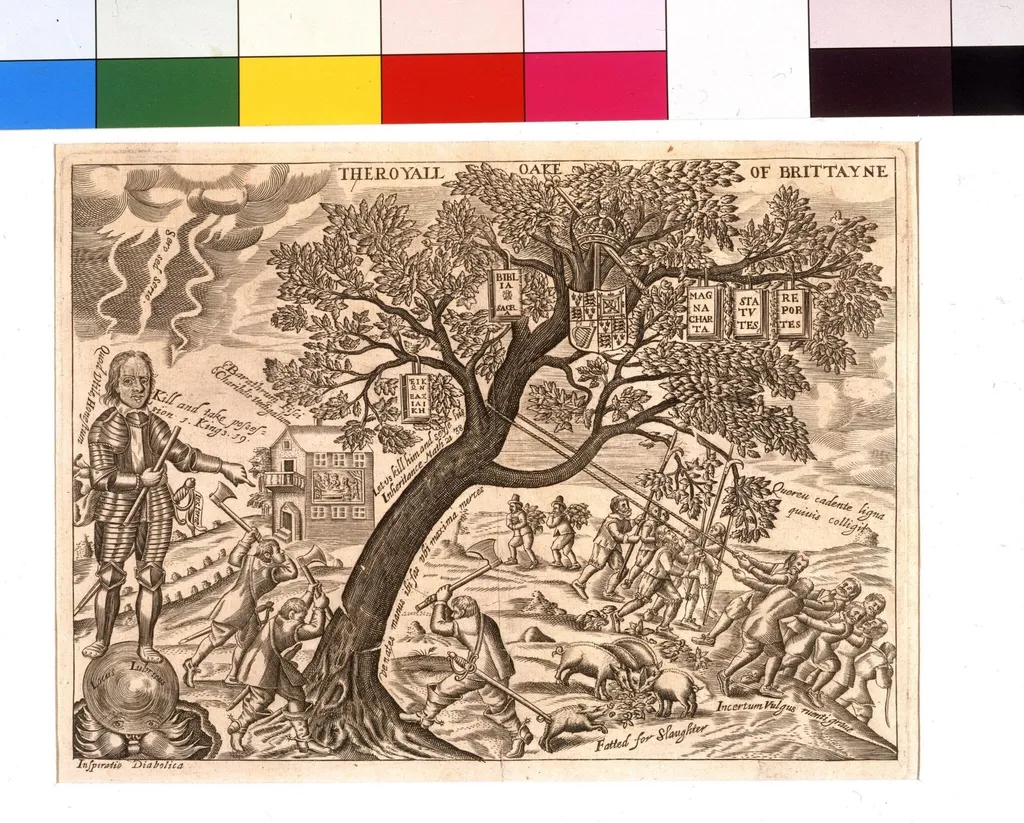
The Royall Oake of Brittayne is a print by the Baroque artist Unknown. It dates from 1649 and is held in the collection of the Victoria and Albert Museum.
About this work
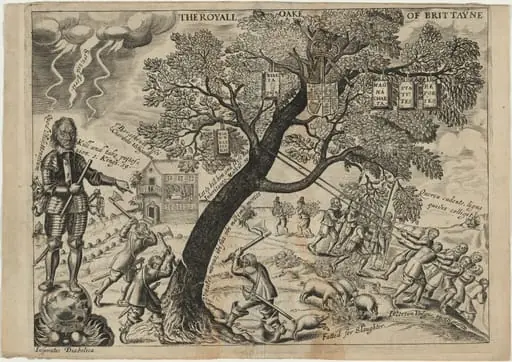
This print shows a man in armor pointing at a huge oak tree marked "The Royall Oake of Brittayne."
It was made in 1649, the year England’s King Charles I was executed. The oak stands for the monarchy—this image mocks the new government by showing it chopped down.
Look up the Victoria and Albert Museum to see where this protest print is kept.
Overview
The satirical print titled The Royall Oake of Brittayne, produced in 1649, portrays Oliver Cromwell directing the felling of a massive oak tree that symbolizes the English monarchy. The work is a woodcut illustration that served as a frontispiece for the second part of Clement Walker’s pamphlet Anarchia Anglicana, published under the pseudonym Theodorus Verax.
Subject & Meaning
In the image, Cromwell stands beside a tree marked "The Royall Oake of Brittayne," a visual metaphor for the monarchy’s downfall. The tree bears a crown, scepter, coat of arms, a Bible, the Magna Carta, and a copy of the royalist work Eikon Basilike, underscoring the loss of royal authority and the perceived betrayal of traditional institutions.
Technique & Style
The print employs dense allegorical detail typical of mid‑17th‑century political satire. Cromwell is placed on a sphere labeled in Latin "Locus Lubricus" (slippery place), suspended above a hellish mouth, a composition that links his actions to diabolical inspiration. Biblical quotations and symbolic objects are rendered in a stark, graphic style that emphasizes moral condemnation.
History & Provenance
Created in the year of Charles I’s execution, the print reflects Walker’s shift from parliamentary supporter to critic of Cromwell’s rule. It was originally printed as the frontispiece to Walker’s pamphlet, which denounced Cromwell as a religious radical and despot. The work is now part of the Victoria and Albert Museum’s collection of protest prints.
Context
The image emerged amid the English Civil War’s concluding phase, when the new Commonwealth government was consolidating power. Walker, a member of Parliament, used the print to articulate his unease about the direction of the revolution, portraying Cromwell’s regime as a source of anarchy rather than liberty.
Artist & collection

 Domestic Scene
 Giacomo and Cardinal Marco, investing Andrea, Abbot of San Zeno, with his Benefice
 The Nymph of Fontainebleau
 Portrait of a Woman
 Madonna and Child with Saints in the Enclosed Garden
 Venus and Minerva
 Family Group of Four on Sofa
 Wall painting from Room H of the Villa of P. Fannius Synistor at Boscoreale
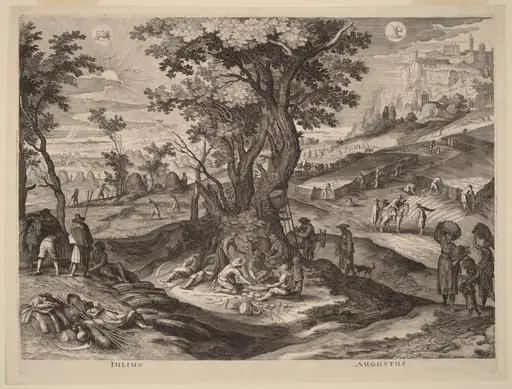 July and August
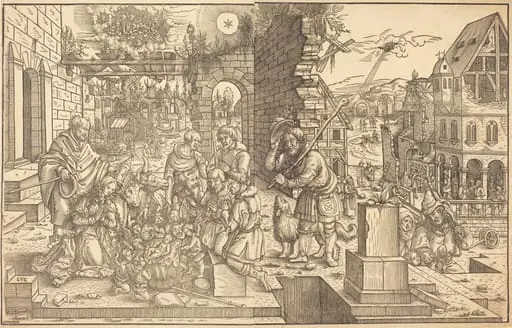 The Adoration of the Shepherds
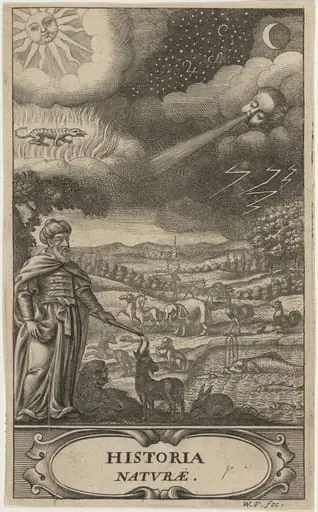 The Creation of Animals
 The Temptation of Saint Anthony
 Landscape with a Shepherd Couple
 The Parable of the Wise and Foolish Virgins
 The Apocalypse: Babylon the Harlot, Seated on the Seven-headed Beast
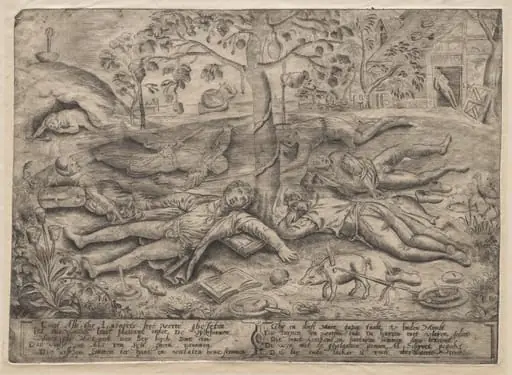 Gluttony (Land of Cockaigne)
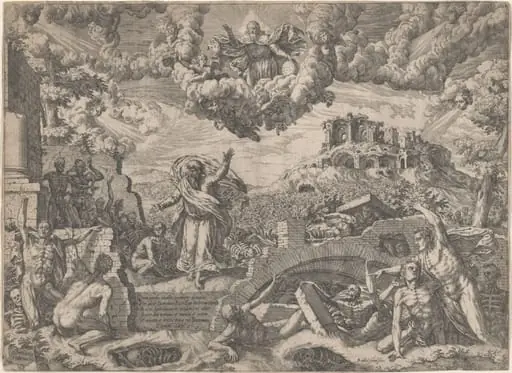 The Vision of Ezekiel
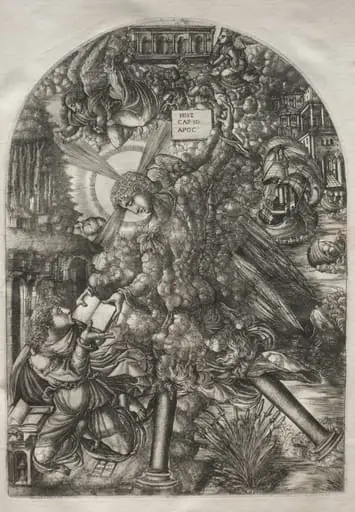 The Apocalypse: The Angel Gives St. John the Book to Eat
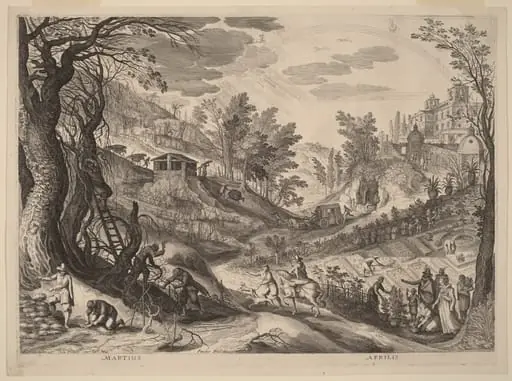 March and April
 Oliver Cromwell