Artwork
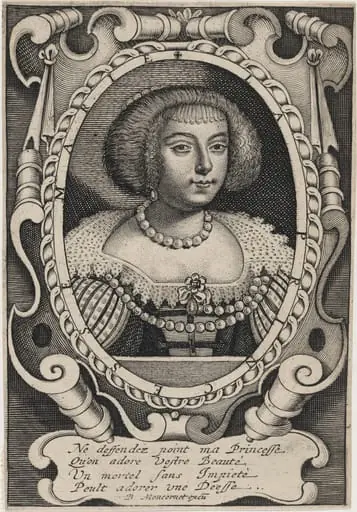
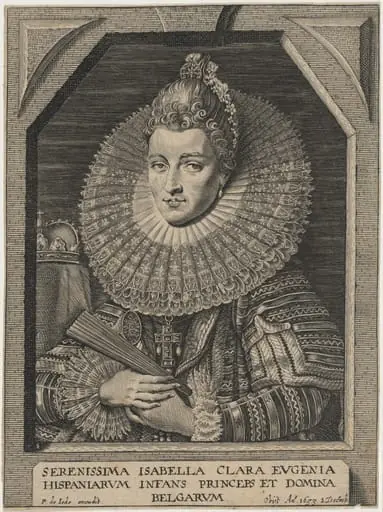
Portrait of a Woman in an Oval with Coat of Arms
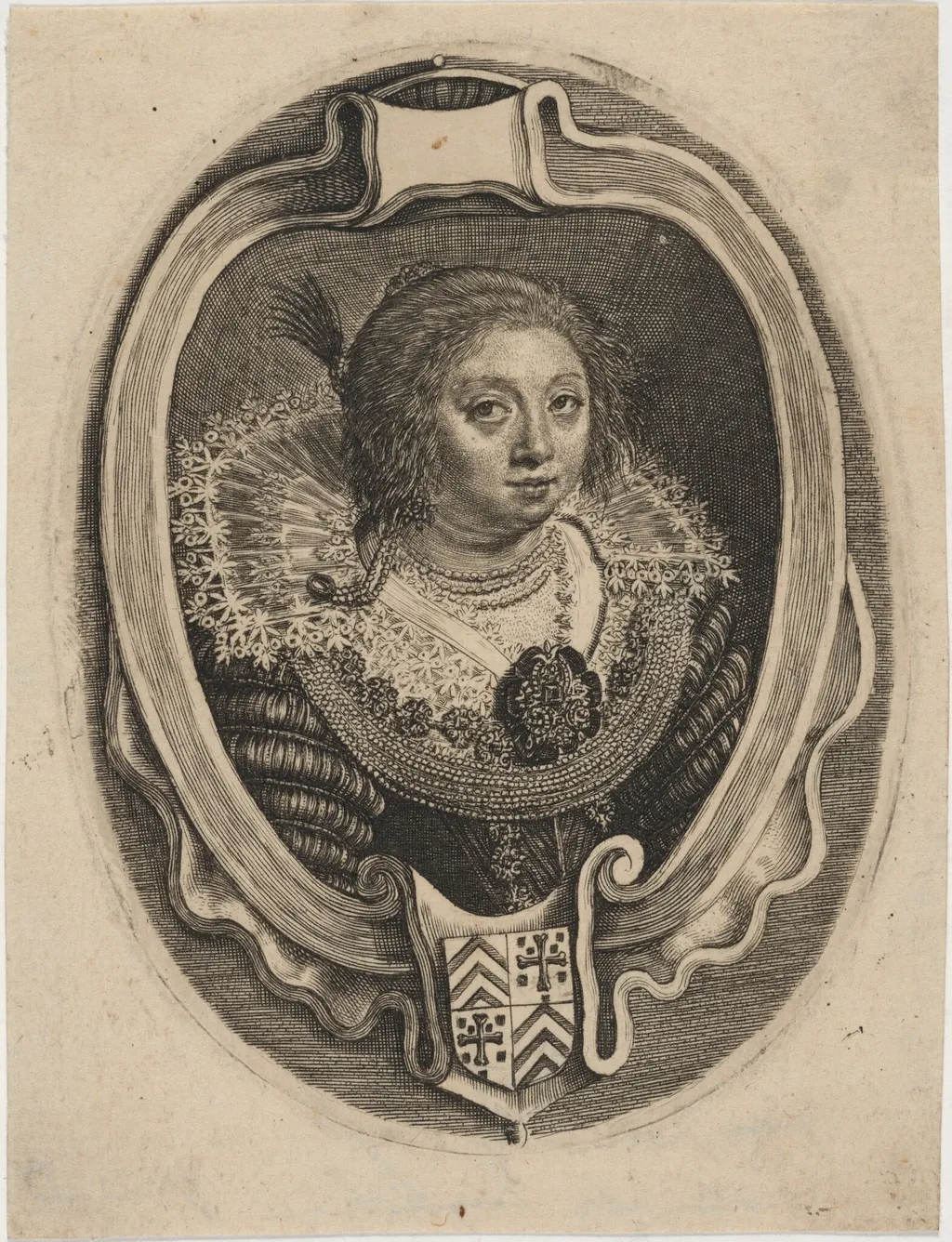
Portrait of a Woman in an Oval with Coat of Arms is an ink print by the Romanticist artist Unknown 19th Century. It dates from 1850 and is held in the collection of the National Gallery of Art.
About this work
Overview
This black-and-white engraving depicts a woman in 17th-century attire, framed within an oval border adorned with decorative swirls and star-like motifs.
This black-and-white engraving depicts a woman in 17th-century attire, framed within an oval border adorned with decorative swirls and star-like motifs. The image is rendered entirely through fine linear techniques, emphasizing texture and form without color. A coat of arms featuring a cross and wavy lines appears beneath her, anchoring the portrait in a context of lineage or status. The composition reflects the precision and restraint typical of engraved portraiture from the period.
Subject & Meaning
The woman is portrayed with elaborate clothing—ruffled collar, layered necklaces, and a fan—suggesting aristocratic or upper-class status. Her poised demeanor and the inclusion of a heraldic shield imply a focus on identity, family heritage, or social standing. The fan, a symbol of refinement, and the coat of arms together reinforce the sitter’s connection to noble lineage, presenting her not merely as an individual but as a representative of a lineage.
Technique & Style
The artist employs cross-hatching—layered sets of fine, parallel lines—to model form and create depth. This method builds subtle gradations of tone, giving the fabric, skin, and metal elements a three-dimensional quality despite the absence of color. The precision of the lines reflects the technical discipline required in engraving, where each stroke is permanent and demands control. Decorative borders enhance the frame’s ornamental function without distracting from the central figure.
History & Provenance
Though the artist and exact origin remain unidentified, the style and heraldic elements align with Northern European engraved portraiture of the late 16th to early 17th century. Such prints were often produced as keepsakes or family records, circulated among elite circles. The presence of a specific coat of arms suggests the portrait was commissioned to commemorate or assert familial prestige, likely within a region where heraldic symbolism held cultural weight.
Context
In this era, engraved portraits served as accessible alternatives to painted likenesses, especially for families without access to court artists. Heraldic imagery was commonly integrated into personal portraiture to affirm social rank. The use of intricate borders and symbolic accessories like fans reflected contemporary ideals of elegance and propriety. These prints were often collected or displayed in private homes as markers of status and taste.
Legacy
This engraving exemplifies how printmaking extended portraiture beyond oil painting, democratizing the representation of nobility. Its reliance on line and texture influenced later generations of engravers and illustrators. While the sitter’s identity may be lost, the work preserves a visual language of status and refinement, offering insight into how identity was constructed and communicated through material culture in early modern Europe.
Artist & collection

Artist

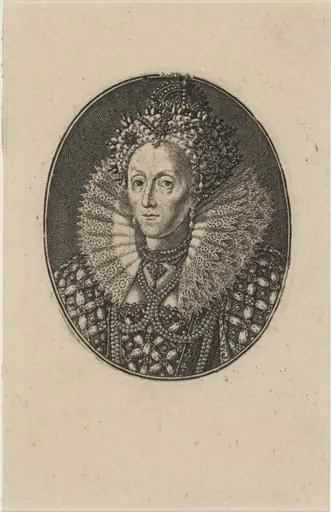 Elizabeth, Queen of England
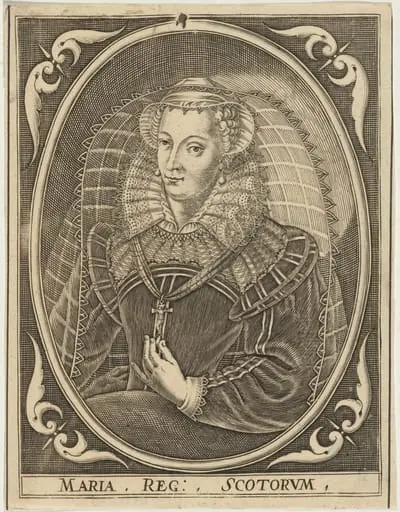 Mary, Queen of Scots
 Henrietta Maria, Queen of Charles I
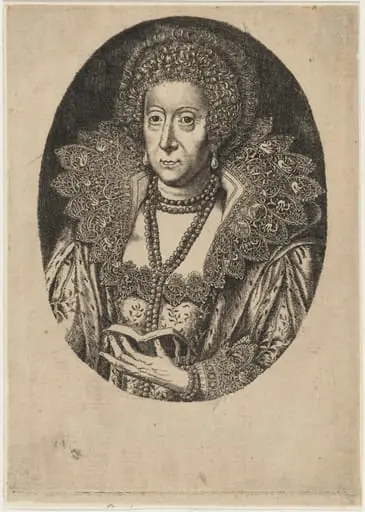 Mary Sidney, Countess of Pembroke
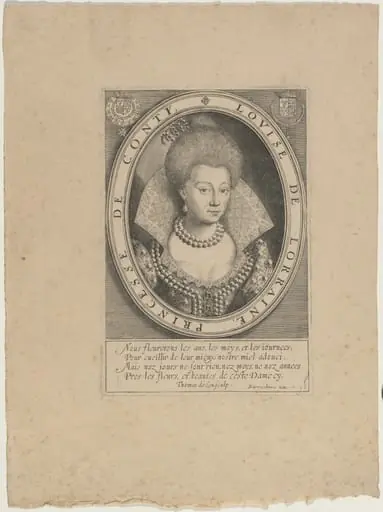 Louise Marguerite de Lorraine, Second Wife ofFrancois, Prince of Conti
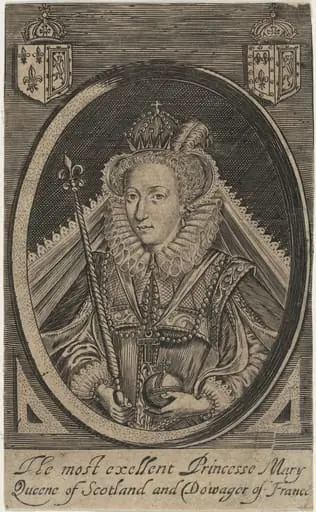 Mary, Queen of Scots
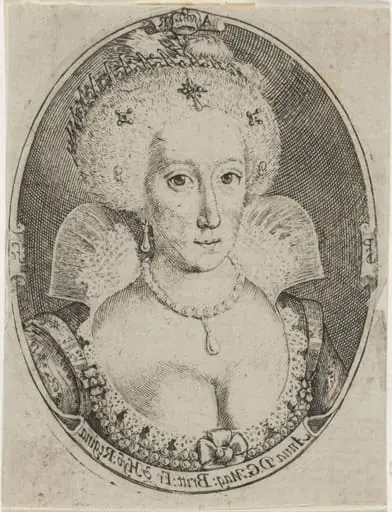 Anne of Denmark
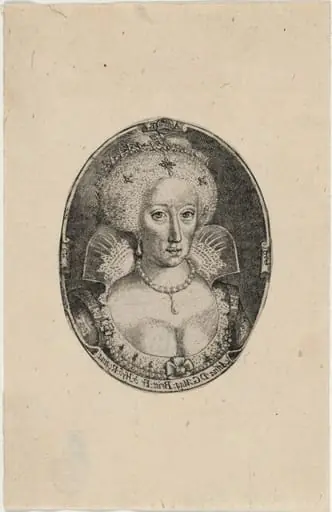 Anne of Denmark
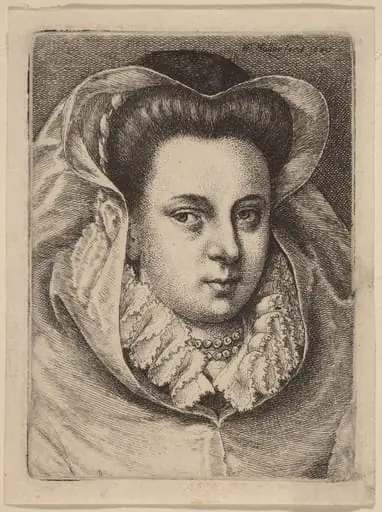 Woman with White Veil and Black Hat (Mary Stuart?)
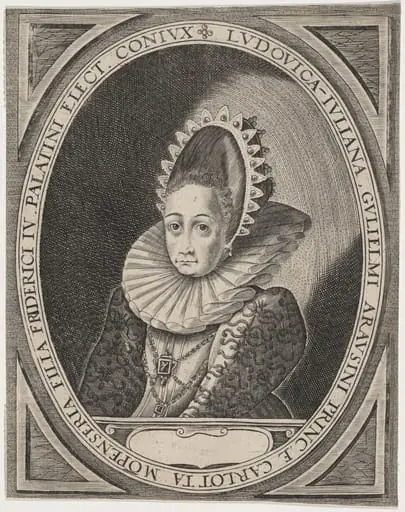 Louise Juliana, Wife of Frederick IV
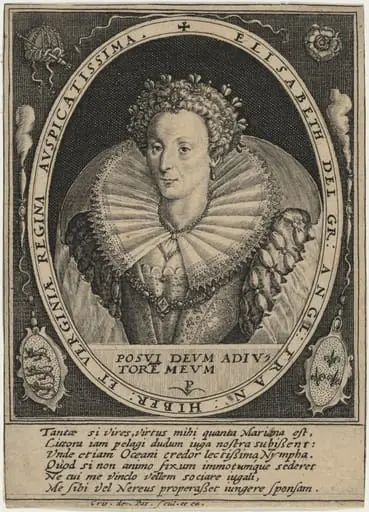 Elizabeth, Queen of England
 Isabella Clara Eugenia