Artwork
A night scene of Shiva puja (recto); Calligraphy (verso)
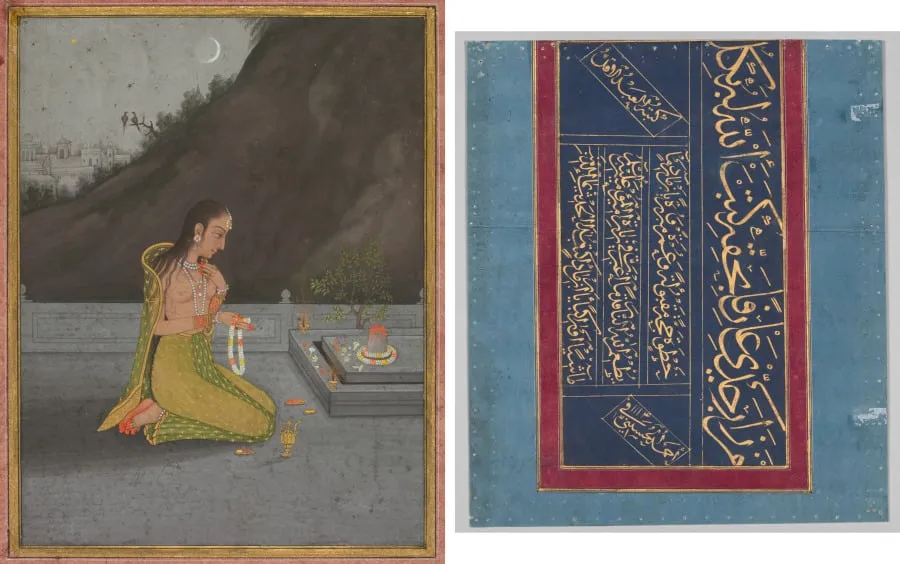
A night scene of Shiva puja (recto); Calligraphy (verso) is an unspecified painting by the Mughal Painting artist Muhammad Rizavi Hindi. It dates from 1765 and is held in the collection of the Cleveland Museum of Art. This double-sided work features a night scene of a Hindu ritual on the recto and calligraphy on the verso.
About this work
Overview
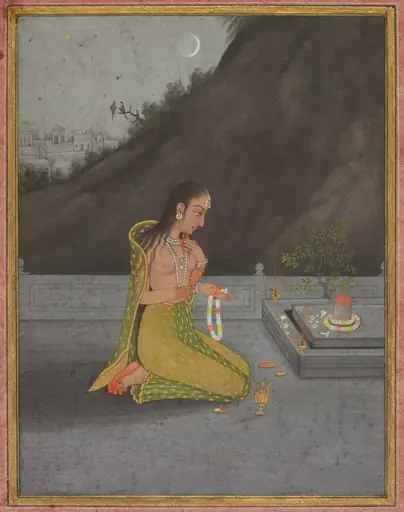
This double-sided work features a night scene of a Hindu ritual on the recto and calligraphy on the verso. The painting captures a royal woman performing puja to Shiva under a starlit sky, surrounded by ritual objects and devotional offerings. Its dual nature reflects the layered cultural practices of 18th-century North India, where artistic production often transcended religious boundaries.
Subject & Meaning
The presence of clarified butter lamps, purified water in a brass ewer, and powdered offerings underscores the ritual’s precision.
The scene depicts a private act of devotion: a woman, marked with kumkum and saffron on her forehead, offers a garland to a linga—an aniconic symbol of Shiva—placed on a simple platform beneath a sapling. The presence of clarified butter lamps, purified water in a brass ewer, and powdered offerings underscores the ritual’s precision. The intimacy of the moment suggests personal piety rather than public ceremony.
Technique & Style
The artist employs fine brushwork to render the luminous night sky, delicate floral offerings, and the subtle glow of lamplight. Warm tones dominate, with gold trim on the robe and vivid orange and yellow pigments highlighting ritual elements. The composition is contained yet atmospheric, balancing naturalistic detail with symbolic clarity, typical of regional Mughal-influenced painting traditions.
History & Provenance
Created in the late 18th century, likely in Lucknow, the painting is attributed to a Muslim artist working within a courtly environment that accommodated multiple religious traditions. Such cross-cultural patronage was common in Awadh, where Hindu and Islamic practices coexisted in artistic and social life. The verso’s calligraphy further indicates the artist’s training in Islamic literary aesthetics.
Context
In 18th-century Awadh, royal courts fostered syncretic cultural expressions. Artists often served patrons of diverse faiths, producing works that respected, rather than erased, religious differences. This painting exemplifies how devotional imagery could be rendered by someone outside the faith it portrays, reflecting a broader climate of pluralism in North Indian court culture.
Legacy
The work stands as a quiet testament to the fluidity of artistic identity in pre-colonial India. It challenges assumptions about religious exclusivity in visual culture, revealing instead a world where skill and patronage could bridge spiritual divides. Such paintings contribute to a more nuanced understanding of how art functioned across religious communities in early modern South Asia.
Artist & collection

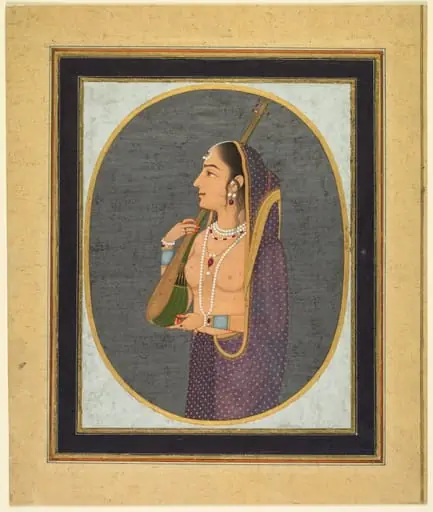
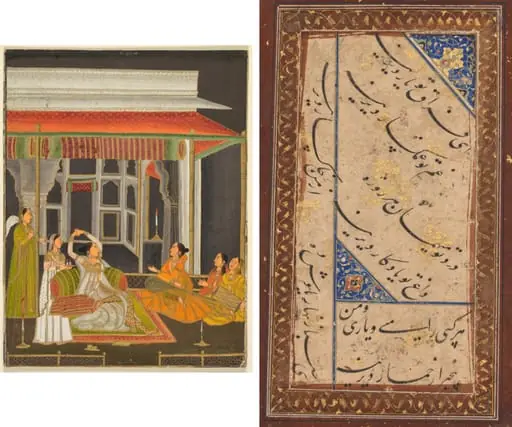 A princess on a terrace with attendants at night (recto); Calligraphy (verso)
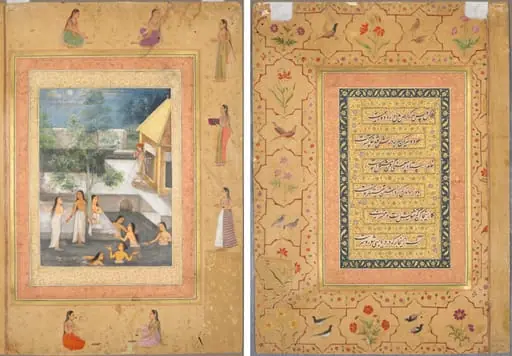 Leaf from the Late Shah Jahan Album: Harem Night-Bathing Scene (recto); Calligraphy Framed by an Ornamental Border of Flowers and Birds (verso)
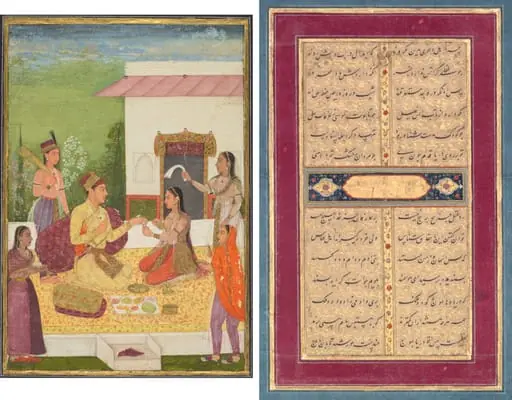 A prince conversing with a woman while taking refreshments on a terrace (recto); Calligraphy (verso)
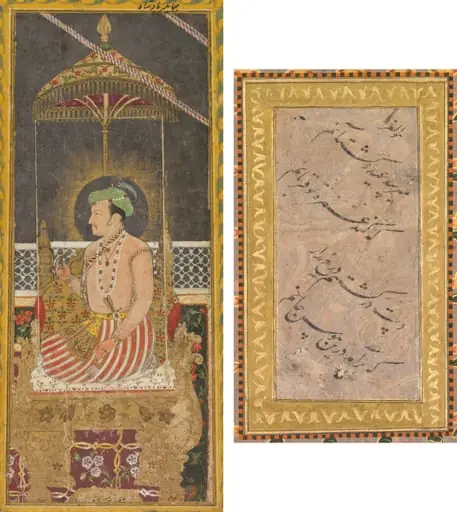 Posthumous portrait of Emperor Jahangir under a canopy (recto); Calligraphy (verso)
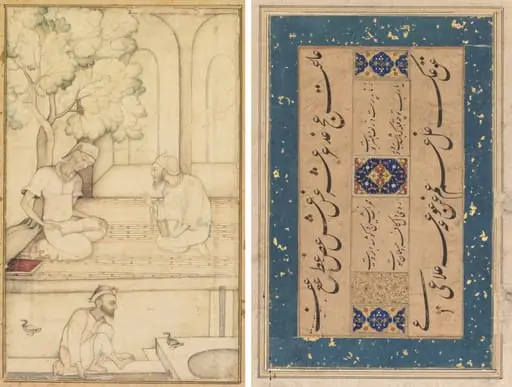 Kabir and Two Followers on a Terrace (recto); Calligraphy (verso)
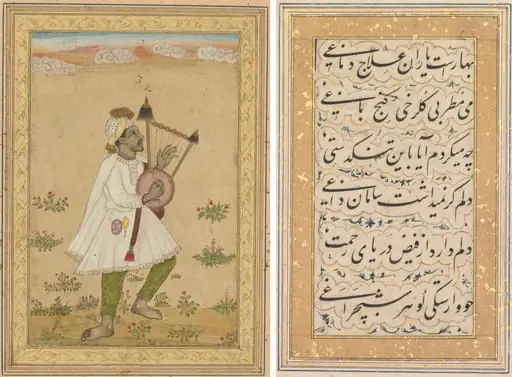 An African Lyre Player (recto); Calligraphy (verso)
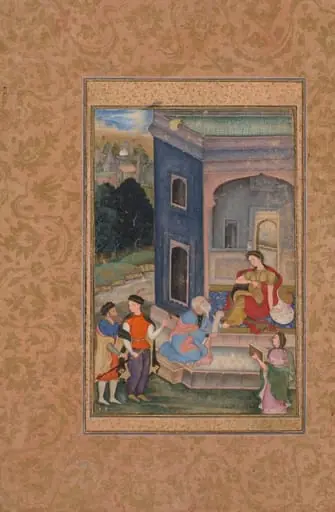 European Costume Scene
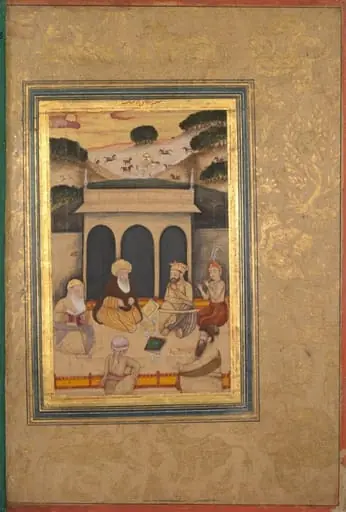 Nobleman Visiting Saint at his Shrine
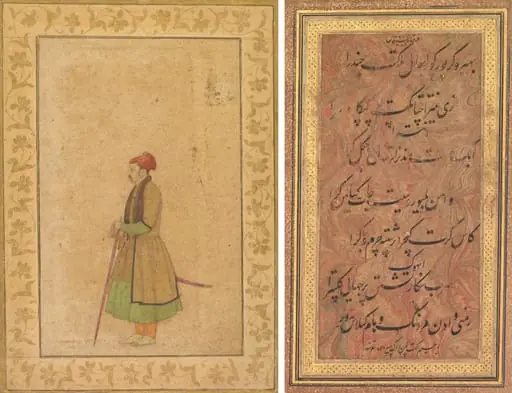 Portrait of Raja Ram Singh of Amber (r. 1667-1688) with a Deccan Sword (recto); Calligraphy (verso)
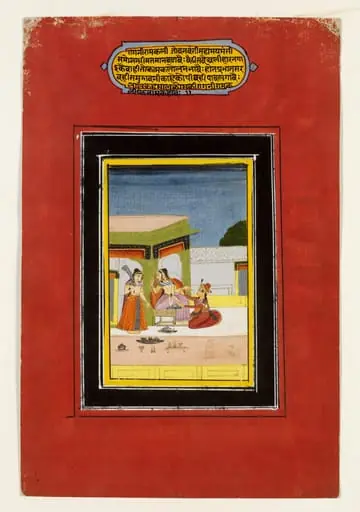 Ramakali Ragini
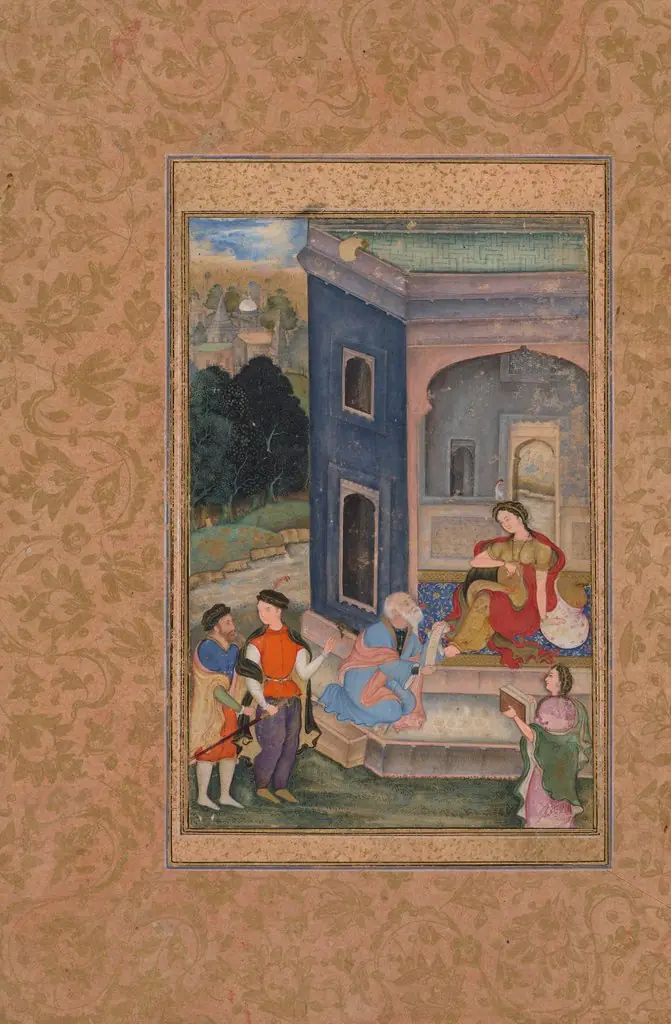 European Costume Scene