Artwork
Kabir and Two Followers on a Terrace (recto); Calligraphy (verso)
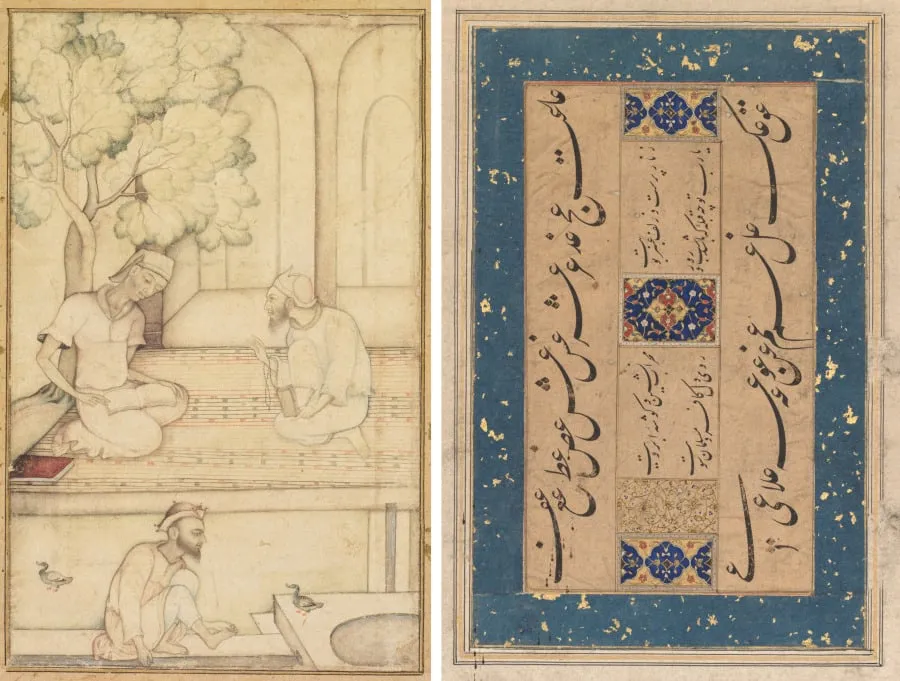
Kabir and Two Followers on a Terrace (recto); Calligraphy (verso) is an unspecified painting by the Baroque artist Unknown. It dates from 1615 and is held in the collection of the Cleveland Museum of Art. The work is a double‑sided sheet from the Mughal period.
About this work
Overview
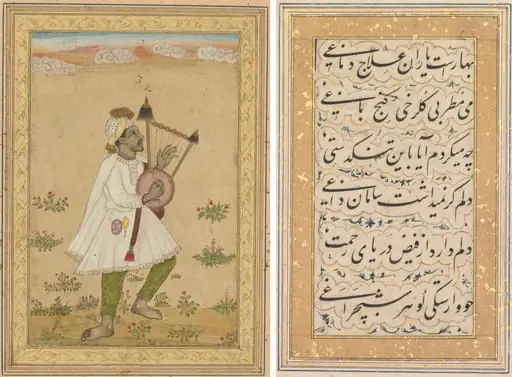
The work is a double‑sided sheet from the Mughal period. The front (recto) depicts three figures seated on a flat rooftop, while the reverse (verso) contains a decorative band of gold and blue with intricate calligraphic script. The composition captures a moment of quiet activity within an interior‑exterior space.
Subject & Meaning
On the terrace, a shirtless man leans forward, another holds an open book, and a third crouches near a bowl, suggesting a scene of contemplation or instruction. The presence of the text on the opposite side hints that the image may have been intended to accompany a devotional or poetic passage, linking visual and literary meditation.
Technique & Style
The painting employs the refined brushwork and delicate coloration typical of late Mughal court art, with muted earth tones for the figures and a subtle handling of light on the roof. The verso’s gilded border and swirling script demonstrate the period’s fondness for luxurious ornamentation and Persian‑influenced calligraphy.
History & Provenance
The sheet belongs to a corpus of Mughal manuscript fragments that were often reused, with the painted scene on one side and calligraphic text on the other. Such dual‑purpose pieces circulated among elite patrons and were sometimes incorporated into larger albums or personal devotional collections.
Context
Mughal artists frequently combined portraiture, narrative scenes, and poetic verses within a single object, reflecting the empire’s synthesis of Persian literary culture and Indian visual traditions. The rooftop setting evokes the architectural motifs found in contemporary palace and garden designs.
Legacy
Works like this illustrate the interdisciplinary nature of Mughal art, where painting and calligraphy functioned together to convey spiritual or intellectual themes. They continue to inform scholars about the aesthetic priorities and cultural exchanges of the 16th‑17th century Mughal court.
Artist & collection

 Domestic Scene
 Giacomo and Cardinal Marco, investing Andrea, Abbot of San Zeno, with his Benefice
 The Nymph of Fontainebleau
 Portrait of a Woman
 Madonna and Child with Saints in the Enclosed Garden
 Venus and Minerva
 Family Group of Four on Sofa
 Wall painting from Room H of the Villa of P. Fannius Synistor at Boscoreale
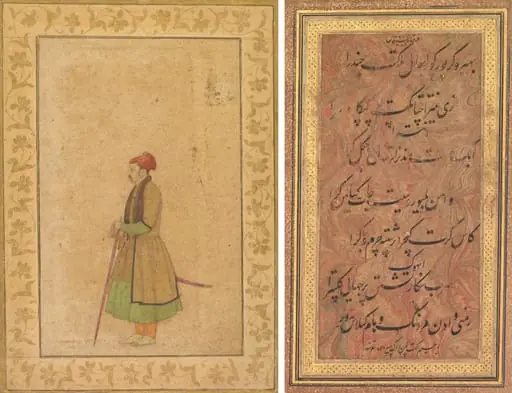 Portrait of Raja Ram Singh of Amber (r. 1667-1688) with a Deccan Sword (recto); Calligraphy (verso)
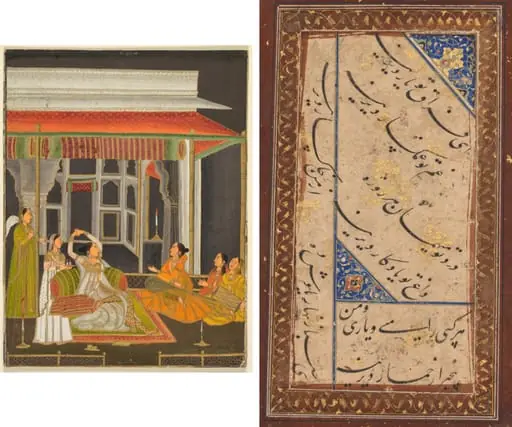 A princess on a terrace with attendants at night (recto); Calligraphy (verso)
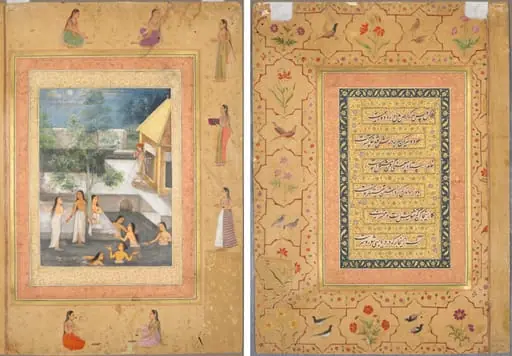 Leaf from the Late Shah Jahan Album: Harem Night-Bathing Scene (recto); Calligraphy Framed by an Ornamental Border of Flowers and Birds (verso)
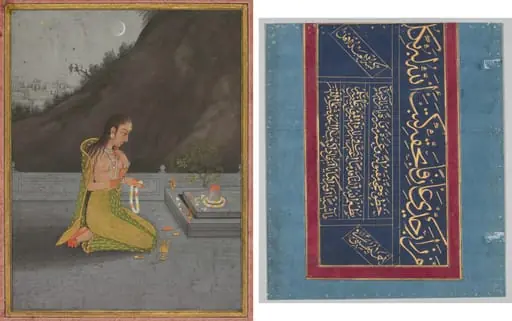 A night scene of Shiva puja (recto); Calligraphy (verso)
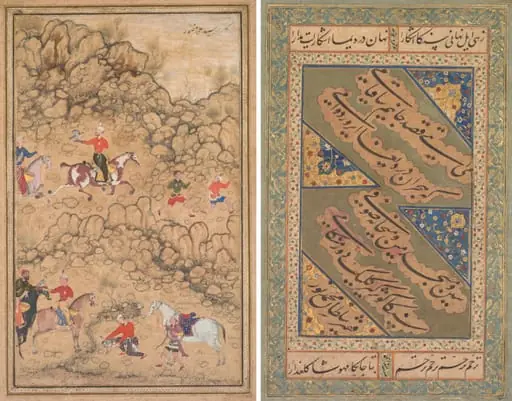 Hunting with falcons in a landscape; verso: Calligraphy of Chaghatai Turkish poems in praise of wine, Sultan Muhammad Nur (Persian, c. 1472–1536) and Mirza Muhammad (probably Persian, active c. 1520s)
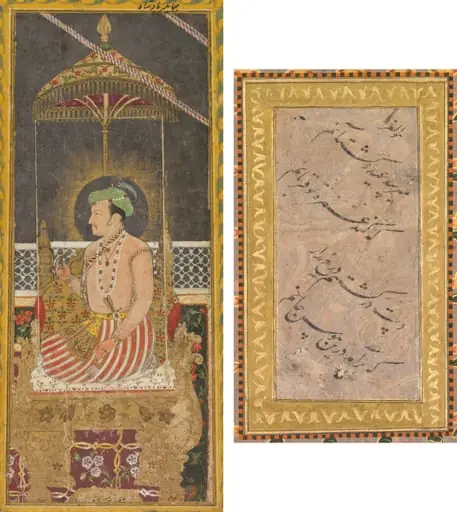 Posthumous portrait of Emperor Jahangir under a canopy (recto); Calligraphy (verso)
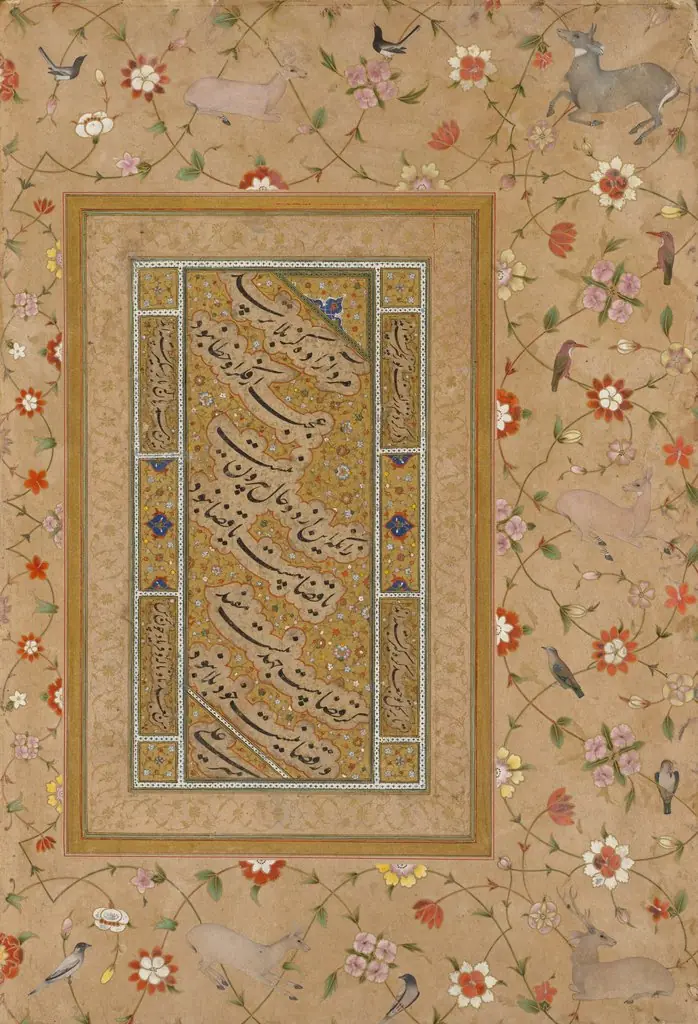 Page from the Late Shah Jahan Album: Persian Calligraphy framed by an ornamental border of flowers, birds, and deer
 An African Lyre Player (recto); Calligraphy (verso)