Artwork
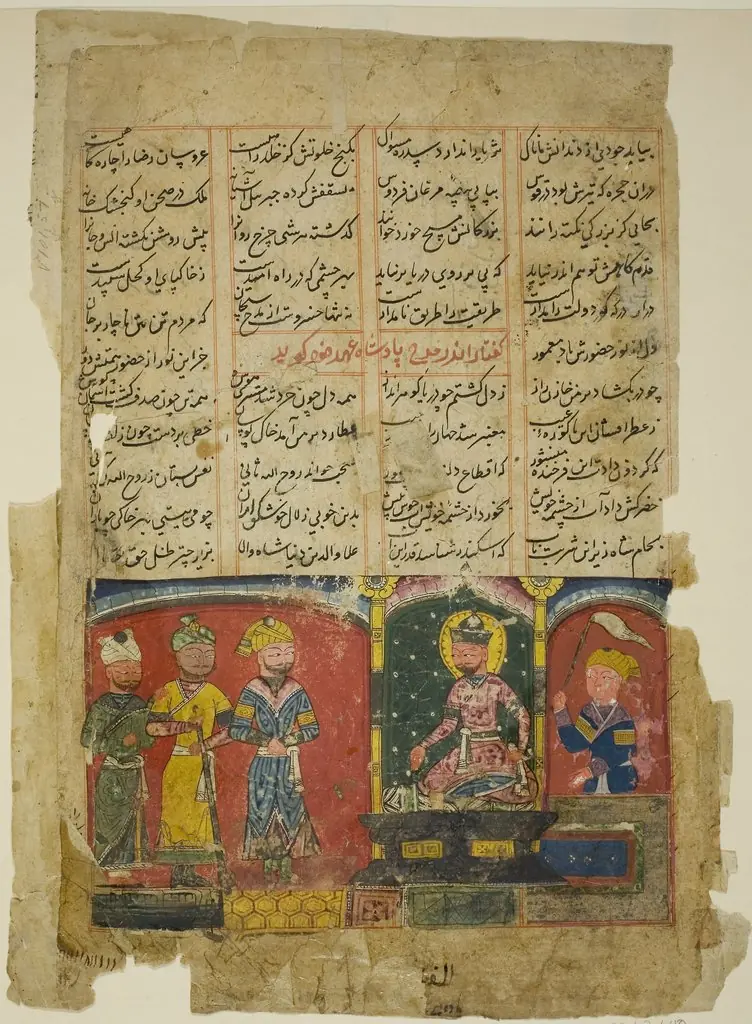
Amir Khusrau Dedicates His Poem to Sultan Ala al-Din Khalji, page from the Quintet (Khamsa) of Amir Khusraw Dehlavi
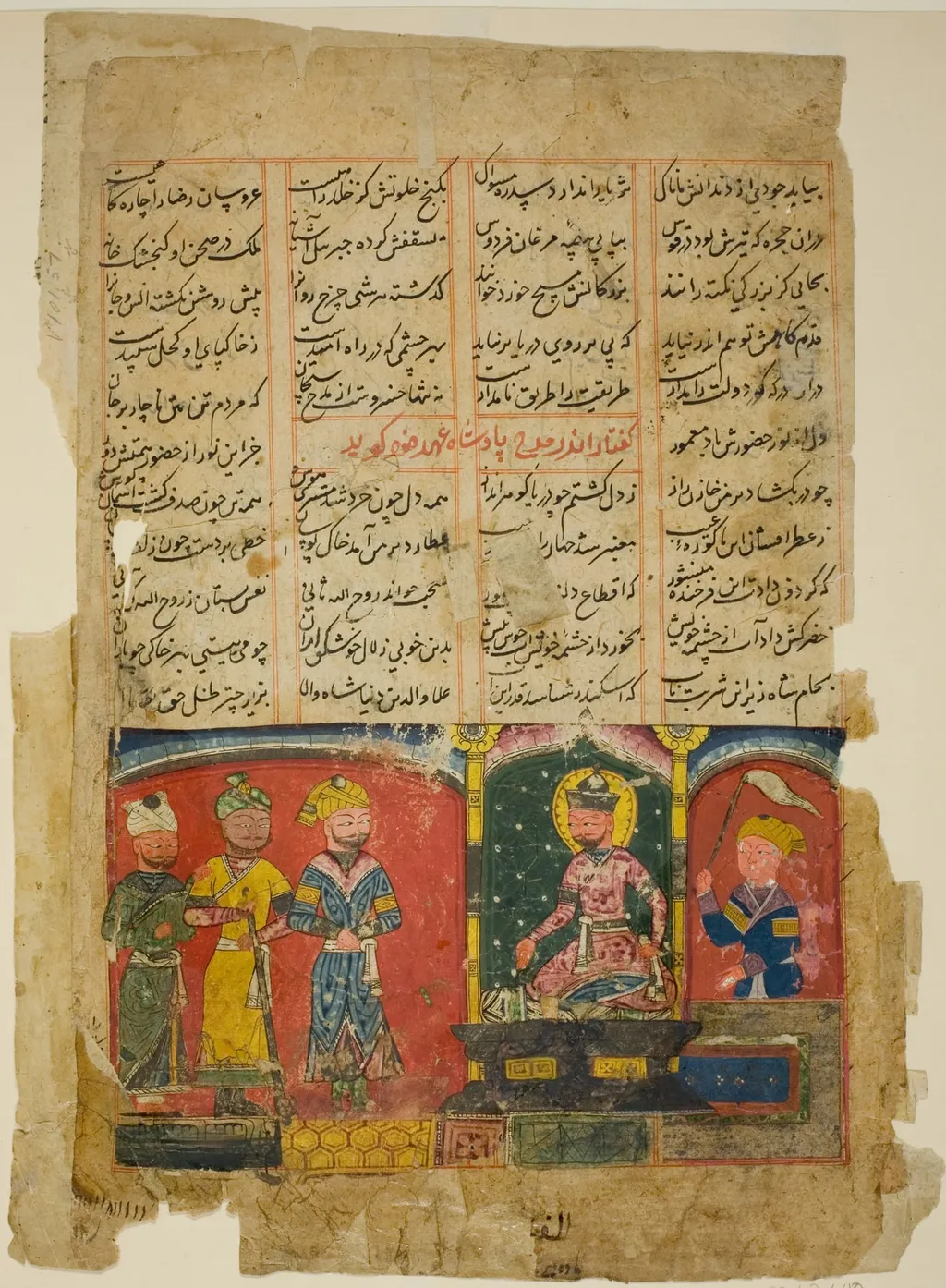
Amir Khusrau Dedicates His Poem to Sultan Ala al-Din Khalji, page from the Quintet (Khamsa) of Amir Khusraw Dehlavi is a watercolor painting by the Renaissance artist Unknown. It dates from 1433 and is held in the collection of the Art Institute of Chicago. This small painted page originates from a manuscript of the Khamsa, a collection of five poetic works by Amir Khusrau Dehlavi.
About this work
Overview
This small painted page originates from a manuscript of the Khamsa, a collection of five poetic works by Amir Khusrau Dehlavi.
This small painted page originates from a manuscript of the Khamsa, a collection of five poetic works by Amir Khusrau Dehlavi. Executed in opaque watercolor and ink on paper, it illustrates a moment of literary dedication within a royal court. The composition reflects the conventions of Indian miniature painting, emphasizing intricate detail and vibrant, non-naturalistic color to convey narrative rather than spatial realism.
Subject & Meaning
The scene depicts the poet Amir Khusrau kneeling before Sultan Ala al-Din Khalji, offering a scroll as a gesture of homage. This act symbolizes the patronage relationship between courtly poets and rulers in medieval India. The presence of courtiers underscores the public nature of the dedication, reinforcing the poet’s role as both artist and courtier, bound by cultural and political ties.
Technique & Style
The painting employs fine brushwork and flat, saturated hues typical of Deccan and Mughal-influenced miniatures. Figures are rendered with delicate lines, and architectural elements are stylized rather than perspectival. Gold accents and rich textiles highlight status, while the lack of depth emphasizes symbolic meaning over naturalism, aligning with broader traditions of manuscript illustration in South Asia.
History & Provenance
Created in the 16th or 17th century, this page likely belonged to a luxury manuscript commissioned by a noble patron. Though the exact origin of this specific folio is undocumented, similar Khamsa manuscripts were produced in Mughal and regional ateliers. It entered the Art Institute of Chicago’s collection through documented acquisitions, preserving its place in the history of Indo-Persian literary art.
Context
Amir Khusrau’s Khamsa, modeled on Nizami’s earlier work, was widely copied and illustrated across the Indian subcontinent. His poetry, composed in Persian and Persianized Urdu, bridged Islamic and Indic traditions. Illustrated manuscripts like this one served both as cultural artifacts and tools of courtly prestige, circulating among elites who valued literary refinement and visual splendor.
Legacy
This folio exemplifies how poetry and painting intertwined in medieval South Asian courts. Though the original manuscript is now dispersed, surviving pages like this one continue to inform scholarly understanding of Indo-Persian literary culture. They remain vital references for studying the visual representation of text, patronage, and identity in pre-colonial India.
Artist & collection

 Domestic Scene
 Giacomo and Cardinal Marco, investing Andrea, Abbot of San Zeno, with his Benefice
 The Nymph of Fontainebleau
 Portrait of a Woman
 Madonna and Child with Saints in the Enclosed Garden
 Venus and Minerva
 Family Group of Four on Sofa
 Wall painting from Room H of the Villa of P. Fannius Synistor at Boscoreale
 An East African King Receives Three Emissaries, from a Khamsa of Amir Khusrau Dihlavi
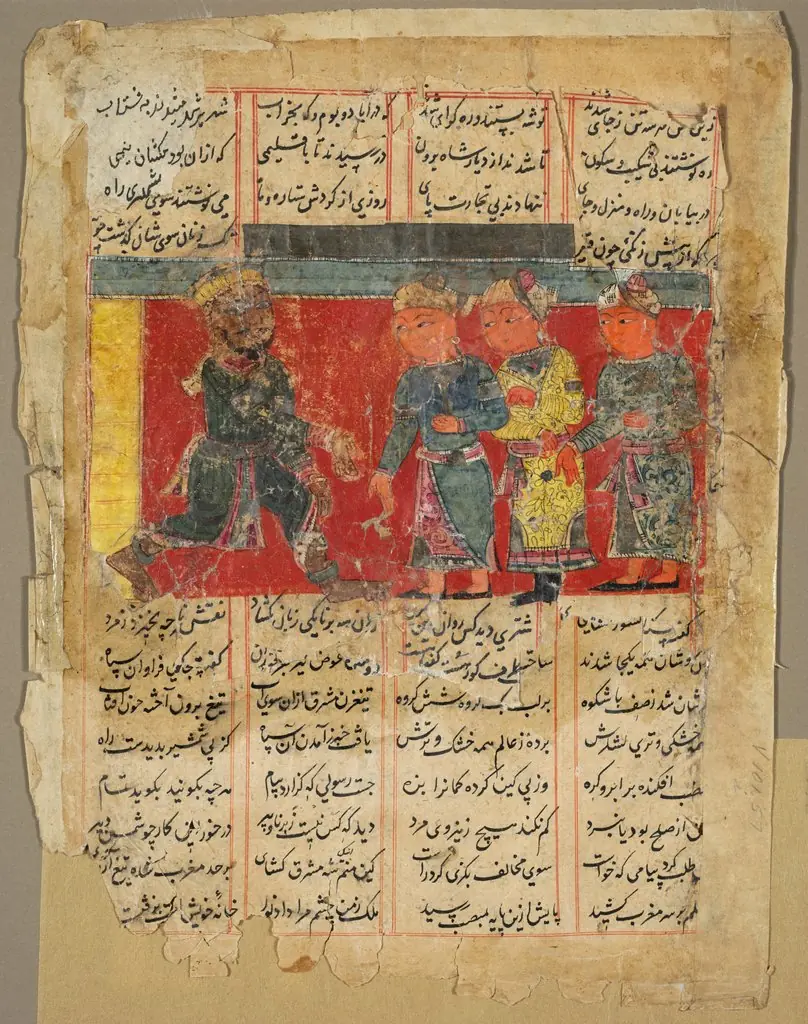 An East African King Receives Three Emissaries, from a Khamsa of Amir Khusrau Dihlavi
 Untitled
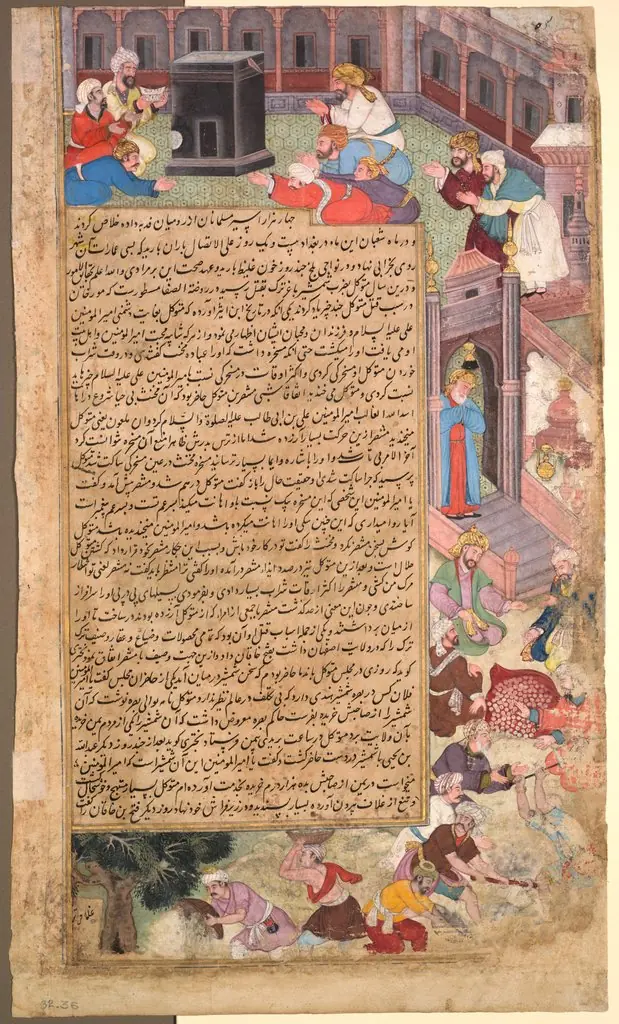 Page of disasters, from the Tarikh-i Alfi (History of a Thousand Years)
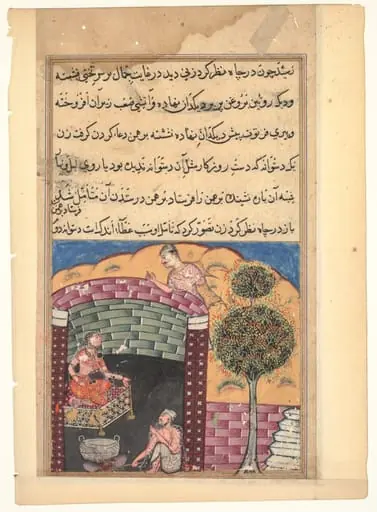 The Brahman gambler sees the daughter of the king of the jinns in a pit together with an old man and a cauldron of boiling oil, from a Tuti-nama (Tales of a Parrot: Seventh Night)
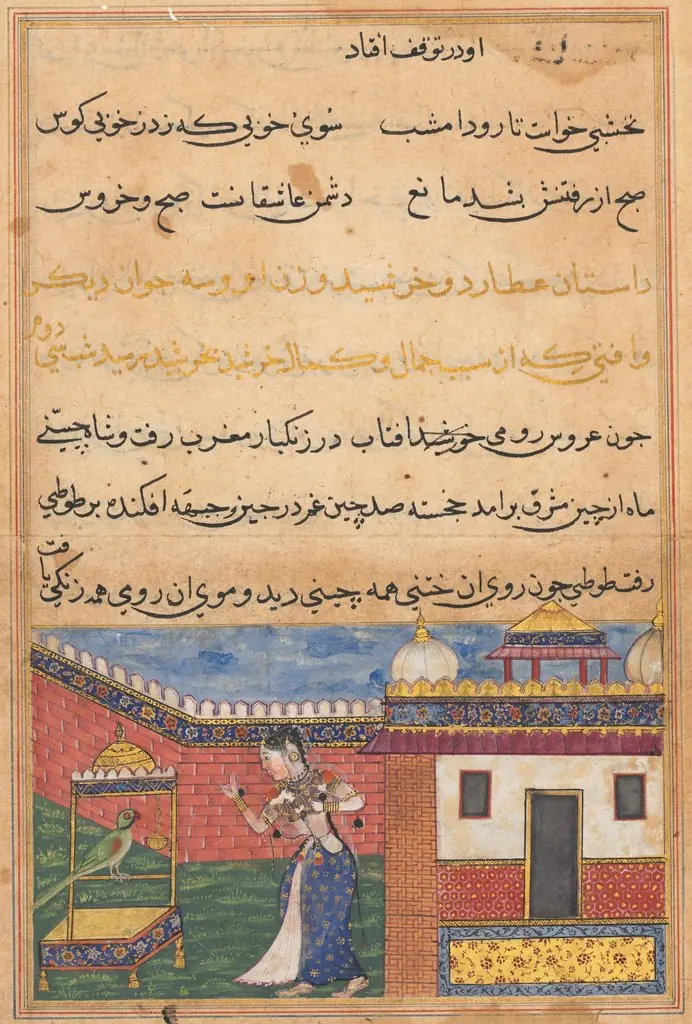 The parrot addresses Khujasta at the beginning of the thirty-second night, from a Tuti-nama (Tales of a Parrot)
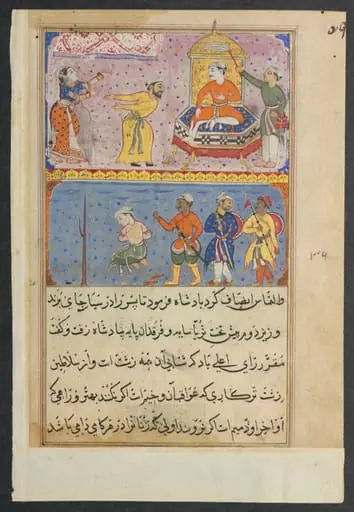 The prince, once reprieved, is returned to the palace of execution a second time on the plea of the king’s handmaiden, from a Tuti-nama (Tales of a Parrot): Eighth Night
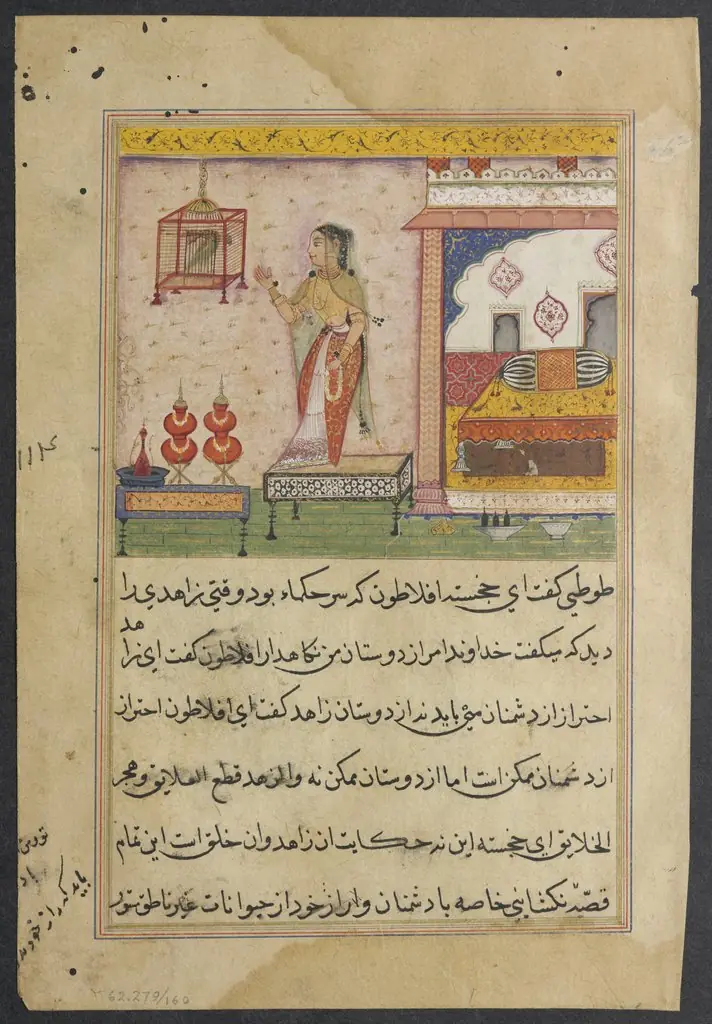 The Parrot Addresses Khujasta at the Beginning of the Twenty-third Night, from a Tuti-nama (Tales of a Parrot)
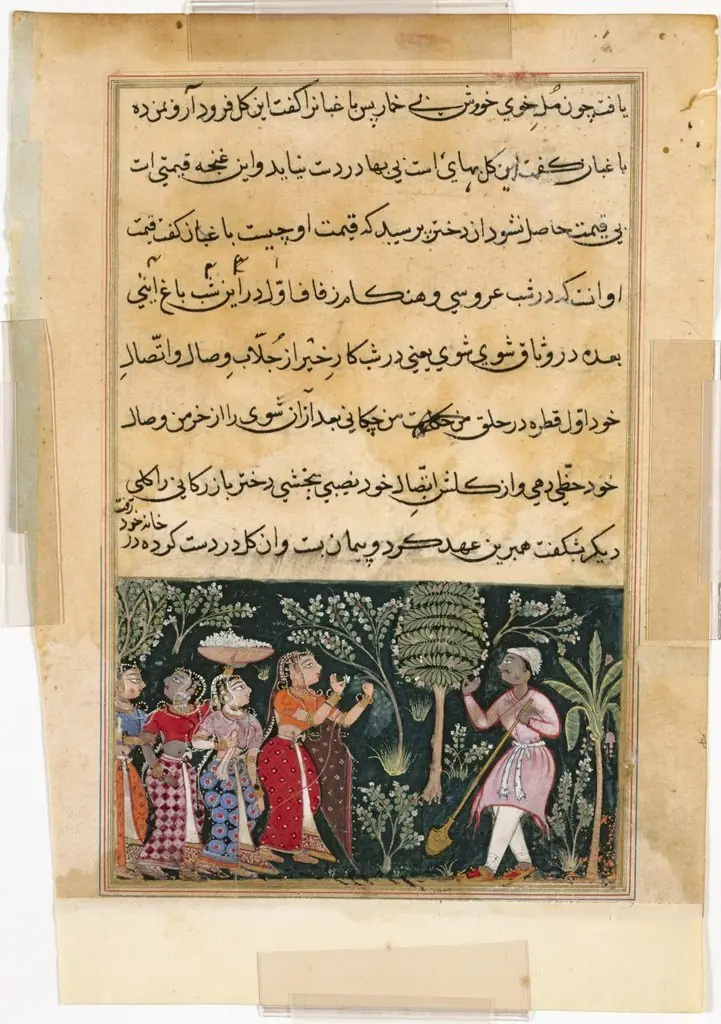 The daughter of the merchant of Mazanderan asks the gardener for the rose, from a Tuti-nama (Tales of a Parrot): Twelfth Night
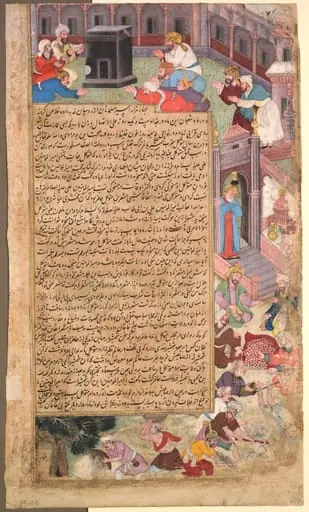 Page of disasters, from the Tarikh-i Alfi (History of a Thousand Years)
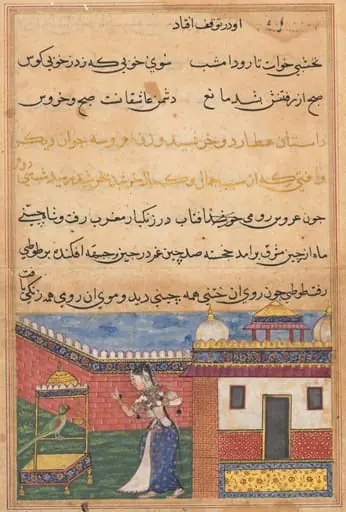 The parrot addresses Khujasta at the beginning of the thirty-second night, from a Tuti-nama (Tales of a Parrot)
 Amir Khusraw Dedicates His Poem to Sultan Ala al-Din Khalji, page from a copy of the Khamsa of Amir Khusraw Dihlavi