Artwork
An East African King Receives Three Emissaries, from a Khamsa of Amir Khusrau Dihlavi
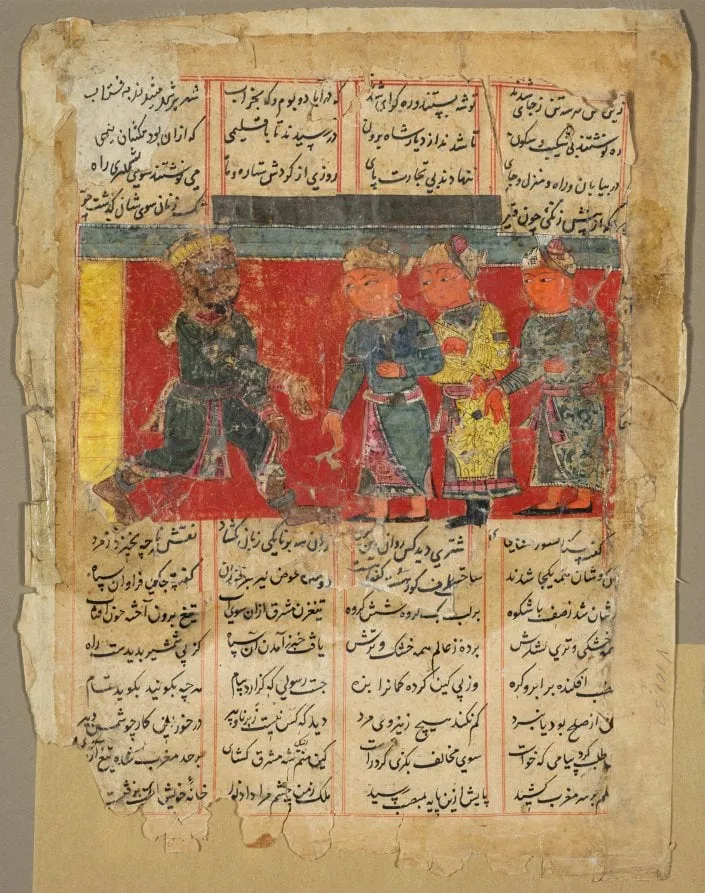
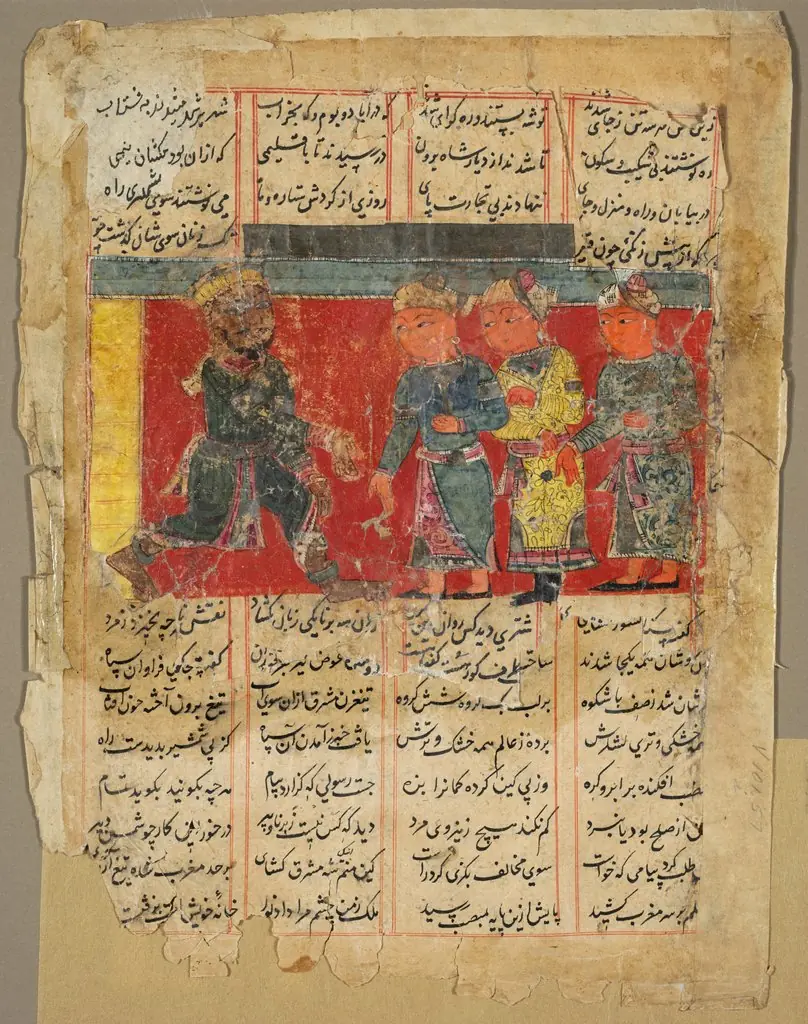
An East African King Receives Three Emissaries, from a Khamsa of Amir Khusrau Dihlavi is an unspecified painting by the Patna School of Painting artist Unknown. It dates from 1450 and is held in the collection of the Cleveland Museum of Art.
About this work
The king’s bold pose shows power, but the small, careful details—like the tiny flowers on the carpet—reveal the artist’s training.
You see a tall king in gold and red robes striding forward, one hand outstretched toward three kneeling men in patterned clothes.
This painting comes from a rare book made in India around 1450. It’s the first known Persian storybook illustrated by an Indian artist, likely trained in Jain workshops. The king’s bold pose shows power, but the small, careful details—like the tiny flowers on the carpet—reveal the artist’s training.
To see more work like this, look up India, sultanate period.
Overview
This painting originates from a circa 1450 manuscript of the Khamsa by Amir Khusrau Dihlavi, produced in India and notable as the earliest known Persian literary text illustrated by an Indian artist. The scene depicts a king of Zang, a region in eastern Africa, receiving three emissaries. Rendered on a flat red background with figures aligned in a single plane, the composition reflects conventions of 15th-century Indian manuscript painting, blending Persian narrative with indigenous visual traditions.
Subject & Meaning
The king of Zang is portrayed mid-stride, one arm extended toward the kneeling envoys, conveying authority and immediate engagement. His dynamic posture contrasts with the stillness of the visitors, emphasizing his dominance in the encounter. The scene illustrates a moment of diplomatic reception, likely symbolizing the king’s sovereignty and the submission of foreign representatives. The narrative draws from Persian literary sources but adapts them to a context familiar to its Indian patrons.
Technique & Style
The artist employed fine brushwork and flat planes of color, characteristic of pre-Mughal Indian manuscript painting. Figures are arranged linearly against a uniform red ground, avoiding perspective depth. Delicate details—such as floral motifs on the carpet and intricate patterns on the envoys’ garments—reveal training in the Jain manuscript tradition. The stylized anatomy and rhythmic contours suggest a synthesis of local aesthetic principles with Persian literary themes.
History & Provenance
The manuscript was created in India during the Sultanate period, likely in a workshop with ties to Jain artistic practices. It represents a rare fusion of Persian literary content and Indian visual culture, produced before the rise of the Mughal atelier system. Its survival is exceptional, as few illustrated manuscripts from this era and region remain. The work’s origin underscores the cross-cultural exchange between Persian-speaking courts and Indian artistic communities in the 15th century.
Context
During the 15th century, Persian literature circulated widely across South Asia, often commissioned by Muslim rulers seeking cultural legitimacy. Indian artists, trained in indigenous traditions like Jain illumination, began adapting these texts visually. This painting reflects a transitional moment: Persian stories were being reimagined through local visual languages, signaling the emergence of a distinct Indo-Persian aesthetic that would later flourish under the Mughals.
Legacy
This manuscript established a precedent for the integration of Indian artistic techniques into Persianate book culture. It influenced subsequent generations of illustrators who blended regional styles with imported narratives. Its existence challenges assumptions about the dominance of Persian or Central Asian models in Islamic manuscript art, highlighting instead the agency of Indian artists in shaping a hybrid visual tradition during the Sultanate period.
Artist & collection

 Domestic Scene
 Giacomo and Cardinal Marco, investing Andrea, Abbot of San Zeno, with his Benefice
 The Nymph of Fontainebleau
 Portrait of a Woman
 Madonna and Child with Saints in the Enclosed Garden
 Venus and Minerva
 Family Group of Four on Sofa
 Wall painting from Room H of the Villa of P. Fannius Synistor at Boscoreale
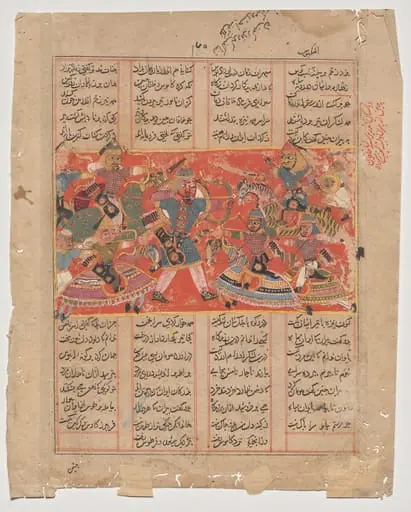 Rustam Takes Aim at Ashkabus, from a Shah-nama (Book of Kings)
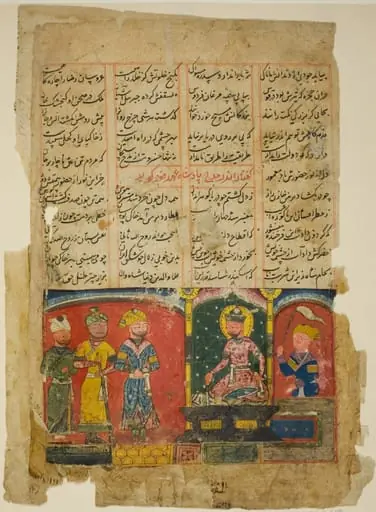 Amir Khusrau Dedicates His Poem to Sultan Ala al-Din Khalji, page from the Quintet (Khamsa) of Amir Khusraw Dehlavi
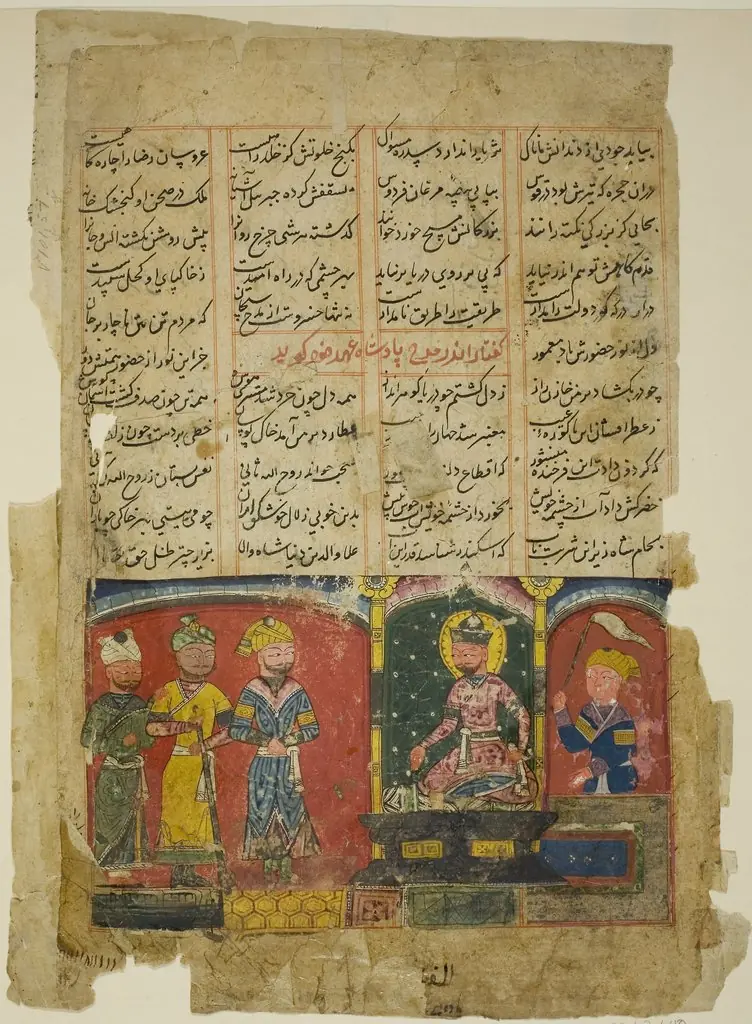 Amir Khusraw Dedicates His Poem to Sultan Ala al-Din Khalji, page from a copy of the Khamsa of Amir Khusraw Dihlavi
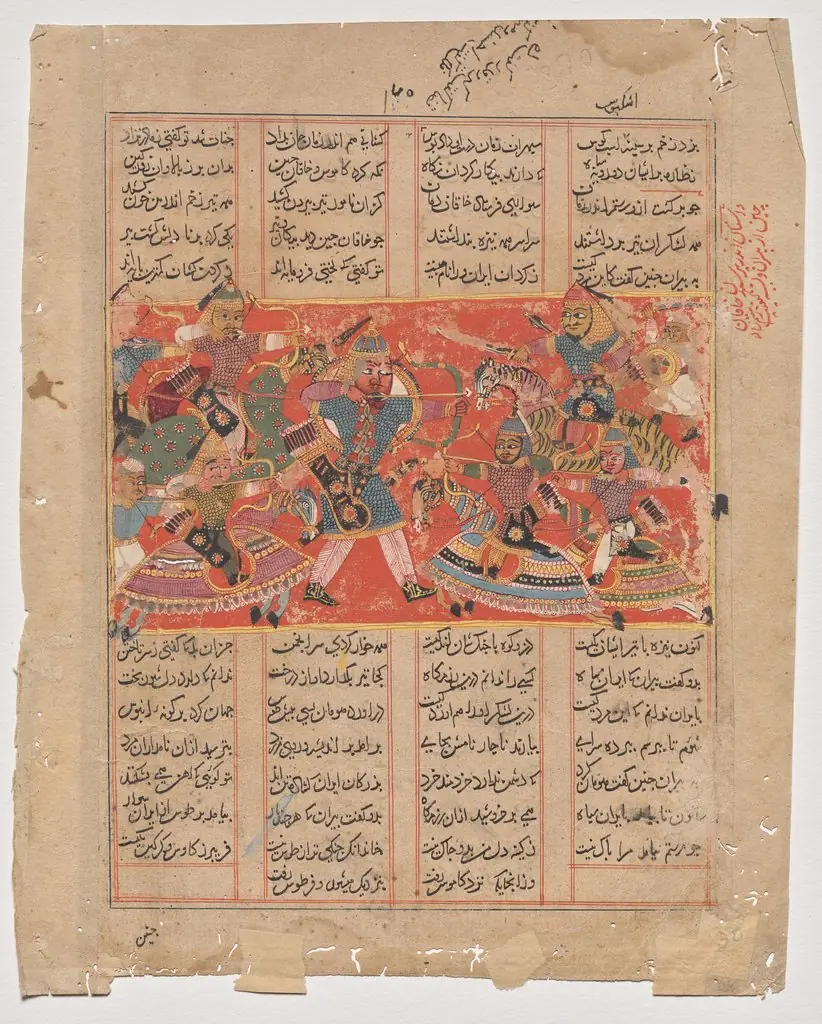 Rustam Takes Aim at Ashkabus, from a Shah-nama (Book of Kings)
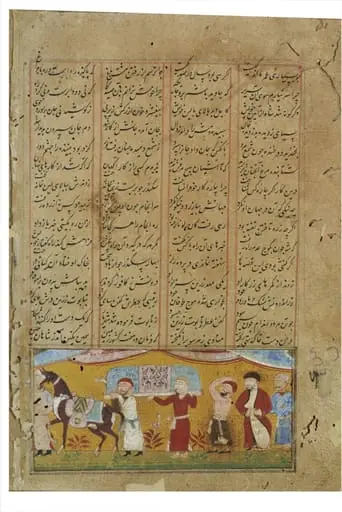 Untitled
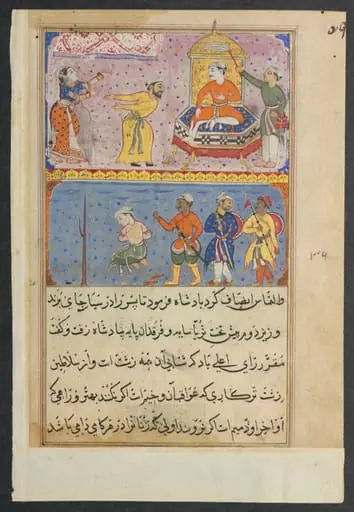 The prince, once reprieved, is returned to the palace of execution a second time on the plea of the king’s handmaiden, from a Tuti-nama (Tales of a Parrot): Eighth Night
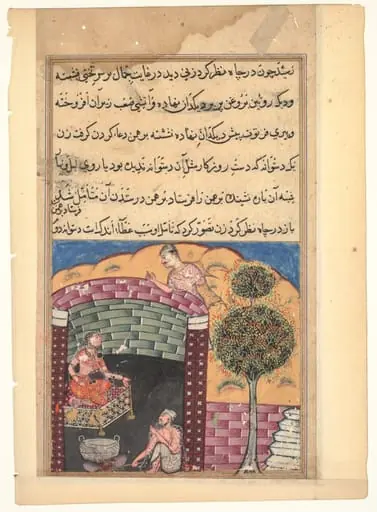 The Brahman gambler sees the daughter of the king of the jinns in a pit together with an old man and a cauldron of boiling oil, from a Tuti-nama (Tales of a Parrot: Seventh Night)
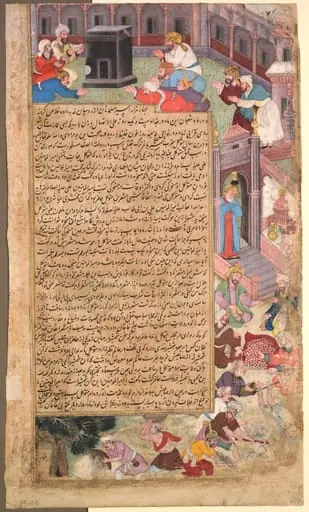 Page of disasters, from the Tarikh-i Alfi (History of a Thousand Years)
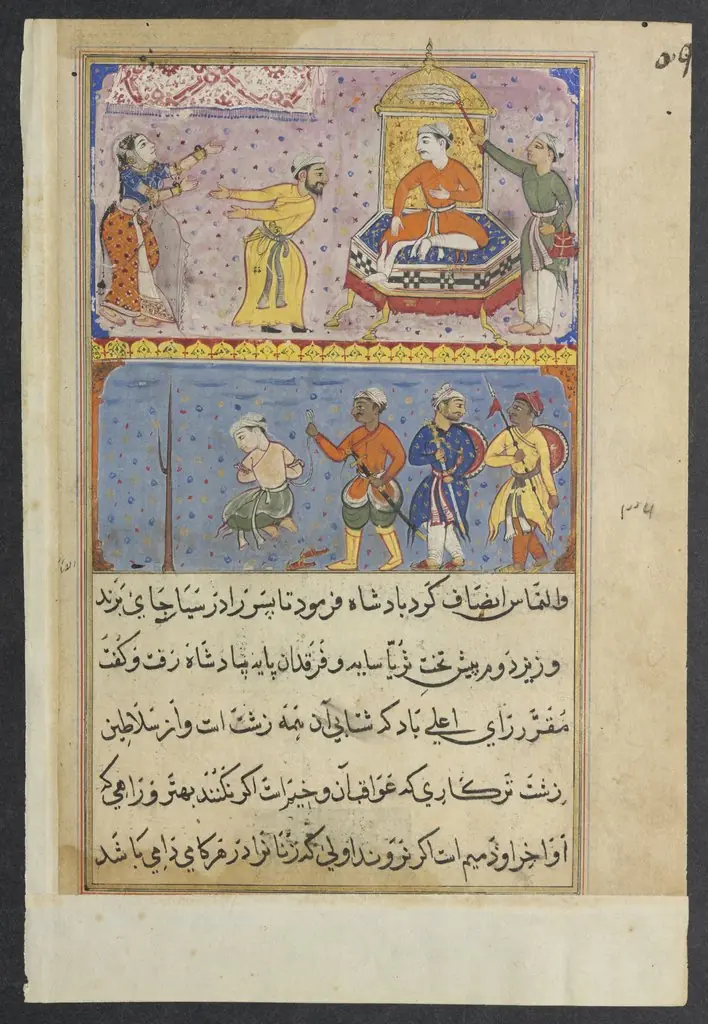 The prince, once reprieved, is returned to the palace of execution a second time on the plea of the king’s handmaiden, from a Tuti-nama (Tales of a Parrot): Eighth Night
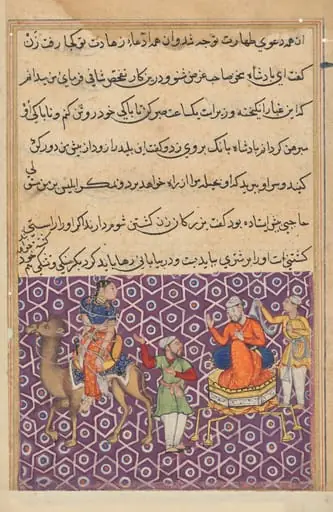 King Bahram, who has married Khassa’s daughter, has her tied to a camel to be abandoned in the desert as a result of false accusations made by Khulasa, from a Tuti-nama (Tales of a Parrot): Fifty-first Night
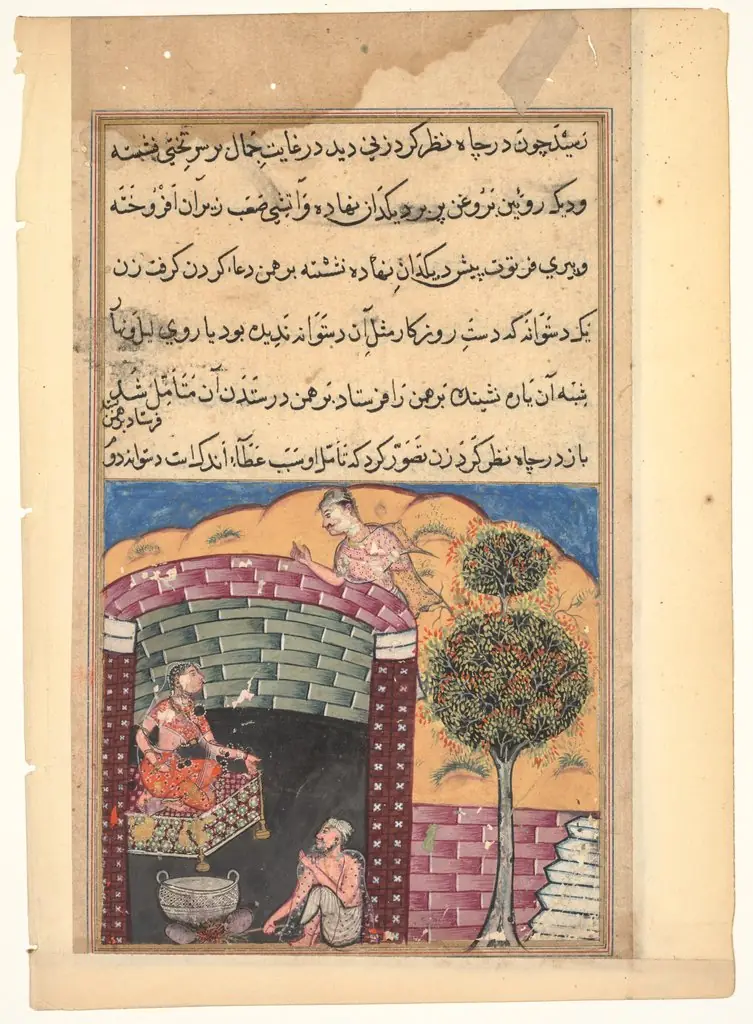 The Brahman gambler sees the daughter of the king of the jinns in a pit together with an old man and a cauldron of boiling oil, from a Tuti-nama (Tales of a Parrot: Seventh Night)
 An East African King Receives Three Emissaries, from a Khamsa of Amir Khusrau Dihlavi