Artwork
An African Lyre Player (recto); Calligraphy (verso)
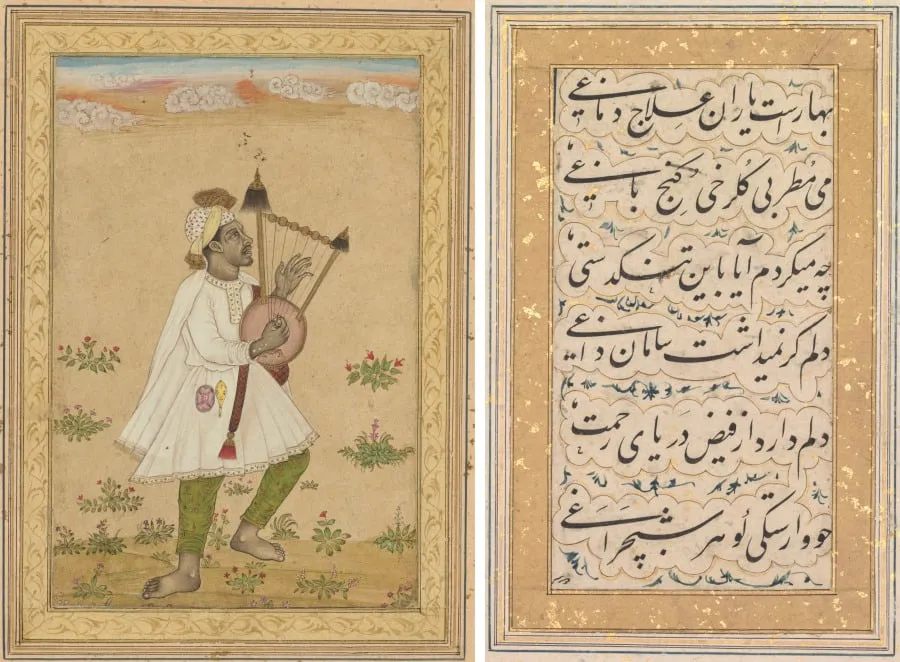
An African Lyre Player (recto); Calligraphy (verso) is an unspecified painting by the Baroque artist Unknown. It dates from 1650 and is held in the collection of the Cleveland Museum of Art.
About this work
Overview
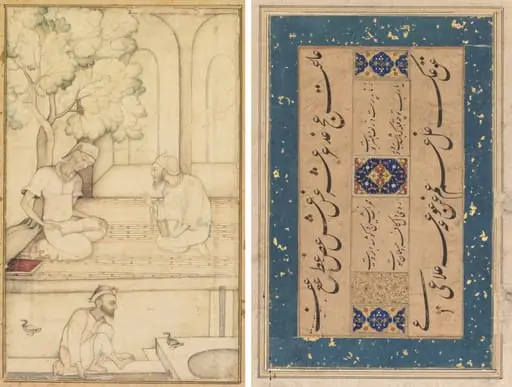
The work consists of a double-sided panel: the recto shows a seated figure in a white tunic and green trousers, a white turban crowning his head, and a red sash at his waist, while he cradles a lyre. The verso is covered with calligraphic script rendered in elaborate, interlaced patterns. Both sides share a warm beige ground and are embellished with floral motifs that frame the central images.
Subject & Meaning
The front image presents an African musician, identified by his instrument and attire, suggesting a focus on musical performance or cultural identity. The reverse side’s undeciphered script, presented as decorative calligraphy, may have served a commemorative or dedicatory function, linking the visual portrait to a textual narrative or patron’s inscription.
Technique & Style
Executed with bold outlines and saturated hues, the painting employs a flattened spatial treatment characteristic of Baroque decorative panels. The use of vivid color contrasts—white, green, red against a muted background—enhances the figure’s presence, while the intricate calligraphic designs on the verso demonstrate a meticulous hand and a concern for ornamental richness.
History & Provenance
The piece is classified within the Baroque period, a time when cross-cultural motifs and elaborate surface decoration were common in courtly and private commissions. Its dual-sided format suggests it may have functioned as a portable object or a hinged panel, typical of artworks intended for personal or diplomatic exchange.
Context
During the Baroque era, European artists increasingly incorporated exotic subjects and non‑Western scripts into their work, reflecting expanding trade networks and curiosity about distant cultures. The depiction of an African lyre player alongside foreign calligraphy aligns with this broader fascination with the ‘other’ and the decorative eclecticism of the period.
Legacy
While the specific origin of the calligraphic script remains unidentified, the panel exemplifies how Baroque visual language could merge portraiture, music, and textual ornamentation. It offers scholars a tangible example of the period’s engagement with multicultural themes and the aesthetic integration of image and script.
Artist & collection

 Domestic Scene
 Giacomo and Cardinal Marco, investing Andrea, Abbot of San Zeno, with his Benefice
 The Nymph of Fontainebleau
 Portrait of a Woman
 Madonna and Child with Saints in the Enclosed Garden
 Venus and Minerva
 Family Group of Four on Sofa
 Wall painting from Room H of the Villa of P. Fannius Synistor at Boscoreale
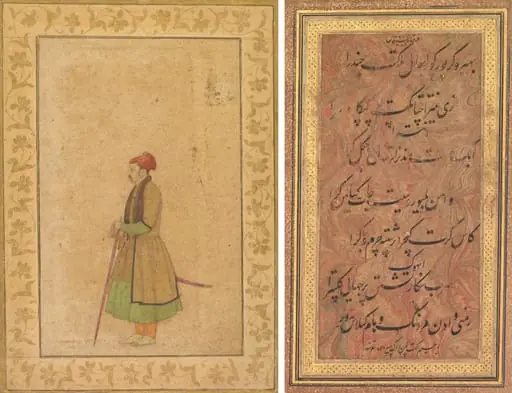 Portrait of Raja Ram Singh of Amber (r. 1667-1688) with a Deccan Sword (recto); Calligraphy (verso)
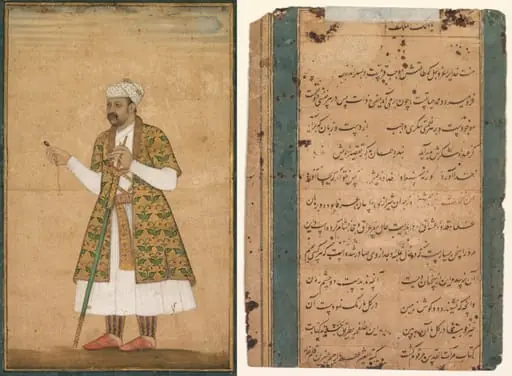 A Courtier, Possibly Khan Alam, Holding a Spinel and a Deccan Sword
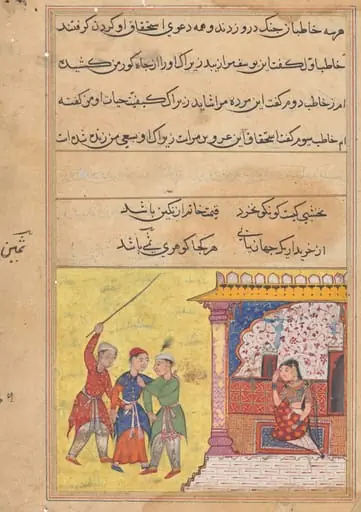 The three suitors again begin to quarrel among themselves for the hand of the devotee’s daughter, from a Tuti-nama (Tales of a Parrot): Twentieth Night
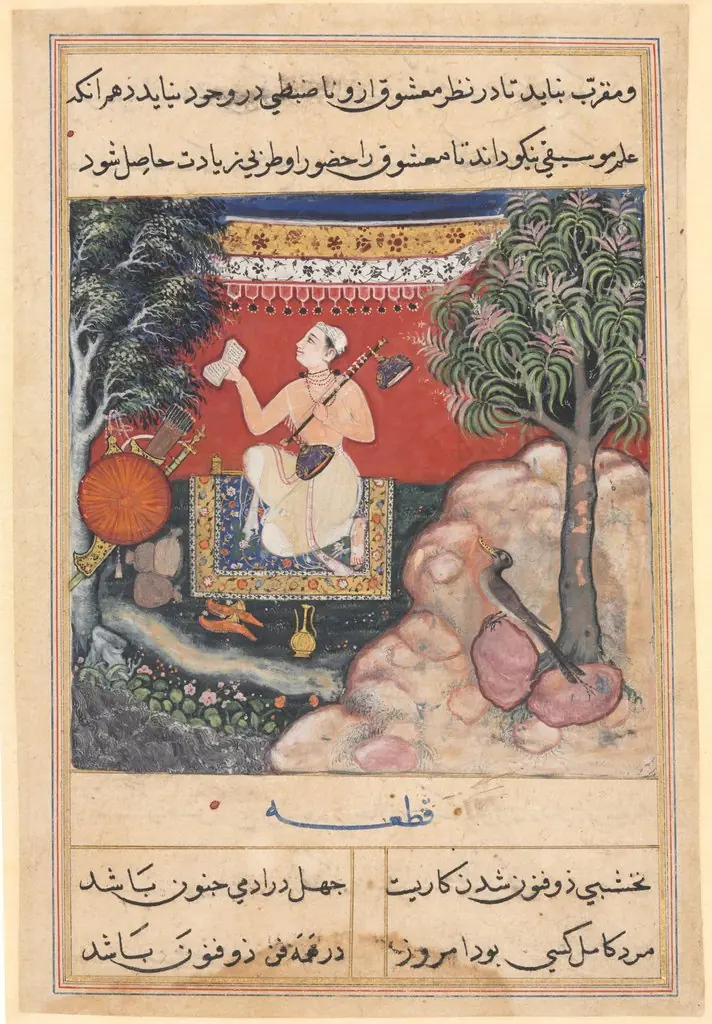 The origin of music from a fabulous bird of India which had seven holes in its beak, from a Tuti-nama (Tales of a Parrot): Fourteenth Night
 The origin of music from a fabulous bird of India which had seven holes in its beak, from a Tuti-nama (Tales of a Parrot): Fourteenth Night
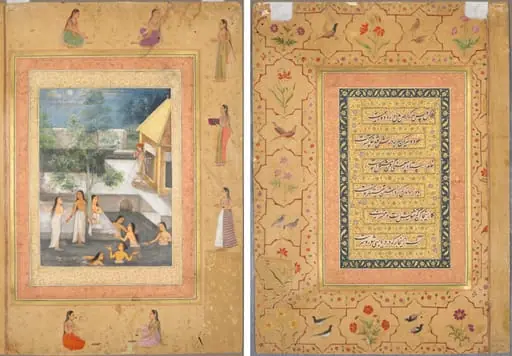 Leaf from the Late Shah Jahan Album: Harem Night-Bathing Scene (recto); Calligraphy Framed by an Ornamental Border of Flowers and Birds (verso)
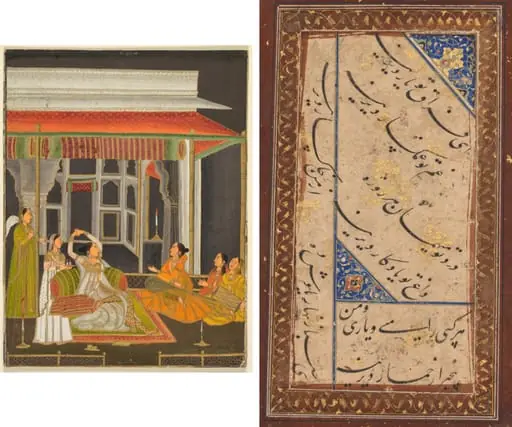 A princess on a terrace with attendants at night (recto); Calligraphy (verso)
 Kabir and Two Followers on a Terrace (recto); Calligraphy (verso)