Artwork
The origin of music from a fabulous bird of India which had seven holes in its beak, from a Tuti-nama (Tales of a Parrot): Fourteenth Night
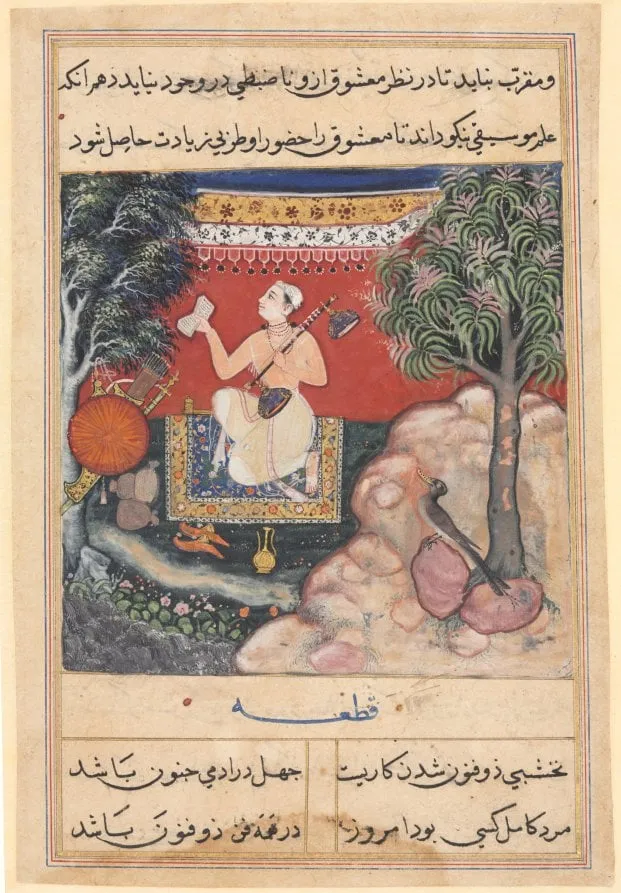
The origin of music from a fabulous bird of India which had seven holes in its beak, from a Tuti-nama (Tales of a Parrot): Fourteenth Night is an unspecified painting by the Mughal Painting artist Unknown. It dates from 1560 and is held in the collection of the Cleveland Museum of Art. This painting, 'Fourteenth Night,' is an illustration from the Tuti-nama, a collection of tales told by a parrot.
About this work
You see a man crouched under a tasseled canopy, holding a book and a *vina*—a stringed instrument.
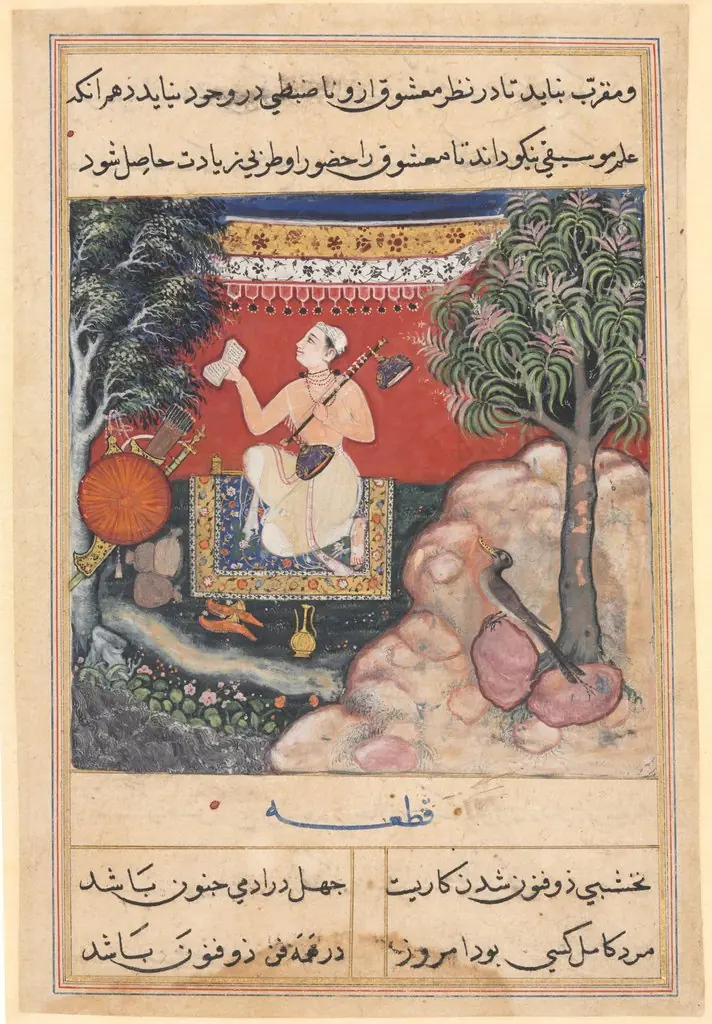
You see a man crouched under a tasseled canopy, holding a book and a *vina*—a stringed instrument. A tree behind him holds his sword, shield, and quiver. Above, a strange bird with seven beak holes perches on a branch.
This painting comes from the *Tuti-nama*, a collection of parrot tales told at the Mughal court. The bird, called a *qaqnos*, was said to create music from its beak, inspiring human song. The scene blends fantasy with the real world of Emperor Akbar’s court.
To see more like this, look up Mughal India, court of Akbar (reigned 1556–1605).
Overview
This painting, 'Fourteenth Night,' is an illustration from the Tuti-nama, a collection of tales told by a parrot. It depicts a scene related to the origin of music, featuring a fantastical bird and a human figure.
Subject & Meaning
The image shows a man under a tasseled canopy, holding a book and a vina, a stringed instrument. A tree behind him holds his weapons. Above, a qaqnos, a mythical bird with seven holes in its beak, perches on a branch, said to be the source of musical inspiration.
History & Provenance
The painting is from the Tuti-nama, created for the Mughal court during the reign of Emperor Akbar (1556–1605).
Context
The Tuti-nama is a collection of stories, and this painting illustrates one such tale, blending the fantastical with elements of the real world of the Mughal court.
Artist & collection

 Domestic Scene
 Giacomo and Cardinal Marco, investing Andrea, Abbot of San Zeno, with his Benefice
 The Nymph of Fontainebleau
 Portrait of a Woman
 Madonna and Child with Saints in the Enclosed Garden
 Venus and Minerva
 Family Group of Four on Sofa
 Wall painting from Room H of the Villa of P. Fannius Synistor at Boscoreale
 The origin of music from a fabulous bird of India which had seven holes in its beak, from a Tuti-nama (Tales of a Parrot): Fourteenth Night
 The Parrot Addresses Khujasta at the Beginning of the Twenty-sixth Night, from a Tuti-nama (Tales of a Parrot)
 The Parrot Addresses Khujasta at the Beginning of the Tenth Night, from a Tuti-nama (Tales of a Parrot)
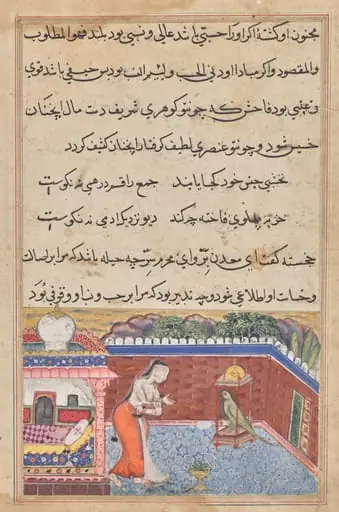 The parrot addresses Khujasta at the beginning of the thirty-first night, from a Tuti-nama (Tales of a Parrot)
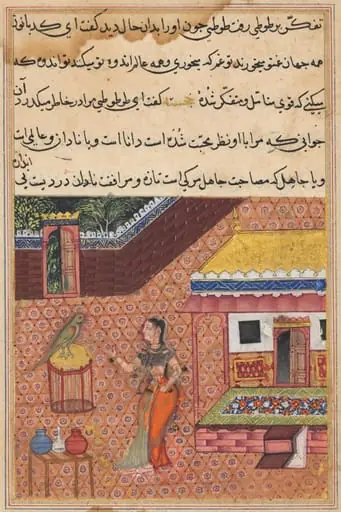 The parrot addresses Khujasta at the beginning of the thirty-fourth night, from a Tuti-nama (Tales of a Parrot)
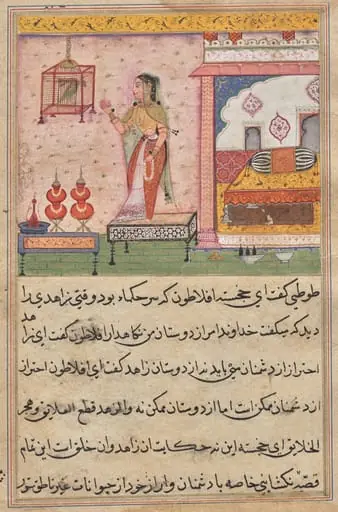 The Parrot Addresses Khujasta at the Beginning of the Twenty-third Night, from a Tuti-nama (Tales of a Parrot)
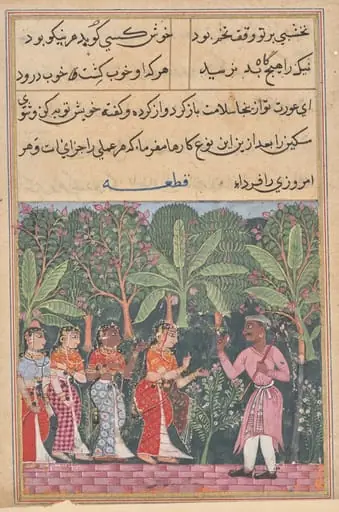 The merchant’s daughter meets the gardener, from a Tuti-nama (Tales of a Parrot): Twelfth Night